





 Portuguese
  English
  Spanish
  3 min of reading


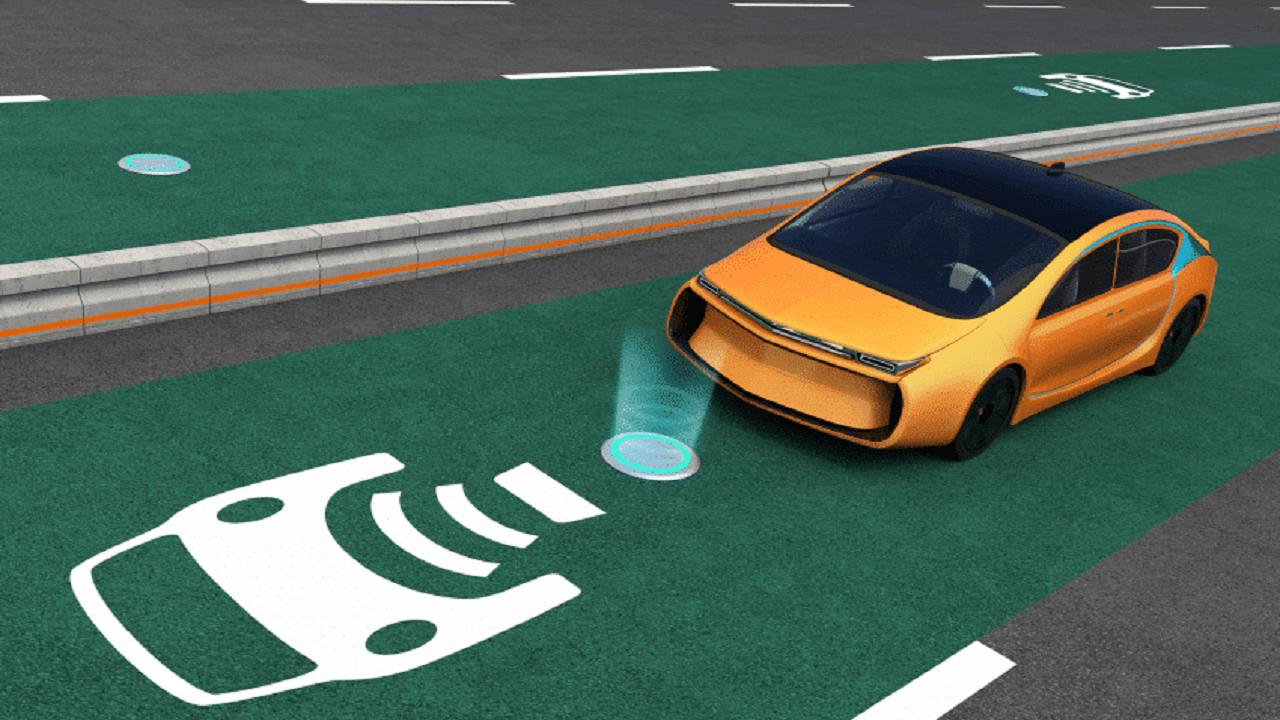
In Partnership With Laboratory And University In Knoxville, The Multinational Volkswagen Plans To Improve Its Electric Car Models With A More Autonomous And Wireless Charging System
By partnering with the Oak Ridge National Laboratory (ORNL) and the University of Tennessee in Knoxville, Volkswagen has outlined new objectives, such as minimizing losses and increasing the speed of fast, wireless charging for the new batteries of its electric cars. This assessment of what needed improvement was conducted through the Volkswagen Group of America’s Innovation Hub Knoxville. With the new strategies in place, impressive progress has already been made, according to a recent report issued by the group.
Read Also
Project Aims To Improve The Way To Recharge Electric Car Batteries, With A Wireless Charger, In A Short Time
With this new research and development partnership, Volkswagen and the University of Tennessee have already been able to enhance the electric car battery and increase the maximum recharging speed, through a wireless charger from 6.6 kW to 120 kW.
Volkswagen and the ORNL plan to increasingly expand these figures, with 300 kW being the main and final objective. If they can actually reach 300 kW, it can be said that this estimate would be more than enough to charge a Porsche Taycan, which has a higher capacity battery, up to 80% in just about 10 minutes.
-
Leapmotor C16 lands in Brazil in 2027 with electric and hybrid options, a futuristic design, interior for 6 people, and a range that can exceed 1,000 km in another Chinese offensive from Stellantis.
-
Why buying a car at a dealership is more expensive? New study reveals the factors that raise the price.

-
Starting at R$ 144,590 and featuring a 1.0 turbo engine and a complete ADAS package, the 2026 Hyundai Creta surpasses the Nivus, Pulse, and even the Kwid, advancing in the SUV rankings in Brazil.
-
Used Toyota Corolla Cross features a 2.0 engine with up to 177 hp, a hybrid version that achieves up to 17 km/l and 122 hp combined, a 10-speed CVT transmission, a package with 6 airbags and adaptive cruise control, as well as prices starting from R$ 117,000 and reaching R$ 149,000 in versions such as XRE, XR, XRV Hybrid, and GR-S.
Charging Time For Electric Car Batteries Will Be Reduced By More Than Half, With The Arrival Of Wireless Chargers
The comparison made to the Taycan’s recharging speed via a fast charging station is, in fact, just a comparison, as the company and the laboratory have not yet reached that reality, since it is very common to have various losses throughout the process.
Indeed, we all know that losses are one of the main problems afflicting wireless chargers for electric cars; however, according to ORNL, during testing, it was possible to achieve efficiencies of up to 98%, since the remaining 2% of energy transmitted through the wireless base is completely wasted.
Sustainable Electric Vehicles, To Serve As An Example To Other Companies
The Director of the Energy Science and Technology Laboratory at ORNL, Xin Sun, said that the team is very pleased to work with Volkswagen and the University of Tennessee, as this demonstrates ORNL’s powerful and ultra-efficient wireless charging technology, through a major brand, which is Volkswagen. Xin also talked about the beautiful design of the multi-phase electromagnetic coil and power electronics, which has a high potential to transfer high levels of energy in a completely compact system.
The director revealed that they will not focus solely on a wireless charging system but also on a components development system made from plant fibers, primarily in the vehicle’s interior, inspired by what was done by BMW’s conceptual iVision Circular.
Bringing more electric cars to market that can contribute to nature and environmental well-being may lead other manufacturers to follow this good example.









Seja o primeiro a reagir!