





 Portuguese
  English
  Spanish
  6 min of reading
  0 comments


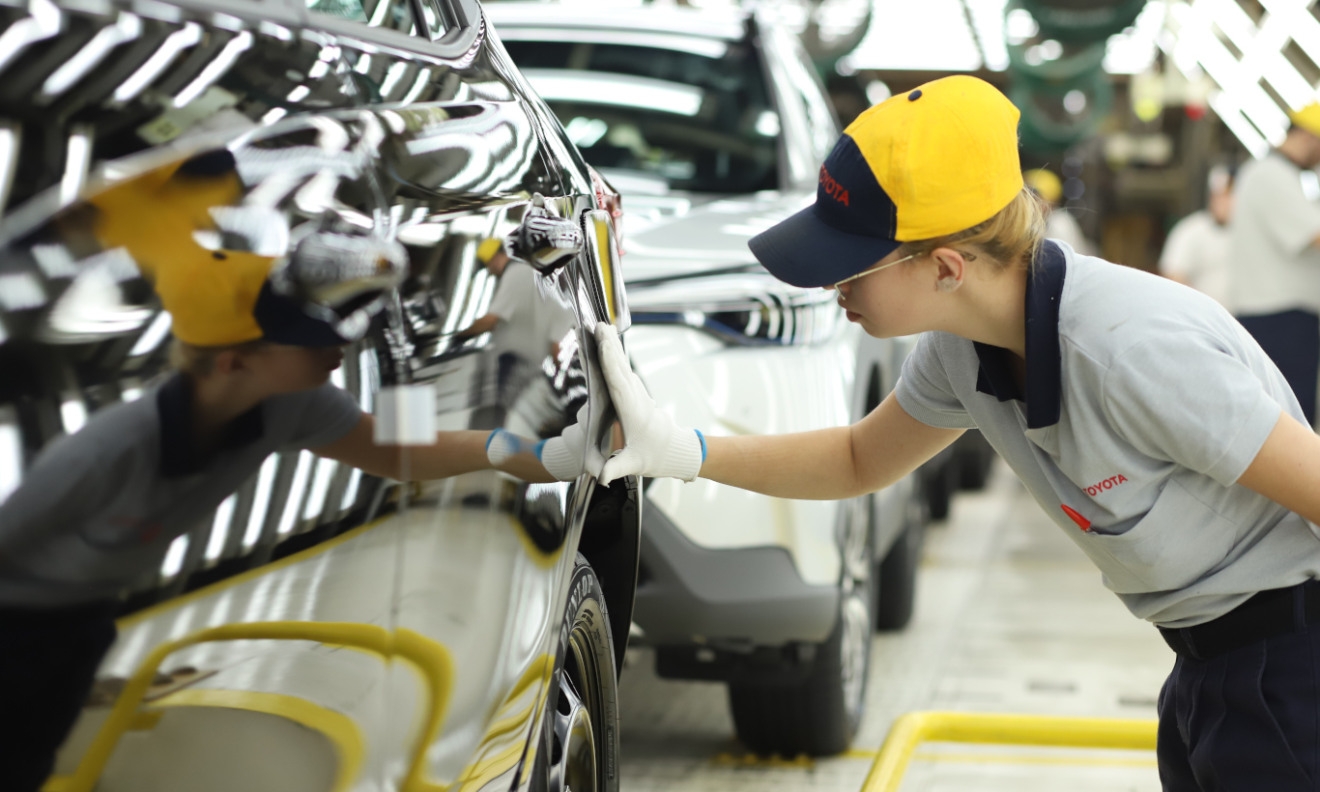
Toyota dominated the automotive industry with discipline, quality, and efficiency. Now, the pressure from China and electric cars forces the brand to rethink how it designs and manufactures each car.
Toyota became a giant by doing exactly what almost no one did so well: controlling every stage of production, cutting waste, and treating quality as a sacred matter. But the game has changed. When he was still CEO of Toyota, Koji Sato got straight to the point in front of hundreds of suppliers: at the current pace, the industry faces a real risk of not surviving. The detail is that this warning did not come from a struggling automaker, but from the global leader in the sector. And it gained even more weight because, since April 1, 2026, the executive command has passed to Kenta Kon, while Sato took on the role of vice-chairman and chief industry officer.
The method that transformed Toyota into a global reference
What many people call “toyotism” was born from the Toyota Production System, supported by two classic pillars: just-in-time and jidoka. In practice, this means producing with the minimum possible inventory, detecting failures early, and allowing the line itself to be stopped when a problem arises. The logic has always been simple and harsh at the same time: a defect cannot move forward just to meet the schedule.
This model only works when the culture of continuous improvement is ingrained on the shop floor, in the development of parts, and in the relationship with suppliers. That’s how the automaker built its reputation for reliability. Not by chance, the brand remains among the top-ranked in recent reliability rankings, alongside Lexus, according to Consumer Reports.
-
Cheaper than a latest-generation iPhone, these 5 used cars combine low maintenance, easily found parts, and prices starting from less than R$ 8,000.

-
Amid the tension between the US and China, Democratic senators warn Trump about the risk of an irreversible crisis by allowing Chinese automakers in the country.
-
It became R$ 10,000 cheaper! The new version of the Citroën C3 features new tires, reduces consumption, improves comfort, and enters the competition among popular cars.
-
They cost less than R$ 40,000, are economical and easy to maintain: see 4 used hatchbacks to buy.
Toyota is still huge, but China changed the speed of the automotive industry
On a scale, Toyota remains a colossus. The group closed 2025 with over 11 million units sold worldwide, while Volkswagen stayed around 9 million. However, size alone no longer solves everything. Today, the competition is not just about volume. It’s about development speed, industrial cost, software, car weight, and reaction time.
And that’s where China became the center of the conversation. The International Energy Agency projects that electric cars should exceed 20 million units sold globally in 2025, more than a quarter of all cars sold that year. In the Chinese market, this share is expected to be around 60% of total sales. In other words: those who take too long to adapt products and factories risk becoming outdated before finishing the project.
The warning from the CEO of Toyota was not theater
At the Toyota meeting with suppliers held on March 25, 2026, over 700 executives from 484 companies heard an unusual message from Koji Sato for the historically contained standard of the company. The central point was not just cost. It was speed. Sato acknowledged that the strength of Japanese manufacturing remains the robust and specialized supply chain, but admitted that the problem now lies in the pace: if nothing changes, the distance to new rivals will only tend to increase.
The speech resonated because it touches right at the heart of the brand. For decades, the entire industry has tried to learn from Toyota. Now, Toyota itself shows signs that it needs to abandon some of the excess diligence that made it famous to gain agility in the face of Chinese competitors. It’s not a simple exchange. It’s almost an identity surgery.
When the pursuit of perfection begins to hinder the car
The review began with an uncomfortable point: parts discarded for cosmetic flaws that the customer would not even see. Toyota itself reports that it has been working with suppliers since 2017, through the SSA (Smart Standard Activity) initiative, to correct excessive quality requirements and reduce the production burden associated with them. An official example involves connectors of wiring harnesses in areas not visible to the consumer: visual inspection for black spots led, for years, to massive discards and rework until the company revised the standard and cut inspection lines in half.
Specialized media adds examples that help understand the size of the problem. Toyota even rejected steering wheels with almost imperceptible wrinkles in the molded resin and wiring harness components for slight color changes in the plastic. Shoji Nishihara, purchasing manager in the vehicle development area, summarized the change in mindset in almost brutal terms: “the average customer doesn’t even see these parts”. It’s the kind of phrase that, years ago, would have sounded almost heretical within the company.
The electric car does not accept solutions inherited from the combustion engine
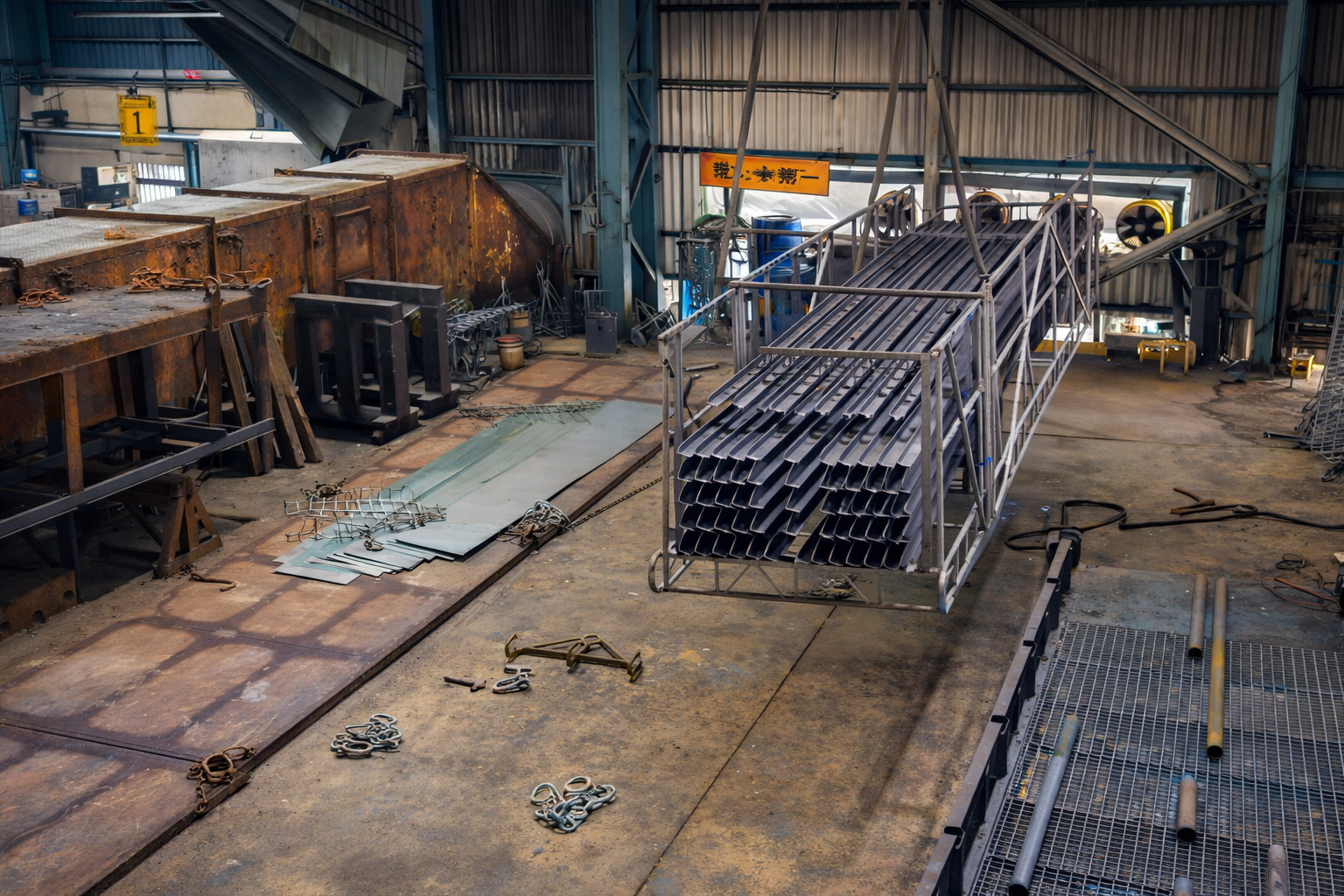
The pressure became more evident when reverse engineering specialists began to dismantle Chinese electric cars and Tesla models to show, piece by piece, where traditional automakers still carry too much weight, cost, and complexity. A report from Bloomberg describes the work of Caresoft in Mizunami, Japan, and cites a symbolic component of Toyota: a steel cross member weighing about 20 pounds that supports the steering wheel and dashboard. In newer electric vehicles, the obsession has shifted: to reduce mass, cut parts, and simplify everything possible.
In industry reports based on Caresoft’s analyses, this difference appears even in structures hidden behind the dashboard. In several Chinese EVs and in Tesla, parts of this assembly can now use more plastic or mixed solutions with thinner metal, while traditional manufacturers remain stuck with heavier reinforcements inherited from the logic of combustion cars. The message behind these dismantlings is harsh: it’s not enough to electrify an old design; it’s necessary to think about the electric car from the first line of the drawing.
This shock had already appeared earlier when Toyota engineers dismantled a Model Y and came away impressed with the structural simplicity of the design. One described the vehicle as “a work of art”, while another admitted that the company needed “a whole different manufacturing philosophy” and a platform truly born for EVs. The criticism, at its core, is the same: an electric car made with a combustion car mindset ends up heavier, more expensive, and slower to produce.
Toyota’s response has already begun, but the clock is ticking
The good news for the automaker is that it has already designed part of the reaction. In its next-generation strategy for BEVs, Toyota itself announced a modular structure, the use of giga casting, and self-propelled production technology to cut steps, reduce manufacturing investment, and simplify vehicle construction. The goal announced by the company is to launch this new generation of electric vehicles starting in 2026.
However, the dilemma remains delicate. Loosening standards invisible to the customer can speed up the factory and relieve costs. Loosening too much can erode precisely the asset that brought the brand to the top: trust. And trust, in the automotive industry, takes decades to build and much less time to wash down the drain.
Toyota’s challenge now is to continue being Toyota
The question is not whether Toyota still knows how to manufacture well. It knows how to do that like few others. The question is different: can the company maintain its reputation for robustness while learning to develop faster, cut weight, reduce costs, and shorten cycles like its Chinese rivals? It is this balance that will determine whether the brand continues to be a reference in the automotive industry or if it becomes just a respected giant trying to catch up to a future that has already arrived.
In the end, Koji Sato’s warning exposes a historic turning point. The perfectionism that helped Toyota dominate the world is still worth gold when it comes to reliability. But in the world of electric vehicles, perfection without speed can turn into delay with a badge of excellence. And no one wants to find that out too late.
And you, do you think Toyota can accelerate without giving up its reputation for reliability? Leave your comment and share this publication with those who closely follow the automotive industry.






Seja o primeiro a reagir!