





 Portuguese
  English
  Spanish
  5 min of reading
  0 comments


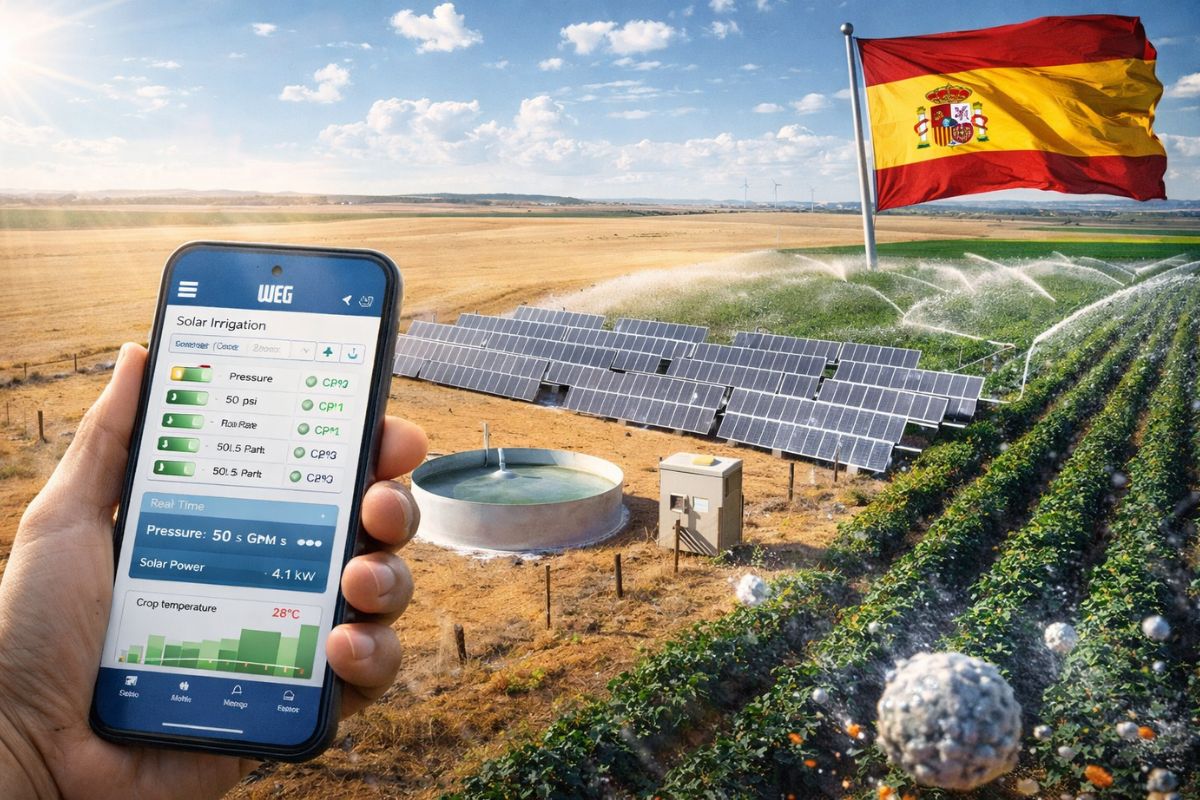
A WEG provided high-performance frequency inverters for a solar pumping project in the region of Castile and León, Spain, which allows for completely autonomous agricultural irrigation, without connection to the electrical grid, with remote monitoring via mobile phone and automatic adaptation to the available solar energy conditions on site.
A WEG, a multinational based in Jaraguá do Sul, Santa Catarina, has just put its technology to work in one of the most demanding agricultural scenarios in Europe. The company provided high-performance frequency inverters for a solar pumping project developed by Riegosolar in Spain, creating an irrigation system that operates completely autonomously without connection to the electrical grid and with the ability to automatically adapt to the solar energy conditions available at any moment of the day.
According to WEG, the project, implemented in the region of Castile and León, uses inverters from the ADV200-SP and ADV50 series from WEG to precisely control the flow and pressure of the pumping system. In addition to functioning without complex energy infrastructure, the system allows for remote monitoring and centralized digital management, meaning that farmers can monitor and control the irrigation of their crops directly from their mobile phones, from anywhere. It is technology from Santa Catarina irrigating Spanish fields.
How the WEG solar irrigation system works in Spain

The heart of the system is the frequency inverters provided by WEG, equipment that converts the energy generated by solar panels and delivers it in a controlled manner to power the water pumps.
-
The US faces a meat crisis with fires, pests, and strikes, consumption rises and supply falls to the lowest level since 1952, creating a billion-dollar opportunity for Brazilian exports to grow in 2026.

-
China rejected an entire shipment of beef from Argentina after detecting an antibiotic so dangerous that it has been banned for human consumption for over 30 years, and now the export sector is facing a crisis of international trust.

-
With nearly 500 thousand tons per year, barley production is growing in Brazil, while a decline in beer consumption among Generation Z raises alarms in the sector.

-
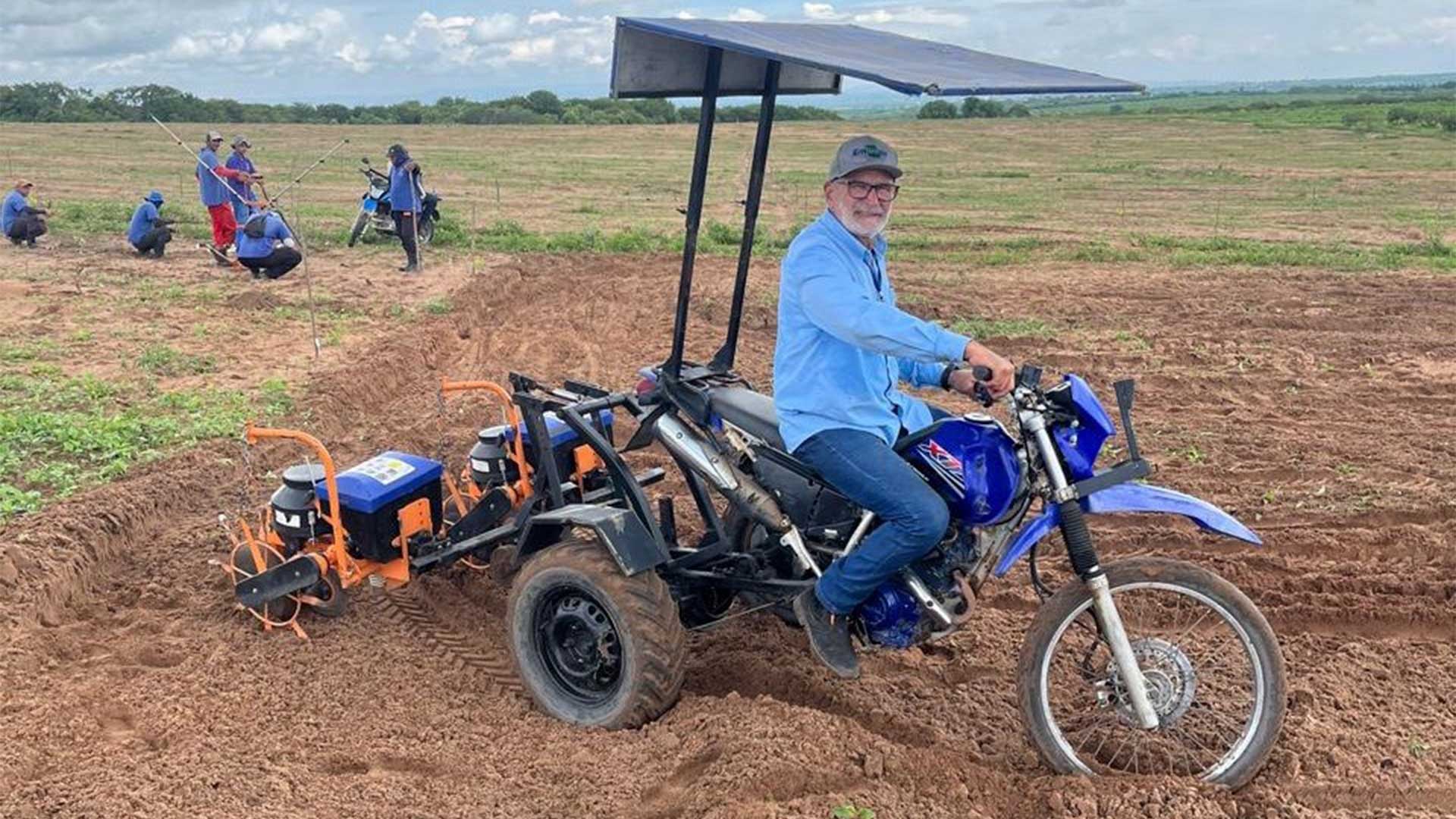
With tractors out of reach for small producers, a tricycle created by Embrapa Algodão becomes a cheap and efficient solution and gains national prominence.

The ADV200-SP and ADV50 models used in the project combine efficient electronics, advanced control algorithms, and robust design to transform a complex pumping application into a stable and energy-efficient system.
In practice, the system operates as follows: the solar panels capture energy, WEG inverters regulate this energy and feed the water pumps with the exact flow and pressure that irrigation requires at that moment.
If solar incidence decreases due to clouds, for example, the system automatically adapts, adjusting the pump operation to maintain stability without wasting energy. All of this without the need for batteries, diesel generators, or connection to the conventional electrical grid. It is irrigation powered exclusively by the sun.
Remote monitoring: WEG puts irrigation control in the farmer’s pocket

In addition to energy autonomy, WEG inverters allow for remote monitoring and centralized digital management of the system. Farmers in the region of Castile and León can monitor in real-time the operation of the irrigation, check flow, pressure, and energy consumption data, and make adjustments without needing to go to the field. All via mobile phone.
This remote management capability is an important differential in extensive agricultural regions, where properties can be large and distances between irrigation points considerable.
WEG’s technology offers producers greater operational security, flexibility to manage multiple irrigation points, and significant reduction in operational costs with fewer trips, less on-site maintenance, and more control over every liter of water used.
Why Spain chose WEG technology to irrigate its crops
The region of Castile and León is one of the largest agricultural areas in Spain and faces increasing challenges of water scarcity and energy costs. In this scenario, autonomous solar irrigation is not a luxury but a necessity.
The partnership with Riegosolar, a Spanish company specialized in solar pumping solutions, placed WEG’s technology at the center of a project that demands absolute reliability: any failure in the irrigation system can mean crop loss.
According to WEG, the inverters used in the project are not just components but strategic elements that allow for the creation of integrated solutions for smarter, cleaner, and more sustainable agriculture.
The company already provides complete solar pumping solutions and solar irrigation pivots for agribusiness in Brazil and worldwide, and the project in Spain reinforces WEG’s presence as a global technology provider for the energy transition in agriculture.
WEG in Europe: from Jaraguá do Sul to the world
The project in Spain is yet another chapter in WEG’s global expansion, which was founded in 1961 in Jaraguá do Sul and has become one of the largest manufacturers of electrical equipment in the world.
Recently, WEG expanded its logistics capacity in Portugal with a new warehouse of 7,500 square meters, reinforcing its strategic presence in Europe and preparing the unit for new opportunities in electric mobility.
The company operates in multiple fronts in Europe: large motors, industrial paints, inverters for solar energy, and now autonomous irrigation systems.
Diversification of markets and applications is a hallmark of WEG, which maintains its headquarters and innovation center in Santa Catarina but operates in dozens of countries with factories, warehouses, and commercial offices. The project with Riegosolar in Spain demonstrates that technology from Santa Catarina is competing and winning in demanding first-world markets.
Santa Catarina technology irrigating Spain: what the WEG project represents
The autonomous solar irrigation project in Spain is both a technological showcase and a practical example of what WEG is capable of delivering.
A system that works without the electrical grid, adapts itself to the sun’s conditions, can be controlled via mobile phone, and ensures the right amount of water for crops all with inverters designed and manufactured by a company that was born in the interior of Santa Catarina.
For European agriculture, it is a solution that reduces costs and energy dependence. For Brazil, it is another demonstration that the national industry has the capacity to compete in any market on the planet.
And for WEG, it is the confirmation of a strategy that unites innovation, sustainability, and global expansion from Jaraguá do Sul to the world.
Do you know of any solar irrigation systems in Brazil? And what do you think of a company from Jaraguá do Sul irrigating fields in Spain? Let us know in the comments if you’ve seen WEG technology working near you.






Seja o primeiro a reagir!