





 Portuguese
  English
  Spanish
  8 min of reading
  0 comments


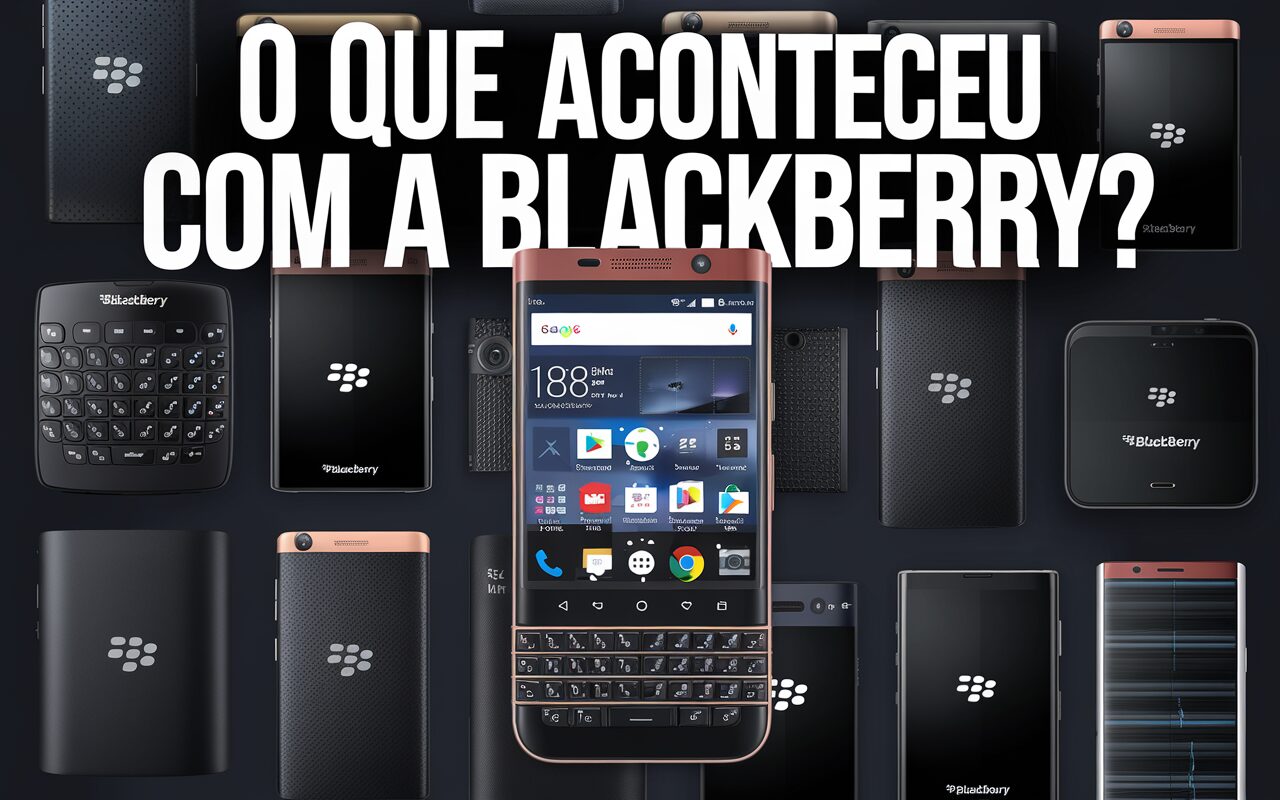
The End of BlackBerry! Brand Dominated the Market with Innovation and Iconic Keyboards, but Could Not Resist the Revolution of Touchscreen Smartphones, Marking One of the Most Emblematic Falls in the History of Technology.
BlackBerry was a phenomenon in the 2000s, especially among executives, politicians, and entrepreneurs seeking mobility, security, and efficient communication. Under the visionary leadership of Mike Lazaridis, the Canadian brand dominated the mobile market for nearly a decade. But just as quickly as it grew, BlackBerry saw its position shaken by profound transformations led by Apple and Google. In this article, understand what happened to BlackBerry, discover the most emblematic models of the brand, and learn how the Canadian company shifted its focus after leaving the mobile market.
The Rise of BlackBerry and Global Ascent


The story of BlackBerry begins with the creation of Research In Motion Limited (RIM) in 1984, in the city of Waterloo, Canada. Founded by Mike Lazaridis and Douglas Fregin, the company initially developed communication technologies for businesses and public agencies.
The turning point came in 1999 when RIM launched the BlackBerry 850, a portable device with a QWERTY keyboard and wireless connectivity for emails. For the first time, it was possible to send and receive electronic messages in real-time, outside the office. This feature became a game-changer for the corporate market.
-
While the world looks at oil, the war with Iran is already disrupting helium supply from Qatar, affecting car and iPhone chips, threatening AI expansion, and putting pressure on aluminum packaging at the highest value in four years.

-
Global warming will expose a treasure hidden under the ice of Antarctica and may spark an international dispute over gold and valuable minerals.

-
The Argentine government celebrates the lowest poverty rate in 7 years, but experts warn that the methodology has changed, real wages have fallen, unemployment has risen, and the number of people on the streets of Buenos Aires has increased by 57% since Milei took office.

-
A street vendor from Praia Grande built a robot made of scrap from scooters and washing machines that pulls his popcorn cart on the beach, emits sounds, and interacts with customers, becoming an attraction on the coast of São Paulo.


Mike Lazaridis saw that the future of communication would be mobile and secure, two characteristics that guided the company’s strategy in the following years.
BlackBerry: Status Symbol in the Corporate Market
Throughout the 2000s, BlackBerry became synonymous with modernity and efficiency. Its robust devices, equipped with a physical keyboard and proprietary email system, dominated the corporate environment, being adopted by companies, governments, and prominent figures.
The BlackBerry Messenger (BBM), an exclusive encrypted messaging system, further solidified the company’s reputation in information security. In a world where corporate data was becoming enormously strategically valuable, BlackBerry was the preferred option for executives and global leaders.
At its peak, between 2009 and 2010, the brand accounted for 20% of global smartphone sales, an impressive number for an expanding segment.
Iconic Models That Marked the History of BlackBerry
Several BlackBerry devices entered the history of the mobile market. Here are some of the key models that helped build the brand’s legacy:
BlackBerry 850 (1999)
First device in the line, with a physical keyboard, monochrome screen, and wireless connectivity for emails. Cost around US$ 399 at launch and sold approximately 100,000 units by 2000.
BlackBerry 5810 (2002)
The first BlackBerry capable of making voice calls, although it required the use of a headset. It was the precursor to the first smartphones, costing around US$ 499.
BlackBerry 7290 (2004)
Device that introduced Bluetooth, color screen, and support for GSM networks. Popularized BlackBerry in the American market and secured millions of subscribers for the brand.
BlackBerry 8700 (2005)
One of the first devices to use EDGE technology, significantly increasing mobile browsing speed.
BlackBerry Bold 9700 (2009)
Considered one of the best BlackBerry devices in history, it combined elegant design, 3G connectivity, and solid performance for its time.
BlackBerry Curve 9300 (2010)
Further popularized smartphone access among the general public, expanding BlackBerry’s presence outside the corporate segment.
BlackBerry Q10 (2013)
An attempt to revive the success of the physical keyboard amid the rise of touchscreen devices, but it could not reverse the brand’s decline.
What Happened to BlackBerry: The Factors That Led to Decline
Despite the innovation that BlackBerry represented in the early 2000s, the market changed rapidly. Starting in 2007, with the launch of the iPhone by Apple, the smartphone revolution gained new foundations: touch screens, app-based navigation, and intuitive interfaces.
Android, the system developed by Google, further expanded the market for affordable smartphones, with devices from various brands and price ranges.
Meanwhile, BlackBerry remained focused on devices with physical keyboards and resisted the shift to touchscreen for too long. When it finally launched its first touchscreen device, the BlackBerry Storm, the market was already solidified in the hands of Apple, Samsung, and other Android manufacturers.
Technical issues, negative reviews, and delays in launching a functional app store also harmed the brand’s reputation.
Additionally, the slowness to adapt its systems to the new demands of entertainment and multimedia, combined with an interface considered outdated, distanced new consumers.
The Influence of BlackBerry on the Smartphone Market
Even with its decline in the mobile phone market, BlackBerry strongly influenced the development of features that are now standard in modern smartphones. Before the popularity of mobile apps and social networks, BlackBerry Messenger (BBM) already offered instant messaging between users, securely and for free.

The concept of push notification, now used by practically all mobile apps, also originated from BlackBerry’s email system. The innovation provided immediate message delivery without the need for manual updates, a feature that transformed the productivity of professionals worldwide.
Furthermore, the emphasis on data security, a hallmark of BlackBerry, propelled the development of protection protocols that remain a priority for businesses and technology developers.
Mobile Device Management (MDM) tools, which allow companies to control employees’ access to corporate networks via smartphones, also had their origins on BlackBerry platforms back in the 2000s.
Resistance to Innovation and Strategic Errors
Among the factors that explain what happened to BlackBerry, the company’s resistance to adapting its business model to the new consumption trends stands out.
While competitors invested in creating complete ecosystems—combining hardware, open operating systems, and app stores—BlackBerry remained focused for too long on a restricted corporate audience, underestimating the appeal of smartphones among the general public.
Another strategic error was the delay in investing in fully touchscreen devices. Even when it launched models like the BlackBerry Torch, which combined a touchscreen and physical keyboard, the operating system still felt outdated compared to iOS and Android.
The launch of the BlackBerry PlayBook in 2011, a tablet that lacked basic features such as a native email client, also harmed the company’s image in a rapidly evolving market.
These conservative decisions alienated young consumers, who were more connected to mobility trends and multimedia content consumption.
The Attempt to Reinvent Itself with the BlackBerry 10 System
In an attempt to regain relevance in the market, BlackBerry launched the BlackBerry 10 system in 2013. Based on a new interface concept, focused on multitasking and security, the system represented a break from the company’s previous software versions.
Despite technological advances, BlackBerry 10 arrived too late. The app ecosystem was small compared to Google Play and the App Store, limiting the attractiveness of the brand’s new devices, like the BlackBerry Z10 and Q10.
The lack of native compatibility with Android apps and the absence of strategic partnerships to boost the system also hindered public acceptance.
The attempt to license BlackBerry 10 to other manufacturers was unsuccessful, sealing the platform’s fate.
The Definitive Shift to Cybersecurity
With the decline in mobile phone sales, BlackBerry decided to definitively change its focus. By investing in strategic acquisitions such as that of Cylance, the company began to specialize in artificial intelligence for cybersecurity.
Today, BlackBerry operates strongly in sectors such as:
- Mobile device security for large corporations;
- Protection of government networks;
- Embedded software for the automotive sector, including autonomous driving systems;
- Secure IoT solutions for industries.
With this transformation, BlackBerry ceased to be recognized as a smartphone manufacturer and established itself as a provider of digital security services.
This reinvention saved the brand from a potential complete disappearance, allowing the company to reposition itself in highly specialized and expanding markets.
The Impact of BlackBerry on Pop Culture and Collective Memory
Even after leaving the mobile phone market, BlackBerry remains alive in collective memory, especially for those who experienced the boom of the 2000s.
TV series, movies, and news reports from the time portrayed executives, politicians, and celebrities proudly using their BlackBerrys, associating the device with efficiency and a successful professional image.
American presidents, like Barack Obama, were declared users of the device, reinforcing its image of security and reliability.
To this day, the term “sending a BBM” is still remembered as a reference to a time when instant communication through messaging was still a novelty.
The cultural influence of BlackBerry serves as a reminder of how technological innovation can profoundly alter social standards and consumption patterns in just a few years.
Recovery Attempts and Exit from the Mobile Phone Market
In 2013, after consecutive losses, BlackBerry attempted to reinvent itself with the launch of the BlackBerry 10 system but failed to compete with iOS and Android. The company even considered selling itself, but no deal was finalized.
In 2016, BlackBerry announced it would stop manufacturing smartphones, licensing its brand to the Chinese company TCL, which continued to produce some models until 2020. Among the devices launched during this period were the BlackBerry KeyOne and BlackBerry Key2, which attempted to combine a physical keyboard with Android but did not achieve great success.
BlackBerry thus ended its cycle as a hardware manufacturer.
BlackBerry Today: A New Phase in Cybersecurity
After leaving the mobile phone market, the company focused its efforts in the area of cybersecurity and corporate software. In 2016, it acquired the British startup Encription, specialized in digital security.
Two years later, in 2018, it purchased the American company Cylance, focused on artificial intelligence for cyber threat prevention, for US$ 1.4 billion.
Currently, BlackBerry offers digital security solutions for companies, governments, and financial institutions. Its services include mobile device management systems, data protection, and embedded software for the automotive industry.
With over 3,500 corporate clients worldwide, BlackBerry remains relevant, albeit in a completely different sector than the one that made it famous.
Mike Lazaridis and the Legacy of BlackBerry
Mike Lazaridis, one of the founders and former CEO of the company, left his position in 2012, but his legacy as a technological innovator remains. Visionary in foreseeing mobility as a vector for transformation in communication, Lazaridis was crucial in positioning BlackBerry as one of the most important names in cell phone history.
Despite the brand’s decline in the mobile market, BlackBerry’s contribution to the evolution of smartphones is undeniable. Without its advancements in corporate mobility, push email, and data security, the development of modern smartphones would have followed a different pace.
Sources: TechTudo and TecMundo






Seja o primeiro a reagir!