





 Portuguese
  English
  Spanish
  4 min of reading
  0 comments


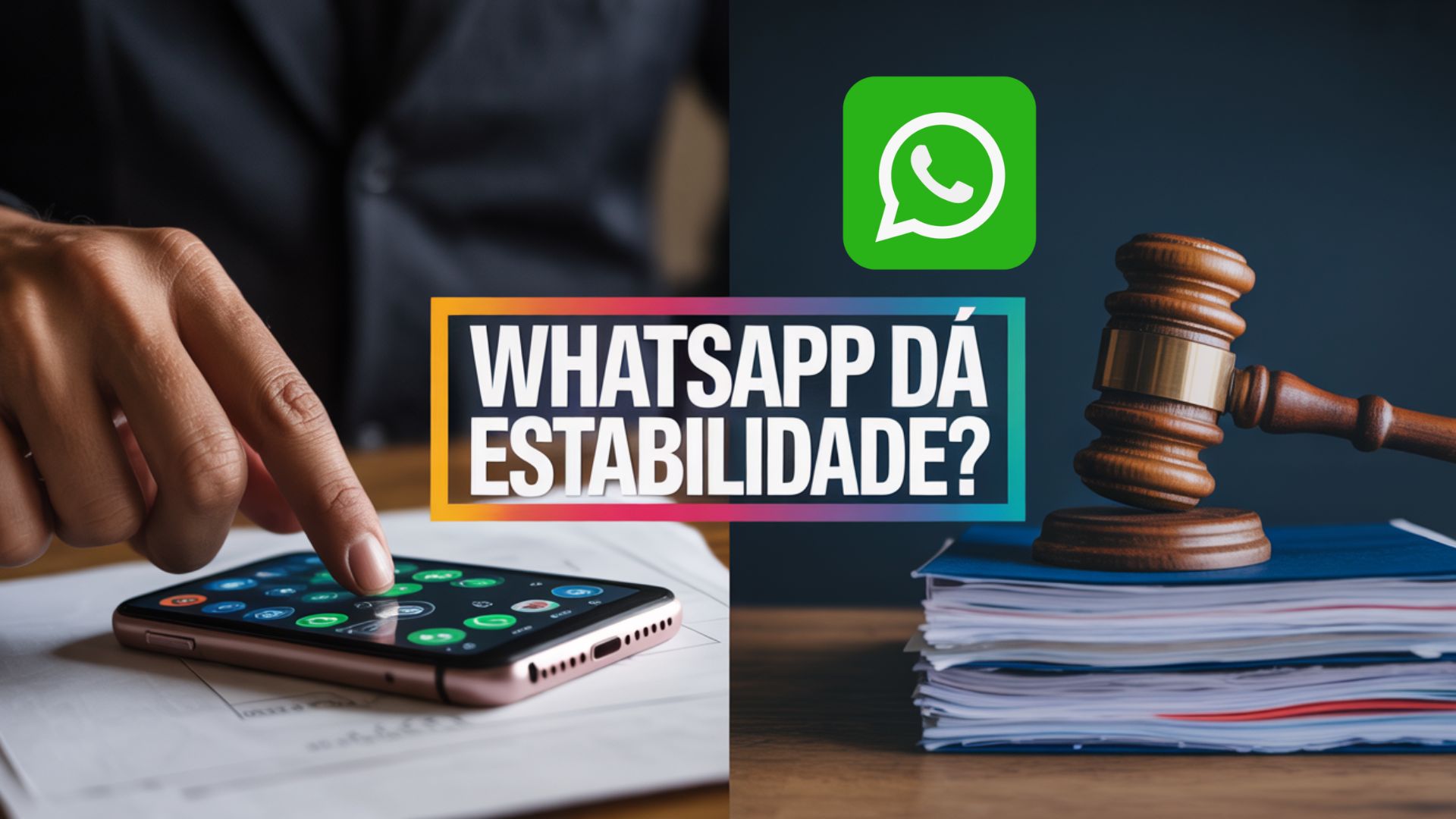
The Advancement of Labor Jurisprudence May Open the Way for the Use of Corporate Cell Phones to Be Linked to Occupational Diseases, Creating New Rights and Risks for Employees and Employers in the Digital Environment.
The intensive use of cell phones for professional purposes can become a labor risk factor.
Since April of this year, the Superior Labor Court (TST) established Theme 125, according to which provisional stability of 12 months may be ensured to workers who develop work-related diseases, even without being away for more than 15 days or receiving accident-related sickness benefits (B-91).
This change paves the way for cases of De Quervain’s Tenosynovitis — popularly known as “WhatsApp finger” — to also have a chance of generating job protection or equivalent compensation, provided that a medical report confirms the causal or contributory link between the injury and the work.
-
Government enacts new law: paternity leave increases from 5 to 20 days with gradual increases until 2029, and Social Security pays the paternity salary; companies no longer bear the absence cost, estimated at R$ 5.4 billion.

-
End of the 1-hour lunch break in the CLT? Current labor law maintains the break, allows for negotiated reductions, and defines rules for working hours and home office in Brazil.

-
Employee Fired After Accumulating 114 Days of Medical Leave in One Year, Labor Court Upholds Company’s Decision

-
Employee Fired While Treating Depression Wins in Court and Vale Is Required to Rehire Him Following Decision Based on the CLT and INSS Benefits


So far, no ruling explicitly cites “WhatsApp” or “smartphone” as a central cause.
The possibility is based on analogy: since the same pathology (ICD M65.4) has already been legally recognized in cases of repetitive strain, there is room for the reasoning to be extended to corporate use of cell phones.

What Is De Quervain’s Tenosynovitis
The disease occurs when the long abductor and short extensor tendons of the thumb become inflamed, causing pain at the base of the wrist and difficulty moving.
Medical research, including reviews published in PubMed, indicates that frequent use of smartphones may increase up to 60% the risk of developing symptoms of the condition among young people with dependency on the device.
In Brazil, orthopedic surgeons from the Brazilian Society of Hand Surgery have warned that typing long messages with the thumbs is among the most common causes of the problem.
Official Recognition as an Occupational Disease
The Manual of Work-Related Diseases, published by the Ministry of Health and updated in 2024, includes “Radial Styloid Tenosynovitis (De Quervain) – ICD M65.4” in the list of occupational illnesses.
In practice, this classification creates an administrative presumption of a link with certain activities, known as Technical Epidemiological Social Security Link (NTEP).
This facilitates recognition by the INSS and serves as evidence in labor lawsuits, although the final conclusion always depends on an expert evaluation.
What Changed with Theme 125 from TST
Until April 2025, 12-month stability was only granted to those who were absent for more than 15 days and received B-91 benefits.
With the thesis established by TST, these requirements have been removed.
Now, if a worker proves in court that the disease is related to their job, even if the diagnosis only arose after dismissal, they may claim reinstatement or equivalent compensation.
This understanding may close a loophole previously exploited by companies, which dismissed employees with symptoms not yet formally recognized as social security absence.
Precedents Regarding Tenosynovitis Recognized in Court
Although there is still no decision linking the condition directly to smartphone use, courts have already recognized De Quervain’s Tenosynovitis as an occupational disease in other cases of repetitive strain:
RR-282200-73.2006.5.12.0014 – TST, 4th Panel
“Worker subjected to repetitive tasks after team reduction.”
The company was condemned to pay compensation for moral and material damages.
ATOrd 0100477-49.2024.5.01.0030 – TRT-1 (banking) – “Employee diagnosed with De Quervain’s tenosynovitis and carpal tunnel syndrome, attributed to intensive typing in customer service.”
The court recognized 12-month stability with retroactive salaries. Sentence upheld in August 2025.
ROT 0012670-69.2017.5.15.0022 – TRT-15 – “Production line worker diagnosed with De Quervain’s tenosynovitis.”
The court recognized the causal link and established a lifetime pension, as well as moral damages.
These precedents reinforce that, if there is an expert evaluation proving the link between the disease and work, the courts may extend the same logic to situations involving smartphones.
How a Worker Could Act in Case of Diagnosis
If a former employee receives a diagnosis of tenosynovitis after dismissal, they may seek legal protection by following a few steps:
- Present medical reports mentioning ICD M65.4.
- Request the opening of a Work Accident Communication (CAT).
- Gather evidence of corporate cell phone use.
- File a labor lawsuit.
The judge will analyze the expert evaluation in light of Theme 125. If the link is confirmed, stability may be granted, with reinstatement or substitute compensation.
Impacts for Companies
Labor lawyers assess that the new jurisprudence may increase the risk of convictions.
If the relationship between corporate use of the cell phone and tenosynovitis is confirmed, costs include a year of salaries, expert fees, fines for failing to issue CAT, and in severe cases, a lifetime pension.
To reduce liabilities, experts suggest limiting messages outside of work hours, offering regular breaks, promoting ergonomic training, and updating occupational risk prevention programs (PGR and PCMSO).
Future Perspectives on “WhatsApp Finger”
Inspections by the Ministry of Labor have already included, since July 2025, guidelines on injuries related to mobile devices in Regulatory Standard 17.
Lawyers believe that the first lawsuits directly citing “smartphone use” as the central cause may arise in 2026. These test cases will be essential to consolidate the application of Theme 125 to this type of situation.









Seja o primeiro a reagir!