





 Portuguese
  English
  Spanish
  3 min of reading
  0 comments


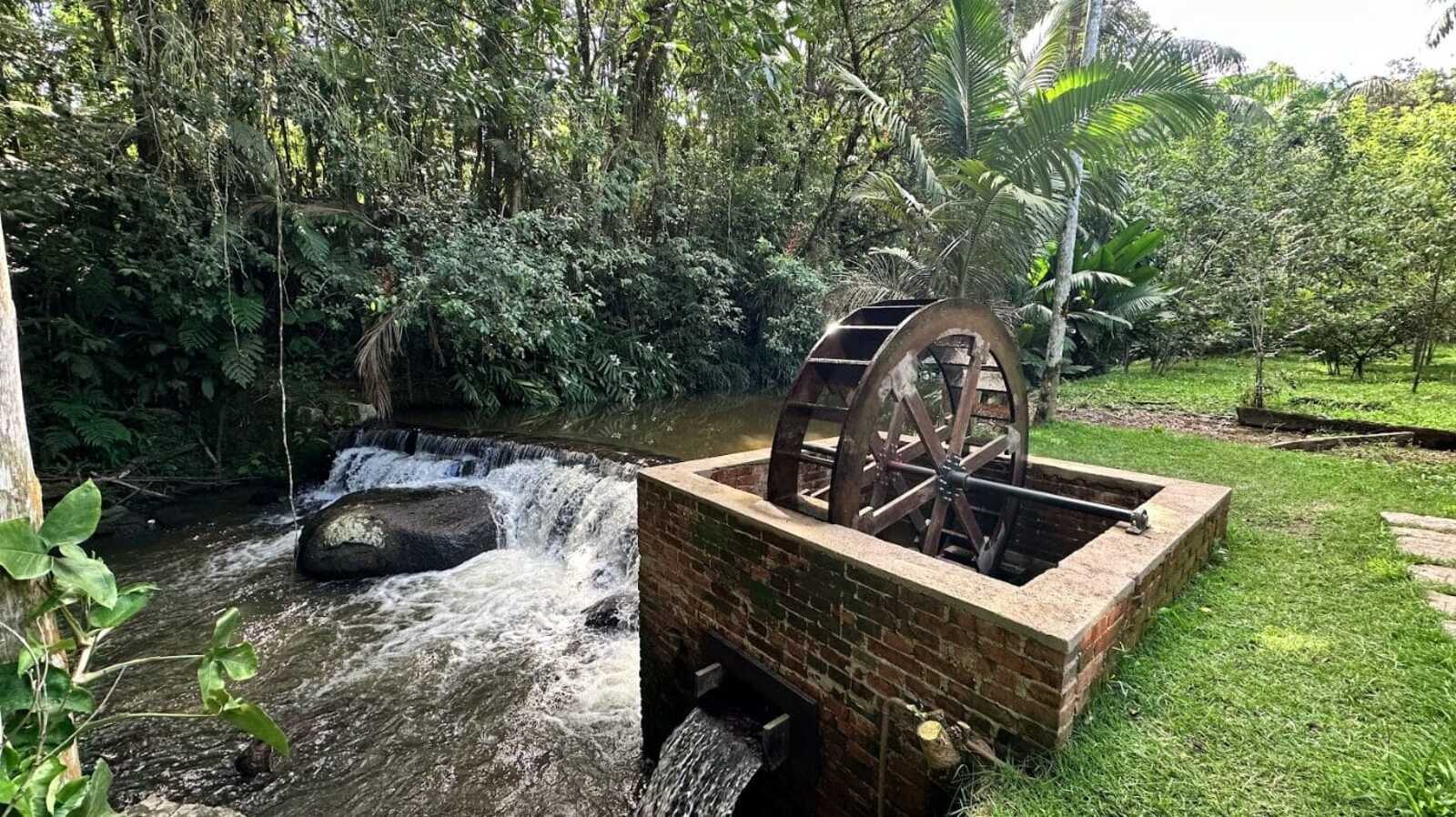
Restoration of historical mansion in Pomerode revealed an old turbine connected to the Rio do Testo, a hidden door, and noble wood flooring, exposing details of the original use of the property and reinforcing its heritage and tourist value in the region
The restoration of a historical mansion on the Enxaimel Route, in Pomerode, revealed hidden noble woods, a turbine, and a hidden door, rediscovering uses of the property built around 1910 and now open to tourists and locals.
Discoveries of the restoration
The current owners purchased the historical mansion in 2022. At the back of the property, where the Rio do Testo flows, they were already aware of the existence of a dam.
Next to it, they found a brick structure that revealed what was probably the first power generation equipment in the Testo Alto neighborhood, built in 1951.
-
Italian researchers have detected what appears to be a second Sphinx buried under the sands of Egypt, and satellite scans reveal a gigantic underground megastructure hidden beneath the Giza Plateau for over 3,000 years.

-
There are 4,223 drums and 1,343 metal boxes concreted with 50-centimeter walls that store the radioactive waste from Cesium-137 in the worst radiological accident in Brazil, just 23 kilometers from Goiânia, with environmental monitoring every three months.

-
Giant Roman treasure found at the bottom of Lake Neuchâtel in Switzerland reveals an advanced trade system, circulation of goods, and armed escort in the Roman Empire about two thousand years ago.

-
He buried 1,200 old tires in the walls to build his own self-sufficient house in the mountains with glass bottles, rainwater, and an integrated greenhouse.
Conversations with former residents helped reconstruct this function. According to these accounts, a turbine installed on-site produced electricity to illuminate the historical mansion and power small agricultural machines.
With the arrival of the public power grid in the 1970s, the equipment was abandoned. The discovery added an element to the property’s history, now integrated into the tourist circuit.

Door reveals old use
Inside the house, the renovations also exposed marks. During the removal of the internal plaster, worn by time, an old door that connected two rooms appeared.
This detail helped explain an old phase of the historical mansion, where a branch of Casa Comercial Haut operated. The door connected the private area to the workspace.
This connection between spaces shows how two houses were united into one. The unusual volume in the region reinforces the architectural uniqueness preserved by the work.
Floor hid noble wood
Another revelation appeared in the flooring. The floor had a dark and uniform appearance after decades of use, but hid, under thick layers of wax and oils, a layout of native noble woods.
The ancient builders interspersed black cinnamon and rosewood planks. With the restoration, the design re-emerged and today composes the Mahlzeit hall.
Preserved features of the mansion
Since January, the property has housed the Mahlzeit Café Colonial. Built around 1910, the historical mansion is listed as municipal and state heritage and is part of the historical ensemble of Testo Alto, protected by Iphan.
To install the colonial café, the partners sought to maintain the original features as much as possible. At the back, the shed was rebuilt around the original bread oven.
The furniture was inspired by German pieces and those from the Tyrol region. The chairs, based on the Bauernstuhl, were specially designed for the space and produced for the café.
On the walls, hand-painted frames cover rock wool used in acoustic treatment. Outside, a mechanical organ plays pre-programmed music. The instrument is unique in Brazil.
Furniture, organ, acoustic panels, and water wheel received direct participation from partner Ivan Blumenschein. In the colonial café, nine out of ten items on the buffet are produced in Pomerode.
With information from NSC Total.









Seja o primeiro a reagir!