





 English
  Francês
  Alemão
  Italiano
  Japonês
  Norueguês
  Portuguese
  Spanish
  5 min of reading
  0 comments



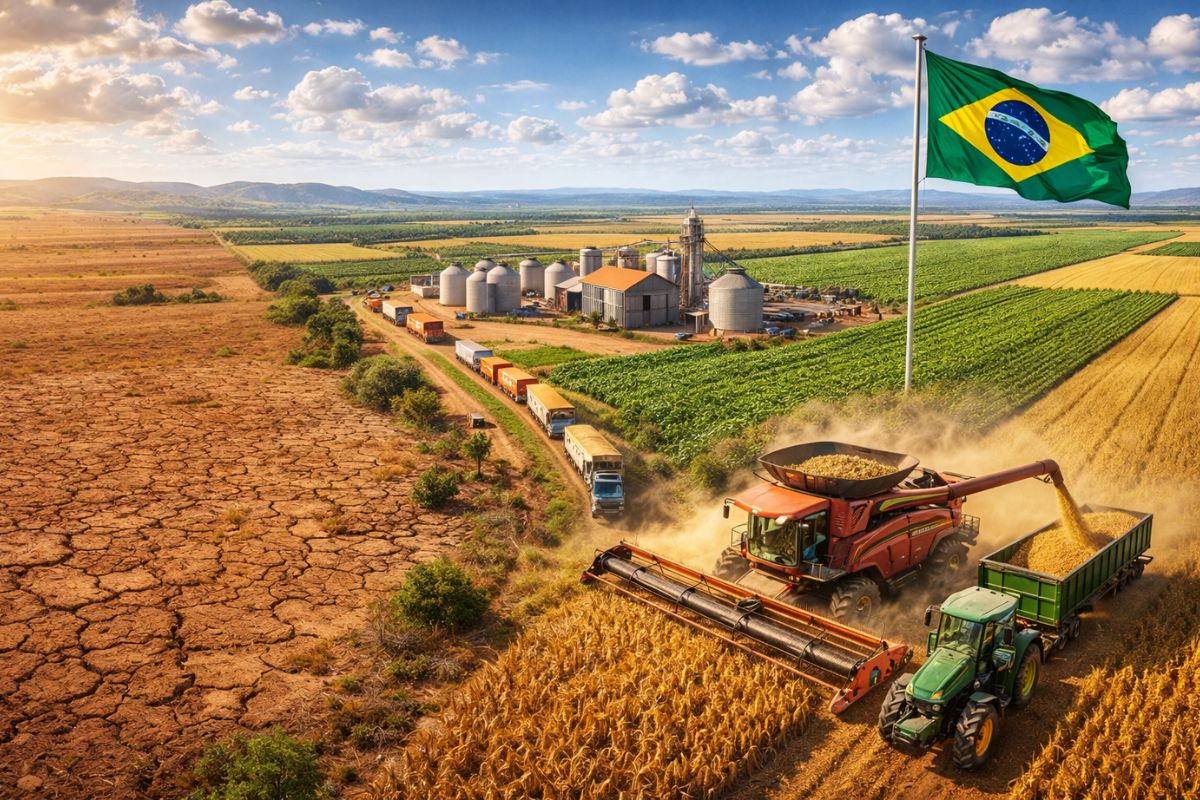
Brazil jumped from 5 million to over 10 million tons of wheat per year thanks to tropicalized cultivars from the Cerrado. The country challenges Russia in the global market and may approach self-sufficiency by 2026, offering grain in the off-season of the northern hemisphere.
Brazil is rewriting the global wheat map. The country, which for decades was one of the world’s largest importers of the cereal, spending fortunes in dollars to supply bakeries and industries, now emerges as an unexpected competitor in the international market. Brazilian production jumped from 5 million tons in 2018 to over 10 million in 2023, and projections for 2026 indicate that the country may reach between 12 and 14 million tons, approaching self-sufficiency for the first time.
The engine of this transformation is the Cerrado, where genetically adapted cultivars to extreme heat, developed by Embrapa, allowed for wheat planting in the dry winter at temperatures of 38 °C. Brazil offers something that traditional exporters cannot: grain available in July and August, exactly when northern hemisphere stocks are at their lowest before the new European harvest.
How Brazil moved from importer to competitor in the wheat market
For decades, Brazil imported over 7 million tons of wheat per year, being captive to a market dominated by Russia, the United States, Canada, and Argentina. Each climate crisis abroad turned into a price increase in the domestic market. Each geopolitical conflict became inflation in the Brazilian bread. The dependence was structural and seemed inevitable because science said that wheat needed cold.
-
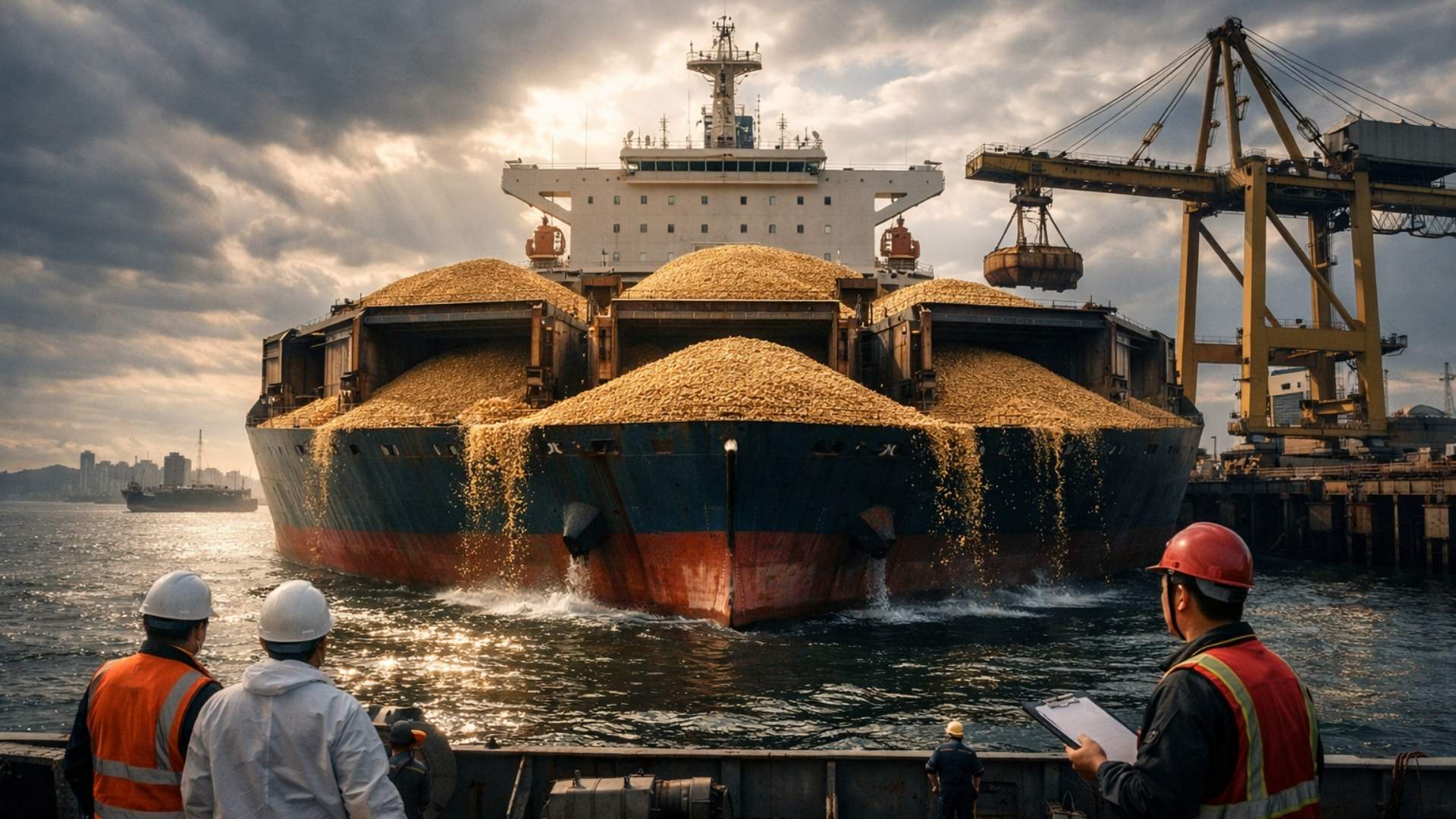
China returned almost 20 Brazilian ships with soybeans, but now everything could change: the country that buys 80% of the grain is considering relaxing regulations after impurities held up shipments of thousands of tons and caused million-dollar losses.
-
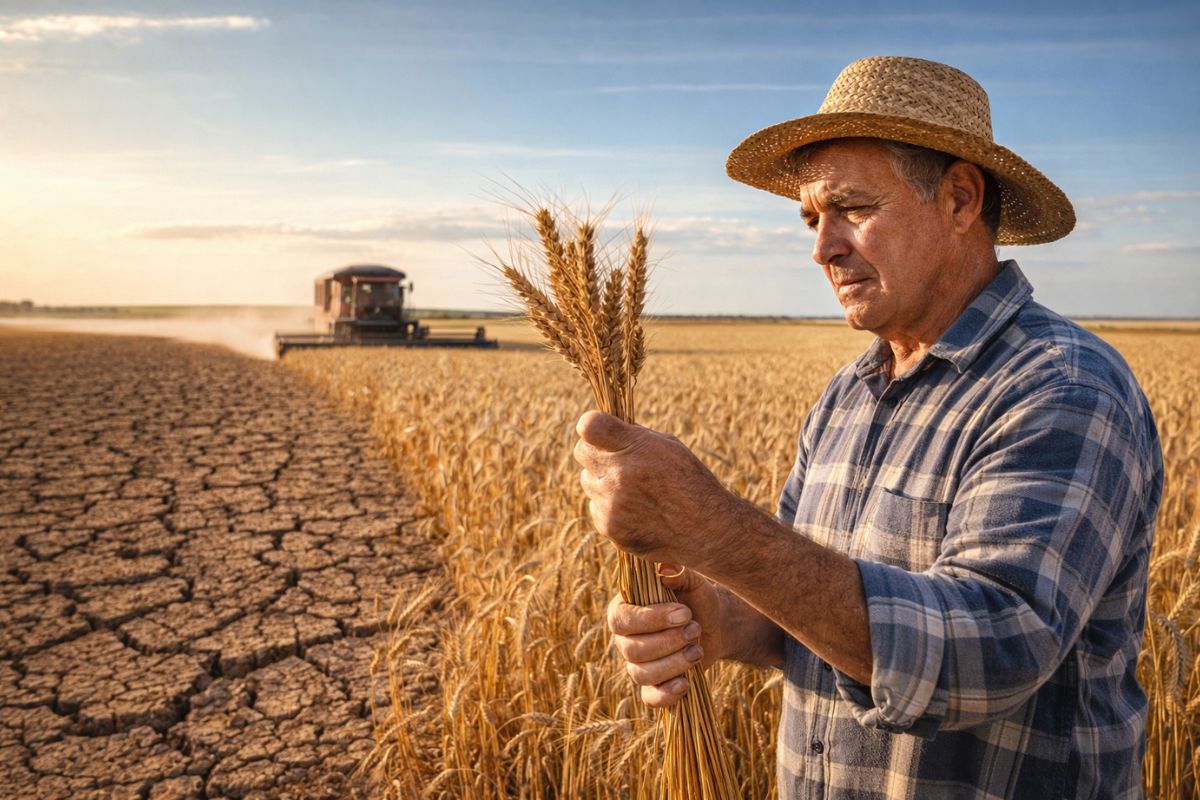
The drought of the cerrado was considered an enemy of wheat, but Brazilian scientists turned the lack of rain into a competitive advantage by creating a grain with quality that is already attracting the attention of international mills around the world.
-
THE OWNER of Brazil: a farmer who came from laundries, created an ’empire’ and today runs a company valued at R$ 42 billion after tripling its value in less than a year and receiving a billion-dollar investment from the USA.

-
Drone with herbicide applied in pasture spreads mist, hits neighboring crop, destroys 40 thousand eucalyptus trees, devastates chayote plantation, and leaves a rural producer in Goiás facing million-dollar losses.
Embrapa, in partnership with universities and biotechnology companies, spent decades researching varieties capable of withstanding the thermal stress of the Cerrado.
The result was the so-called tropicalized cultivars, varieties developed with classical breeding techniques and genomic editing tools, including CRISPR, that allow Brazil to produce wheat where any agronomist in the world would say it was impossible.
The science behind the tropical wheat that grows in Brazil’s Cerrado
Researchers identified genes responsible for thermal stress resistance in wild wheat varieties found in arid regions of Central Asia and the Middle East.
These characteristics were introduced into productive lines, creating cultivars that withstand temperatures that would destroy any conventional European or North American variety.
In addition to genetics, the vegetative cycle was shortened to fit within the dry window of the Cerrado, usually between May and September.
Center pivot irrigation systems, connected to real-time soil sensors and monitored by artificial intelligence, create what agronomists call an artificial spring in Brazil: in the middle of a dry and hot July, the pivot distributes calculated water to maintain soil moisture within ideal parameters, simulating conditions of a temperate European spring.
Why drought became a competitive advantage for Brazilian wheat
One of the most surprising data points from the tropical wheat revolution is that the lack of rain during grain filling has become a competitive advantage for Brazil. The natural drought of the Cerrado eliminates the favorable environment for fungal diseases that devastate crops in the south of the country and in Argentina, resulting in wheat with high protein content, firm husk, and low incidence of fungi.
The quality of flour produced from Cerrado wheat is already beginning to attract the attention of international mills.
For Brazil, this means that the cereal competes not only on price but also on quality, a differential that few countries can offer in the same harvest window.
Brazil’s strategic trump card in the global harvest window
Brazil harvests tropical wheat in July and August, exactly when northern hemisphere stocks are at their lowest point of the year, before the new European harvest.
This complementarity of harvest windows is a strategic trump card that is beginning to be seriously negotiated by importers who learned the hard way, between 2021 and 2023, the risk of relying on a few geopolitically unstable suppliers.
Importers who relied exclusively on Russia, Ukraine, or the United States are now seeking diversification of origin.
Brazil, stable, tropical, and capable of producing wheat in the off-season of the northern hemisphere, offers grain available when no one else has it to sell. Grain traders in Chicago, Paris, and Moscow are already closely monitoring Brazilian numbers.
The numbers that show Brazil’s transformation in the wheat market
In 2018, Brazil produced about 5 million tons of wheat per year, covering less than 40% of domestic consumption. In 2023, this number crossed the mark of 10 million tons.
Projections for 2026 indicate between 12 and 14 million tons, bringing the country closer to self-sufficiency in a crop that has always been considered structurally imported.
The Cerrado accounts for the most significant share of this growth, especially in the states of Mato Grosso, Goiás, Minas Gerais, and Bahia.
For the international market, a country that historically represented demand is now beginning to emerge as supply, changing pricing models and creating pressure on traditional exporters like Russia.
The economic and environmental impact of tropical wheat in Brazil


Municipalities in the Cerrado that lived exclusively from the soybean-corn cycle are now incorporating wheat as a third annual crop, increasing income per hectare without expanding deforested area. Mills are being installed in cities in the interior of Goiás and Mato Grosso, bringing industrialization to regions that until recently only exported raw commodities.
From an environmental perspective, tropical wheat grows in areas already cleared for agriculture, without cutting down a single additional tree.
The expansion happens in time, not in space: it is more production per already consolidated hectare, with efficient use of water and inputs. For Brazil, this model of sustainable intensification is exactly what researchers and environmentalists have been asking for decades for the Cerrado.
Brazil is breaking another impossible barrier in agriculture. With tropicalized cultivars, precision irrigation, and a harvest window that no competitor in the northern hemisphere can offer, the country positions itself as a new competitor in the global wheat market, challenging Russia’s hegemony and approaching self-sufficiency.
What do you think of the tropical wheat revolution in Brazil? Do you believe the country can become a relevant exporter or is logistics still too big of an obstacle? Leave your opinion in the comments and share with those who follow agribusiness and the grain market.








Seja o primeiro a reagir!