





 English
  Francês
  Alemão
  Italiano
  Japonês
  Norueguês
  Portuguese
  Spanish
  5 min of reading
  0 comments



Entrance into service of new strategic submarine strengthens Russian nuclear capacity at sea with focus on stealth, autonomy, and long-range response.
The entry into service of the Knyaz Pozharsky consolidated another stage of the renewal of the Russian strategic fleet, incorporating a submarine designed to remain hidden for long periods while carrying intercontinental range nuclear weapons on board.
The ship belongs to project 955A, known as Borei-A, an enhanced version of the Borei class, and has become part of a segment of the naval force that Moscow considers the core of its deterrent capabilities at sea.
With it, Russia has reached eight submarines of project 955/955A in operation, five of them in the modernized variant.
-
‘Populous’ city in Rio among the worst in Brazil in national ranking and exposes silent development crisis.

-
Couple buys house in the South Zone of São Paulo, opens a hidden door in the garage, and finds a secret wine cellar with dozens of old wines forgotten since the 1970s.

-
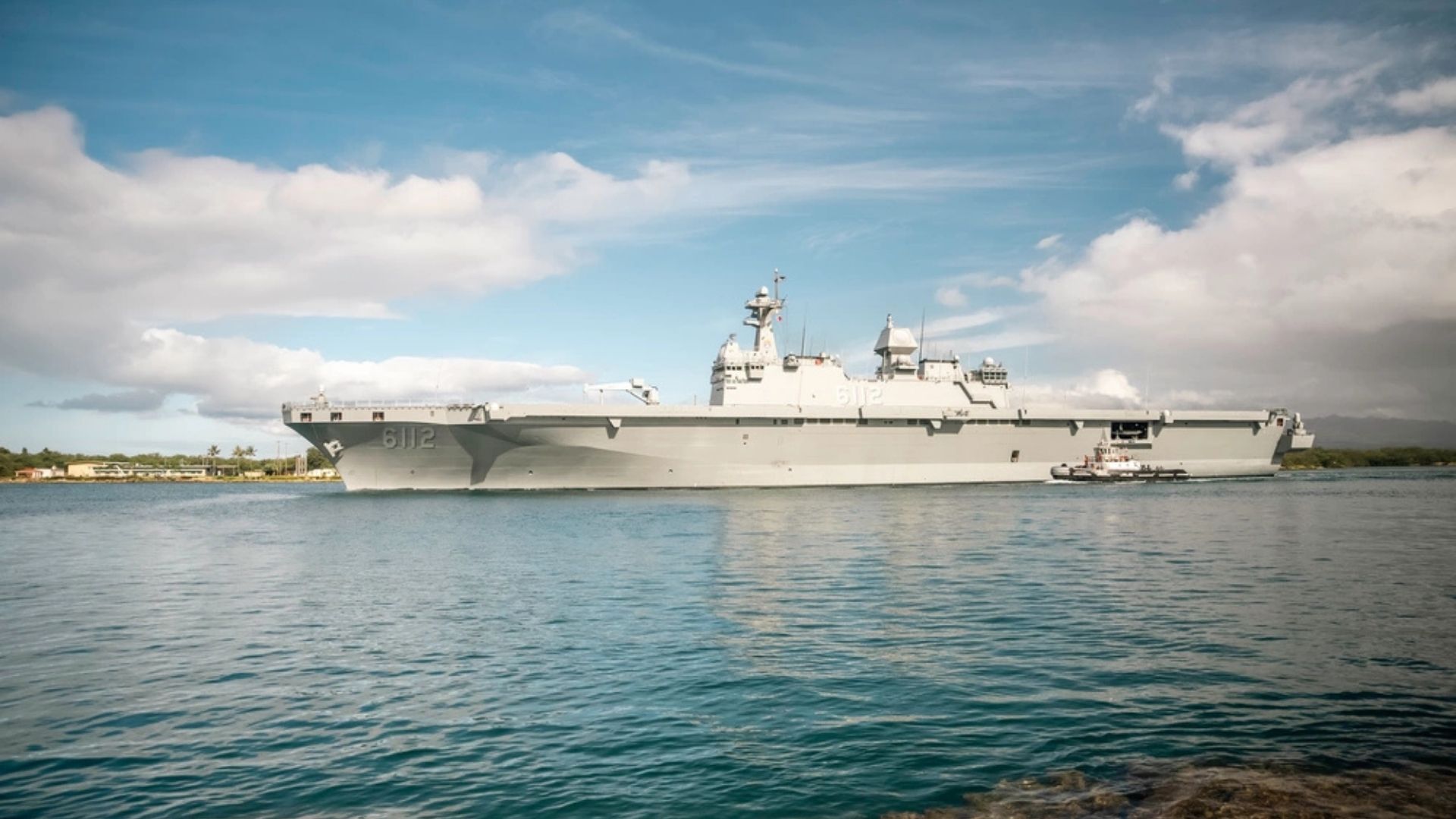
With 19,000 tons, 199 meters in length, and the capacity to carry 720 marines, the ROKS Marado has become a floating amphibious base that extends South Korea’s naval reach in one of the most tense regions on the planet.
-
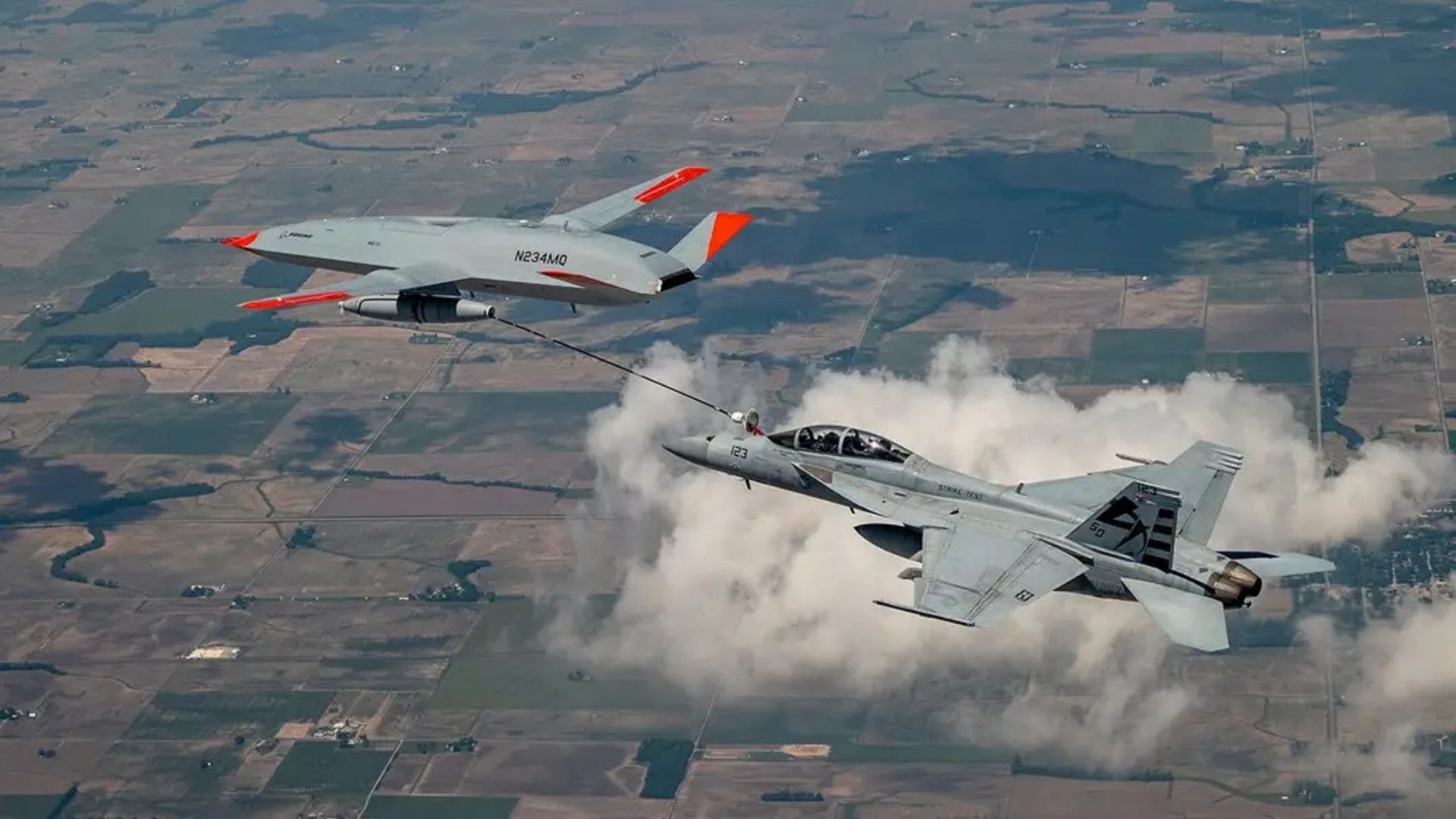
The United States has unveiled the MQ-25 Stingray, the world’s first carrier-based tanker drone designed to operate on aircraft carriers and extend the range of naval fighters.

Borei-A submarine and its role in nuclear deterrence
Unlike an attack submarine, designed to pursue vessels or hunt other submerged means, the Borei-A fulfills a more sensitive mission: to preserve the country’s nuclear response capability in the ocean even under a large-scale war scenario.
Its military utility depends less on appearing and more on not being located. This logic explains why the class attracts attention far beyond the naval environment.
Instead of maximum speed or display of power on the surface, the project prioritizes autonomy, discretion, and submerged permanence, three attributes that support the idea of a retaliation capable of surviving even if land facilities are hit.

At the incorporation ceremony, the Kremlin announced that the submarine was entering service with the Russian Navy and highlighted that it was the fifth serial unit of the Borei-A class delivered in six years.
On the same date, Vladimir Putin directly associated these ships with the strengthening of the country’s strategic nuclear forces at sea.
Bulava missiles and the embarked strategic range
The main deterrent element of the class lies in its armament.
Each Borei-A carries 16 intercontinental ballistic missiles Bulava, a system that constitutes the offensive core of the submarine and summarizes its reason for existence within the Russian nuclear architecture.
TASS itself described the class as the foundation of Moscow’s naval strategic forces for the coming decades.
According to the Missile Threat project by CSIS, the RSM-56 Bulava is a submarine-launched ballistic missile, powered by solid fuel, with an estimated range of 8,300 kilometers and the ability to carry multiple MIRV warheads.
Operationally, this allows for the combination of ocean mobility with strategic readiness maintained at a great distance from land bases.
This capability increases the weight of the platform because it shifts the nuclear vector to a more difficult environment to monitor.
While fixed silos and air bases are known targets, a strategic submarine on patrol increases the adversary’s uncertainty and preserves what military personnel call a second strike, a classic foundation of nuclear deterrence.
Acoustic stealth and advances of the Borei-A version
The evolution of the original project to the 955A variant appears primarily in the attempt to reduce the acoustic signature.
TASS reported that the Borei-A received improvements in sound stealth, maneuverability, deep navigation, and weapon control, while NTI highlights pump-jet propulsion and other refinements aimed at discretion.
In a submarine of this type, being less audible is as valuable as carrying longer-range missiles.
The survival of the vessel, and therefore the credibility of the mission it represents, depends on remaining out of enemy detection range for as long as possible during extensive and discreet patrols.

The technical coverage by Naval News on the incorporation of the Knyaz Pozharsky added that the Borei-A class is about 170 meters long, has a submerged displacement of around 24,000 tons, and propulsion based on the OK-650V nuclear reactor connected to steam turbines and a pump-jet propulsor.
These data help to understand the design of the vessel.
The project prioritizes large internal volume, stability for long missions, and noise reduction, without repeating the logic of submarines popularized during the Cold War for ostentatious performance or speed as their main identity mark.
Replacement of the Soviet fleet and naval modernization
The Borei program did not arise merely to add new hulls to the fleet, but to gradually replace older strategic submarines associated with the Delta and Typhoon families.
In this process, Russia is reorganizing its nuclear presence at sea around a more standardized, recent platform adjusted to the contemporary standard of deterrence.
NTI describes the Borei class as the current backbone of the Russian force of ballistic missile-launching submarines.
Naval News notes that the Borei and Borei-A family is likely to centrally assume the replacement of the 667BDRM project submarines, a move that reinforces the structural importance of this lineage.
Beyond the technical aspect, the recent pace of deliveries helps to measure the priority given to the program.
In a meeting dedicated to the development of submarine forces, the Kremlin stated that five strategic Borei-A submarines and four multipurpose Yasen-M submarines joined the Russian Navy in the six years leading up to July 2025.
This data dispels the notion that the Knyaz Pozharsky is an isolated or too symbolic case to represent a trend.
On the contrary, it is part of a continuous production line, embedded in a broader effort of naval modernization that combines technological renewal, standardization of means, and strengthening of strategic permanence capability beneath the surface.
Strategic importance of invisible submarines
Strategic submarines rarely become a frequent presence in open images, parades, or demonstrations of force comparable to those of fighters, surface ships, or missile defense systems.
Still, the political and military weight of these platforms tends to grow precisely in proportion to their disappearance from public view and remaining undetectable.
In the case of the Borei-A, this combination of invisibility, embarked nuclear armament, and continuous modernization has transformed the class into one of the most sensitive axes of the Russian naval force.
The incorporation of the Knyaz Pozharsky has only made this movement more concrete by reaffirming, with a new unit in service, Moscow’s bet on silent deterrence.






Seja o primeiro a reagir!