





 Portuguese
  English
  Spanish
  5 min of reading
  0 comments


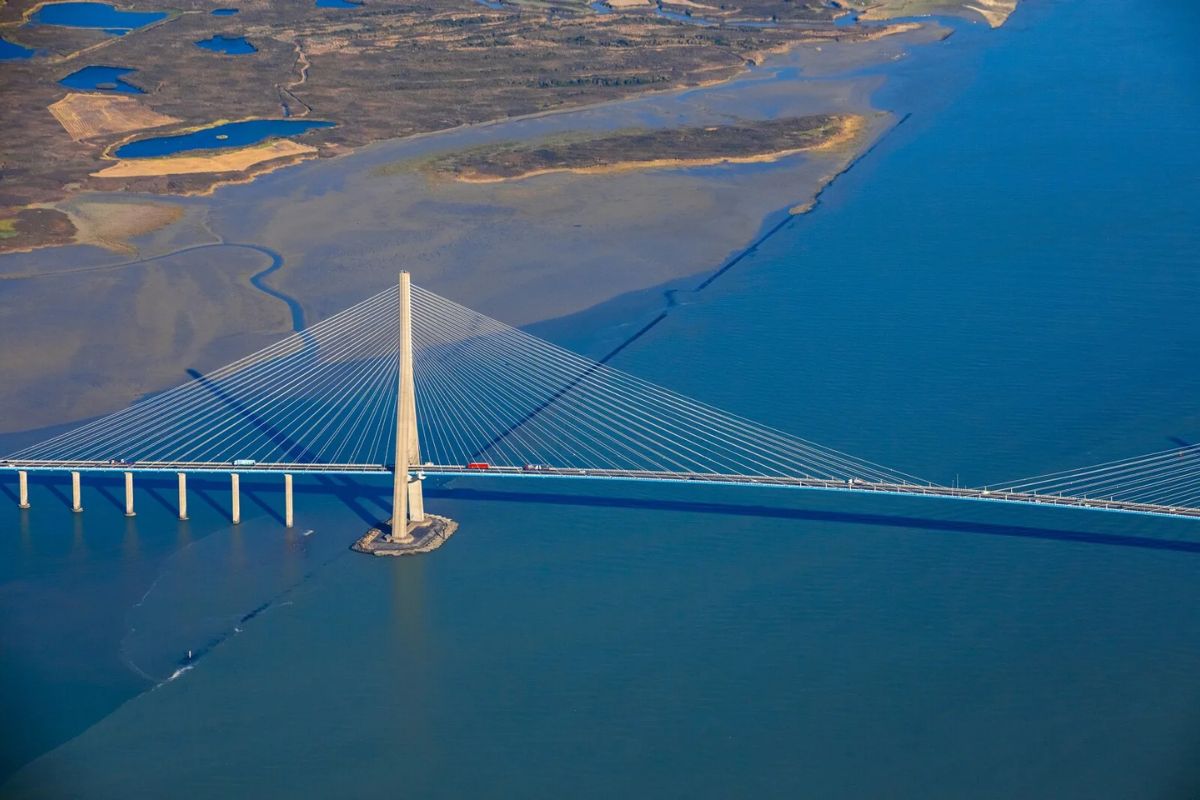
Designed by the same engineer who later created the Millau Viaduct, the structure crosses the estuary of the Seine River between Le Havre and Honfleur, resists winds of 300 km/h, and still allows pedestrians and cyclists to cross for free
When someone talks about famous bridges in France, the name that almost always comes to mind is the Millau Viaduct, that absurd structure that is taller than the Eiffel Tower. But before Millau existed, another French project had already rewritten the rules of bridge engineering worldwide. And few people outside of Europe know this story.
The Pont de Normandie was inaugurated in 1995 and, at that moment, did something that no cable-stayed bridge had done before: surpassed the mark of 800 meters of free span. With a central span of 856 meters, it proved that the direct cable system, known as cable-stayed, could compete on equal terms with traditional suspension bridges over gigantic distances.
And the most impressive thing is that the man behind this project is the same one who later designed Millau.
-
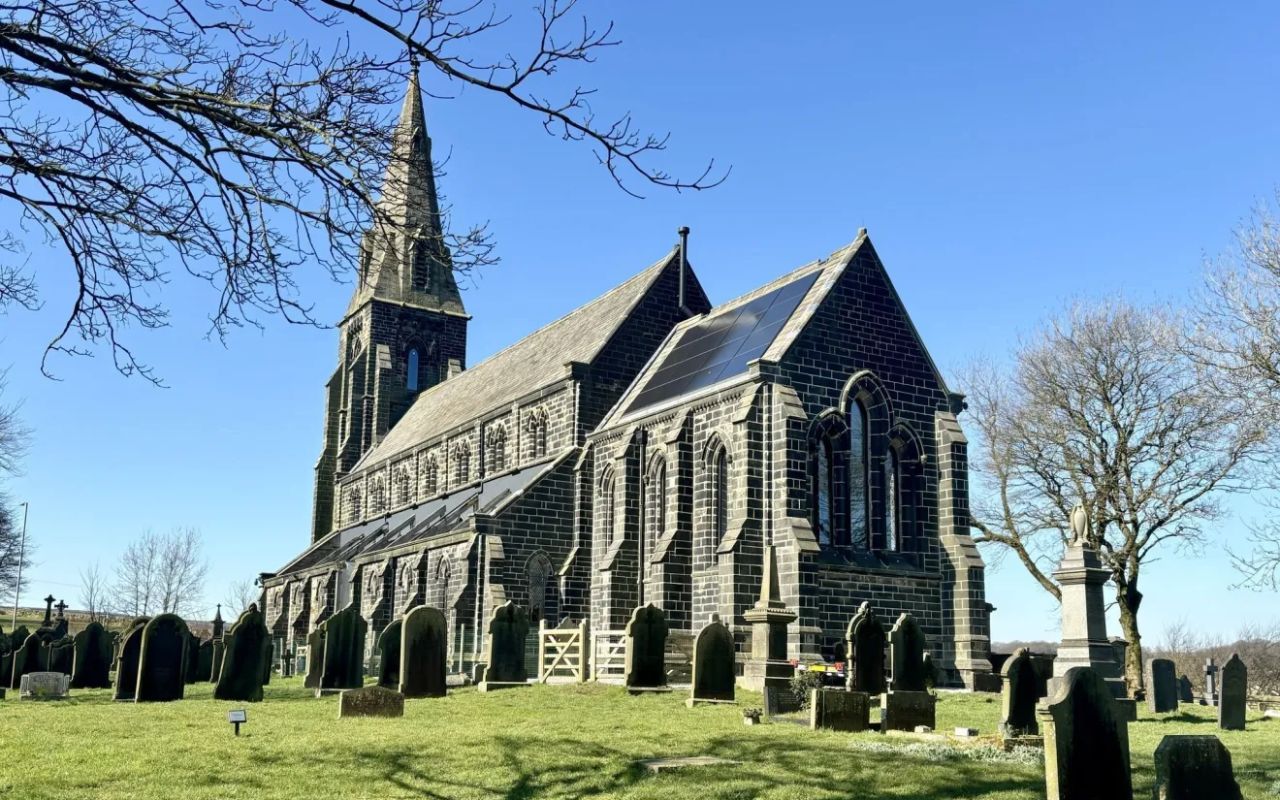
Couple invests around R$ 3.2 million to transform abandoned church from 1846 into a luxury mansion surrounded by over 300 tombs — property is now valued at R$ 11.6 million.
-
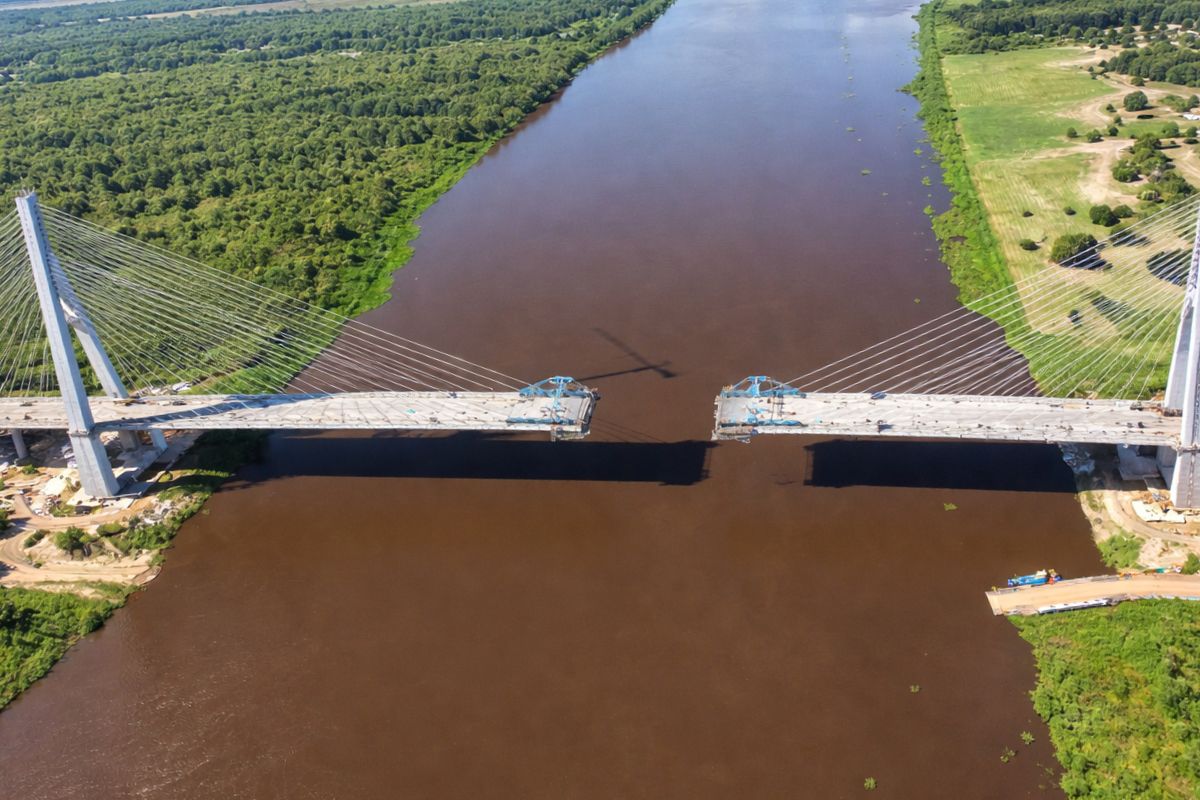
Only 37 meters remain for Brazil and Paraguay to “close” the bioceanic bridge on the Bioceanic Route: the project worth R$ 575 million is at 89% completion, uses 14,000 tons of steel, and aims to finish the connection by the end of April.
-
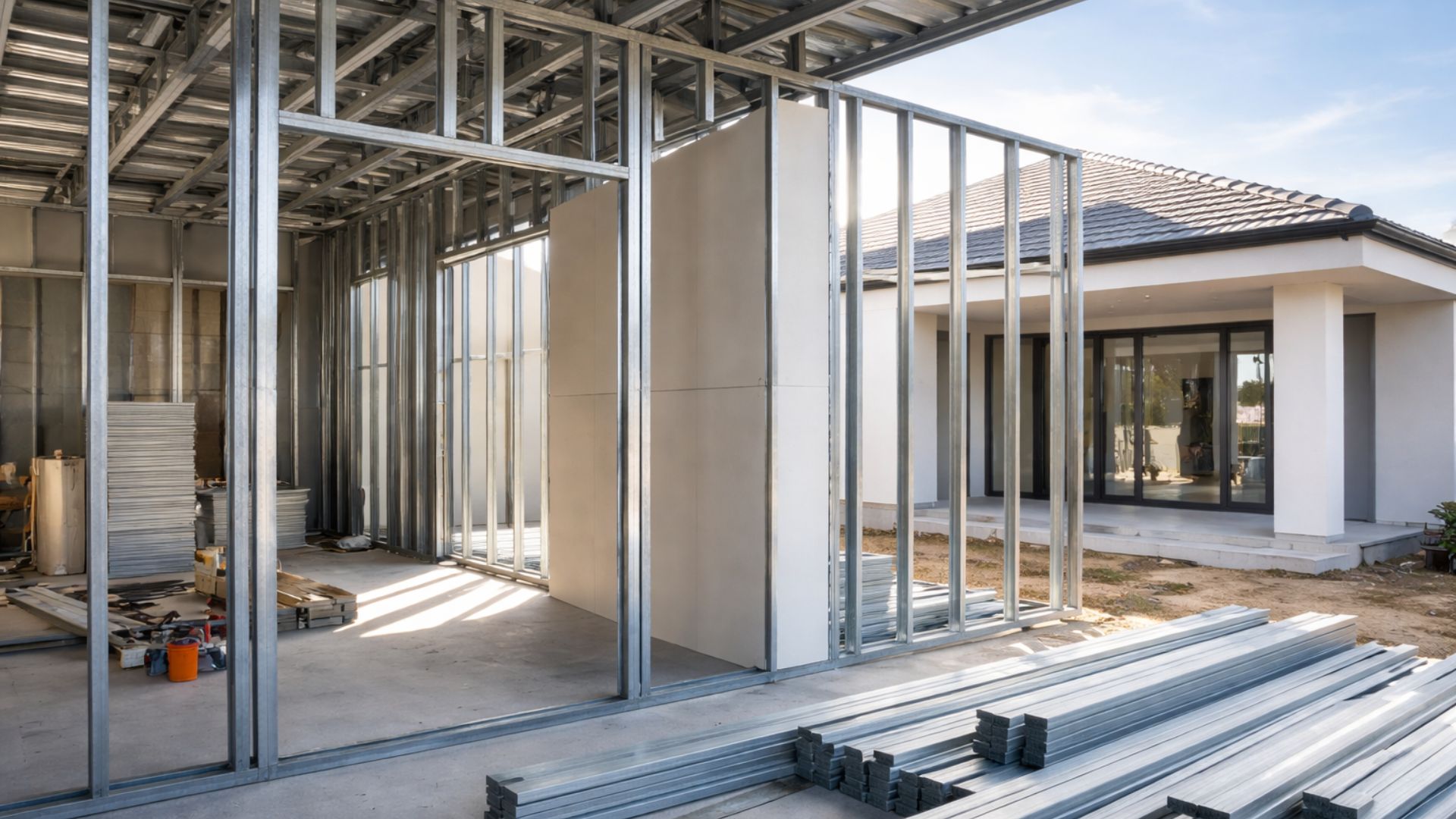
The new era of civil construction features “dry construction” and boosts a company that accelerates expansion with 48 stores and steel frame.
-
Woman enters abandoned houses for 16 years that no one dared to visit: beautiful project and logical layout, interior mold-free, possible resort; after exploring, decides to buy everything for €32,000 and surprises the entire village.
Who designed the Pont de Normandie?

The engineer responsible for the bridge is Michel Virlogeux, one of the most important names in structural engineering of the 20th century, according to records from the French Ministry of Transport (Ministère de la Transition Écologique). Virlogeux was not a novice when he designed the Pont de Normandie. He already had decades of experience in major roadway projects in France. But it was this bridge, over the estuary of the Seine River, that solidified his international reputation.
After the Normandie, Virlogeux was called upon for the project that would become even more famous: the Millau Viaduct, inaugurated in 2004. The Pont de Normandie was, in practice, the laboratory that allowed Millau to exist. The construction techniques, the use of ultra-high-strength concrete in the pillars, and the aerodynamic engineering of the cables were tested and refined there, in the Seine estuary, almost a decade earlier.
But what exactly makes this bridge so different?
What makes a cable-stayed bridge different from a suspension bridge?

This is a very common confusion and it’s worth explaining, because the difference is what makes the Pont de Normandie so revolutionary.
In a suspension bridge, like the Golden Gate in San Francisco, the vertical cables that support the deck hang from a curved main cable (the catenary), which requires huge anchorage blocks on both shores. It is an efficient system for very long spans, but it requires heavy and expensive infrastructure at the ends.
In a cable-stayed bridge, like the Pont de Normandie, the cables extend directly from the pillars to the deck, in a fan or harp shape. There is no curved main cable. Each cable works in direct tension, transferring the weight of the deck to the pillars more efficiently. The result is a faster, more economical construction with a cleaner appearance.
The problem is that, until 1995, no one had managed to use this system for spans over 800 meters. Conventional engineering said that, beyond a certain length, direct cables would not hold. The Pont de Normandie proved them wrong.
What are the numbers of the Pont de Normandie?
The official data from the French Ministry of Transport and the regional operator show a structure that impresses in every detail:
Total length: 2,143 meters from end to end, crossing the estuary of the Seine River between the cities of Le Havre and Honfleur, in the Normandy region.
Central span: 856 meters, which was a world record among cable-stayed bridges from 1995 until 1999, when the Tatara Bridge in Japan surpassed the mark.
Pillar height: 214 meters, built with ultra-high-strength concrete, in an inverted “Y” shape. This geometry is not aesthetic: it was designed to ensure aerodynamic stability against the violent winds of the English Channel.
Wind resistance: it was designed to withstand gusts of up to 300 km/h, according to data from the Ministère de la Transition Écologique.
Support cables: 184 steel stays that connect the pillars directly to the deck, each under continuous tension monitoring.
Clear height over the water: 59 meters, enough to allow uninterrupted passage of large cargo ships in the Seine estuary.
And there is one detail that sets this bridge apart from almost all other expressways in Europe.
Can pedestrians and cyclists cross for free?
Yes. The Pont de Normandie has exclusive lanes for pedestrians and cyclists, with free access. This is rare on expressway bridges in Europe, where normally only motor vehicles are allowed to travel.
For drivers, crossing is tolled and operated by the Le Havre Chamber of Commerce, which uses the revenue to fund the ongoing maintenance of the structure. But anyone wanting to cross the Seine estuary on foot or by bike can do so without paying anything.
The experience of walking across the bridge is described as unique. The subtle vibration of the cables, the sea breeze coming from the English Channel, and the view of the port of Le Havre from an angle that does not exist anywhere else in the region make the crossing something that goes beyond simple transportation.
Why did the Pont de Normandie lose the record?
Because engineering does not stop. In 1999, just four years after its inauguration, the Tatara Bridge in Japan surpassed the mark with a central span of 890 meters. Then came others: the Russky Bridge in Russia (1,104 meters in 2012) and the Sutong Bridge in China (1,088 meters in 2008).
But losing the record did not diminish the importance of the Pont de Normandie. It remains the bridge that paved the way. Before it, no cable-stayed bridge had proven that it was possible to go beyond 800 meters. All those that came after, in some way, relied on the technical solutions that Virlogeux developed there, in the Seine estuary.
The Millau Viaduct, which today attracts all the attention, probably would not exist without the advancements first tested in Normandie. And Michel Virlogeux, the engineer who signed both projects, has made it clear on more than one occasion that the bridge over the Seine was the step that made everything possible afterward.
The Pont de Normandie is not the tallest, nor the longest, nor the most famous bridge in France. But it is the one that changed the rules of the game. And sometimes, in engineering as in life, the most important thing is not who breaks the final record, but who proves for the first time that the record can be broken.







Seja o primeiro a reagir!