





 Portuguese
  English
  Spanish
  6 min of reading
  0 comments


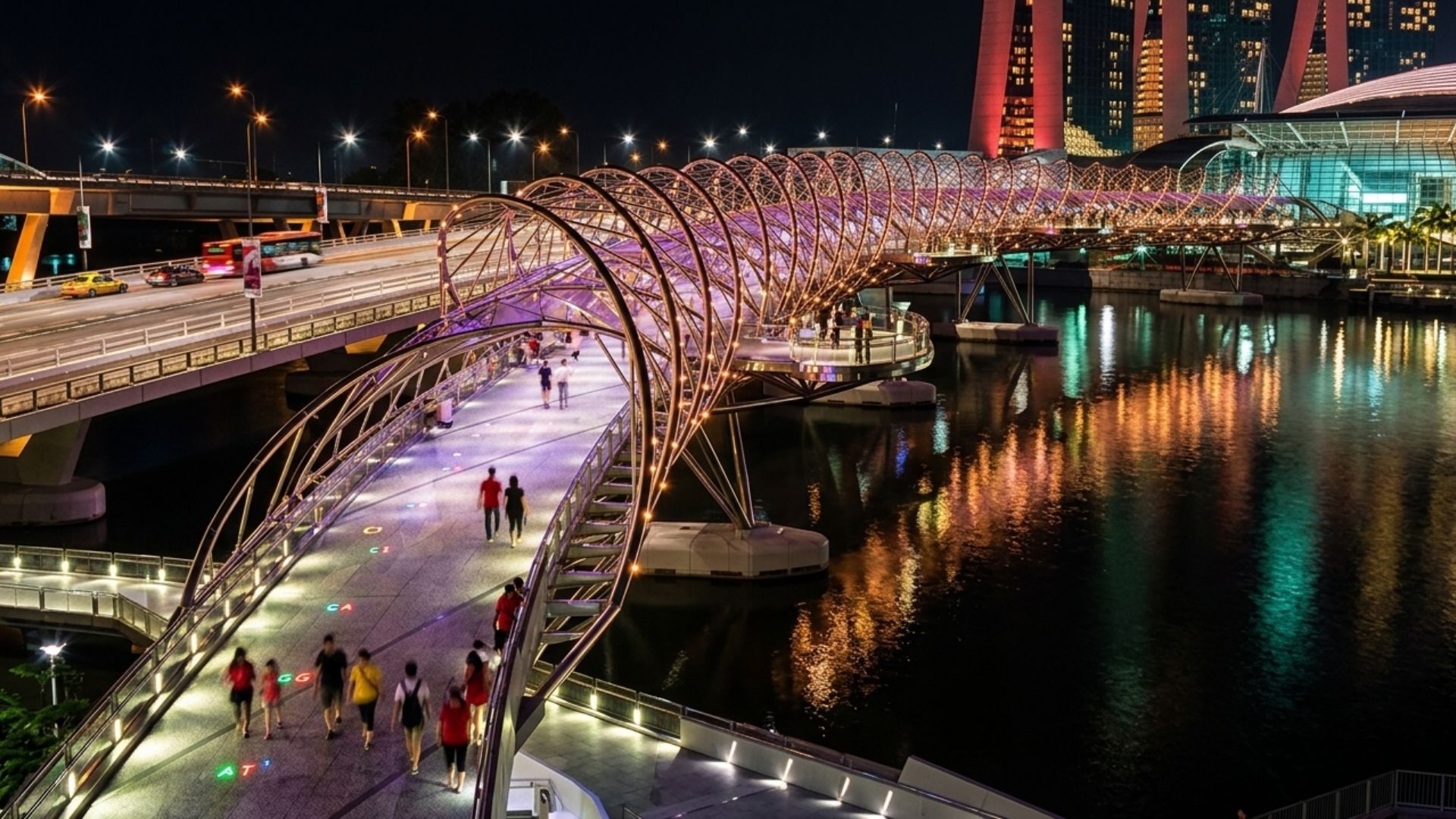
Discover how the Helix Bridge, the famous bridge of Singapore, uses the DNA shape in its construction to revolutionize architecture and attract tourists with a unique and innovative urban experience.
The Helix Bridge has become one of the greatest icons of contemporary architecture by combining structural innovation, visual appeal, and impact on the urban experience and local tourism. Located in Marina Bay, this bridge in Singapore impresses with its DNA shape, which not only attracts attention but also plays an essential role in the engineering of the structure.
Inaugurated in 2010, the bridge spans 280 meters and uses over 650 tons of duplex stainless steel. These numbers reinforce the grandeur of the construction, which was designed to safely and comfortably accommodate a large flow of pedestrians. More than a passage, it represents a new way of thinking about urban architecture.
Throughout this content, you will understand how the DNA shape revolutionized architecture, what the challenges of constructing the Helix Bridge were, and why this bridge in Singapore has become a global reference.
-
Giant underwater pipeline begins to take shape with a R$ 134.7 million project at the Port of Santos: the 1.7 km structure uses 12-meter and 700 mm pipes to supply water to 450,000 people in Guarujá.

-
A mason reveals a professional plastering technique that uses aligned guides and a 3-meter ruler to plaster an entire wall in up to 3 hours, without visible seams, with uniform thickness, perfect plumb, and a finish ready for painting without rework.

-
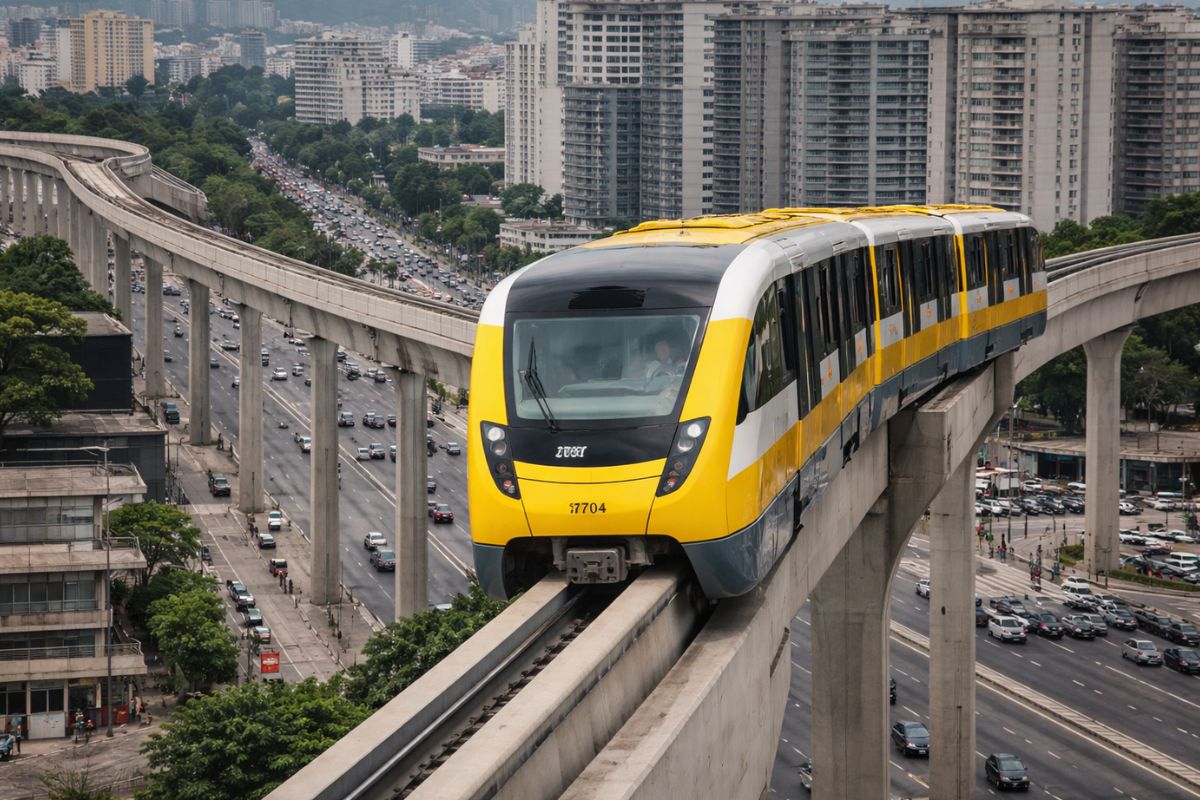
The project that was supposed to be ready for the 2014 World Cup in Brazil debuted with a 12-year delay and nearly R$ 6 billion invested: the Line 17-Gold of the São Paulo monorail opened with reduced hours and is only expected to operate fully in October.
-
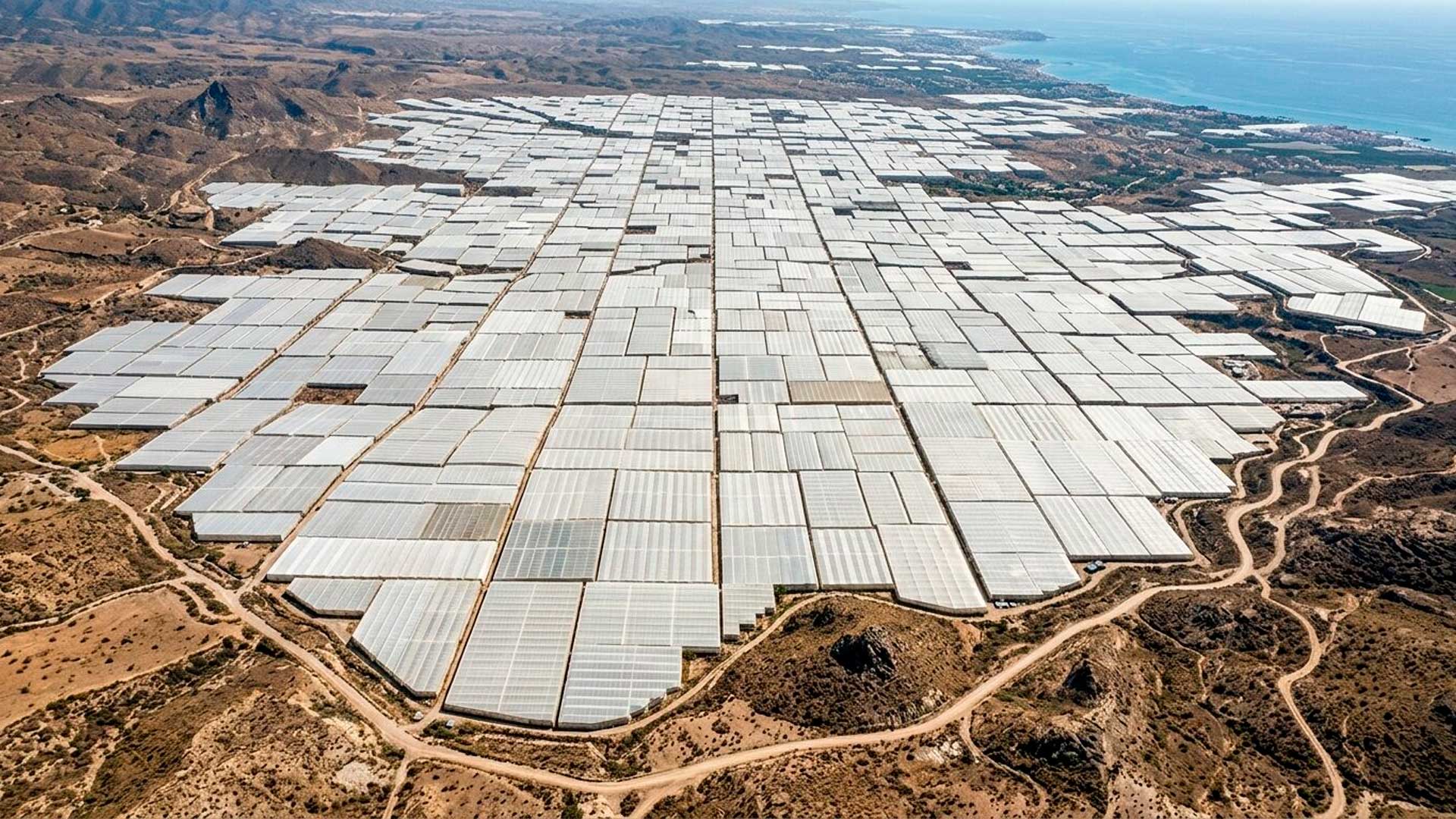
Neither the Pyramids nor the Great Wall of China, this gigantic construction in Spain is the human mark on planet Earth that intrigues the most when seen in images from space.

DNA shape in the bridge of Singapore redefines standards of contemporary architecture
The great differential of the Helix Bridge lies in its DNA shape, inspired by the double helix that composes human genetic structure. This concept was strategically incorporated into the architecture of the bridge, ensuring not only a striking visual but also structural efficiency.
The construction uses two intertwined stainless steel spirals that function as the main support. This system better distributes loads and increases the bridge’s resistance, making it a reference in modern engineering.
The project involved the participation of Cox Architecture, which sought to integrate science and design into an innovative solution. The result was a bridge in Singapore that stands out globally for both its aesthetics and functionality.
Moreover, the DNA shape reinforces the symbolism of the structure, associating architecture with the idea of life, continuity, and evolution.

Construction of the Helix Bridge combines technical precision and structural innovation
The construction of the Helix Bridge required a high level of planning and technology. More than 650 tons of duplex stainless steel were used, a material chosen for its durability and corrosion resistance, especially in coastal environments.
With a length of 280 meters, the bridge was designed exclusively for pedestrians, allowing for greater freedom in design. Nevertheless, safety was one of the main pillars throughout the construction process.
Among the elements that stand out in the structure are:
- Double helix in steel that ensures support
- Curved structure that better distributes weight
- Observation platforms along the route
- Materials resistant to weather conditions
The bridge in Singapore was also integrated into the urban planning of Marina Bay, connecting strategic areas and facilitating the movement of people. This integration shows how architecture can directly contribute to urban mobility.

Architecture of the bridge of Singapore transforms crossing into urban experience
Walking across the bridge of Singapore is an experience that goes beyond mere transportation. The architecture was designed to create an engaging environment where the visitor becomes part of the space.
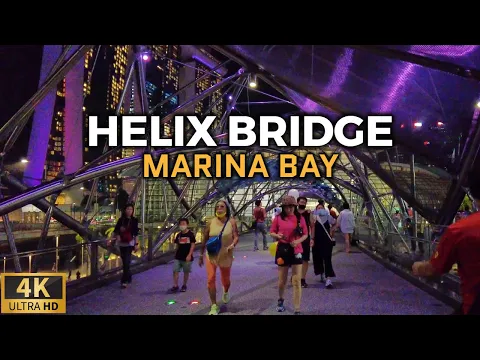
Along the Helix Bridge, five platforms serve as observation points. These spaces offer privileged views of Marina Bay and attractions such as the ArtScience Museum and Marina Bay Sands.
These points make the crossing more dynamic and encourage visitors to stop, observe, and interact with the environment. Additionally, the structure provides partial shade, making the walk more comfortable even on hot days.
Among the main differentiators of the experience are:
- Panoramic view of the skyline
- Ideal spaces for photos
- Integration with tourist attractions
- Exclusive route for pedestrians
This care reinforces how architecture can enhance the quality of the urban experience.

LED lighting enhances the DNA shape and creates a nighttime spectacle
At night, the Helix Bridge takes on a new identity. The LED lighting was designed to highlight the DNA shape, creating a unique visual effect.
The lights are inspired by the genetic structure, reinforcing the scientific concept behind the architecture. This detail transforms the bridge in Singapore into one of the most photographed scenes in the city.
In addition to the visual impact, the lighting also increases pedestrian safety, ensuring visibility throughout the crossing.
According to the Singapore Tourism Board, the bridge is one of the most visited points in Marina Bay, especially at night.
Bridge of Singapore strengthens tourism and boosts local economy
The construction of the Helix Bridge had a direct impact on tourism in Singapore. Located in one of the most valued regions of the city, the bridge attracts visitors interested in architecture, design, and technology.
This constant flow of tourists contributes to the economic growth of the region, benefiting sectors such as hospitality, gastronomy, and commerce.
Among the main impacts are:
- Increase in the number of international visitors
- Appreciation of the Marina Bay area
- Strengthening of Singapore’s global image
- Integration with other tourist attractions
The bridge in Singapore demonstrates how architecture can generate real benefits for the economy.

Strategic location and easy access enhance urban relevance
The Helix Bridge is strategically positioned, connecting Marina Centre to Bayfront. This location facilitates access to various tourist attractions and makes the bridge an important circulation axis.
Access is easily made through the public transport system, including the MRT. This allows tourists and residents to quickly reach the area.
Additionally, the bridge was designed to be fully pedestrian-oriented, reinforcing the proposal for more sustainable urbanism.
How the DNA shape of the Helix Bridge inspires global architecture
The Helix Bridge has become an international reference in architecture and construction. Its DNA shape has opened new possibilities for projects that seek to unite aesthetics and functionality.
The bridge in Singapore has been studied in universities and research centers as an example of structural innovation. Its construction demonstrates that it is possible to create efficient works that are also visually striking.
This impact goes beyond Singapore, influencing projects in different parts of the world and reinforcing the role of architecture as a tool for urban transformation.
An urban landmark that redefines the relationship between people, architecture, and the city
The Helix Bridge is more than just a bridge. It represents a shift in how architecture is conceived and applied in modern cities.
With its DNA shape, the bridge in Singapore shows that infrastructure construction can go beyond basic function and create memorable experiences. It connects not only two points but also people, ideas, and sensations.
By transforming a simple crossing into a remarkable moment, the Helix Bridge reinforces the importance of architecture in creating more innovative, accessible, and attractive cities. This type of project demonstrates that the future of urbanism lies in the integration of technology, design, and human experience, creating spaces that truly make a difference in people’s daily lives.






Seja o primeiro a reagir!