





 Portuguese
  English
  Spanish
  5 min of reading
  0 comments


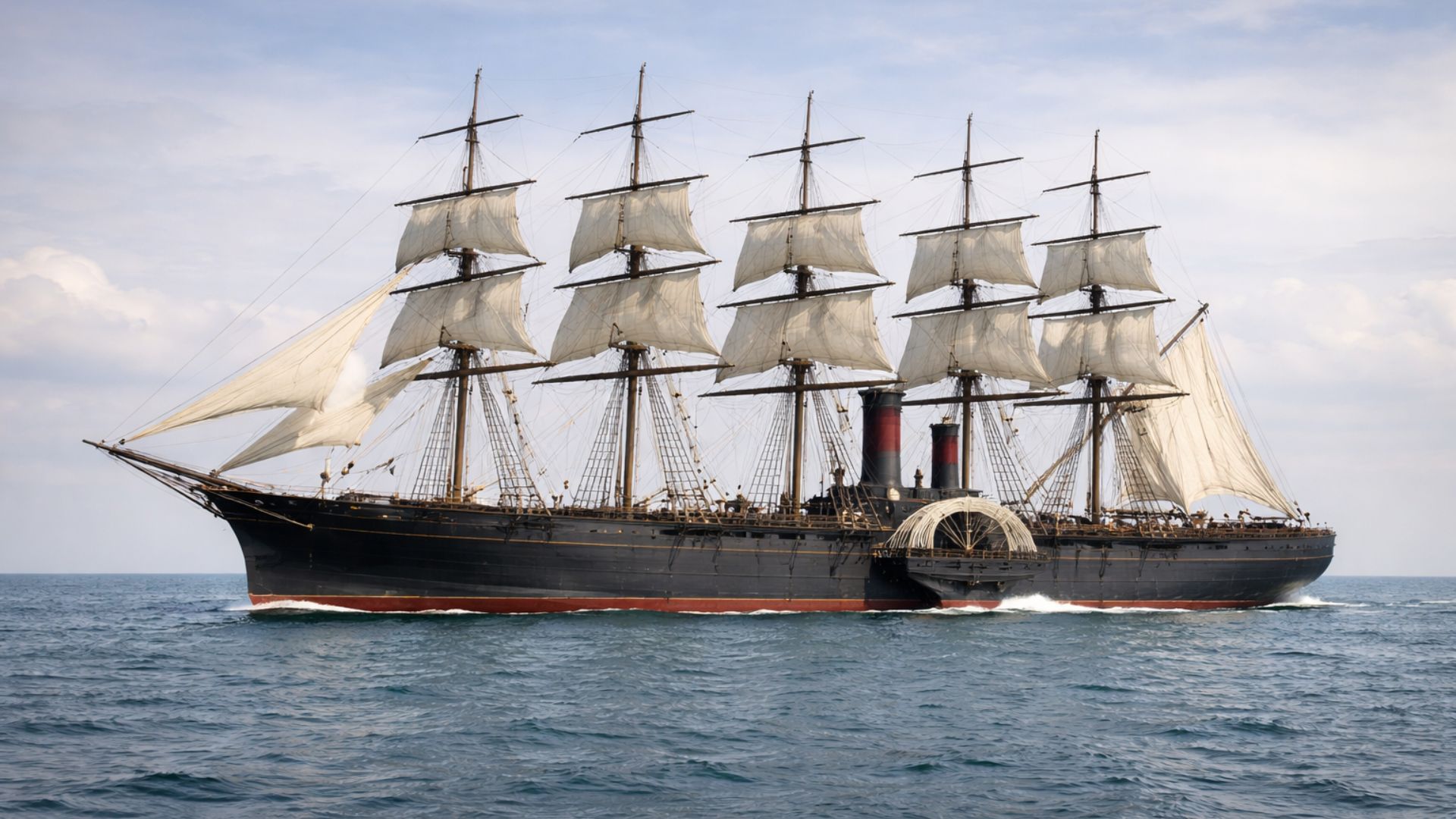
Victorian giant united unprecedented engineering and global infrastructure by enabling fast intercontinental communications, after failing as a commercial ship due to port limitations and operational costs, becoming a key piece in the launch of submarine cables that drastically reduced the time for information exchange between Europe and North America.
When it entered service in 1859, the Great Eastern had no parallel at sea.
At 692 feet long, equivalent to about 211 meters, the ship designed by Isambard Kingdom Brunel surpassed in scale any vessel of its time and combined sails, side paddle wheels, and a propeller in the same hull.
The bet was to transform it into a giant capable of covering long distances with great autonomy, but the feat that solidified its importance came a few years later, when it served as a platform for the first lasting transatlantic telegraph cable, completed in 1866.
-
The world consumes 50 billion tons of sand per year and no one is monitoring it: the UN warns that the second most used resource on the planet after water is running out and has even created an international mafia.

-
A truck driver spent 21 years building a 15-meter replica of New York using balsa wood, cardboard, and regular glue; the work, featuring hundreds of thousands of buildings, has become an attraction in a museum in the city itself.

-
More than 138 stone tools found on the seabed between Turkey and Europe reignite the hypothesis of a lost land bridge from the Ice Age that may have been used by humans to cross continents.

-
Argentina places the first U.S. Stryker 8×8 armored vehicles in operational units, while Brazil sets a record of $3.1 billion in military exports, reaching 140 countries and strengthening the Defense Industrial Base.


19th-century naval engineering and ambition for global reach
Brunel envisioned the ship for a logic that still challenged steam navigation in the 19th century.
The central problem was the limitation of range, as vessels needed to carry enough coal for very long journeys.

According to the Royal Museums Greenwich, the proposal was to build a ship so large that it could carry enough fuel for routes to India or Australia without relying on frequent refueling, something far beyond the operational standard available at that time.
Out-of-scale design and innovative technical solutions
The size was impressive, but it was not the only trait of technical boldness.
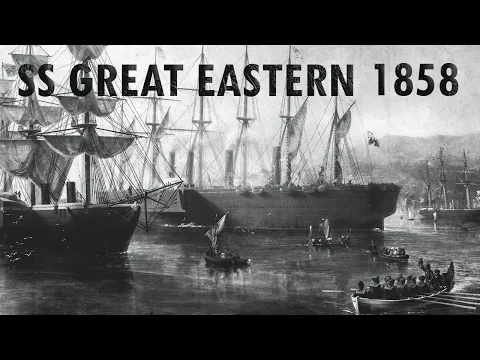
The Encyclopaedia Britannica records that the Great Eastern was launched in 1858 as the largest ship in the world, with a displacement of 32,160 tons, a designed speed of 14.5 knots, and an unusual propulsion arrangement, consisting of two engines for the paddles, one engine for the propeller, and sails distributed across six masts.
The Royal Museums Greenwich also highlights the iron hull with a double bottom, a solution associated with greater structural strength and safety during a time of technological transition in shipbuilding.
In practice, the vessel seemed to anticipate an infrastructure that did not yet exist.
The Royal Museums Greenwich itself notes that at the time of its launch, there was no dock or port in the world capable of accommodating it easily.
What made the Great Eastern a symbol of British industrial ambition also restricted its commercial use.
The ship was too large for the maritime network that was supposed to support it, and this incompatibility began to weigh heavily from the start of its operational journey.
Challenges increased soon during testing. On September 9, 1859, during the experimental voyage along the southern coast of England, an explosion in the boilers connected to the paddle engines killed six firemen and destroyed part of the main saloon and several cabins.
The incident exposed the complexity of the machine but also reinforced the robustness of the design.
The vessel withstood the impact, and the internal division by compartments with watertight bulkheads helped contain the damage.
Commercial failure and change of function

Even surrounded by technical admiration, the Great Eastern did not deliver the expected economic results.
Britannica reports that the holds were never fully utilized, and after years of operating at a loss, the ship was sold in 1864.
Instead of establishing itself as a major carrier of passengers and cargo, it began to seek new utility in a sector that required exactly what it had in surplus.
Internal space, stability, and unusual cargo capacity became its main assets.
Transatlantic cable and revolution in communications
It was in this context that the ship entered the history of telecommunications.
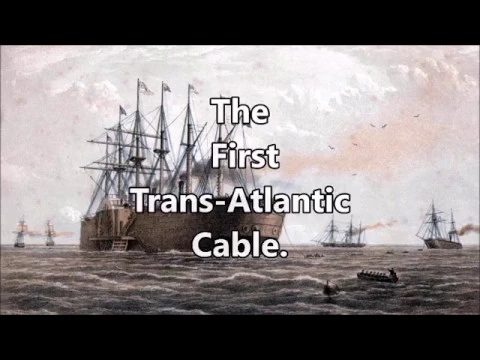
The Institution of Engineering and Technology states that the Great Eastern was chosen to lay the transatlantic cable because it was the only ship with enough space to accommodate the enormous cable drums required for the crossing.
The challenge involved transporting thousands of kilometers of material, releasing it continuously at sea, and maintaining regularity in an operation subject to mechanical failures, weather conditions, and constant tension on the submarine line.
The first attempt in 1865 did not end as planned.
After leaving Ireland, the ship advanced across the Atlantic, faced cable failures, managed to repair sections along the way, but lost the line in open water after a break near the stern.
Still, the operation served to prove that the method was viable and that the Great Eastern could perform the task.
The following year, the new expedition progressed successfully and reached Heart’s Content, Newfoundland, on July 27, 1866. The link connected both sides of the Atlantic over about 1,600 miles of ocean.
Global impact and new strategic function
The impact of the connection was immediate. The IET records that in April 1865, the news of Abraham Lincoln’s assassination took 12 days to reach British newspapers.
After the consolidation of the cable, this interval dropped drastically.
Communication between Europe and North America no longer depended solely on the speed of ships, altering the flow of political, economic, and diplomatic information between the continents.
This repositioning gave the Great Eastern the most successful phase of its career.
According to the Royal Museums Greenwich, the ship continued to be employed in laying other submarine cables over the following years, including in strategic connections beyond the Atlantic.
The vessel imagined to dominate long-distance maritime transport ended up becoming more relevant as a mobile global communication infrastructure than as a traditional means of travel.
Decline and dismantling of a giant
The symbolic strength of the ship also helped preserve its memory. The gigantic hull, the six masts, and the hybrid propulsion system made the Great Eastern a singular presence in the 19th century.
Instead of being remembered only as an exaggerated project, it came to represent a moment when engineering tested its own limits.
After losing operational importance, the ship entered a decline. The Royal Museums Greenwich reports that after years of inactivity and marginal uses, it was dismantled at the end of the 1880s.
The process mobilized 200 men for nearly two years and was completed around 1890.
This fact summarizes the contradiction that accompanied its entire history, as even in dismantling, the Great Eastern remained too large to be reduced quickly.







Seja o primeiro a reagir!