





 Portuguese
  English
  Spanish
  5 min of reading
  0 comments


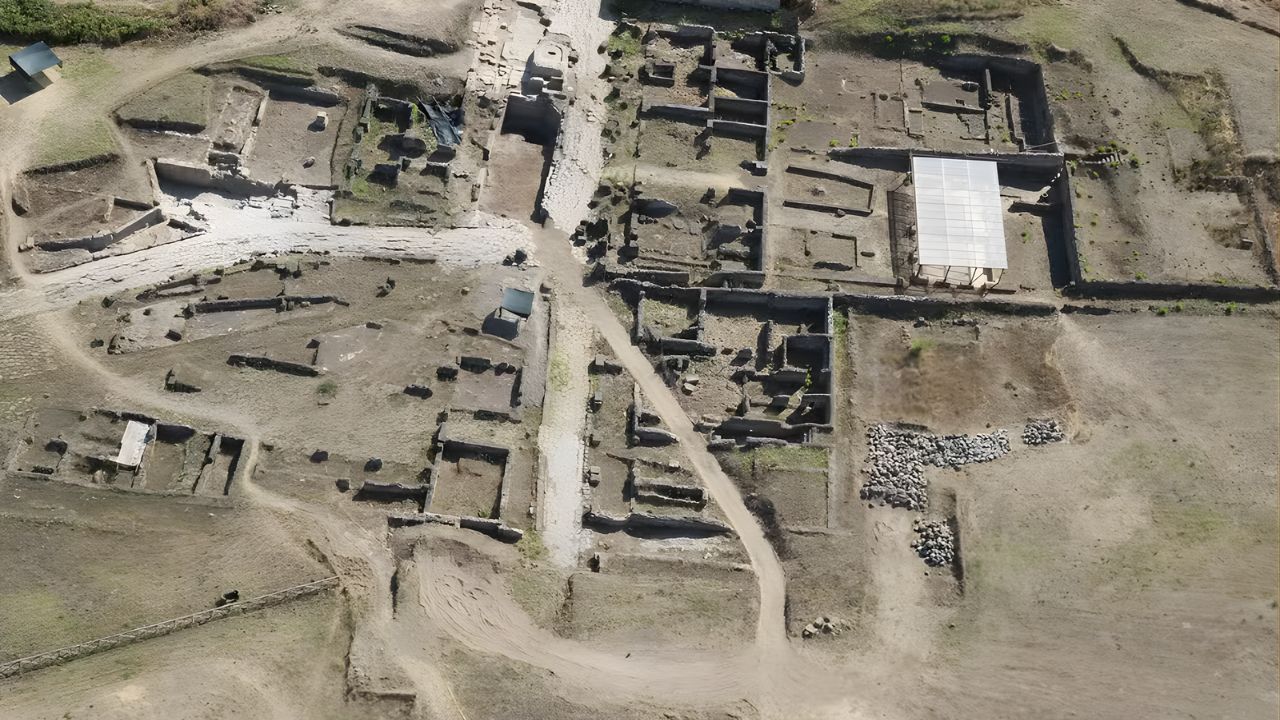
Roman monumental structure discovered in Gabii reveals tank over 2,000 years old and may redefine the understanding of urbanism in Ancient Rome.
In 2025, archaeologists from the Gabii Project, an initiative launched by the Kelsey Museum of Archaeology at the University of Michigan and currently affiliated with the University of Missouri, announced the discovery of a monumental structure in the ancient city of Gabii, located about 18 kilometers east of Rome. The find drew attention for revealing a large stone-lined reservoir in one of the most central areas of the archaeological site, reinforcing the importance of Gabii as one of the best laboratories for understanding early Roman urbanism. According to an official statement from the regarding the excavation in Gabii, the central element of the find is a large stone-lined tank, partially excavated directly into the bedrock, built around 250 B.C., with indications that some parts may be even older.
The team claims that the structure may represent one of the oldest examples of Roman monumental architecture outside of temples and walls, which enhances the historical significance of the discovery.
The reservoir, due to its size, urban position, and architectural configuration, suggests collective use and a level of urban planning more sophisticated than previously imagined for this period. According to archaeologist Marcello Mogetta, the location of the tank, near the main intersection of the city, indicates that it may have functioned as a monumental pool integrated into the forum, making the structure one of the first pieces of large-scale public works with civic function in Republican Rome.
-
A flight attendant fell from 10,160 meters without a parachute after an airplane explosion, survived against all logic, and still holds the record for the highest fall ever survived by a human being.

-
Goodbye fitness bracelet: users around the world are replacing the old item with this more discreet, comfortable smart ring that can monitor health for several days without recharging.

-
Millions of people have been eating garlic for centuries without knowing that this simple bulb contains a compound called allicin, which studies link to the reduction of blood pressure and cholesterol.

-
Neither in the refrigerator nor in a poorly sealed bag: this is the correct way to store bread.


Structure excavated about 6 meters deep impresses with its volume and engineering
According to researchers, the tank was excavated to approximately 6 meters deep, directly into the volcanic rock characteristic of the region. The excavation required a significant level of technical planning, considering the tools available at the time.
The structure features:
- carefully carved walls
- leveled base
- well-defined rectangular shape
- dimensions indicating large storage capacity
Although studies are still ongoing, archaeologists emphasize that the total volume of the structure suggests a design intended for collective use, possibly linked to water supply, ritual activities, or civic functions.
Location in Gabii reinforces the strategic importance of the city in antiquity
Gabii was a significant city during the archaic and republican periods of Rome, frequently mentioned in classical sources as a major urban center before the complete rise of Rome.

The city was situated on a strategic route between Rome and other regions of Latium, which favored commercial and administrative activities. The presence of a monumental structure like the tank reinforces the idea that Gabii had a level of urban organization more advanced than previously thought.
Function of the structure is still debated among archaeologists
Despite the grandeur of the find, the exact function of the tank is still under discussion. Among the hypotheses raised by researchers are:
- water reservoir for urban supply
- space for ritual activities
- infrastructure linked to industrial or agricultural processes
- central element of a civic complex
The absence of direct written records associated with the structure complicates the precise definition of its function. However, the scale and level of finish indicate that it is not a common domestic construction.
Discovery challenges traditional view of early Roman urbanism
Historically, large Roman public works are associated with later periods, especially during the Empire, when aqueducts, baths, and sewage systems reached high levels of complexity.

The discovery in Gabii suggests that large-scale projects were already being developed in earlier periods, possibly during the Republic or even before.
This raises new questions about the development of Roman urbanism and the technical capabilities of societies at the time.
Excavation and construction techniques indicate advanced engineering knowledge
The execution of a structure excavated directly into the rock requires detailed knowledge of the material and specific techniques to avoid collapses and ensure stability.
The archaeologists noted that:
- the walls show regular cuts
- there is evidence of geometric planning
- the bottom was leveled with precision
These elements indicate that the builders had considerable technical mastery, even in a period prior to the great imperial works.
Gabii Project uses modern technology to analyze ancient structures
The investigation of the structure involves the use of modern technologies, including:
- three-dimensional mapping
- geophysical analysis
- digital scanning
- volumetric modeling
These tools allow for precise reconstruction of the structure and testing hypotheses about its function and use over time. The combination of traditional excavation methods with advanced technology has been essential for expanding the understanding of the site.

Historical attention often focuses on Rome, leaving cities like Gabii in the background. However, finds like this demonstrate that smaller urban centers also played an important role in the development of engineering and social organization.
The presence of a monumental structure suggests that Gabii had the resources, labor, and technical knowledge necessary to undertake complex projects.
Structure may reveal new information about water management in antiquity
If confirmed as a reservoir, the tank may provide important data about water management systems before the construction of the large Roman aqueducts.
This includes:
- storage techniques
- resource distribution
- adaptation to the local environment
This information is essential for understanding how ancient societies dealt with natural resources on a large scale.
What still needs to be discovered about the monumental tank of Gabii
Despite the progress in research, many aspects of the structure remain unknown. Among the points under investigation are:
- more precise dating of the construction
- identification of possible associated structures
- analysis of residues indicating specific use
- relationship with other areas of the city
Researchers continue to explore the site in search of answers that may clarify the exact role of the tank in the urban dynamics of Gabii.
Do you believe that “secondary” cities can hide works as advanced as Rome?
The discovery of a monumental structure outside the main axis of Roman history raises an important question about what else may still be hidden in less studied cities.
If Gabii was able to develop such a work over two thousand years ago, other cities may hold equally complex structures yet to be revealed.
In your opinion, how many other advanced projects from antiquity are still buried waiting to be discovered? Leave your analysis in the comments.







Seja o primeiro a reagir!