





 Portuguese
  English
  Spanish
  5 min of reading
  0 comments


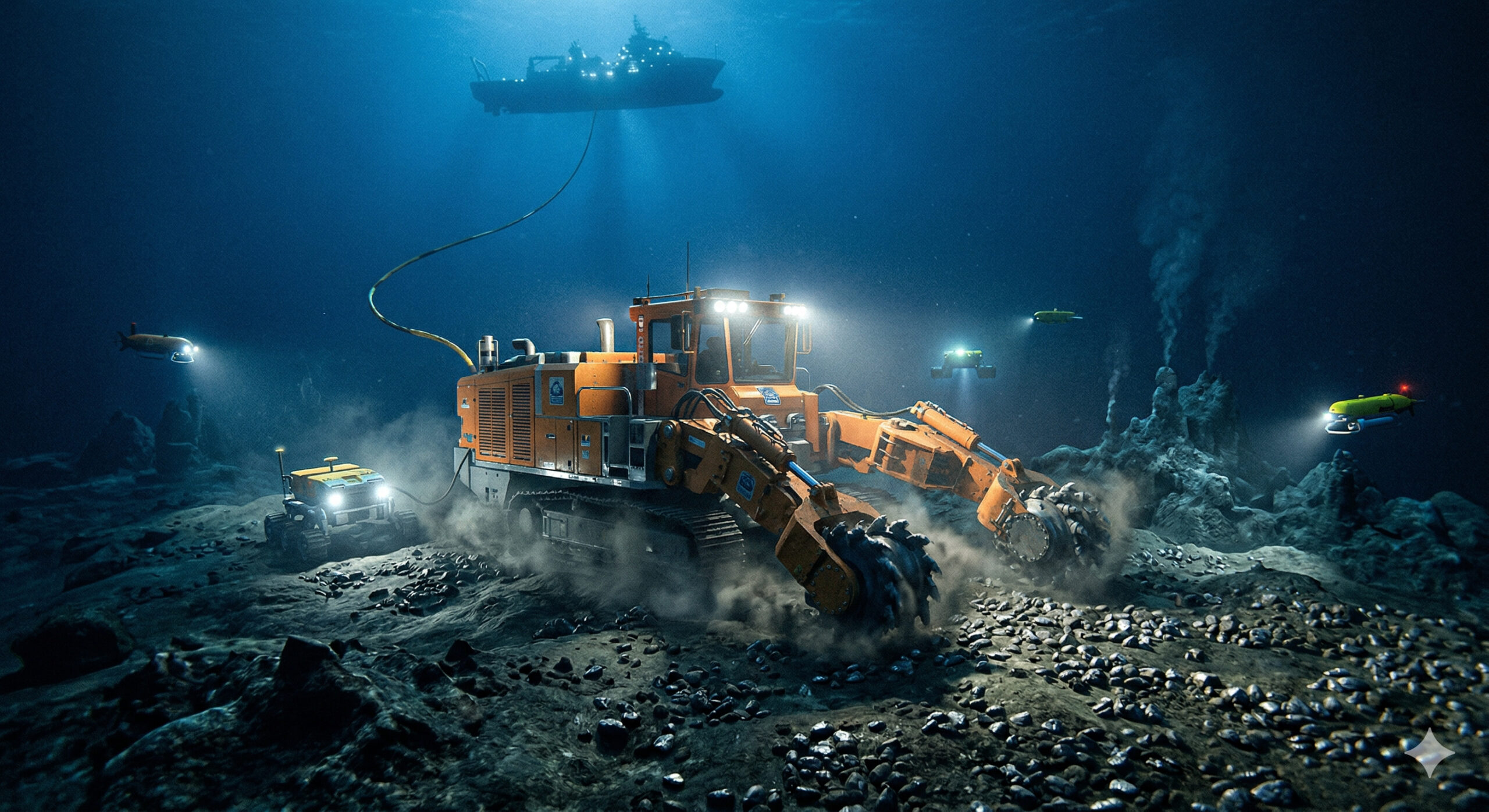
A $1 billion merger creates a new giant in underwater mining and accelerates the race for nickel, copper, and cobalt at depths of up to 6,000 meters.
On April 8, 2026, American Ocean Minerals Corporation and Odyssey Marine Exploration announced a merger agreement to create a platform focused on the exploration of critical minerals on the seabed, in an operation valued at around $1 billion. Reported by Reuters, the transaction reinforces the advancement of the global competition for strategic resources in deep ocean areas, at a time when governments and companies are seeking new sources of essential metals for the energy transition.
The focus of the new company is on polymetallic nodules, mineral formations that develop over millions of years and spread across vast areas of the ocean floor, especially in deep regions of the Pacific. According to Reuters itself, these nodules are distributed over large expanses of the seabed, while NOAA treats them as one of the main targets of deep-sea mining.
These deposits concentrate metals that are highly demanded by modern industry, such as nickel, copper, cobalt, and manganese, inputs considered strategic for batteries, energy systems, advanced electronics, and electrical infrastructure. It is precisely on this set of minerals that the new platform intends to position itself, expanding the race for critical raw materials outside conventional land reserves.
-
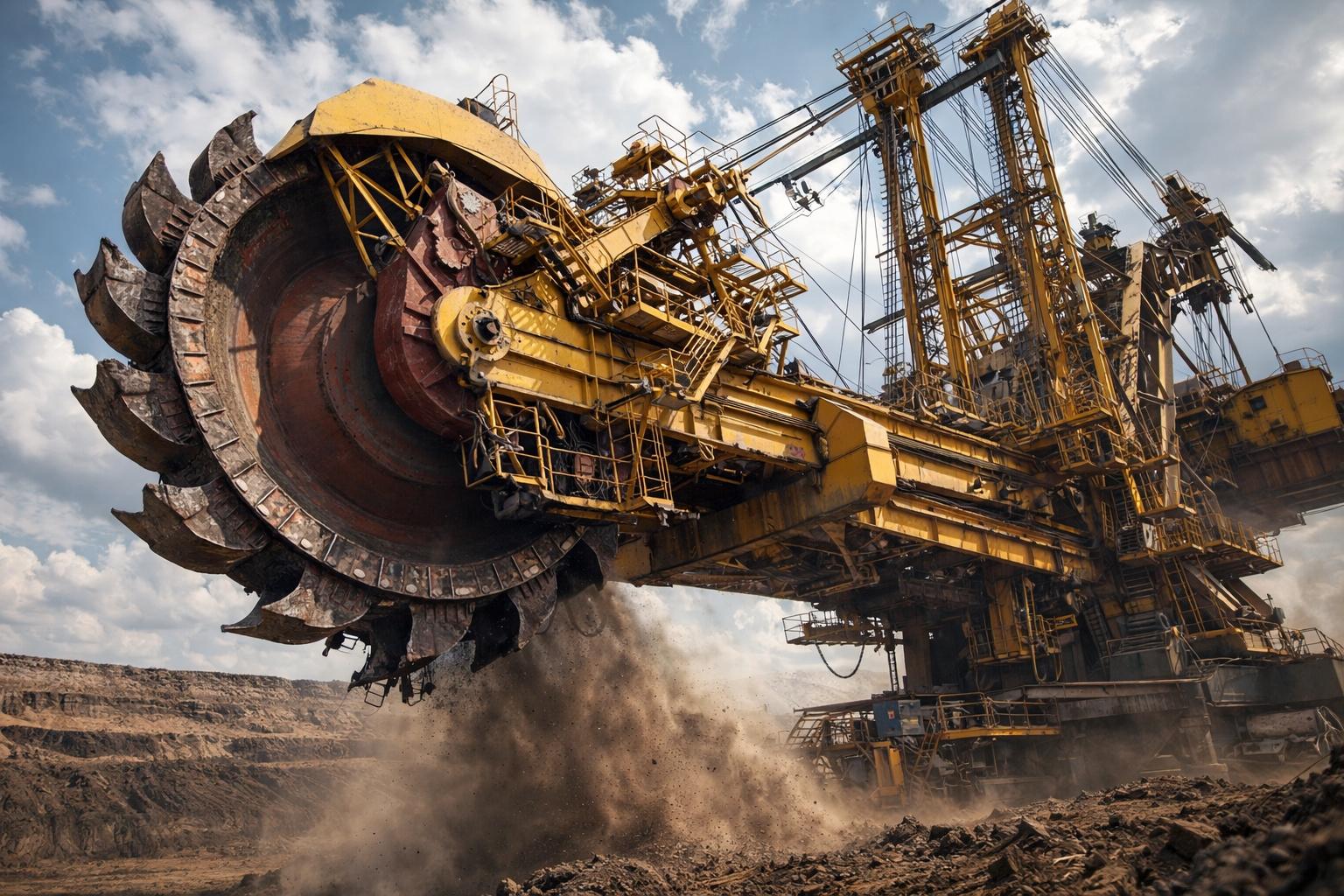
A machine capable of removing up to 12,000 cubic meters of earth per hour helps to feed part of the European energy matrix, and this mining colossus almost never appears when discussing the real cost of electricity.
-
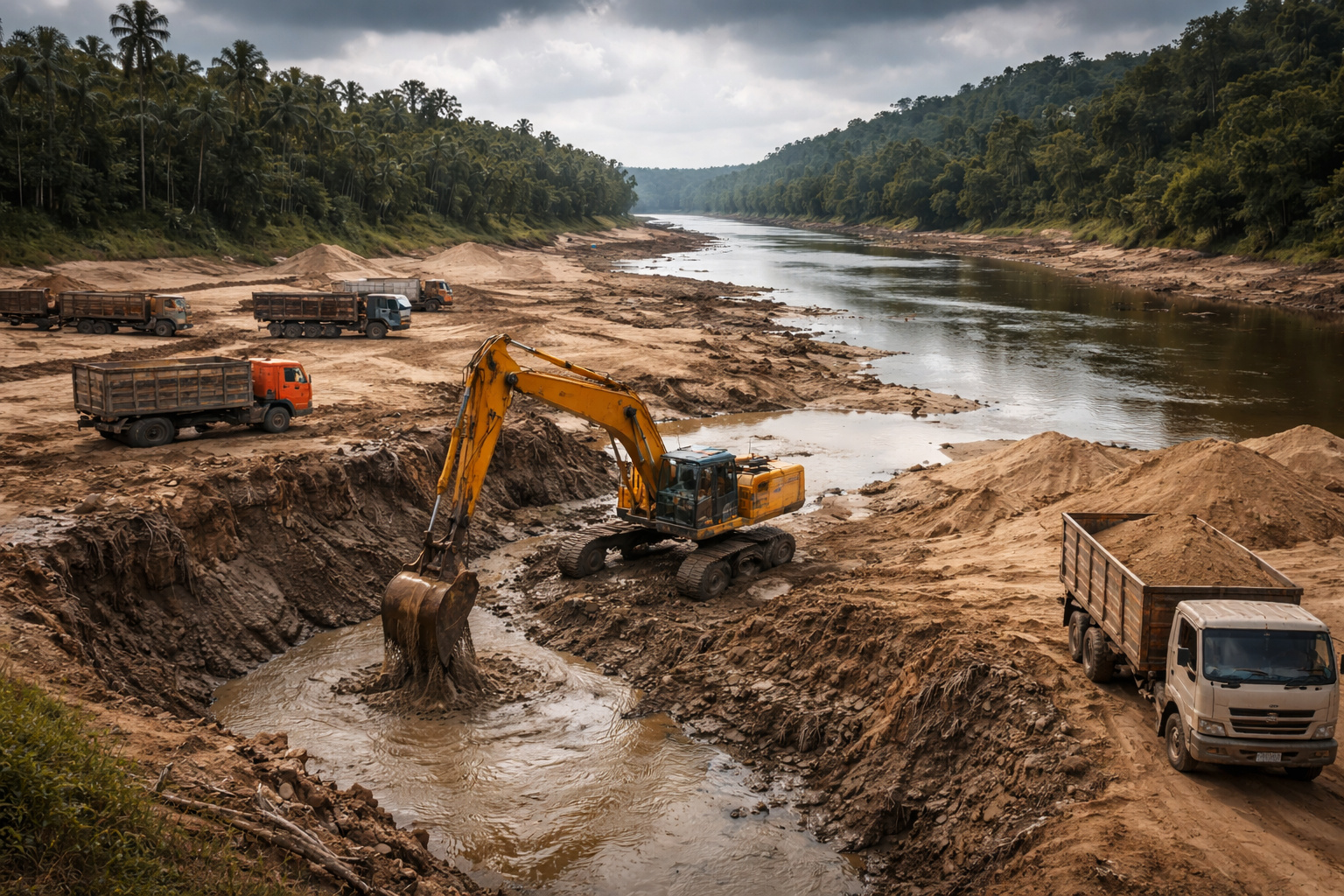
In Kerala, India, known as “the land of God,” dredging machines are extracting sand from rivers 40 times faster than nature can replenish it, riverbeds have already dropped nearly 2 meters, rivers have begun to dry up, and scientists who investigated the floods of 2018 discovered that decades of uncontrolled mining have weakened the rivers to the point where they can no longer contain the water.
-
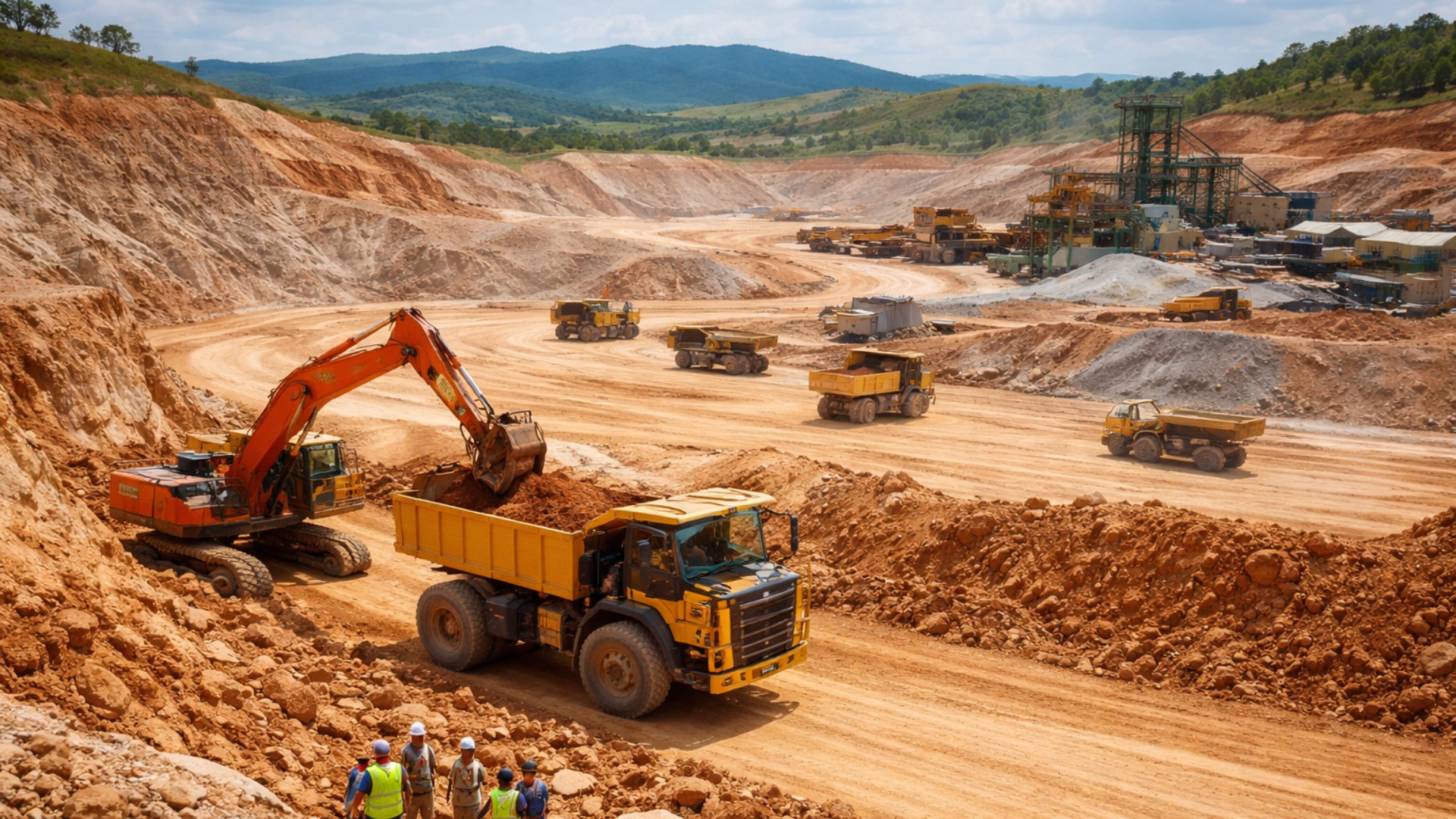
USA and China compete for Brazil over resources that could be worth trillions — rare earths put the country at the center of a global dispute

-
After China, it’s now the turn of the USA to ‘secure’ a share of Brazil’s natural resources: the country buys critical rare earths for R$ 3 billion and enters the center of the global technology dispute.
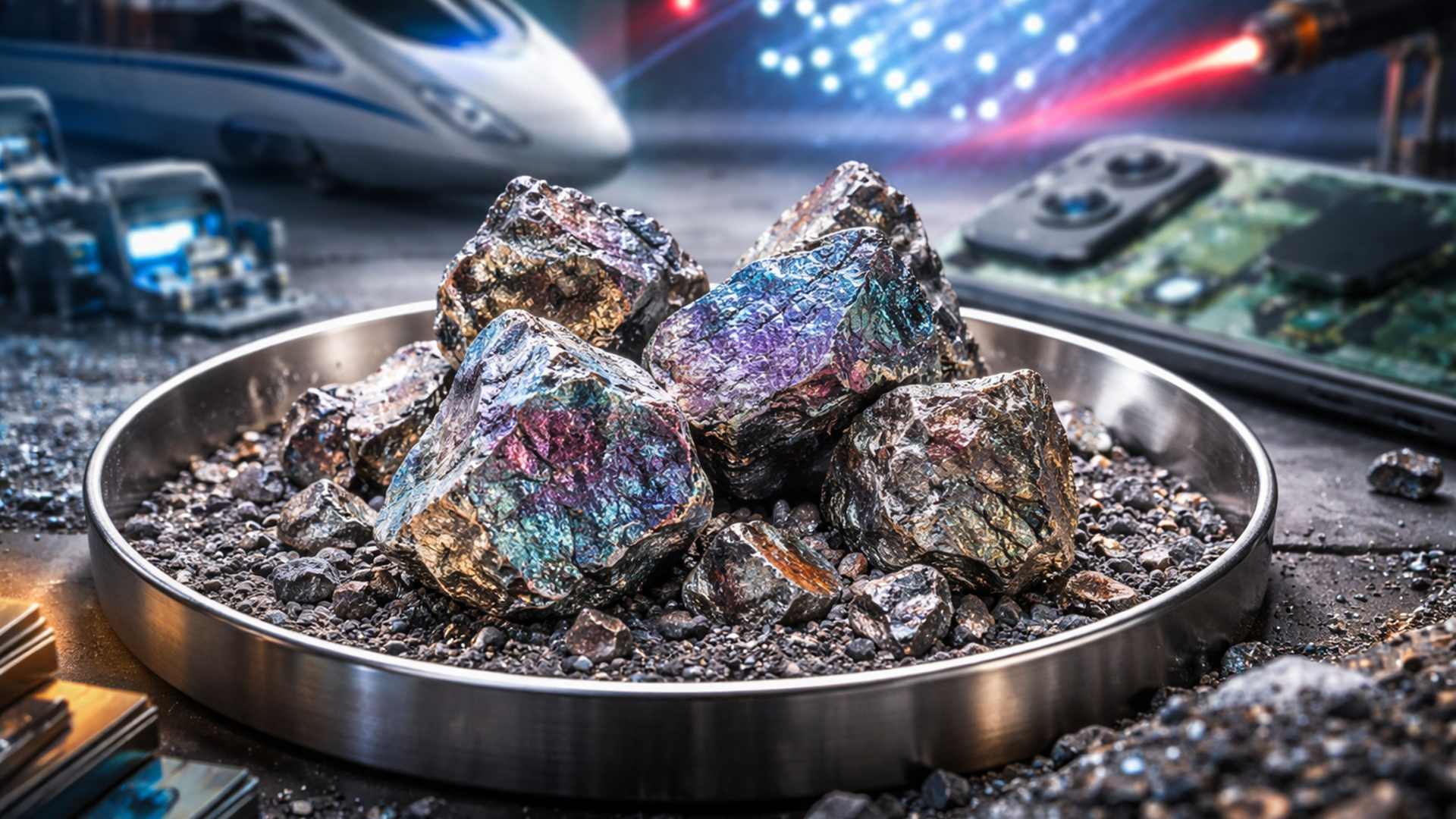
Metallic nodules at depths of up to 6,000 meters concentrate strategic resources
Polymetallic nodules are found at depths that can exceed 6,000 meters, in areas known as abyssal plains. These regions remain largely unexplored due to the technical difficulties involved.

Each nodule can contain a combination of essential metals, and their large-scale distribution transforms these areas into one of the planet’s largest potential reservoirs of critical minerals.
Unlike traditional mining, where ore is concentrated in specific deposits, nodules are spread across the seabed, forming true “mineral fields” that can extend over thousands of square kilometers.
Deep-sea mining technology requires high-complexity operations
Exploring resources thousands of meters deep requires advanced technological solutions. The pressure in these environments can exceed 600 times the atmospheric pressure at sea level, in addition to the total absence of light and near-zero temperatures.
The systems used include:
- Remotely operated underwater vehicles
- Collection equipment adapted to the ocean floor
- Pumping systems for transporting material to the surface
- Processing marine platforms
The integration of these elements forms a complex operational chain, which is still in the development and large-scale testing phase.
Demand for battery metals drives a global race for the seabed
The advancement of underwater mining is directly linked to the increasing demand for metals used in the energy transition.
Nickel and cobalt are essential components of high-energy-density batteries, while copper is indispensable for electrical networks and renewable generation systems.
With the expansion of electric vehicles and energy storage, pressure on land reserves has significantly increased, leading companies to seek alternatives in new frontiers. In this context, the seabed emerges as one of the last major reserves still little explored.
Merger creates financial and technical scale to advance in an still-emerging sector
The union between American Ocean Minerals and Odyssey Marine is not just a corporate move, but an attempt to gain scale in a sector that requires high investments and continuous technological development.
The new structure allows for:
- Technology sharing
- Increased investment capacity
- Access to licensed exploration areas
- Greater global competitiveness
This type of consolidation is seen as necessary to enable projects that involve high technical and financial risk.
Underwater mining faces resistance and environmental questions

Despite the economic potential, deep-sea mining is targeted by criticism from scientists and environmental organizations. The main concerns involve:
- Impact on ecosystems that are still poorly understood
- Permanently altering the seabed
- Dispersal of sediments
- Risks to biodiversity
These abyssal regions harbor life forms adapted to extreme conditions, many of which have not yet been studied in depth. The lack of complete knowledge about these ecosystems increases uncertainty about long-term impacts.
International regulation is still under construction and defines the pace of exploration
The exploration of the seabed in international areas is regulated by the International Seabed Authority, an organization linked to the United Nations responsible for establishing rules for this type of activity.

Currently, the sector operates under a regime of exploratory licenses, while comprehensive norms for commercial exploration are still under discussion.
This scenario creates an environment of regulatory uncertainty, where political decisions can accelerate or slow down the development of underwater mining.
Companies seek to anticipate position in a market that could be worth billions in the coming decades
Even with technical and regulatory challenges, interest in underwater mining is growing rapidly. Companies are seeking to secure an early position in areas considered strategic, betting that the demand for critical minerals will continue to expand.
The announced merger reinforces this trend and indicates that the sector may enter a phase of greater consolidation and investment.
The entry of new players and the formation of companies with greater financial capacity indicate that underwater mining may cease to be an experimental activity and begin to play a significant role in the global supply chain.
If this occurs, the seabed could become a new economic frontier, comparable to other major expansions of natural resource exploration throughout history.
The exploration of the oceans can solve the scarcity of metals or create a new field of environmental and geopolitical conflict
The advancement of underwater mining raises a central question for the future of the industry and the environment: can the exploration of these resources help meet the growing global demand for metals or open a new chapter of environmental and geopolitical disputes on a global scale?
As technology advances and investments increase, this discussion is likely to gain even more relevance, placing the seabed at the center of one of the most complex decisions in the modern economy.







Seja o primeiro a reagir!