





 Portuguese
  English
  Spanish
  3 min of reading
  0 comments


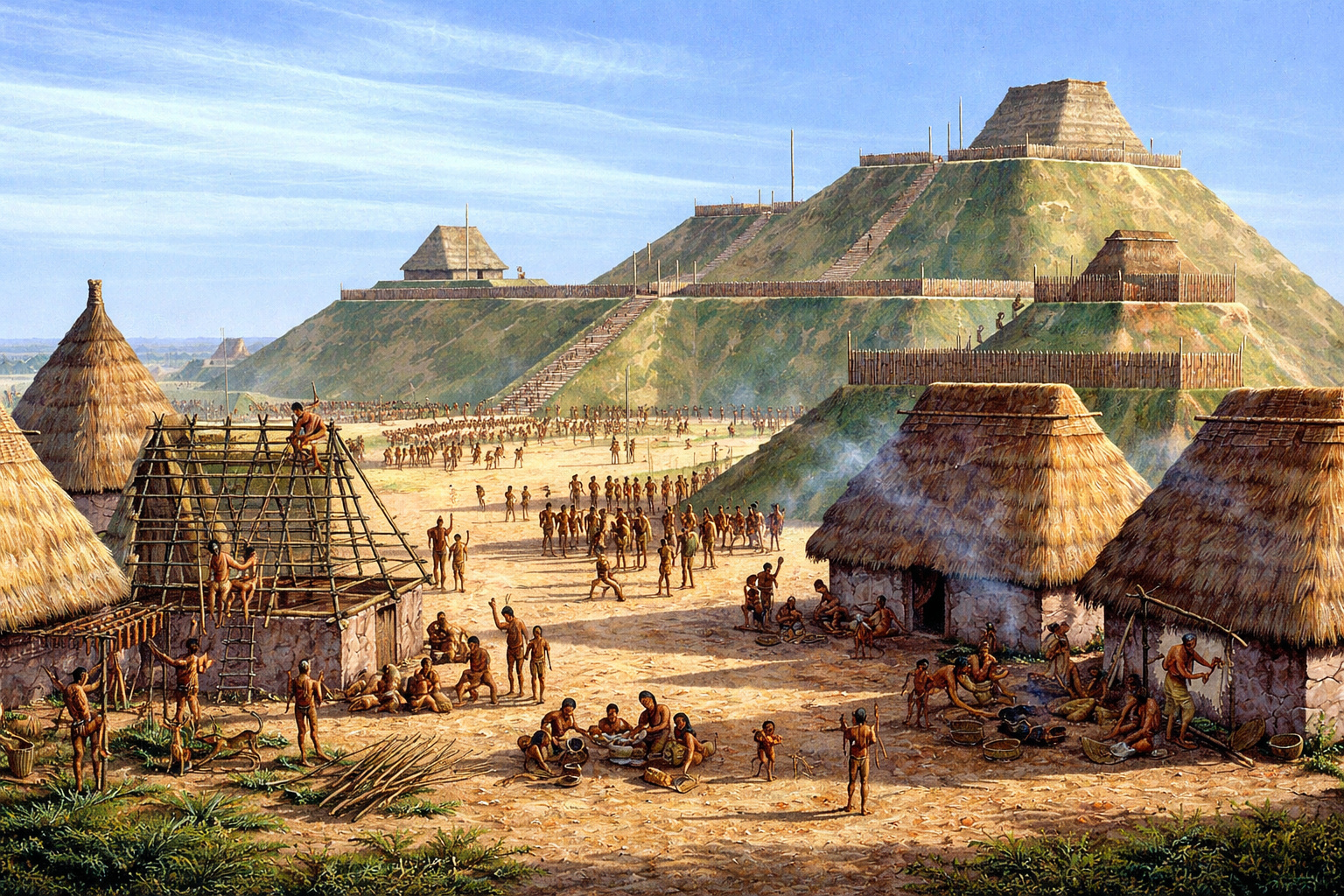
The ancient city of Cahokia demonstrates urban organization, advanced engineering, and complex social structure long before European colonization
One of the greatest discoveries about pre-Columbian urbanization in North America was consolidated from studies on Cahokia, attracting global attention.
The city, located in the Mississippi River valley, reached its peak between 1050 and 1200, when about 20,000 people lived in a highly organized urban structure.
This scenario evidences that North American Indigenous societies developed complex urban centers, contradicting old views of predominant nomadism.
The city’s growth was sustained by intensive maize-based agriculture.
This food surplus allowed for the formation of an administrative elite responsible for coordinating works and distributing essential resources.
Thus, the city established itself as one of the largest urban centers north of Mexico before the arrival of Europeans.
Monumental construction reveals impressive technical mastery
The main symbol of Cahokia is the Monks Mound, an earth pyramid about 30 meters high.
For its construction, more than 14 million baskets of earth were manually transported, demonstrating an extremely advanced collective organization.
-
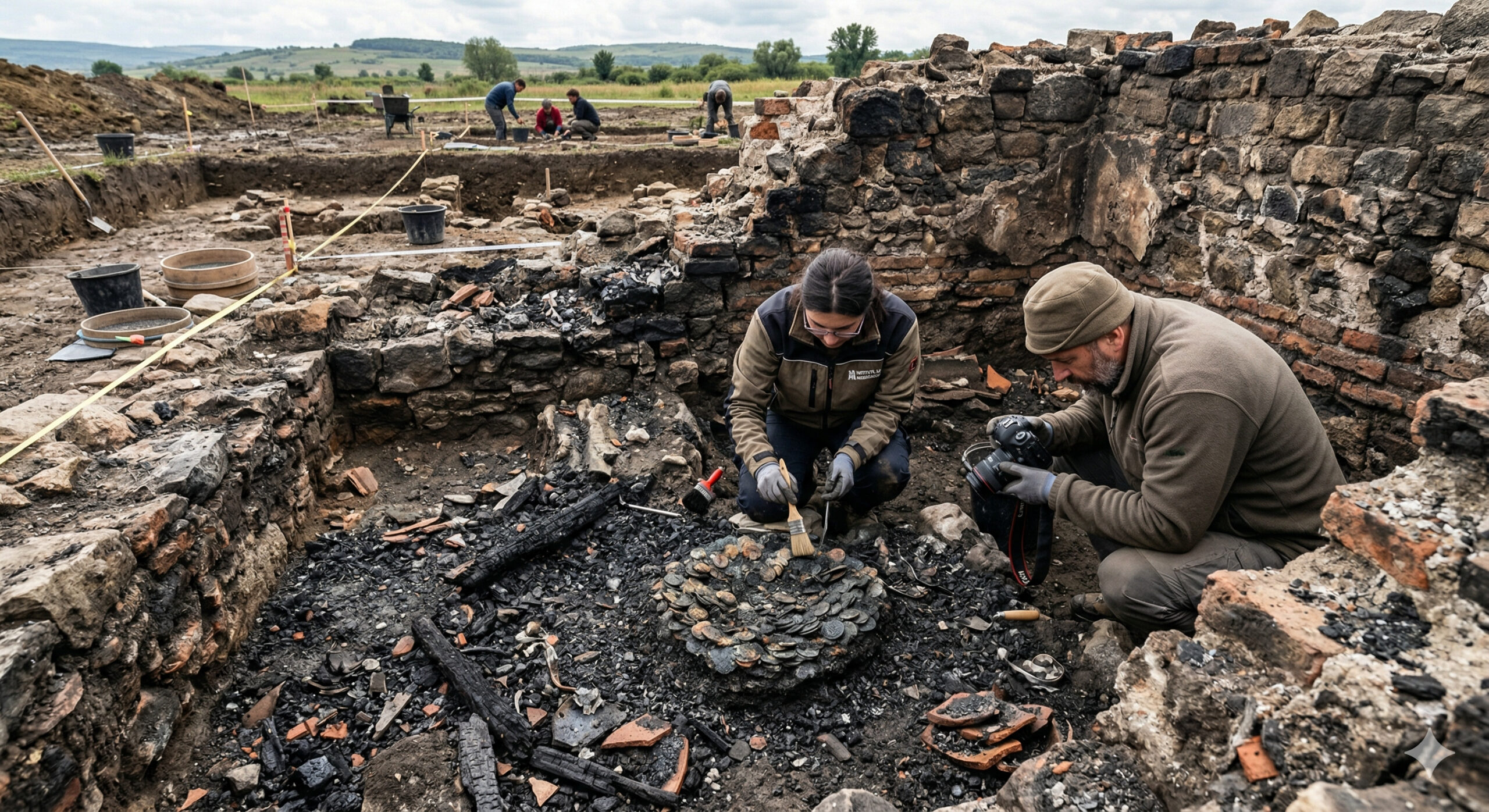
A 1,900-year-old treasure emerges from a Roman house destroyed by fire and sealed since antiquity in Romania, with coins and metals fused among the ashes.
-
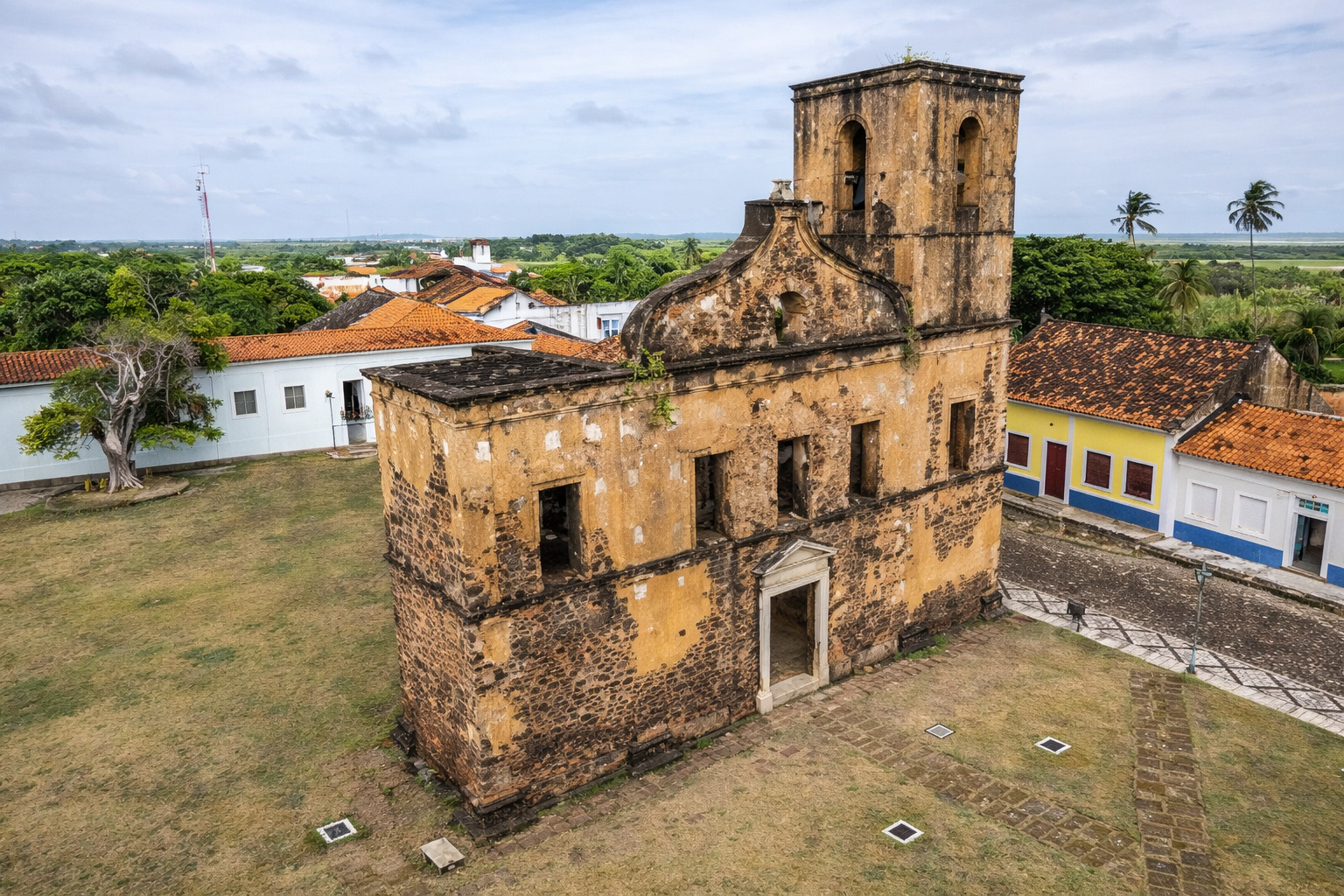
The Brazilian colonial city that stopped in time and shares territory with a rocket launch base.
-
79-year-old woman challenges limits, visits 193 countries in the world after 56 years of planning and reveals the behind-the-scenes of a global journey that few have managed to accomplish.

-
These are the drivers who may stop paying tolls on highways in a project that promises to reduce costs for those who live from transportation in Brazil.

Moreover, the structure was used as a political and religious center.
The elevated position reinforced the authority of leaders and symbolized the sacred power of the dominant elite.
At the same time, the construction required detailed technical knowledge about soil.
Different types of earth were selected to ensure stability and avoid collapses.
This practice evidences an empirical mastery of geotechnics, even without modern technologies.
Urban organization and population density surprise researchers
The city featured a planned urban network, with public squares, organized residential areas, and defense systems.
This configuration allowed the population to reach levels comparable to European cities of the same era.
Additionally, agricultural production sustained the population density and ensured a constant supply.
Consequently, the city maintained a continuous and structured operation for decades.
This urban model reinforces that Cahokia was a highly developed center.
The city integrated planning, production, and management into an efficient system for its time.
Social hierarchy and trade routes structured society
The social organization was clearly hierarchical.
The leaders resided at the highest points of the mounds, symbolizing political and religious authority.
Moreover, centralized governance allowed for the execution of complex rituals.
This system also coordinated trade routes that extended for thousands of kilometers.
Thus, Cahokia connected various regions of present-day United States.
This network expanded the exchange of resources and strengthened the local economy.
Among the main elements identified by archaeologists are:
• Structured urban planning
• Defined social hierarchy
• Integration between religion and political power
• Long-distance trade network
Scientific evidence confirms advanced engineering
Archaeological studies indicate that the structures were aligned with solar events.
This factor reveals mastery of astronomy and practical application of mathematical knowledge.
Moreover, the careful selection of materials ensured the preservation of the constructions for centuries.
This technique reinforces the level of technical knowledge of the civilization.
Technical data reinforce the magnitude of the city
The main indicators of the archaeological site include:
• Height of Monks Mound: about 30 meters
• Volume of earth used: more than 14 million baskets
• Estimated population: approximately 20,000 inhabitants
• Protected central area: more than 1,600 hectares
Historical relevance and international recognition
The archaeological site was recognized as a World Heritage Site by UNESCO.
This recognition highlights the importance of pre-Columbian civilizations in global urban evolution.
Additionally, studies indicate that climatic factors and resource management influenced the abandonment of the city in the 14th century.
Currently, research analyzes sediments to understand this historical process.
Thus, Cahokia remains one of the most relevant examples of ancient urban organization in North America.
The technical and social legacy of this civilization continues to be studied to understand the complexity of native cultures.







Seja o primeiro a reagir!