





 Portuguese
  English
  Spanish
  4 min of reading
  0 comments


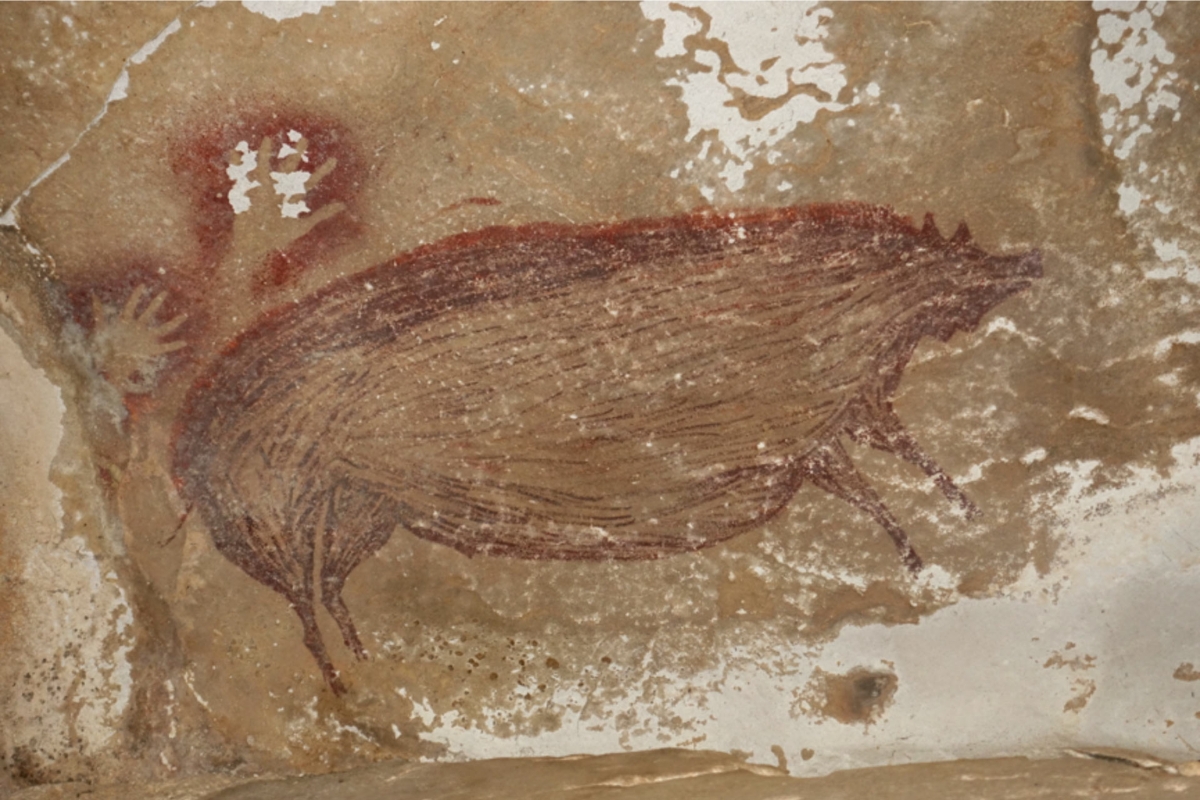
Researchers dated a cave painting in Sulawesi, Indonesia, at 51,200 years, now seen as the oldest known figurative art. The finding changes the chronology of prehistory and shifts the focus from Europe to Asia.
A preserved painting in a cave in Sulawesi, Indonesia, has elevated the origin of human art to another level. The scene was dated at at least 51,200 years and is now treated as the oldest known record of figurative art.
The impact goes far beyond the number. The discovery weakens the old narrative that placed Europe at the center of this beginning and brings Southeast Asia into a decisive position in this story.
The image appears in a cave on the Indonesian island and features an animal and small human figures in the same composition. This detail changes the discussion because it points to a complex visual representation, with action and intention.
-
Lava river flows down the volcano on Reunion Island, crosses the road, enters the sea, and creates a new strip of land; the longest and most intense eruption of 2026 is already reshaping the coast before our eyes.

-
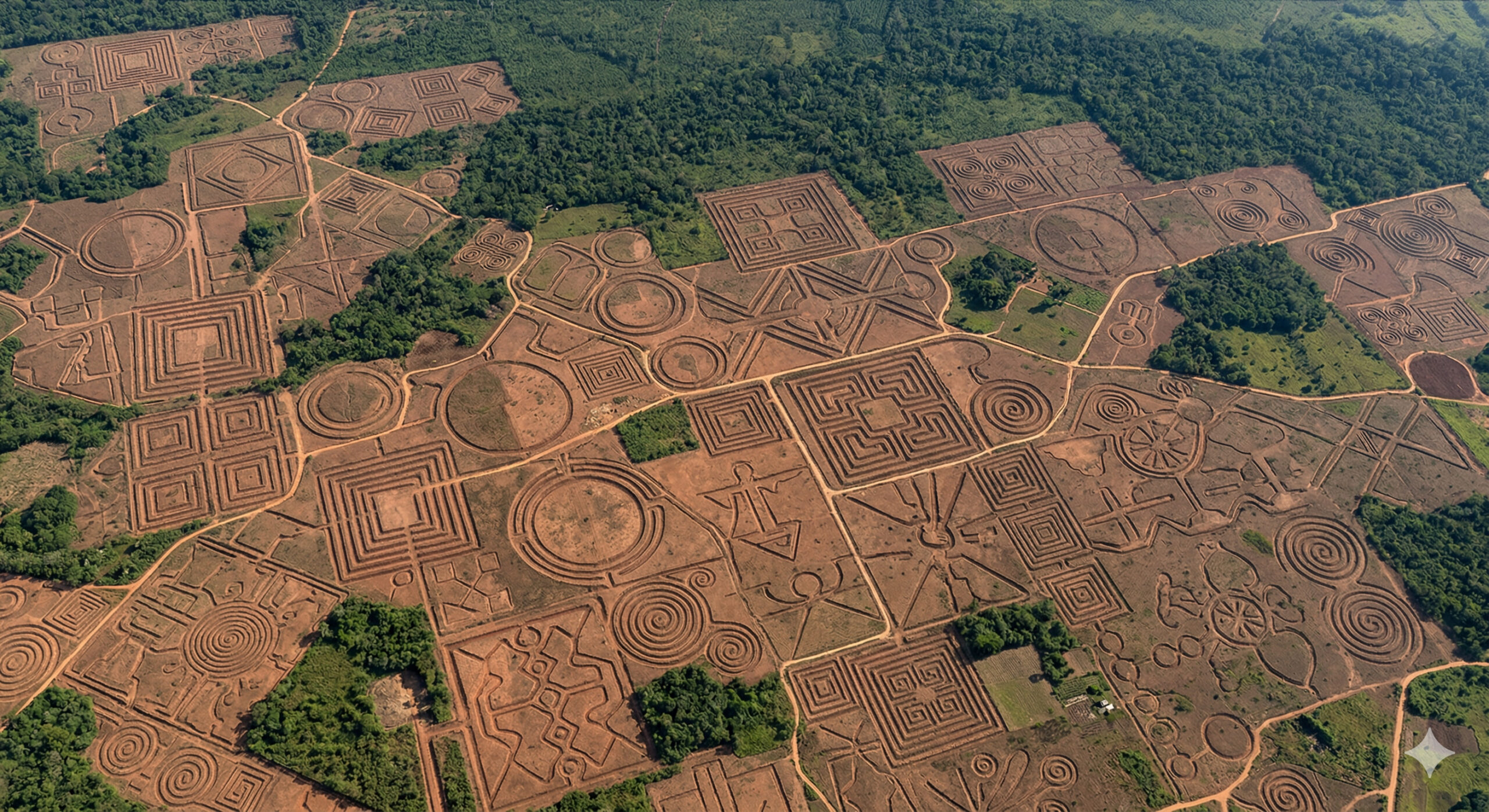
More than 400 geoglyphs up to 350 meters long were excavated over 2,000 years ago in Acre and remained hidden under the forest for centuries. These giant structures, now visible in satellite images, still challenge science regarding their origin and function.
-
Few people know, but in Brazil there are cities with curious names like Feliz Natal, Não-me-Toque, and Varre-Sai, which may seem like random names, but originated from real events, local habits, and natural characteristics.

-
No one told you this about rosemary: there is a plant that silently rots its roots, and the place where you plant it makes all the difference between a vigorous herb and a dead plant in just a few weeks.

Cave in Sulawesi holds scene with pig and human figures
The painting was found in Leang Karampuang, a cave located in Sulawesi. On the panel, one can see a warty pig and at least three smaller humanoid figures painted with reddish pigment.
Even damaged by time, the composition still allows for identifying a relationship between the characters. This is what makes the finding so relevant, as it is not just loose marks on the rock, but a recognizable scene.

New technique pushed the minimum date to 51,200 years
The age was calculated from the analysis of thin mineral layers that formed over the painting. Since these crusts appeared after the image, they help establish a minimum date for the panel.
With this, researchers were able to push the chronological mark to an even more distant past. The result reinforces the idea that the production of figurative images began much earlier than previously thought.
Ancient mark repositions the origin of human art
For a long time, the dominant narrative pointed to European caves as the main cradle of humanity’s first complex images. This picture now loses strength with the consolidation of a much older record in Southeast Asia.
According to National Geographic, an international magazine dedicated to science, history, and nature, the discovery reinforces Sulawesi as a central area for understanding the early steps of human creativity. The effect of this is direct on the traditional chronology that has dominated books, studies, and documentaries for decades.
Ancient scene suggests one of the first known visual narratives
The strongest point of the discovery lies not only in the age of the painting. What really draws attention is the fact that the scene shows an animal and human figures in a position of visual interaction.
This type of composition suggests more than a simple record of forms. It indicates an attempt to represent action, relationship, and perhaps even a shared episode, something that brings the panel closer to the earliest known visual narratives.
Sulawesi has been changing world archaeology
The island of Sulawesi, located in Indonesia, has already held a prominent place for housing some of the oldest known cave paintings. Now, with this new milestone, the region gains even more weight in the study of human prehistory.
This expands the map of the origins of art and shows that the ability to create complex images was not restricted to a single territory. The story becomes broader, older, and less centered on Europe.
Wear of the rock increases the urgency to preserve the site
Part of the painting has already been lost due to the natural wear of the cave’s surface. This means that the panel may have been even more complete in the past and that other important information has already disappeared over time.
The discovery also raises an alarm. A heritage that has survived for tens of thousands of years may now suffer accelerated damage, making the preservation of these caves an immediate necessity.
The strength of this finding lies in two points at the same time. It expands what is known about the origin of art and also forces a reevaluation of how humanity has told this very trajectory up to now.
By placing Sulawesi, Indonesia, at the center of one of the oldest chapters of human expression, the discovery shifts the axis of this story and changes the strategic reading of the past.









Seja o primeiro a reagir!