





 Portuguese
  English
  Spanish
  7 min of reading
  0 comments


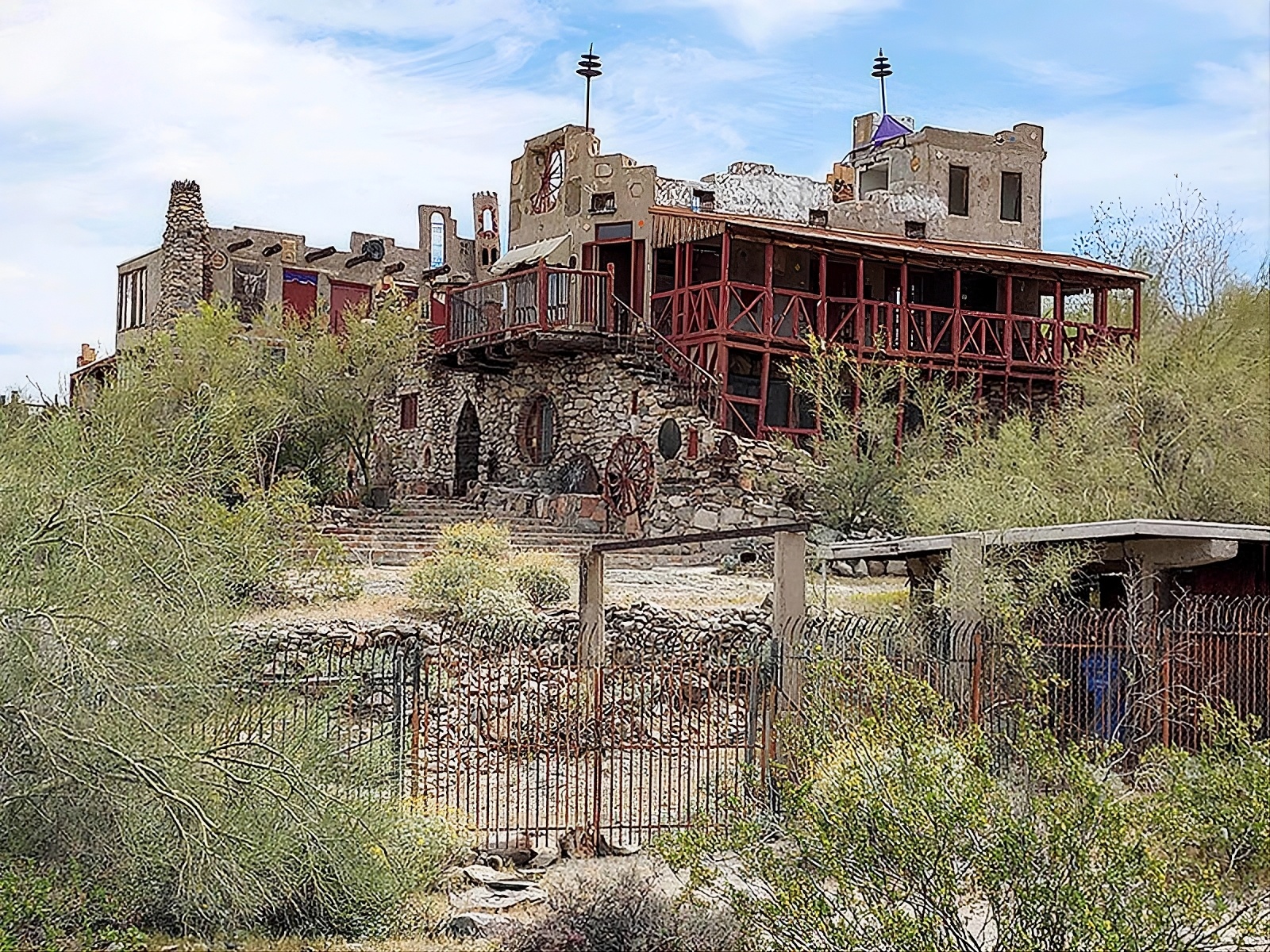
Mystery Castle in Arizona: castle with 18 rooms built with scrap and stones over 15 years becomes a heritage site and is at risk of disappearing
In the 1920s, according to records from the National Trust for Historic Preservation, shoe salesman Boyce Luther Gulley disappeared from Seattle without explanation and reappeared years later in the Arizona desert, where he built the Mystery Castle alone, a structure of 18 rooms erected over 15 years with repurposed materials. The construction, located in Phoenix, became a historic landmark and one of the most unusual cases of improvised engineering in the United States, combining rudimentary techniques, material reuse, and unconventional architectural solutions.
Without formal training in architecture, without a formal plan, and without a building permit, Gulley erected a three-story structure with 13 fireplaces and over 700 square meters, using river stones, trolley tracks, car parts, and even discarded household items. The result was one of the most unique projects ever documented in the American desert, now known as Mystery Castle.
History of the Mystery Castle: disappearance of Boyce Gulley and construction in the Arizona desert
Boyce Luther Gulley was a shoe salesman in Seattle, married to Frances Gulley and father to Mary Lou. On an ordinary day in the 1920s, he disappeared without warning, without an address, and without justification.
-
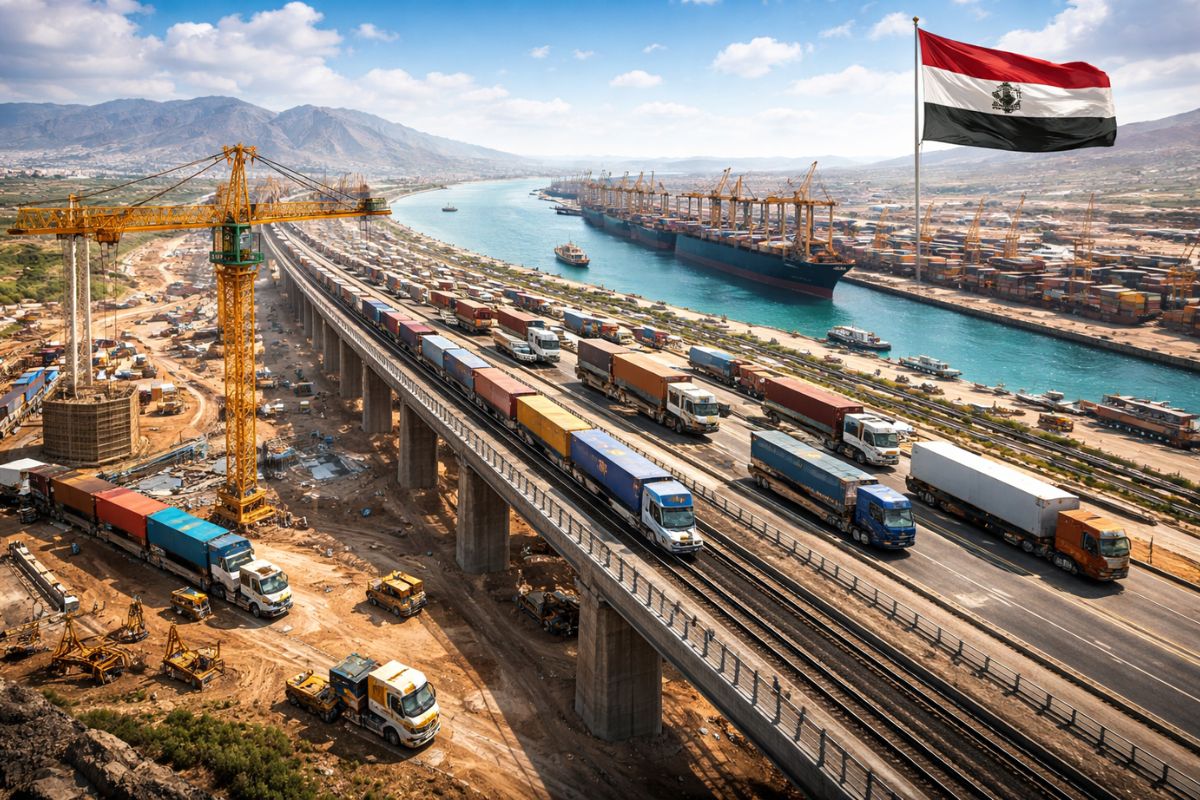
A megaproject worth R$ 89 billion is advancing in Iraq and promises to change the game in global trade by creating a new corridor between Asia and Europe, reducing traditional routes and repositioning the country as a logistics powerhouse.
-
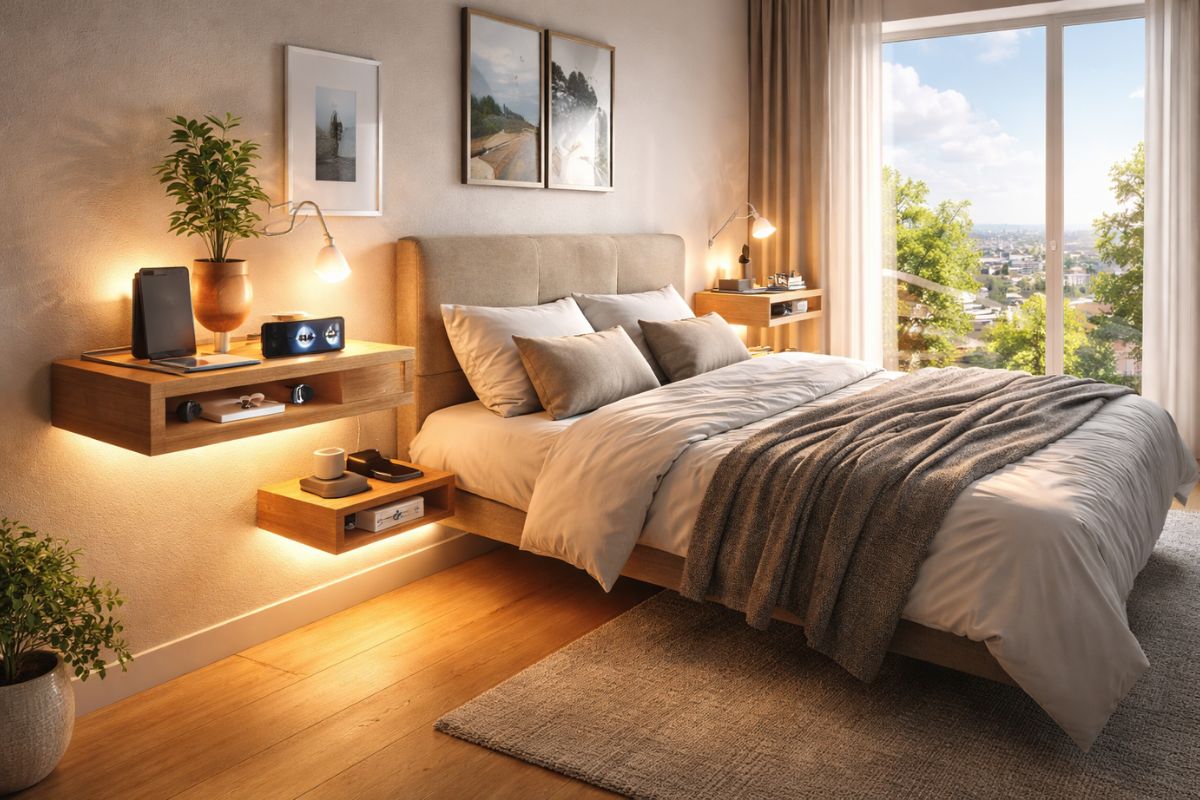
Goodbye bedside table: floating shelves become a trend in 2026 by freeing up space in the bedroom, improving circulation, bringing visual lightness, and integrating technology without taking up floor space.
-
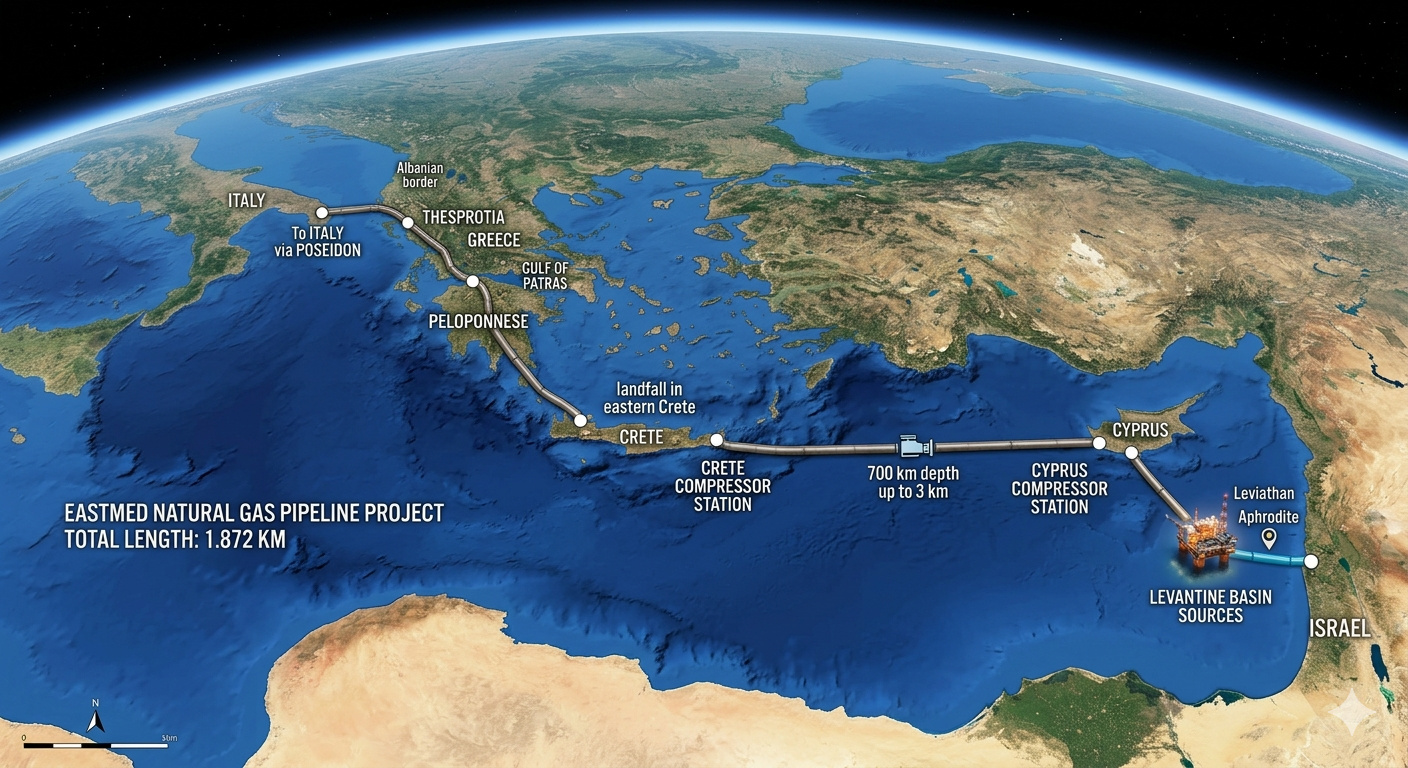
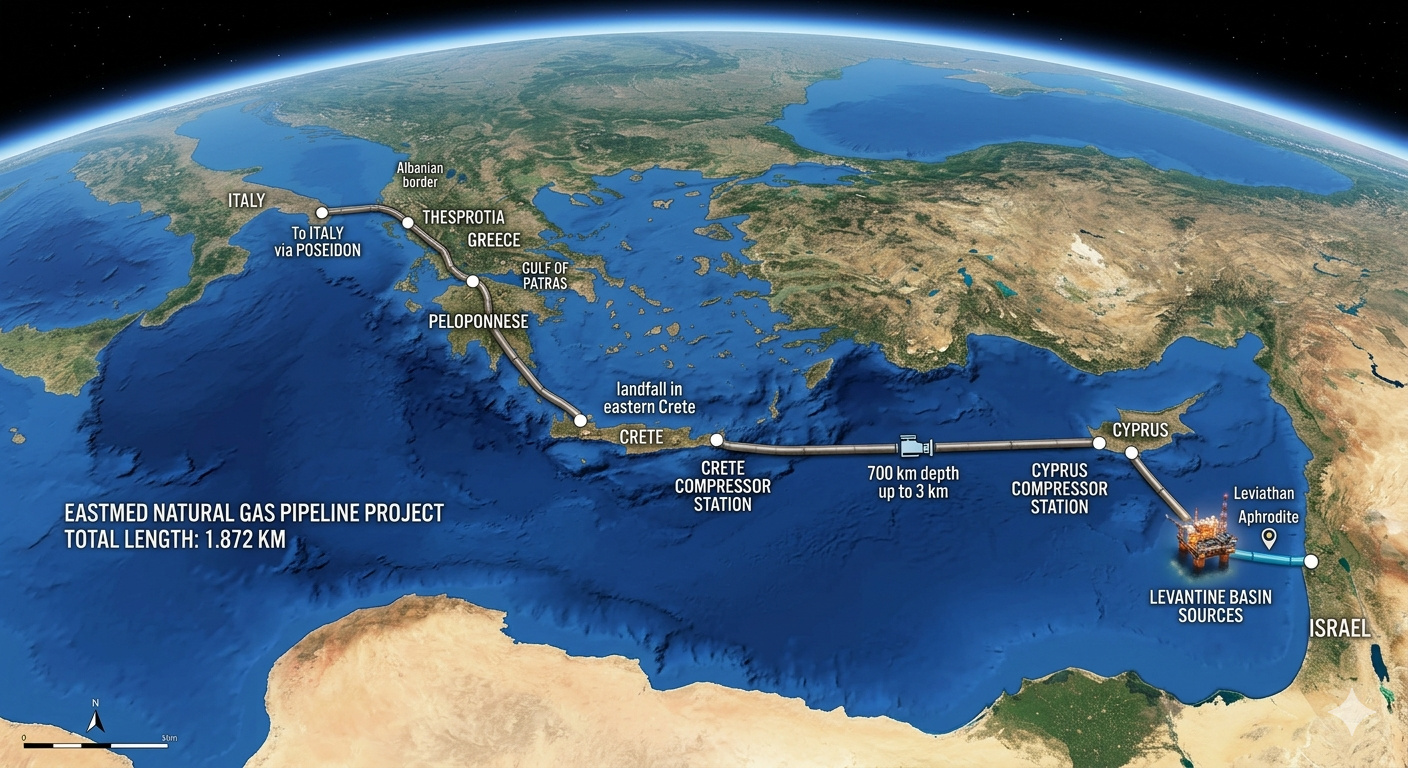
Israel, Greece, and Cyprus signed an agreement in 2020 to transport gas from the Mediterranean to Europe via a 1,872 km pipeline, but Turkey claimed sovereignty over part of the maritime route, and the project never materialized.
-
Israel, Greece, and Cyprus signed an agreement in 2020 to transport gas from the Mediterranean to Europe via a 1,872 km pipeline, but Turkey claimed sovereignty over part of the maritime route, and the project never materialized.

For years, the family received only sporadic letters postmarked from Arizona, with no concrete explanation about his whereabouts.
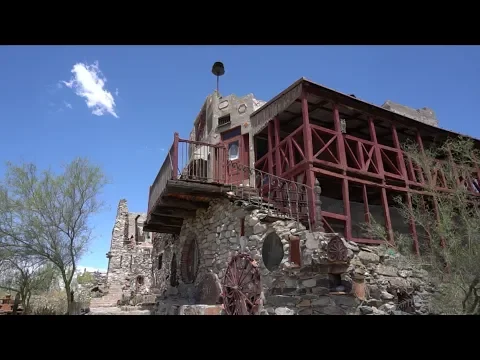

According to the story documented by the National Trust for Historic Preservation, Gulley spent the next 15 years living in the Arizona desert, where he began building the castle that would later become world-renowned. He settled at the foot of South Mountain, about seven miles south of downtown Phoenix, initially living inside an abandoned train car on an old mining claim.
This sudden disappearance and the silent construction of a structure of this magnitude form the basis of one of the most unusual stories in 20th-century American architecture.
Origin of the project: sandcastle in Seattle inspired construction in Arizona
The origin of the project is linked to a childhood memory of Mary Lou. Father and daughter used to build sandcastles on the beaches of Seattle. When the tide destroyed the structures, the girl would cry.
She is said to have said:
“Please, dad, build me a big strong castle where I can live. Maybe in the desert, where there is no water to destroy it.”
Years later, already in Arizona, Gulley carried this phrase as a symbolic reference for his construction. What began as an emotional memory transformed into a real large-scale physical project, executed without any formal technical support.
Construction of the castle with scrap: reused materials in the Mystery Castle
Without financial resources to acquire conventional materials, Gulley used what was available around him. The municipal dump of Phoenix, swap meets, and the desert itself became his main sources of supplies.
He collected stones from riverbeds and mountain slopes, transporting them with the help of a mule. Discarded telephone poles were transformed into structural beams. Abandoned trolley tracks were used as stair steps. Automotive parts, wagon wheels, ammunition cartridges, saguaro cactus skeletons, and discarded bricks were incorporated into the construction.
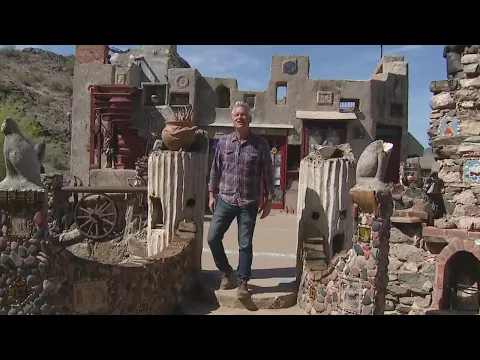
The mortar used to bind the stones was made with a mixture of cement, caliche, and goat milk, a technique that Gulley is said to have learned from Native Americans in the area. This combination of materials results in a structure that blends rudimentary engineering with extreme environmental adaptation, ensuring durability even in the harsh desert conditions.
Natural lighting solution: windows with Pyrex glass in the Mystery Castle
One of the most ingenious elements of the castle is the natural lighting system. Gulley acquired a lot of discarded Pyrex glass plates for $7.50 and incorporated them into the walls, floors, and ceilings.
These containers function as light diffusers, allowing natural light to enter while maintaining internal privacy. In practice, the system works similarly to industrial glass blocks, but at virtually no cost and using repurposed materials.
Additionally, slate from a demolished school in Phoenix was used as slate flooring, while wagon wheels were incorporated into the walls as structural and decorative elements.
Structure of the Mystery Castle: 18 rooms, three floors, and unusual architectural solutions
The Mystery Castle grew organically over 15 years, without a formal plan or design. The construction was expanded as Gulley found new materials.
The final structure includes:
- 18 rooms distributed across three floors
- 13 fireplaces
- A wedding chapel
- A subterranean bar with bunk beds
- Tower with medieval fortress-style parapet
- Terrace with panoramic view of Phoenix
Each roof functions as a patio for the upper floor. Pillars also serve as furniture. Niches in the walls function as storage areas.
One of the most unusual elements is the brass bed in the guest room, which slides on train tracks into a compartment when not in use. This mechanical solution highlights the level of technical improvisation applied in the construction, something rare even in modern projects.
Secret of the trapdoor: discovery documented by Life magazine
Near the entrance of the castle, there is a metal alligator sculpture, beneath which there is a trapdoor. Gulley left instructions in his will stating that Mary Lou could only open it on January 1st after his death, as long as she was living in the castle.
Mary Lou accepted the conditions and moved to the site in 1945 with her mother. They faced extreme conditions, including the absence of running water, electricity, and the presence of desert animals.
On the stipulated day, with the presence of Life Magazine, Mary Lou opened the underground compartment about three meters deep. Inside, she found money, letters, a recent photograph of her father, and a Valentine’s Day card she had made in childhood.
The event solidified the almost legendary character of the Mystery Castle and attracted national attention.
Mystery Castle becomes a tourist attraction after publication in Life Magazine
On January 26, 1948, Life Magazine published a report detailing the story of the castle. From this publication, the structure became officially known as Mystery Castle.
Mary Lou became responsible for the maintenance of the site and began conducting guided tours. What was initially an isolated construction in the desert transformed into a tourist attraction that operated for over six decades.
Mary Lou lived in the Mystery Castle from 1945 until her death on November 3, 2010, at the age of 87. It was 65 years residing in the structure built by her father.
She preserved the original structure, decorated the spaces with folk art, and kept various historical elements intact.
Her personal room remained closed to the public throughout her life and continues to be inaccessible today. The prolonged stay at the site reinforces the durability of the construction and its cultural relevance.
Mystery Castle at risk: historic heritage may disappear in the United States
The Mystery Castle occupies approximately 8,000 square feet, about 740 square meters, on a 40-acre lot at the foot of South Mountain. The structure was listed on the Phoenix Historic Properties Register in 1990 and recognized as “Phoenix Point of Pride.”
In 2025, the National Trust for Historic Preservation included the site on the list of the 11 Most Endangered Historic Places in the United States. The foundation created by Mary Lou is facing financial difficulties, and the structure suffered vandalism in March 2022, with damages estimated at $100,000.
No arrests have been made.
The city of Phoenix denied a preservation permit, creating a one-year moratorium before possible demolition. Organizations like Preserve Phoenix and Friends of Mystery Castle are trying to mobilize resources to prevent the disappearance of the site. The construction that has withstood the test of time and the desert is now facing institutional risk of disappearing.
Historical and cultural elements of the Mystery Castle: Mexican and Indigenous influences
During the 15 years of construction, Gulley incorporated elements from various cultural origins. Among the items present in the structure are:
- Sun dial from a Mexican castle linked to Empress Carlota
- Venetian glass bowls
- Pre-Hispanic metates used by Indigenous peoples
- Turquoise and onyx stones embedded in the walls
The result is a construction that blends European, Mexican, and Indigenous influences with improvised techniques. This cultural fusion makes the Mystery Castle a unique case of hybrid and unconventional architecture.
Boyce Gulley’s illness and reason for disappearance to Arizona
Boyce Luther Gulley was diagnosed with tuberculosis, a disease that at the time led many patients to Arizona due to the dry climate, considered favorable for respiratory treatment.
He never informed his family about the illness. He separated from them at a distance and continued building the castle until his death in 1945, at the age of 62, caused by cancer.
The desert climate contributed to the improvement of his lungs but did not prevent the fatal outcome. Still, the structure he built with limited resources remains a physical testament to one of the most unusual projects in construction history in the United States.




Seja o primeiro a reagir!