





 Portuguese
  English
  Spanish
  6 min of reading
  0 comments


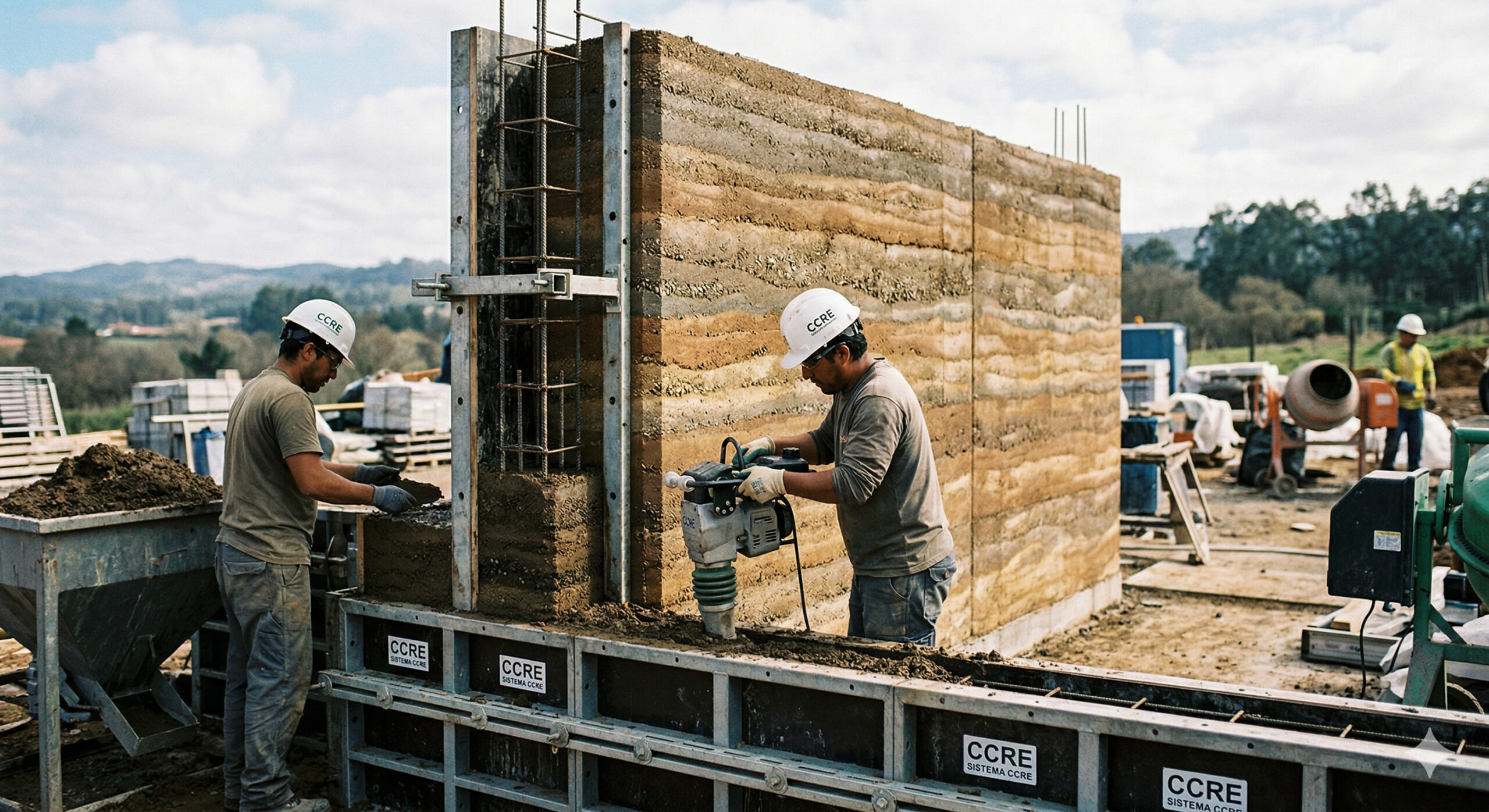
Construction system with compacted earth and recycled cardboard reduces emissions and proposes an alternative to concrete in civil construction.
In 2023, researchers from RMIT University, in the city of Melbourne, Australia, released results of studies involving a new construction system called Cardboard-Confined Rammed Earth (CCRE). The method combines compacted earth with recycled cardboard tubes to form structural elements with lower environmental impact. According to a study published in the scientific journal Structures, the system uses cardboard tubes to confine the compacted earth, increasing its mechanical strength and significantly reducing cost and carbon footprint compared to conventional materials
The concept was also reinforced by an official announcement from the university itself. According to a statement from RMIT, the material completely eliminates the use of cement and can have about a quarter of the carbon footprint of traditional concrete
The most striking data is that the system dispenses with the use of Portland cement, a material responsible for approximately 7% to 8% of global CO₂ emissions, one of the main factors that place the construction sector among the largest emitters on the planet. This factor positions CCRE at the center of discussions about low-carbon alternatives in civil construction, especially in a global context seeking more sustainable materials with lower environmental impact.
-
Alert in the electric sector: excess solar energy triggers overload in the Brazilian electrical system, forces the operator to shut down power plants, and exposes an unexpected risk that could affect stability and energy costs.

-
Russia spent $5 billion and 28 years modernizing a nuclear warship that had been inactive since 1997. The Admiral Nakhimov returned to the sea in August 2025 as the heaviest surface combat ship in the world, with 176 missile launchers, including hypersonic Zircon missiles.

-
James Webb finds 300 galaxies with mysterious scars, and this discovery may show that the universe was born much more violently than astronomers had imagined.

-
Haiti’s capital is experiencing an energy and construction crisis, facing blackouts, a blocked port, and buildings at risk after years of instability and a significant earthquake.

What is the CCRE system and how does it evolve the compacted earth technique
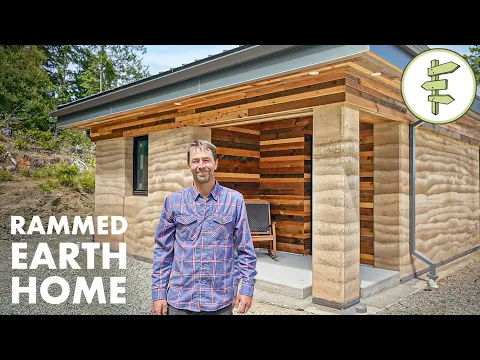
The basis of CCRE lies in the technique known as compacted earth, or rammed earth, used for thousands of years in traditional constructions in different regions of the world. This method consists of compacting layers of soil within forms, creating dense and resistant walls.
The innovation introduced by RMIT University is in the use of recycled cardboard tubes as a confining element. These tubes act as a permanent form that maintains the structural integrity of the compacted material and improves its mechanical performance.

This combination allows for transforming a traditional material into a modern construction system, with greater structural control and potential for application in contemporary projects. The cardboard does not only act as a temporary mold but becomes part of the final system, contributing to stability and load distribution.
Why cement is one of the biggest environmental problems in civil construction
The relevance of CCRE is directly linked to the environmental impact of Portland cement. The production of this material involves the calcination of limestone in kilns that reach temperatures above 1,400 degrees Celsius, a process that is highly energy-intensive and responsible for large CO₂ emissions.
In addition to emissions from burning fossil fuels, there is also the release of carbon dioxide during the chemical transformation of limestone into clinker. This process makes cement one of the main individual contributors to global warming.
By completely eliminating the need for cement, the system based on compacted earth drastically reduces the carbon footprint of construction, positioning itself as a strategically interesting alternative in a scenario of energy transition.
How the use of recycled cardboard reduces environmental impact and logistical costs
The cardboard used in the CCRE system comes from industrial and urban waste, especially discarded packaging. When incorporated into the construction process, this material ceases to be considered waste and takes on a structural function.

In addition to reducing the need for disposal in landfills, the use of cardboard helps to decrease the demand for industrial materials with high embodied energy. Transportation is also favored, as the tubes are lightweight and can be easily handled.
This characteristic allows a significant portion of the raw material to be sourced locally, reducing logistical costs and making the system more viable in remote areas or with limited access to conventional materials.
Structural performance of CCRE compared to traditional methods
Studies conducted by RMIT University indicate that the system exhibits good compressive strength, a fundamental characteristic for structural elements such as walls and columns. Compacted earth, when properly processed, can achieve adequate strength levels for certain applications.
However, it is important to highlight that the structural behavior of the material differs from reinforced concrete. While concrete combines compressive strength with metal reinforcement to withstand tension, CCRE primarily relies on compression and geometric stability.
This means that the system can be applied in specific contexts, especially in low-rise constructions, but still requires careful technical evaluation to ensure structural safety.
Potential applications of the system in modern civil construction
CCRE has potential for use in low environmental impact housing, especially in regions where access to industrial materials is limited. Its application can be particularly relevant in social housing projects and sustainable constructions.
Additionally, the system can be used in non-structural or partially structural elements, reducing concrete consumption in certain parts of the work. This contributes to a hybrid approach, where traditional and alternative materials coexist.
The flexibility of application allows the system to be adapted to different contexts, expanding its potential for adoption in contemporary architectural projects.
Technical challenges and limitations of large-scale use
Despite the advantages, the system still faces challenges for large-scale adoption. The standardization of processes, regulatory validation, and market acceptance are critical factors for its expansion.
Furthermore, the performance of the material may vary depending on the type of soil used, requiring strict control in the selection and preparation of the raw material. The durability of cardboard under specific conditions also needs to be considered.
These factors indicate that, while promising, the system is still in the development phase and requires further advancements to compete directly with conventional methods on a large scale.
Civil construction seeks alternatives in the face of pressure for decarbonization
The construction industry faces increasing pressure to reduce its carbon emissions. Governments, companies, and international organizations have established increasingly stringent targets for decarbonizing the sector.

In this context, solutions like CCRE gain relevance by offering alternative paths that reduce dependence on highly polluting materials. The search for innovation intensifies as the demand for sustainable constructions grows.
The partial or total replacement of cement with lower-impact materials can represent a structural change in the way cities are built.
Relationship between constructive innovation and circular economy
The use of recycled cardboard in CCRE also fits into the concept of circular economy, which seeks to reuse materials and reduce waste. By transforming waste into construction inputs, the system contributes to a more efficient model of resource use.
This approach reduces pressure on traditional production chains and encourages the reuse of materials that would otherwise be discarded. The integration between recycling and civil construction opens new possibilities for the sector.
This type of innovation reinforces the trend of integration between sustainability and engineering, creating solutions that simultaneously meet environmental and economic demands.
A promising path to reduce the environmental impact of constructions
The system based on compacted earth and recycled cardboard represents an innovative approach to tackling one of the biggest challenges in civil construction: reducing carbon emissions. By eliminating the use of cement and incorporating recycled materials, the method proposes an alternative with lower environmental impact.
Although still under development and facing technical limitations, CCRE demonstrates that it is possible to rethink how structures are built, paving the way for more sustainable solutions adapted to future needs.






Seja o primeiro a reagir!