





Selected from over 200 candidates, the young people assembled a Sling 4 under supervision, while specialists prepared critical systems for the 12,000-kilometer journey to Cairo.
Boxes with parts of an aircraft arrived at a workshop in South Africa. In front of them were 20 teenagers with no experience in aviation or mechanics, chosen to participate in a project that would transform separate components into a four-seater Sling 4 airplane.
The group completed the assembly in three weeks, under the guidance of engineers and within a controlled environment. The information was published by BusinessTech, a South African portal for business and technology news. The young people gained practical experience in engineering but did not work without professional supervision.
The plane underwent inspections, received authorization to fly, and left Cape Town on a journey across the African continent. The aircraft arrived in Cairo on July 8, 2019, after covering approximately 12,000 kilometers.
-
Without money to buy all new materials, a couple repurposes stones, beams, windows, and pieces taken from 11 barns, builds a castle over decades, and transforms part of the residence into an inn.

-
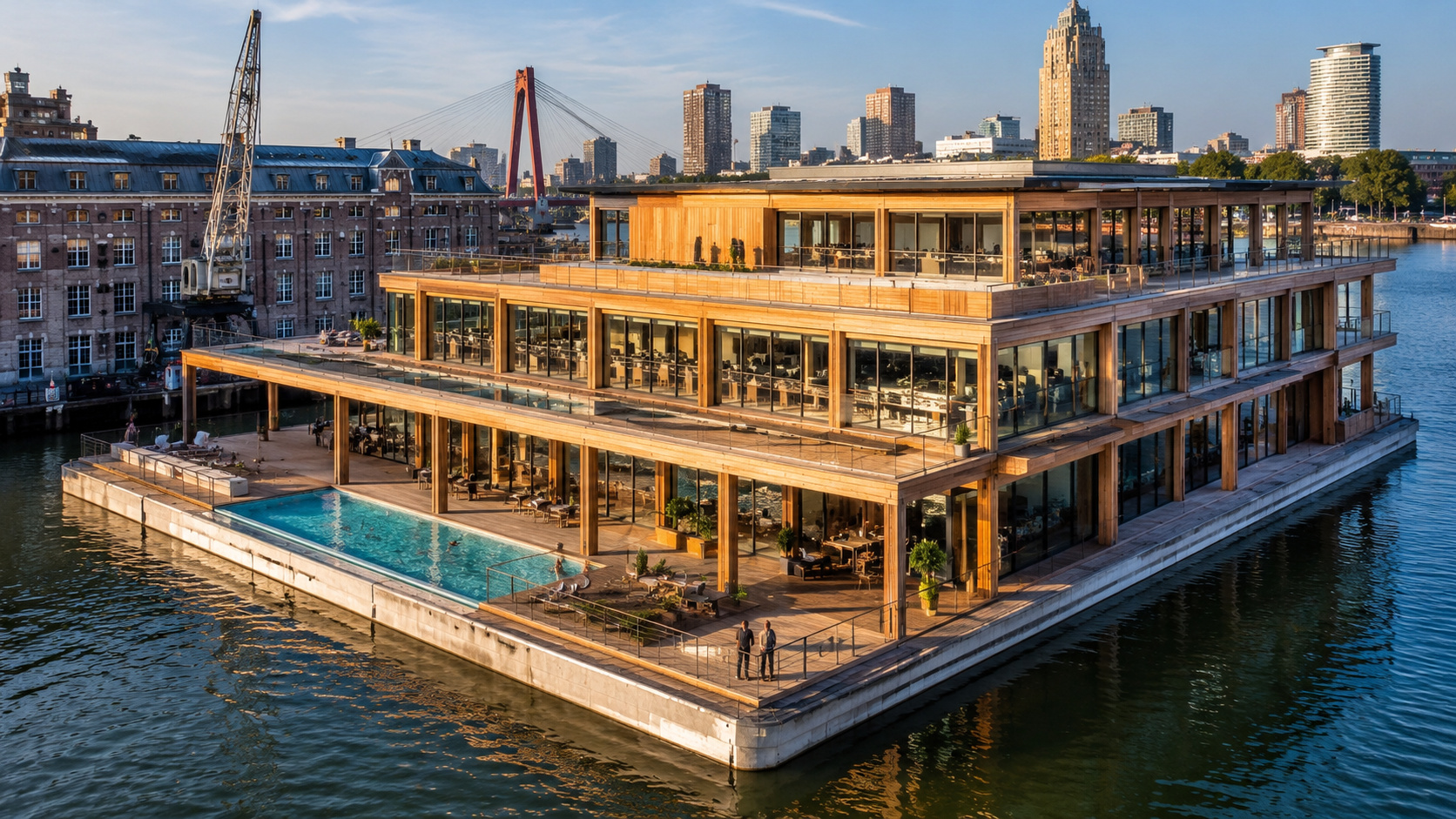
The world’s largest floating office occupies 3,600 square meters in an old port, has a swimming pool, restaurant, detachable wood, and can be towed elsewhere.
-
With concrete, wood, and engineering calculations, university students build canoes up to 6.7 meters long, carry four people, and prove on the water that even a heavy material can float.
-
First rains after the drought require extra attention in water treatment.




More than 200 candidates competed for the 20 spots in the project
The initiative was organized by U Dream Global, an institution created by young pilot Megan Werner. The goal was to bring teenagers closer to aviation, engineering, and technology through an experience that required direct participation.

More than 200 young people from different regions and social backgrounds in South Africa sent videos via WhatsApp to participate in the selection. Only 20 teenagers secured a spot in the group responsible for the assembly.
The lack of prior experience did not prevent participation. The project specifically sought young people who could learn during the workshop, as long as they demonstrated interest, responsibility, and willingness to work as a team.
None of the selected participants left the program during the construction period. The assembly took place in June 2018, during the school holidays, with tasks distributed among the participants.
Kit airplane arrived divided into parts for assembly
The Sling 4 is a light aircraft with space for four people. In the design, it was assembled from a kit, a model in which the components arrive prepared to be joined in the order indicated by the manufacturer.
This does not mean that anyone can open boxes and build an aircraft without technical knowledge. Each piece needs to occupy the correct position, as errors in alignment, tightening, or installation can compromise the functioning of the plane.
The instructions guide the sequence of work. Templates, which are supports used to keep the parts in the right position, help align components as the structure takes shape.
The workshop allowed different teams to work simultaneously. Some teenagers worked on the central part of the aircraft, while others helped assemble the wings and the parts responsible for stability during flight.
Three weeks of work required permanent supervision
The 20 teenagers assembled the plane in three weeks, but the timeframe does not represent an improvised construction. Experienced engineers accompanied the activities and checked the work before each stage advanced.
The BusinessTech, a South African portal for business and technology news, reported that the assembly took place under professional guidance and within a highly controlled environment. The care was necessary because any failure might only appear when the plane was in the air.

The participants learned to identify parts, interpret instructions, and use tools. They also needed to understand why a seemingly simple task could affect other parts of the aircraft.
The division of labor helped reduce the total time. While one group completed a certain area, another team prepared the components that would be installed in the next stage.
Engine and electronic equipment were left to specialists
The teenagers had direct participation in the construction, but did not do everything alone. Professionals took over the installation of the engine and the avionics, the name given to the electronic equipment used in navigation, communication, and reading the plane’s conditions.
The engine requires precise adjustments, tests, and specialized knowledge. An incorrect installation can cause serious failures, so this part was not left to beginner participants.
Avionics also have delicate components. It includes instruments that help the pilot understand altitude, direction, speed, and other necessary information during the flight.
This separation shows the real limit of student participation. The young people built a large part of the structure, but worked under supervision and left the more critical systems in the hands of qualified people.
First flight occurred after inspections and authorization
The completion of the assembly did not immediately release the plane. The aircraft needed to undergo final inspections, technical checks, and flight certification before leaving the ground.
The South African Civil Aviation Authority issued the flight authorization the afternoon before the public presentation. The first flight took place at Tedderfield Airfield, south of Johannesburg, in front of family and supporters.
DefenceWeb, an African portal specialized in defense and aviation, reported that the Sling 4 flew accompanied by another aircraft of the same model. The test confirmed that the plane was ready to start the planned journey across the continent.

The presence of another aircraft also provided support during the operation. Professional pilots could follow the route, observe possible problems, and assist in decisions made along the way.
Journey between Cape Town and Cairo was divided into stages
The journey began on June 12, 2019. Before heading to North Africa, the group flew from Johannesburg to Cape Town, passing through Mossel Bay.
The route was planned with stops in different countries. These interruptions were necessary for refueling, rest, organizing ground activities, and preparing for the next stages.
Not all 20 teenagers piloted the plane. Some young people prepared for the role shared the controls, while adults and professional pilots accompanied the mission in another aircraft.
DefenceWeb, an African portal specialized in defense and aviation, confirmed that the Sling 4 arrived in Cairo on July 8, 2019. The aircraft passed through Namibia, Malawi, Ethiopia, Zanzibar, Tanzania, Uganda, and Sudan during the approximately 12,000-kilometer journey.
Project turned a workshop into a real aviation experience
The airplane built by the teenagers was not displayed inside a school or stored in a hangar. After inspections and tests, it embarked on a long journey from the southern tip of Africa to Egypt.
The experience showed that students without prior training can participate in complex projects when they receive clear instructions, technical supervision, and safety limits. It also made it evident that critical components need to remain under professional responsibility.
In three weeks, the young people saw separate parts transform into a four-seater airplane. Months later, they watched the same aircraft cross the continent and arrive in Cairo.
Should projects like this be part of more students’ education, or do the costs and safety requirements make this experience difficult to repeat? Leave your opinion in the comments and share the post.


