





 Portuguese
  English
  Spanish
  3 min of reading
  0 comments


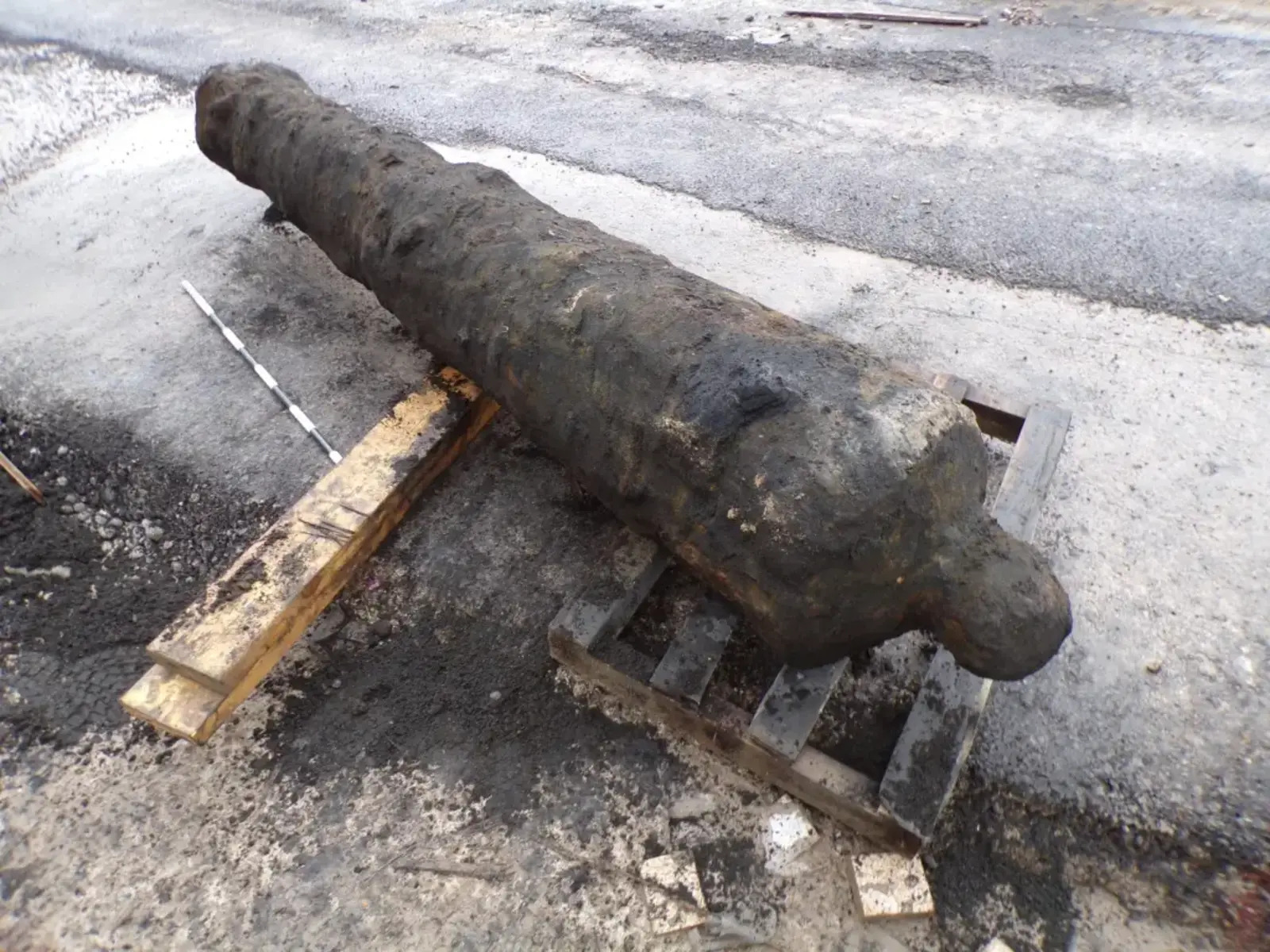
Workers found an ancient cannon almost three meters long and more than a ton during a construction project in Kingston upon Hull, surprising archaeologists
Construction workers discovered an ancient cannon during a project in Kingston upon Hull, in East Yorkshire. The artifact, measuring three meters and weighing over a ton, caught the attention of archaeologists due to its rarity and the repurposing identified.
Discovery during the work
The discovery occurred during construction work in Kingston upon Hull, as announced by the Hull City Council. The ancient cannon was removed from an area of dockland filled in during the 1930s.
After the object appeared, archaeologists from Humber Field Archaeology, a unit linked to the Hull City Council, began examining the piece.
-
The water cooling system of the nuclear fuel pool in Fukushima has resumed operation.

-
With images from NASA’s Juno spacecraft, researchers detected lightning on Jupiter that is up to 100 times stronger than that on Earth.

-
Ancient Romans were obsessed with a plant that they said was a contraceptive and an aphrodisiac – then it became extinct.
-
For the first time, scientists have mapped the Etna magma system in almost real time and discovered where the volcano was storing large volumes of molten material before years of eruptions, revealing an underground reservoir that fills and reorganizes like a living organism beneath the mountain.

At first, the contractors did not even realize it was a cannon.
Peter Connelly, archaeology manager at Humber Field Archaeology, stated that the discovery was unexpected.
He said that the archaeologists did not anticipate this find because they knew the excavated deposit was dock fill.
Characteristics of the artifact
The ancient cannon is made of cast iron and was likely produced in the late 17th century or early 18th century. According to authorities, it measures almost three meters in length and weighs over a ton.
The released images show the piece covered in dirt and corrosion after being unearthed. Initial observations indicated that the cannon had been decommissioned, with the muzzle deliberately sealed.
Reuse and disposal
According to the council, researchers believe that the ancient cannon was repurposed as a mooring post. This practice was common in the late 19th and early 20th centuries.
Later, the object would have been pushed into the dock area. After the dock ceased to be used and began to be filled in and transformed into a garden, this post lost its function, and the cannon was buried with the fill.
Connelly said that people tend to dump anything into a conveniently large hole when it is being filled. This statement helps to contextualize why the artifact ended up there.
Rarity and upcoming studies
Although this type of find is not unprecedented, Connelly classified the discovery as definitely very rare. He stated that this is the third discovery of this kind in 30 years made by Hull archaeologists.
Prior to this, the team had already found a cannon from the time of Henry VIII in the late 1990s and also a fragment of a cannon from a period just before the English Civil War.
The archaeologists were expecting to locate 20th-century household waste and occasional accidental losses. From the dock fill, a glass decanter from the late 19th century had been recovered.
Now, researchers will analyze the ancient cannon to try to determine when it was cast, where it was manufactured, and, if possible, who produced it.
With information from New York Post.








Seja o primeiro a reagir!