





 Portuguese
  English
  Spanish
  5 min of reading
  0 comments


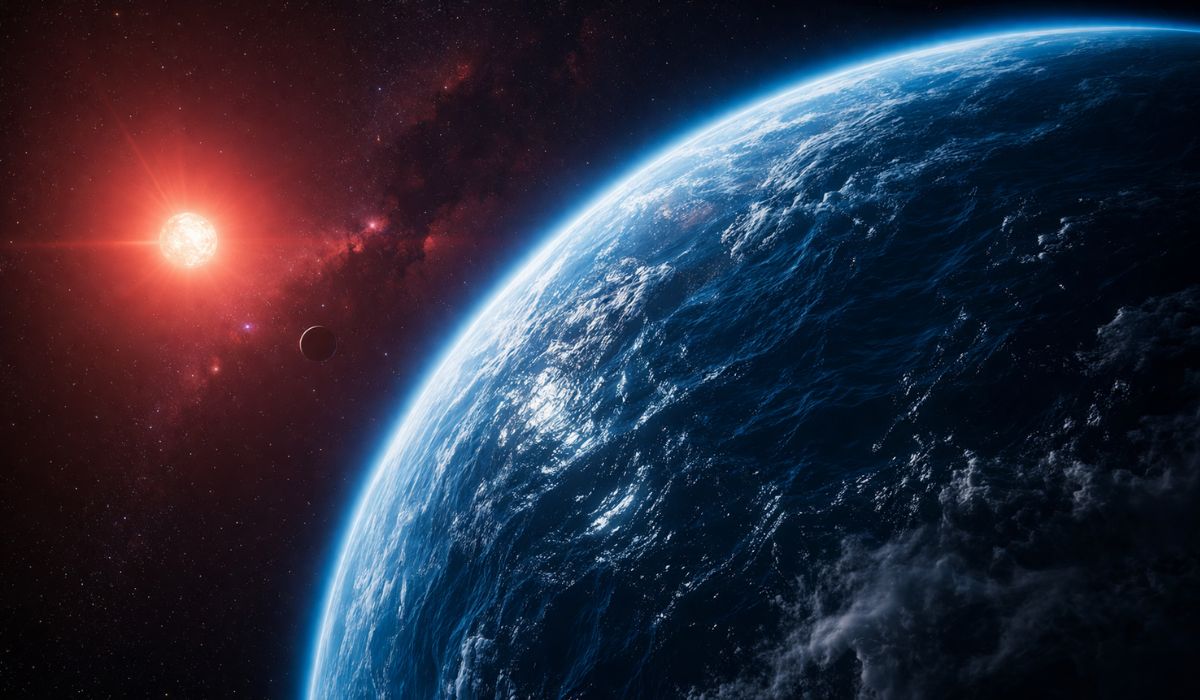
A theoretical class of exoplanets expanded the field of astrobiology, put new worlds on the radar of telescopes, and rekindled discussions about the limits of habitability beyond Earth, in a debate still surrounded by revisions and scientific disputes.
The hypothesis that some exoplanets may be covered by oceans and have hydrogen-rich atmospheres opened a new research front in the search for life beyond Earth.
These worlds, called Hycean, were proposed in 2021 as a theoretical class of planets larger than Earth and smaller than Neptune, which could, in certain scenarios, maintain liquid water under conditions different from those observed on our planet.
The proposal expanded the set of targets considered relevant, especially in systems with red dwarf stars, which are common in the Milky Way.
-
Argentina achieves the unimaginable after more than 110 years and reintroduces the largest native herbivore of South America to the Chaco to restore a lost link in nature.
-
Returning to the Moon now costs a billion-dollar bill and reignites the competition between the USA and China for science, technology, and rare minerals on lunar soil.
-
While the world looks at oil, the war with Iran is already disrupting helium supply from Qatar, affecting car and iPhone chips, threatening AI expansion, and putting pressure on aluminum packaging at the highest value in four years.

-
Global warming will expose a treasure hidden under the ice of Antarctica and may spark an international dispute over gold and valuable minerals.

The formulation gained traction because it altered one of the central criteria in the field.
Until then, most studies focused on rocky planets with characteristics closer to those of Earth.
With the Hycean, researchers began to consider that environments with different atmospheric compositions and planetary structures could also enter the radar of astrobiology, as long as they presented physical conditions compatible with the presence of liquid water.
What are Hycean planets and why did they enter the search for life
In the proposal presented by researchers from the University of Cambridge, Hycean would be worlds with global oceans and an atmosphere dominated by hydrogen.
In terms of mass and size, they would occupy an intermediate range between super-Earths and sub-Neptunes.
This profile drew attention because extensive atmospheres, in theory, facilitate the detection of chemical compounds by space telescopes, making these planets relevant observational targets.
Moreover, the authors of the model indicated that the habitable zone for this type of planet could be broader than that calculated for worlds strictly similar to Earth.

In practice, this would mean that a planet would not need to replicate Earth-like conditions to be included among the candidates for more detailed studies.
It would be sufficient to gather a set of factors that, according to the models, could allow the maintenance of liquid water for extended periods.
The proposal also shifted the focus of part of the scientific discussion.
Instead of limiting the search for habitability to rocky planets with relatively thin atmospheres, the concept of Hycean led astronomers to evaluate whether different combinations of mass, pressure, and chemical composition could, in certain cases, sustain environments of astrobiological interest.
K2-18 b and the growing interest in ocean worlds
One of the factors explaining the interest in this class of exoplanets lies in the observation of their atmospheres.
As these celestial bodies would tend to have thicker gas envelopes, the signals detected during transit in front of their stars could be more accessible to current instruments than the signals from a rocky planet with a less extensive atmosphere.
In this context, K2-18 b became the most cited example.
The planet, discovered in 2015, orbits a red dwarf in the habitable zone and has about 8.9 times the mass of Earth, with an estimated radius 2.37 times that of Earth.
The distance from the Solar System is calculated to be approximately 120 to 124 light-years.
In 2023, observations made with the James Webb Space Telescope indicated the presence of methane and carbon dioxide in its atmosphere, along with the apparent absence of ammonia at expected levels in some scenarios.
This set was treated by researchers as compatible with the hypothesis of a Hycean candidate.
From then on, the planet became central to the debate about habitability beyond Earth-like standards.
In April 2025, a team from Cambridge reported indications of DMS and DMDS, molecules that, on Earth, are primarily associated with marine biological activity.
The researchers themselves, however, stated that the result did not represent proof of life and that confirmation with new observations and independent analyses would be necessary.
Recent studies impose limits on the hypothesis of ocean worlds
With the advancement of simulations, important restrictions emerged on the scenario initially proposed.
Models published in recent years indicated that hydrogen-rich atmospheres could produce a very efficient greenhouse effect, significantly raising the surface temperature.

In some cases, this warming could prevent the stable presence of liquid water, even on planets located in the habitable zone of their stars.
This point has become central in the reevaluation of Hycean.
If the atmosphere is too thick, the combination of high pressure and heat retention could lead the planet to conditions incompatible with the type of surface ocean suggested in the most optimistic hypotheses.
Thus, the orbital position alone would not be sufficient to determine whether a world of this type can or cannot maintain liquid water on its surface.
Other works have also drawn attention to the limits of interpreting atmospheric data.
In 2025, a reanalysis of Webb’s observations indicated that there was not enough statistical significance to support the presence of DMS or DMDS in K2-18 b.
The result did not end the discussion but showed that the interpretation of the signals is still open and depends on additional confirmation.
At the same time, doubts persist about the very structure of these planets.
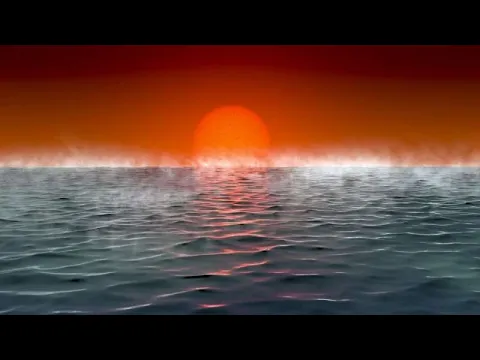
Some candidates classified in the Hycean category may, in practice, be worlds with very deep atmospheres, superheated oceans, or high-pressure water layers.
In these scenarios, the existence of stable surface liquid water, as understood in the most widely circulated models, may not be confirmed.

What the discussion about habitability changes in astrobiology
Even with the restrictions pointed out by more recent research, Hycean remains relevant to astronomy because it expanded the criteria used to select observation targets.
The discussion did not replace the interest in Earth-like planets but added new possibilities to the map of habitability investigation.
This effect is more methodological than conclusive.
By studying these worlds, scientists not only assess where life could exist but also identify which combinations of temperature, pressure, and atmospheric composition reduce that possibility.
The result is a gradual refinement of the models used to interpret exoplanet data.
K2-18 b remains at the center of this process.
Today, the planet is treated as an important case for testing competing hypotheses about atmospheric composition, internal structure, and limits of habitability.
The same observations that support promising interpretations also serve as a basis for more cautious analyses, keeping the debate open.







Seja o primeiro a reagir!