





 Portuguese
  English
  Spanish
  6 min of reading
  0 comments


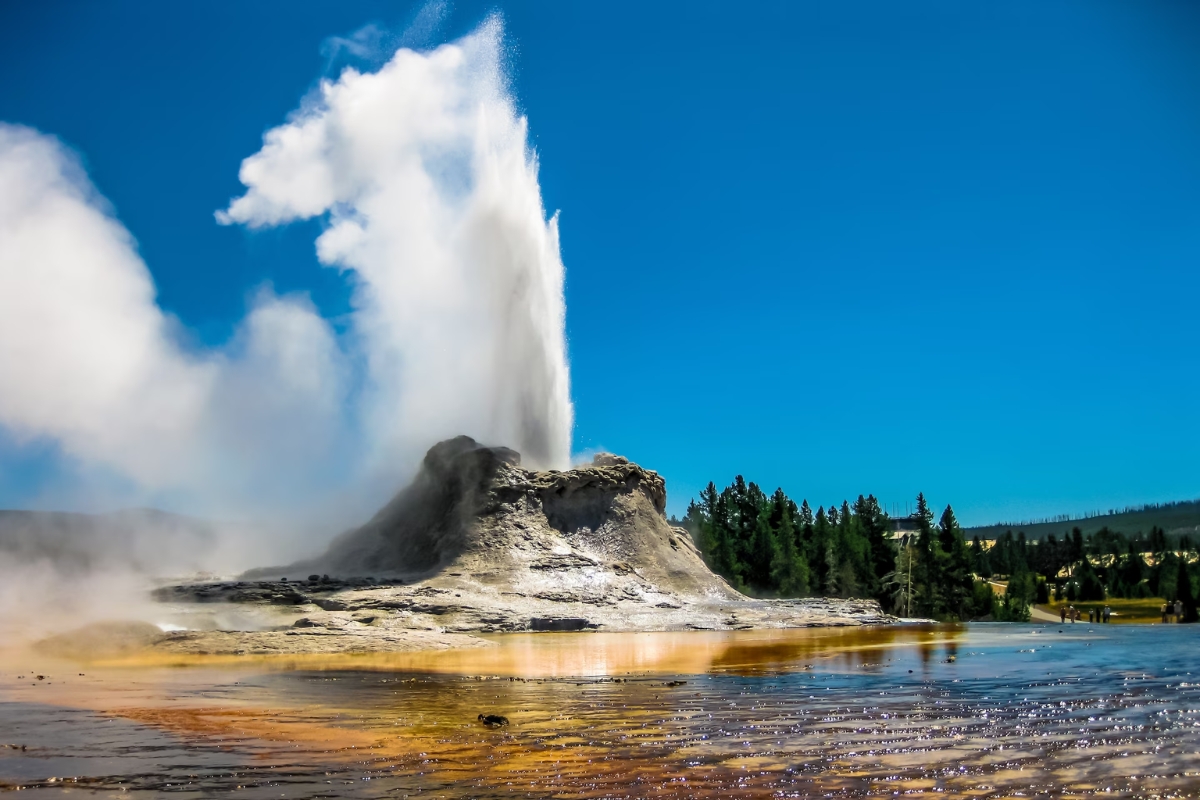
A new ground deformation has put Yellowstone back in the spotlight: an area of the caldera has begun to rise, while the USGS intensifies monitoring of earthquakes and underground changes in the U.S. volcanic system.
Yellowstone has drawn attention again after researchers confirmed a slight uplift of the ground in an area on the northern edge of the caldera, one of the most famous volcanic structures on the planet. The change was detected south of Norris Geyser Basin, a region known for its intense hydrothermal activity and having exhibited similar behavior in the past.
The news naturally ignites the imagination surrounding the so-called “supervolcano” of the United States, a term that often generates impactful headlines. But the most important fact is another: according to the USGS, the United States Geological Survey, the Yellowstone volcanic system remains in normal state, with overall activity at background levels and no signs of an imminent eruption.
The detail that put Yellowstone back on the radar
The uplift began in July 2025 and was observed in a specific zone on the northern edge of the caldera. It is a discreet movement, measured by high-precision instruments, and not an abrupt or visible deformation to the naked eye. Nevertheless, the phenomenon is scientifically relevant because it shows that the system remains dynamic below the surface.
-
Woman arrested after receiving $1.2 million due to banking error and not returning the amount.

-
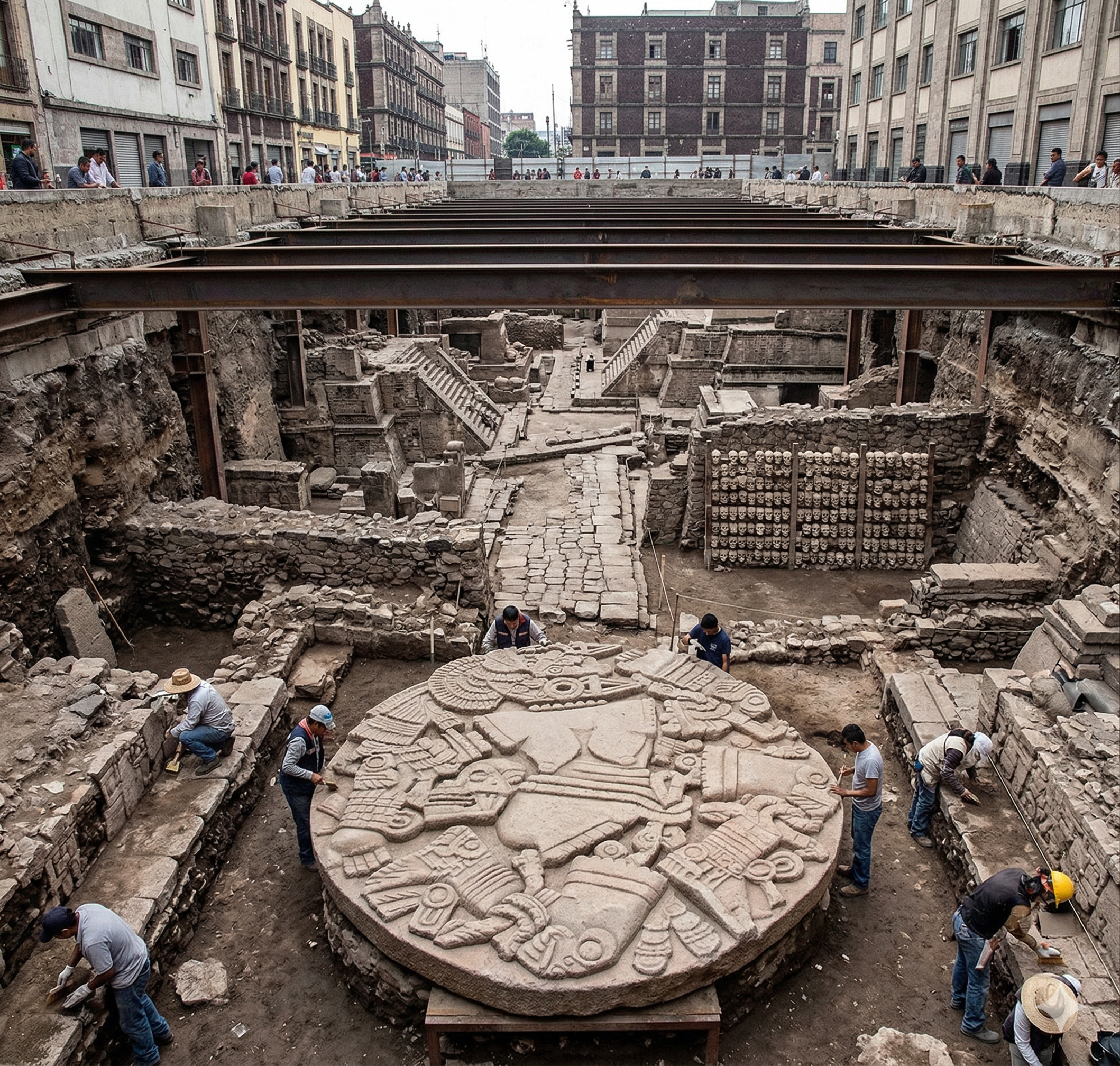
Beneath Mexico City lies an entire buried Aztec capital, and it all began when workers discovered a 3.25-meter stone disk featuring a dismembered goddess, revealing temples, skulls, and palaces beneath 22 million people.
-
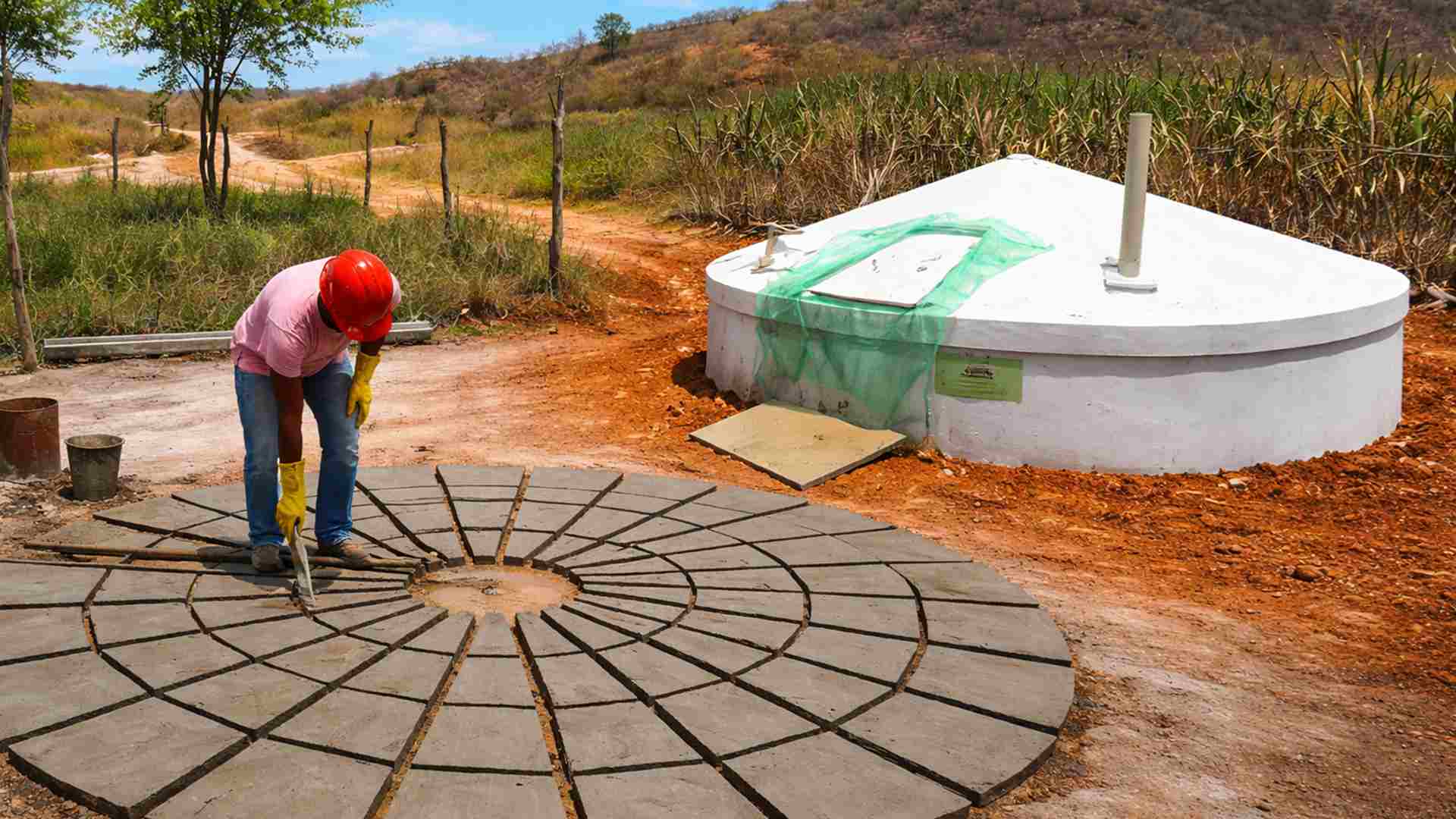
How to build a 35,000-liter cistern with 60 by 50 cm panels and rainwater for drinking and cooking without relying on water trucks or the city hall.
-
A woman went out for a regular walk and ended up finding a treasure buried for over 900 years, with more than 2,000 medieval silver coins compared by archaeologists to a lottery prize and considered one of the most significant finds in recent years in the country.

This area is not unknown to researchers. The same sector had experienced a similar episode between 1996 and 2004, when the ground also rose slowly. After that, the region entered a phase of subsidence, meaning gradual sinking, until it became relatively stable for a period. The return of this pattern in 2025 has reinforced the interest of geologists, but within a context already known from historical monitoring.

What it really means for the ground to be rising
In a volcano like Yellowstone, the ground can rise or fall slowly over the years for different reasons. This can involve changes in pressure at depth, movement of hot fluids, intense hydrothermal circulation, and even structural adjustments in the crustal rocks. In other words: ground deformation is not an automatic synonym for magma about to break the surface.
This is precisely the main difference between scientific reading and alarmist interpretation. The fact that an area of the caldera is rising does not mean that Yellowstone is “waking up” for a major eruption. What the data shows is an active, complex system that is monitored in real time, with fluctuations that are part of its natural behavior.
The “supervolcano” that is more scary than truly threatening
Yellowstone carries this nickname because it was the site of gigantic eruptions in the geological past. The system has had three major caldera-forming eruptions in the last 2.1 million years, the most recent occurring about 631,000 years ago. It was this event that helped shape the current caldera, now one of the most studied on Earth.
However, the fame of the “supervolcano” often comes with exaggerations. The idea that Yellowstone could explode “at any moment” is not supported by what the observatories are recording today. The system is enormous, remains active, and releases heat constantly, but that does not mean it is on a collision course with a supereruption. The very notion that it is “overdue” for an explosion is rejected by science.

Norris Geyser Basin helps explain why the area is so sensitive
The new uplift occurs near Norris Geyser Basin, one of the most intense and unstable hydrothermal areas of Yellowstone. There, the surface is marked by geysers, fumaroles, superheated waters, and constant circulation of underground fluids. This activity makes the region especially important for understanding how the internal heat of the volcano expresses itself on the surface.
This also helps explain why the signals observed in Yellowstone do not always point directly to rising magma. In many cases, part of the deformation may be linked to the behavior of the hydrothermal system, where hot water, steam, and gases alter pressure and influence the structure of the ground. Yellowstone functions like a huge geological gear, where magma, hot rocks, and underground fluids continuously interact.
Monitoring is so precise it detects minimal movements
One of the reasons Yellowstone appears so often in the news is the impressive level of scientific surveillance. The volcano is monitored by the Yellowstone Volcano Observatory, which uses GPS networks, satellites, seismometers, and other sensors capable of recording very small changes in the terrain and seismic activity.
It is thanks to this monitoring that scientists can notice when an area rises a few centimeters over months or years. Instead of meaning automatic danger, this shows how closely the system is being monitored. Yellowstone is not a “forgotten” volcano nor a silent giant out of control; it is one of the most observed geological environments in the world.


The latest bulletin brings a detail that reduces alarmism even further
In addition to keeping Yellowstone at normal volcanic alert, the USGS reported in the latest update that the uplift observed since July 2025 has shown a pause. At the same time, seismicity remained low, with dozens of small earthquakes, all within the behavior considered typical for the region.
This point is essential because it shows that the phenomenon did not come accompanied by a widespread escalation of activity. In the event of a volcanic crisis, scientists would expect to see a broader set of changes, such as a strong increase in seismicity, accelerated deformation in larger areas, marked changes in gases, and more intense hydrothermal changes. That is not what is happening now.
Today’s Yellowstone is more fascinating than apocalyptic
The recent history of the caldera shows that the ground in Yellowstone has been rising and falling for years. Since 2015, for example, the dominant trend has been slow subsidence, interrupted by seasonal oscillations. The new uplift on the northern edge does not emerge, therefore, as an isolated event in a stagnant system, but as another chapter of a caldera that is in constant adjustment.
This makes the news interesting for a reason better than panic: it offers a rare window to observe one of the largest volcanic systems on Earth in normal operation. Yellowstone remains alive, slowly pulsing beneath the surface, releasing energy, moving fluids, and deforming the ground at rates that modern instruments can capture in great detail.
The correct reading is less dramatic and much more impressive
The case shows why Yellowstone needs to be treated seriously, but without sensationalism. Yes, an area of the caldera has risen again. Yes, scientists are closely monitoring this. But no, that does not mean an eruption is near. The current picture remains one of background activity, within the expected pattern for a system of this size.
In practice, the discovery reinforces two truths at once. Yellowstone continues to be one of the most extraordinary volcanoes on the planet, capable of sparking global fascination with each new measurement. And precisely for that reason, each change needs to be interpreted with technical context. At the moment, the scientific message is clear: the ground may be rising at one point in the caldera, but the volcano as a whole remains in a normal state.






Seja o primeiro a reagir!