





 Portuguese
  English
  Spanish
  3 min of reading
  0 comments


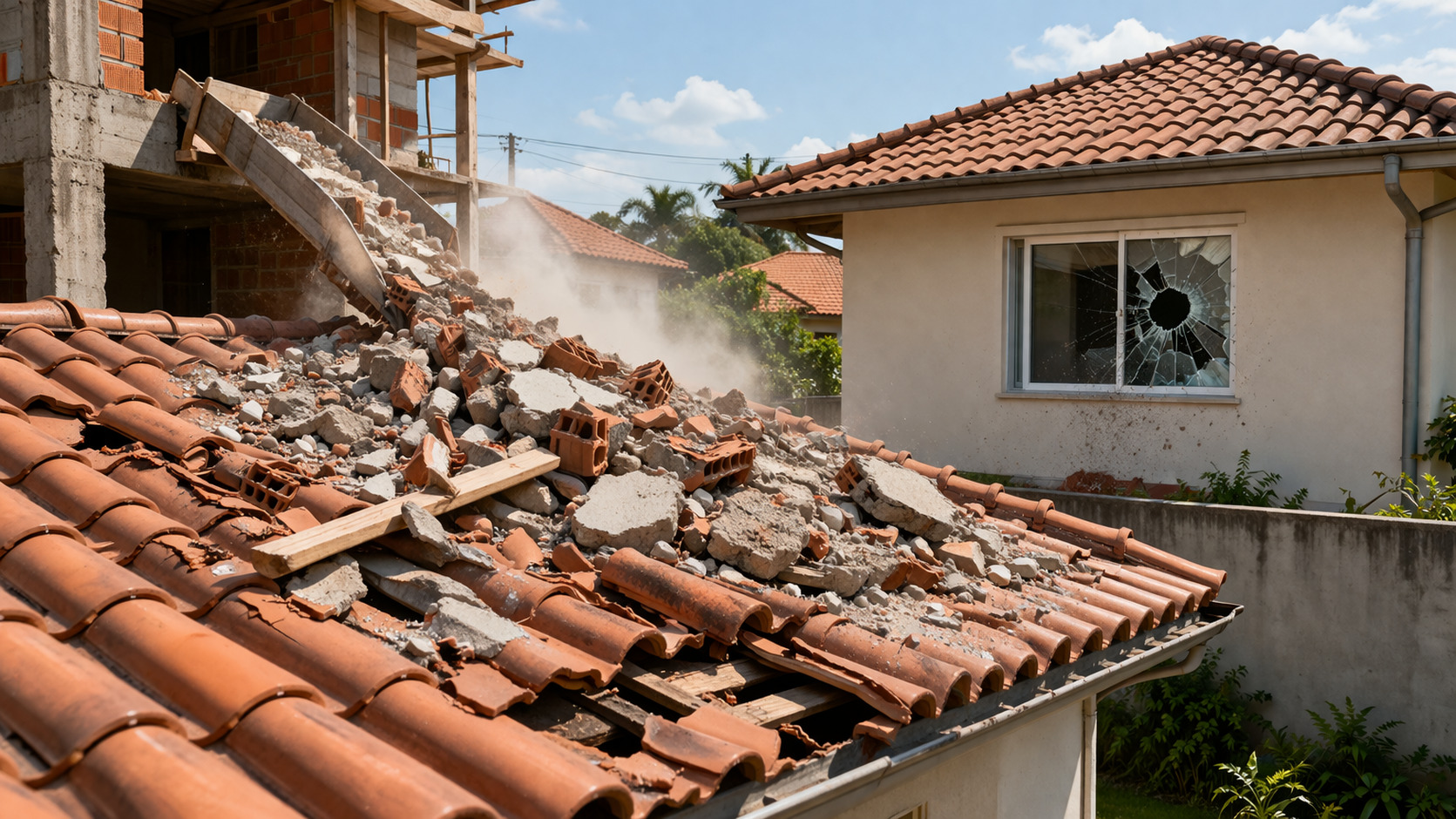
When construction debris causes damage to neighboring property, the legislation provides for compensation for losses, civil liability, and formal measures to collect cleaning, repair, and compensation
When debris from a construction site affects a neighboring property and causes damage, the situation involves civil liability, with the obligation to compensate by the responsible party, the owner, and even the construction company, for the losses generated.
Liability for damage in construction
When construction waste falls onto another property, breaking tiles, glass, or spreading dirt, the problem is no longer just a matter of coexistence.
In these cases, there may be liability for those who did not adopt adequate protection during the construction.
-
The noise law will no longer be in effect at 10 PM starting in June with a new rule valid during the 2026 World Cup.

-
The Chamber opens a debate on driver’s licenses at 16 years old as part of a reform that includes around 270 proposals to change the Brazilian Traffic Code and may redesign rules for licensing, enforcement, and circulation in the country.

-
The new Civil Code could revolutionize marriages in Brazil with “express divorce” and changes that could exclude spouses from inheritance.

-
Banco do Brasil sues famous influencer for million-dollar debt and intensifies debate on delinquency, risks of seizure, and direct impact on Gkay’s credibility.


The owner must use the property without harming the safety, peace, and health of the neighbors. Anyone who causes damage has the obligation to repair losses to roofs, walls, vehicles, and affected belongings.
Rights of the affected resident
The affected resident has the right to full compensation for the damages caused by the fall of debris. The compensation should restore the property and the affected belongings to the same condition they were in before the incident.
The situation may involve damage to different structures and objects, from roofs and outdoor areas to belongings inside the affected property.
The aim of the compensation is to cover the proven losses and restore the previous conditions.
How to act in the face of loss
Although many conflicts can be resolved through dialogue, there is not always an immediate agreement. Therefore, it is important to gather evidence and document the progression of the problem to facilitate negotiation or legal action.
Recommended measures include photos, videos, dates, and times, as well as discussions with the person responsible for the construction to request cleaning and repairs. It is also advisable to formalize the request in writing, describing the damages and demanding action.
The resident can contact municipal oversight in case of irregular construction or improper disposal. If necessary, they can seek the judiciary to pursue compensation for material damages and, when applicable, for moral damages.
Duties of the renovator
Those who carry out renovations or construction must adopt preventive measures to prevent debris and materials from affecting neighboring properties.
Failure to comply with these precautions constitutes abnormal use of the property and can generate civil liability.
In minor damages, an agreement is often sufficient, involving the exchange of tiles, repair of glass, or cleaning. However, when the loss is significant, recurrent, or poses a risk to safety, specialized legal advice is recommended.
In these situations, seeking a lawyer or public defender can help guide the claim, organize evidence, and determine the course of action. This becomes important when damages recur or affect the safety of the resident.
With information from O Antagonista.









Seja o primeiro a reagir!