





 Portuguese
  English
  Spanish
  6 min of reading
  0 comments


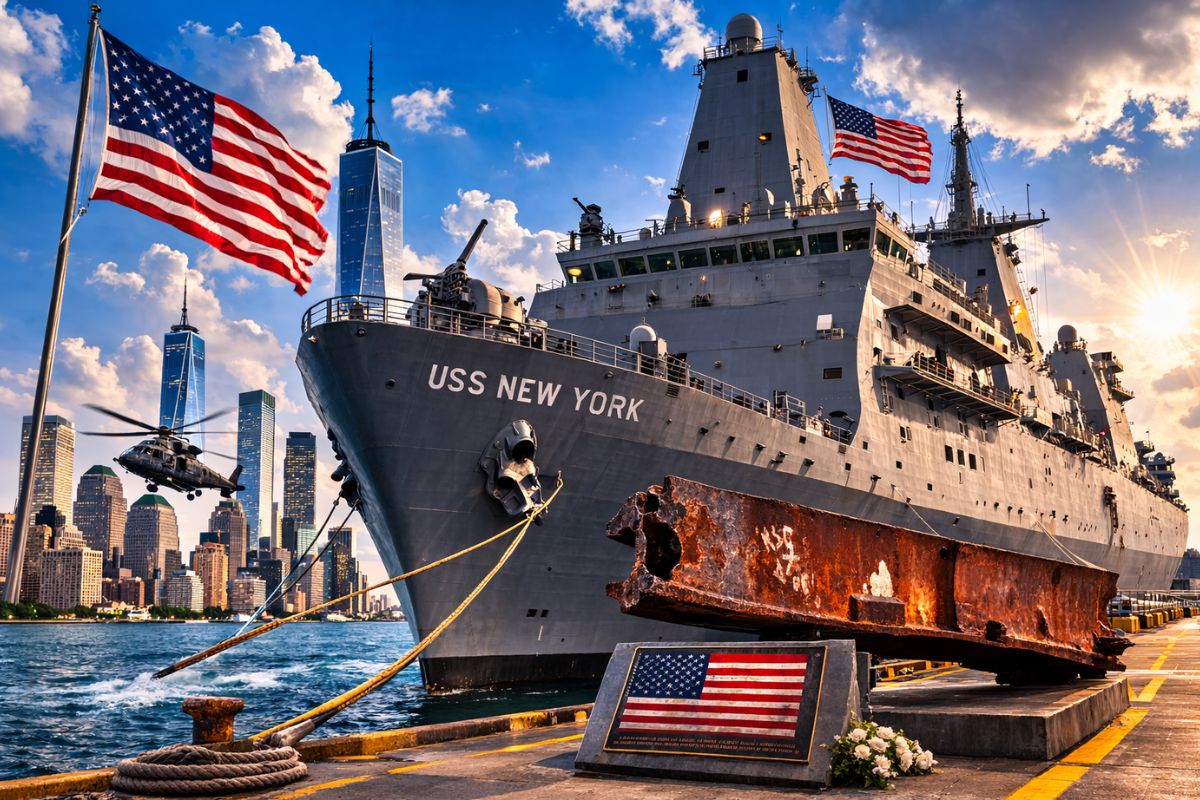
The USS New York Mixes Steel from the World Trade Center in the Bow, Stealth Design, Dock for Hovercraft, and a 124-Bed Hospital, Showing Why the U.S. Navy Treats This Giant as a Strategic Piece
The USS New York is not an aircraft carrier, cruiser, or submarine, but it is one of the most versatile ships in the U.S. Navy. A YouTuber spent three nights aboard the USS New York and discovered, from the inside, that it was designed for two things at once: to fulfill an industrial-scale amphibious combat mission and to carry a symbolic weight related to September 11.
The shock begins in the way of arrival. The visitor does not board “as everyone imagines.” He reports that he entered the belly of the ship in a hovercraft, directly through the dock, and from there each corridor, door, mast, and light has an explanation of engineering, operation, and survival.
Why the USS New York Is Different from Other Ships
What makes the USS New York unique is the material incorporated into its construction. During assembly, seven and a half tons of steel from the rubble of the World Trade Center were incorporated into the bow.
-
Attracting around 250,000 people a year, a lighthouse 200 meters from the sea, on a 60-meter high cliff, on the North Sea coast in Denmark, becomes one of the most impressive examples of how nature can threaten historical buildings.

-
The narrowest house in the world is only 63 centimeters wide, but inside it can accommodate a bathroom, kitchen, bedroom, office, and even two staircases.

-
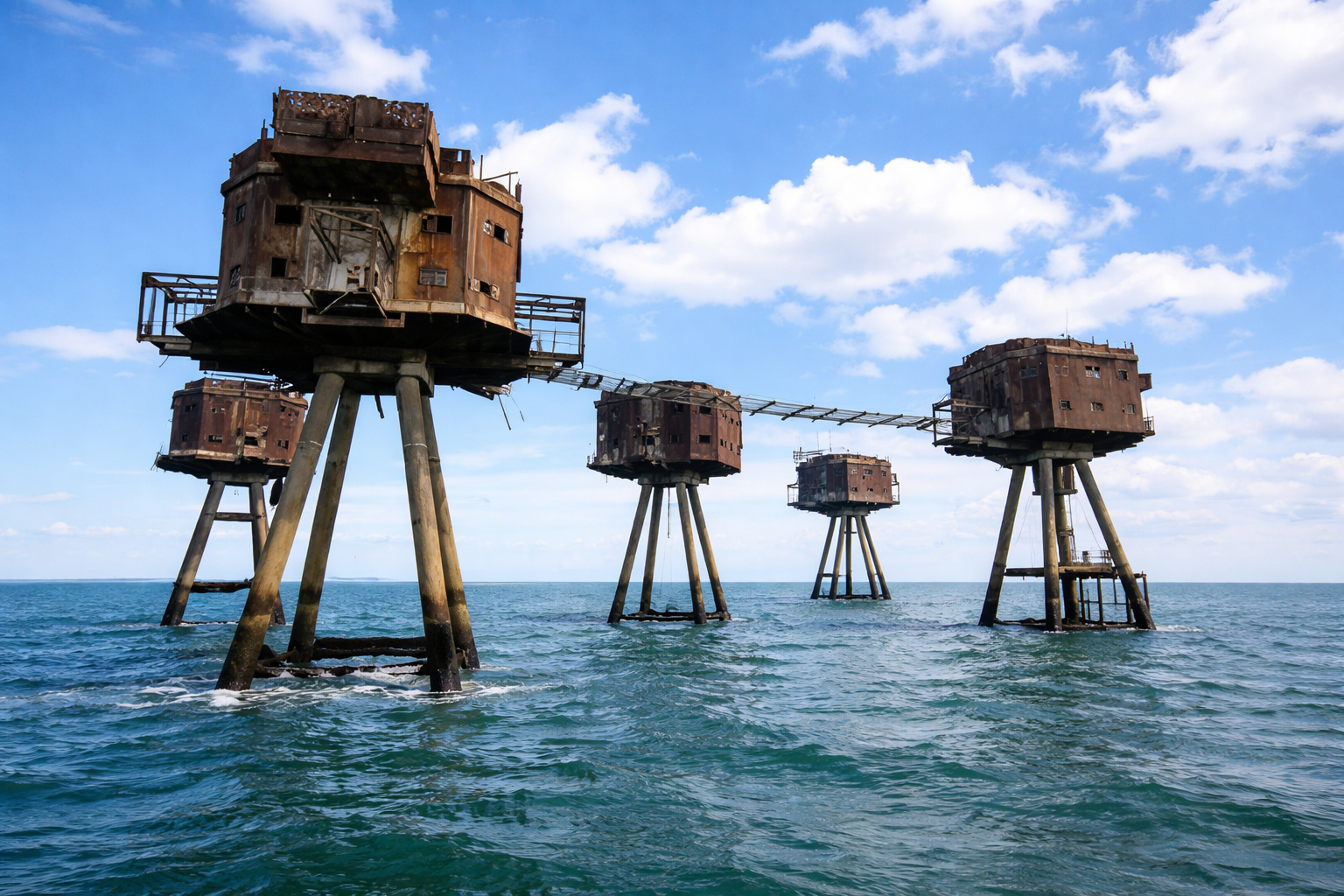
In the middle of the sea, these enormous concrete and steel structures, built by the British Navy to protect strategic maritime routes, look like they came straight out of a Star Wars movie.
-
For years, no one could cross a neighborhood in Tokyo because of the tracks, but an impressive solution changed mobility and completely transformed the local routine.


The ship was named in honor of the victims of the September 11 attacks in New York, and this detail transforms structure into memory.
In addition, the USS New York also carries a metal plaque with the ship’s name salvaged from the ruins of the World Trade Center and installed on board.
That is why it and its sister ships, USS Arlington and USS Somerset, are described as floating museums, with direct references to the event and the city that names the vessel.
What Is the San Antonio Class and Where the USS New York Fits In
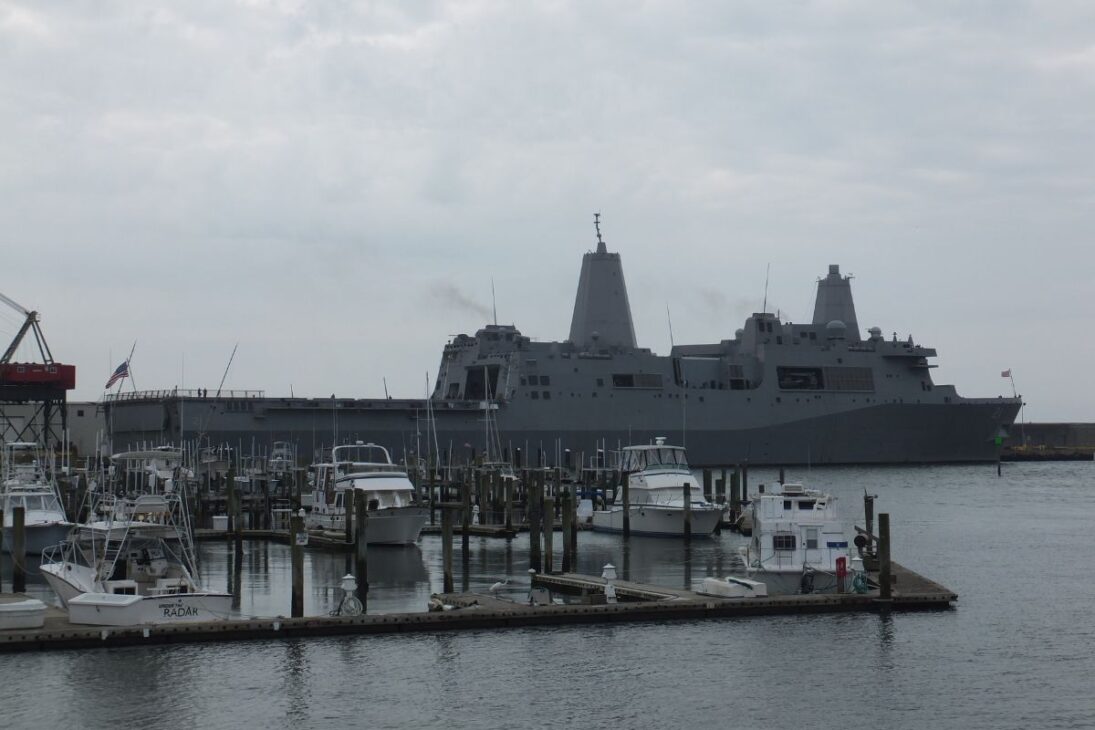
The USS New York belongs to the San Antonio class, also called LPD 17, ships known as landing platform docks. The text describes that this class has a displacement of 25,000 tons and is among the largest warships in the U.S., except for the giants with flight decks from bow to stern.
What matters in practice is the function: the USS New York exists to carry about 800 Marines and their equipment close to the destination and then put people and vehicles ashore using aircraft and landing craft, while 360 sailors on board keep everything running.
Flight Deck, Dock, and Fuel: The Real Size of the USS New York
The flight deck of the USS New York has been described as enormous, capable of supporting the operation of two MV-22 Ospreys almost simultaneously. The report mentions the loud noise of the Ospreys and the use of ear protection by those on board.
Another number catches attention: the USS New York carries 319,000 gallons of aviation fuel, a volume comparable to half of an Olympic swimming pool.
And the feature that explains the boarding via hovercraft is the dock: it is spacious and was designed to accommodate LCACs or LCU, with multiple decks for vehicles and over 38,000 square feet intended to store amphibious assault vehicles. It is a ship that resembles a mobile port.
Stealth Design: Why the USS New York “Looks Smaller” on Radar
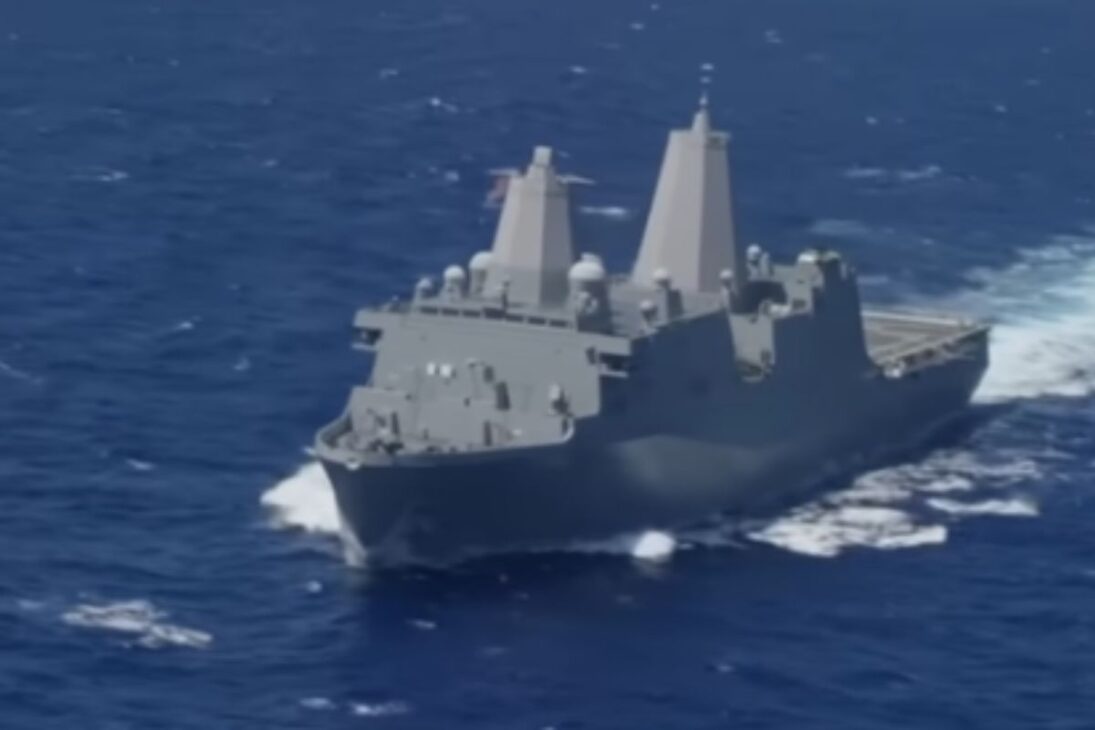
A highlighted feature of the USS New York is the stealth design. The text states that, on radar, San Antonio class ships appear smaller than they are. The reason lies in the inclinations spread throughout the external structure, starting with the two giant masts.
These ships were the first to incorporate advanced closed masts, with communication and radar antennas protected within structures designed to reduce radar cross-section.
The slanted pattern repeats in details that may seem trivial but are intentional: slanted external doors, handrails following the same “angle,” and even steps adhering to the principle.
Overall, the USS New York trades traditional aesthetics for geometry that “returns” radar signals upward, reducing what returns to the enemy receiver.
The USS New York Inside: Comfort, Corridors, and Routine That No One Imagines
The YouTuber mentions design details that come to light when living on the ship, such as the force needed to open doors and the shape of handrails. But there is a deeper point: the USS New York was designed as a functional city, with decisions aimed at quality of life and continuous operation.
The text states that the San Antonio class was designed to accommodate 90% of the male and female population of the U.S., and gives examples: watertight doors that require only 25 pounds of force to operate and bunks sized to comfortably accommodate most of the crew.
Even the layout changes according to the mission. The corridors leading to the flight deck are wider to allow Marines to prepare before boarding aircraft. And on the USS New York there is a white “special” corridor called Broadway, with show posters and lighting inspired by Broadway itself.
124-Bed Hospital: Why the USS New York Has a Giant Medical Structure
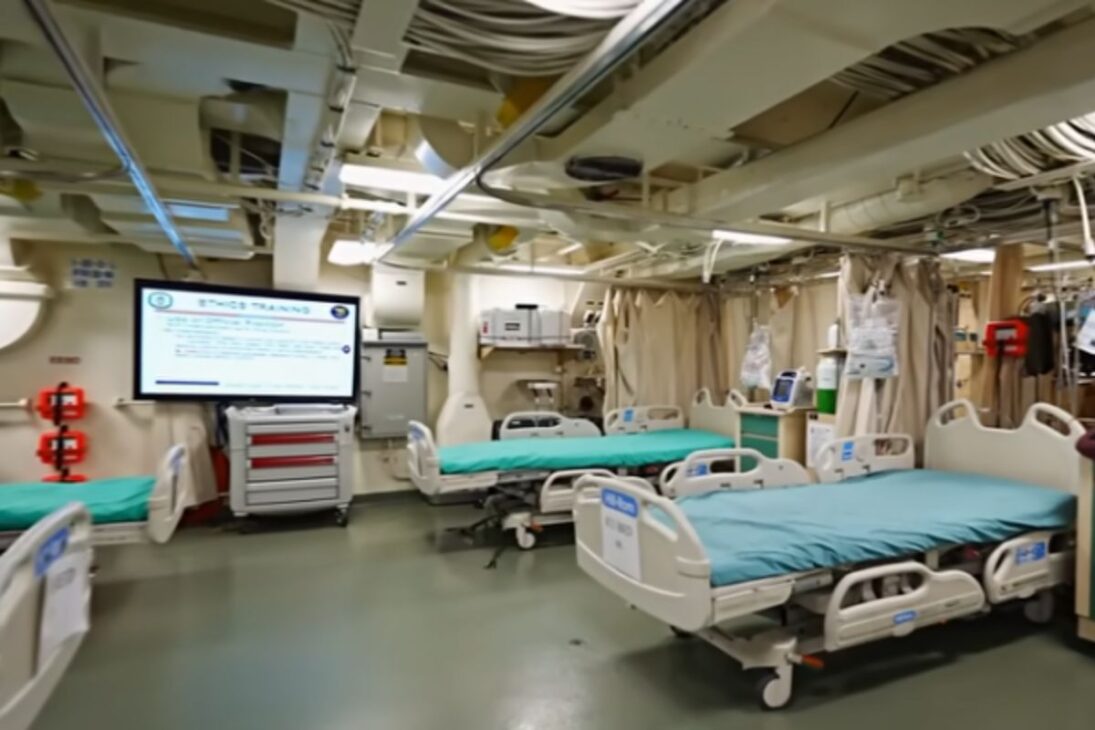
The USS New York has a hospital described as state-of-the-art, with 124 beds, X-ray machines, and two operating rooms. The text emphasizes that the LPDs have larger hospitals than aircraft carriers because the primary mission involves a higher risk of injury for Marines.
Even dining room details come into play: officers’ dining tables can turn into makeshift beds if necessary. The ship is not just combat; it is support to maintain operation and keep people alive.
LCAC and the Entrance through the “Belly” of the Ship: How the USS New York Receives Hovercraft


The report describes how LCACs enter the USS New York: the stern gate opens, and there is prior communication between the hovercraft and the ship. In addition to radio, blinking green lights can be used as a complement or backup to the “green well” signal, indicating that the ship will not maneuver during entry.
The text also highlights that operating an LCAC is no “joke” because putting the vehicle inside a moving ship’s deck has minimal clearance on the sides. Once inside, it is chained down to prevent movement with the ocean’s motion.
And there is another detail that seems small but is not: the USS New York uses a reverse osmosis system to generate drinking water and also water to clean vehicles when necessary, since fresh water is a scarce resource at sea.
Defense and Firepower: What the USS New York Can Do in Combat
Even though it is focused on amphibious assault, the USS New York is not defenseless. The text cites two RIM 116 RAM missile launchers for defense against anti-ship missiles, mounted on giant springs that act as dampers.
It can also transport a HIMARS, a capability tested on another ship of the class, with launches made from the flight deck. The logic is simple: carry people and equipment, protect the platform, and maintain responsiveness.
Red Light, Night Vision, and What the USS New York Teaches About Navigating in the Dark
The text mentions that during night operations, the bridge lights are kept to a minimum and often in red light, because red dissipates faster than white light and preserves visual adaptation. The visitor also reports the quality of the sky at night at sea, far from light pollution.
And there is a practical example: a “man overboard” drill, with light and smoke signals launched in the water, Williamson maneuver, and rescue simulation.
The narrative reinforces how, at night, the difficulty increases because even a light signal can disappear for seconds behind the waves, drastically reducing chances of survival.
Why the USS New York Became a Symbol and Not Just Another Ship
In the end, the USS New York carries two layers that rarely coexist on the same scale. It is a ship on a tough mission, with a dock, flight deck, hospital, stealth, and systems designed for war and real operation.
And at the same time, it is a material memorial: steel from the World Trade Center in the bow, salvaged plaque, internal references, and a name that does not let September 11 become just a date.
The YouTuber’s experience aboard transforms this into something direct: it is not a “pretty” ship; it is a ship with purpose, built to deliver capability and to carry memory, functioning as a weapon, platform, and floating museum at the same time.
Do you think the USS New York impresses more with its military engineering or with the symbolism of September 11 embedded in its very structure?





Seja o primeiro a reagir!