





 Portuguese
  English
  Spanish
  3 min of reading
  0 comments


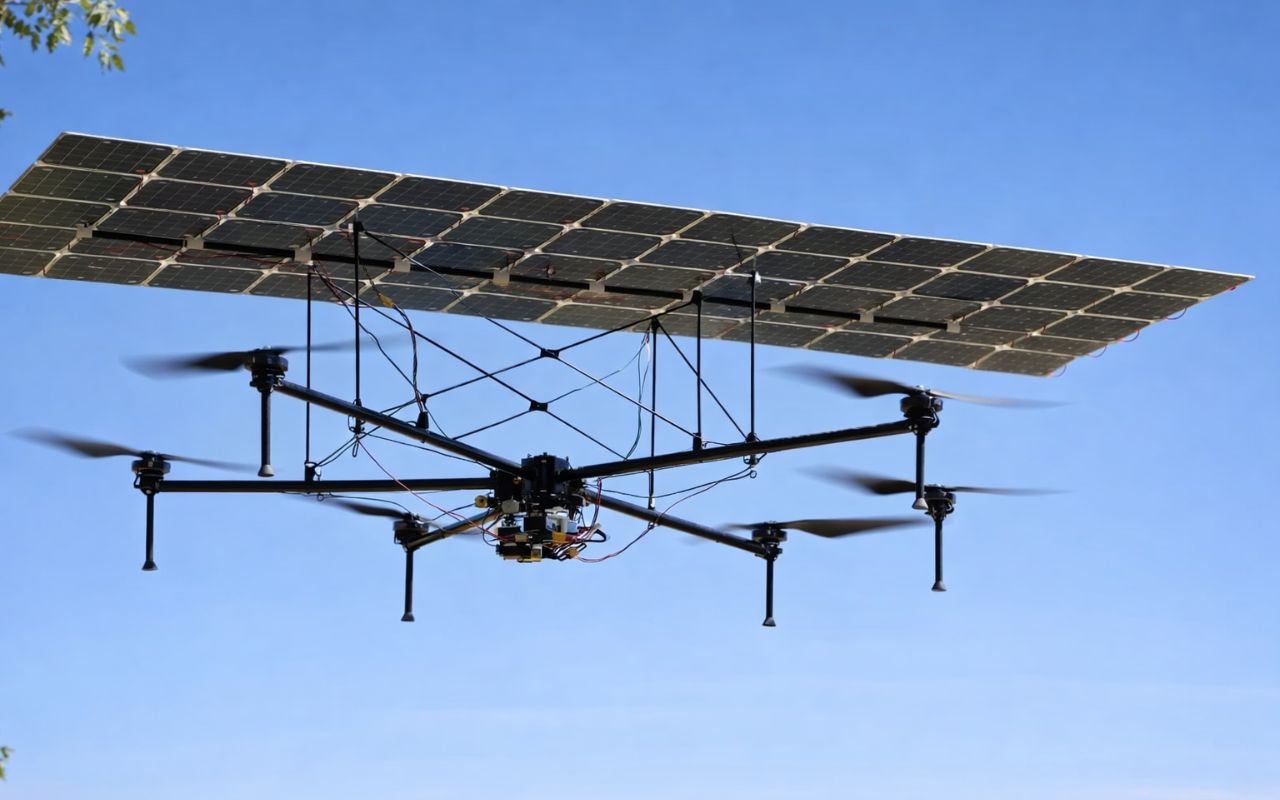
Homemade solar drone exceeds 5 hours of flight, reduces battery usage, and may reach up to 12 hours in the future.
A solar drone technology may be about to take an even bigger leap. Developers are already projecting that future versions of the homemade model could achieve up to 12 hours of flight in a single day, significantly expanding the use of this type of equipment.
This advancement is the result of a series of structural and energy improvements implemented throughout the development.
The project was created by Luke Bell, with support from Mike Bell, and has been independently refined. The goal is clear: to increase autonomy and minimize dependence on batteries.
-
With mass production of over 2 million hamburgers per month, the Korean factory impresses with high-standard industrial machines, capable of processing 500 kg of meat per hour and supplying entire networks of markets worldwide.

-
With a very high value, the factory extracts raw ore to produce gold bars, the precious yellow and shiny metal, which undergoes smelting, molding, and finishing to be present in the lives of people around the world.

-
With a rigid organization, attentive workers, and machines that don’t stop for a second, the production of foam slippers like Crocs in India demonstrates how the factory transforms raw material into pairs ready for export.
-
Archaeologists find 16th-century silver coin.

Thus, the proposal stands out as a sustainable and efficient alternative. Moreover, the most recent achievement already demonstrates this potential in practice.
Homemade solar drone has already exceeded 5 hours of continuous flight
Even before reaching the future goal, the solar drone has already shown impressive performance. In recent tests, the model stayed in the air for 5 hours, 2 minutes, and 21 seconds.
This result establishes an unofficial record among electric drones and reinforces the viability of the technology. The flight time easily surpasses the limits of conventional models.
With the ability to fly for long periods, the solar drone expands its possibilities of use. Sectors such as agriculture, mining, and environmental monitoring are among the most benefited.
This is because the equipment can operate for longer without the need to land. Additionally, the reduction in traditional energy consumption lowers operational costs.
The energy system of the solar drone ensures high performance
The operation of the solar drone is based on a set of approximately 27 to 28 solar panels connected in series. Under ideal conditions, they generate between 110 and 150 watts of power.
This energy keeps the drone operating with minimal dependence on batteries. Thus, the equipment can continuously harness sunlight. This mode of operation represents an important shift compared to traditional drones.

Another essential factor for the performance of the solar drone was the weight reduction. The decrease of about 70 grams resulted in savings of approximately 4 watts during flight.
Additionally, the use of lighter materials contributed to improving energy efficiency. Among them, TPU stands out, which also increased the structure’s resistance. Thus, small changes had a significant impact on the final result.
Initial tests of the solar drone showed limitations
The project did not always yield good results. The initial version of the solar drone operated without batteries, relying solely on energy captured in real-time.
However, the flight lasted only three minutes and was interrupted by instability caused by the wind. This result highlighted the need for adjustments.
The design of the solar drone improves stability in flight
The performance of the solar drone is also linked to its design. The “X” shaped structure contributes to better balance and weight distribution.
The carbon fiber arms help reduce weight without compromising strength. The larger propellers, about 46 centimeters, ensure greater lift. Therefore, the design was crucial for achieving greater efficiency.
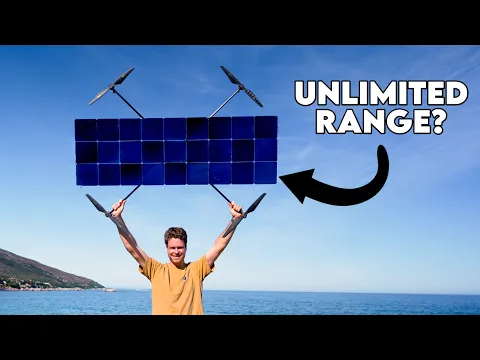

The success of the solar drone reinforces the potential of projects developed outside large companies. Even being a homemade model, the equipment managed to achieve significant results.
Moreover, the initiative shows that innovation does not solely depend on large investments. With technical knowledge and creativity, it is possible to achieve relevant advancements.
Thus, the homemade solar drone consolidates itself as an example of how technology can evolve in an accessible and sustainable way.
With information from Olhar Digital




Seja o primeiro a reagir!