





 Portuguese
  English
  Spanish
  4 min of reading
  1 comment


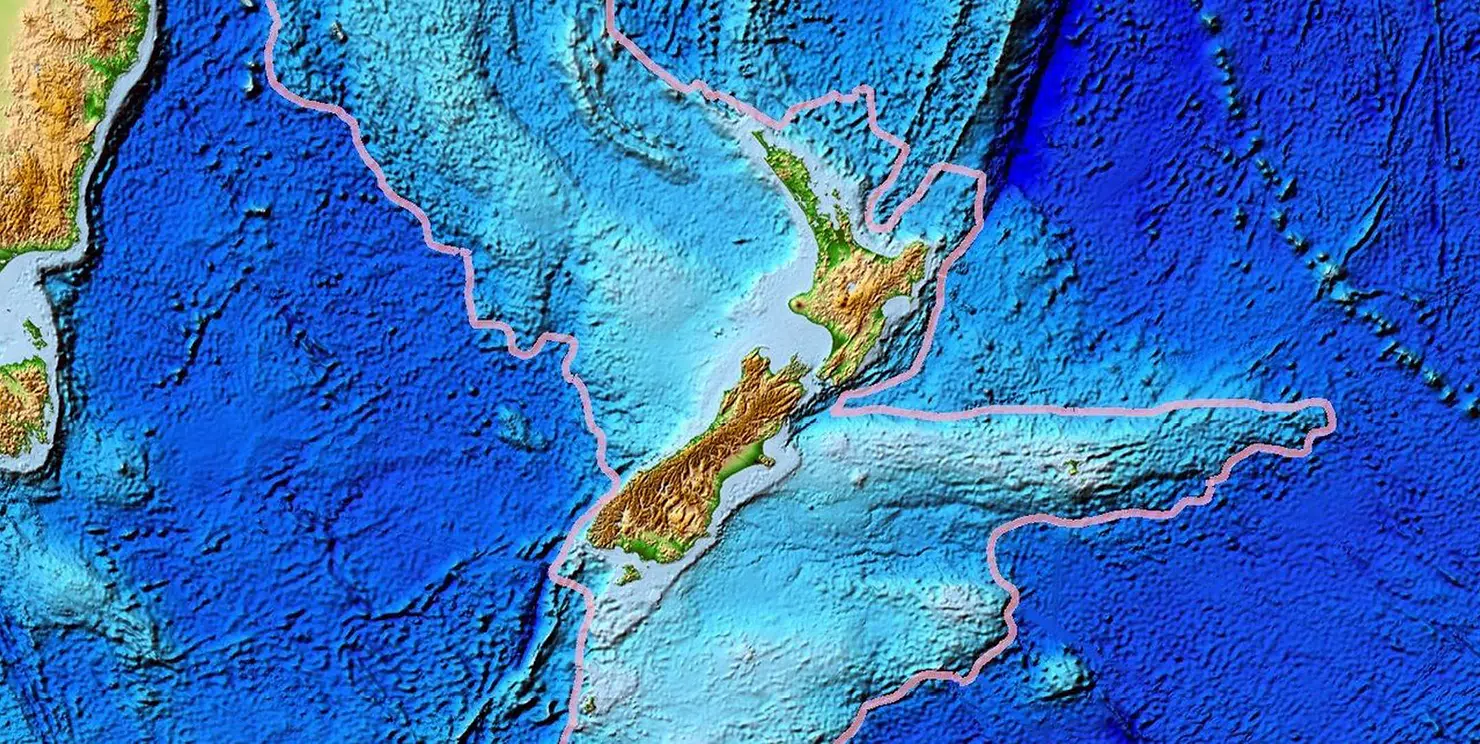

Eighth Continent Discovered: Meet Zealandia, The New Hidden Continental Mass Of The Earth
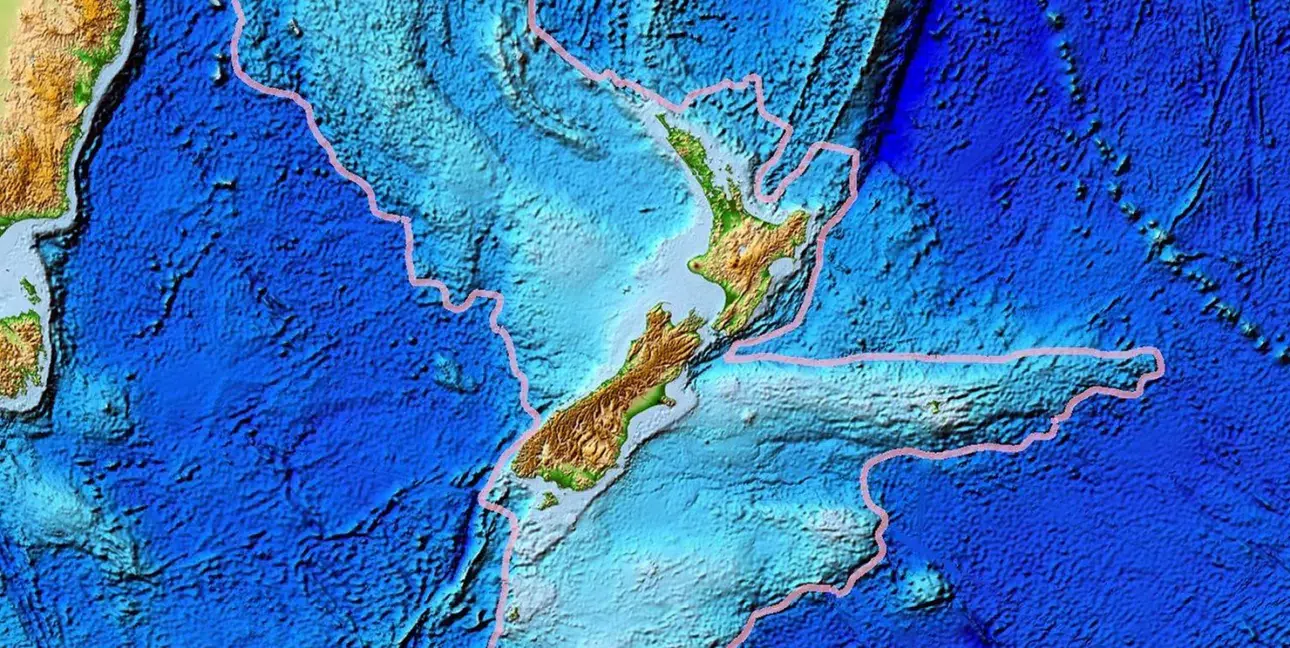
Below the waves of the South Pacific is Zealandia, a massive submerged landmass often considered the eighth continent of Earth. About 95% of its area remains underwater, but its geological origins date back millions of years, from the supercontinent Gondwana.
The fragmented history of Zealandia offers a unique insight into the tectonic evolution of our planet and reveals how this “lost” continent has remained hidden beneath the waves over time.
A Continent Lost To The Sea
Zealandia is part of the supercontinent Gondwana, which has existed for over 100 million years and includes regions that are now Africa, South America, Antarctica, Australia, and the Indian subcontinent.
-
An engineer designs a solar plane to fly on Mars at an altitude of 1,000 meters and a speed of 300 km/h, covering 16,000 kilometers in a Martian year, 900 times the distance traveled by the Ingenuity helicopter in three years on the planet before experiencing a rotor failure, and NASA is already funding the feasibility study.

-
A new phenomenon of contactless magnetic friction intrigues scientists and questions a theory that has been valid since the 17th century.

-
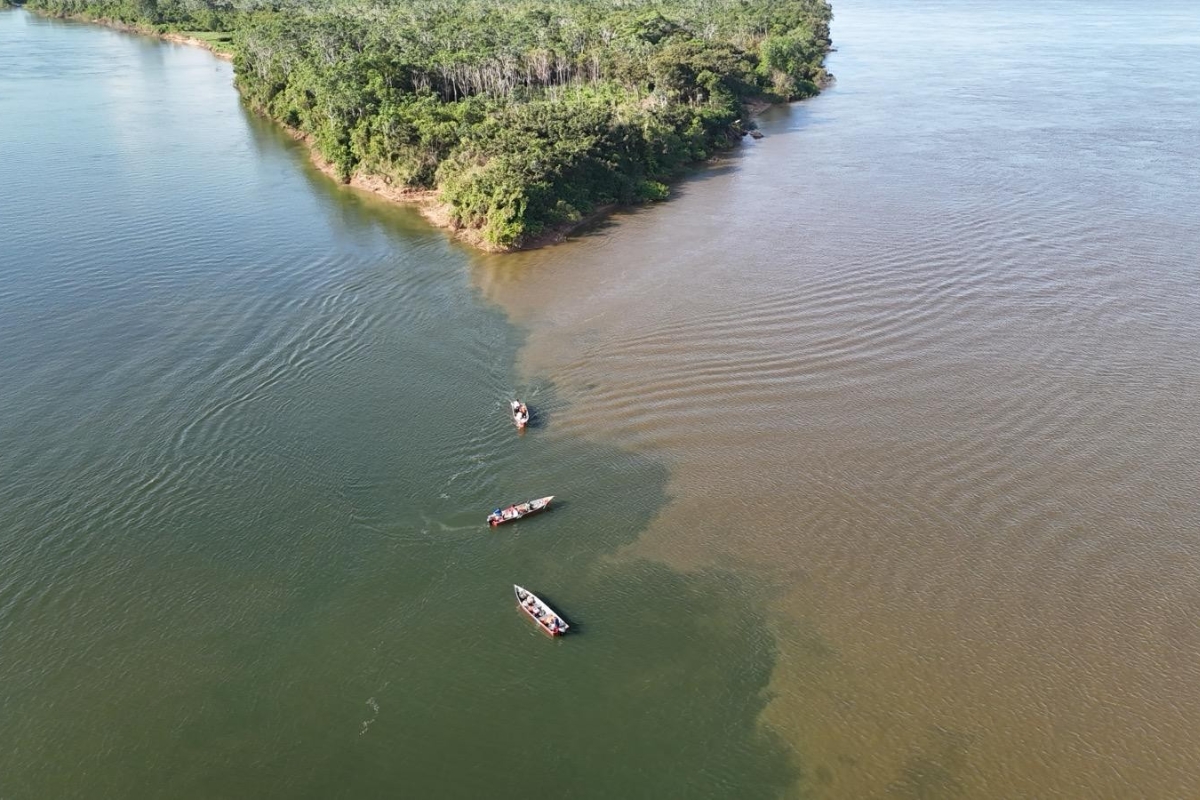
An impressive phenomenon in Northern Brazil causes rivers of different colors to flow side by side, revealing secrets about sediments, currents, and biodiversity.
-
While many schools are still struggling with the basics, a teacher in China went viral for having elementary school students build a two-stage rocket using plastic bottles, water, and pressurized air in a science class that caught the attention of the entire world.


Over time, Gondwana underwent a process of fragmentation, and Zealandia began to separate from its neighbors.
The separation of Zealandia from West Antarctica occurred about 85 million years ago. Meanwhile, the northern part of Zealandia drifted away from Australia approximately 60 million years ago.
However, unlike other continents that were raised above sea level, Zealandia began to gradually sink during the Paleogene period.
The Earth’s crust in the region cooled and thinned, causing most of Zealandia to remain submerged, with only New Zealand and New Caledonia visible today.
Uncovering The Secrets Of Zealandia
Although the existence of Zealandia was suggested decades ago, only recent scientific advances have allowed the continent to gain more attention in the academic community.
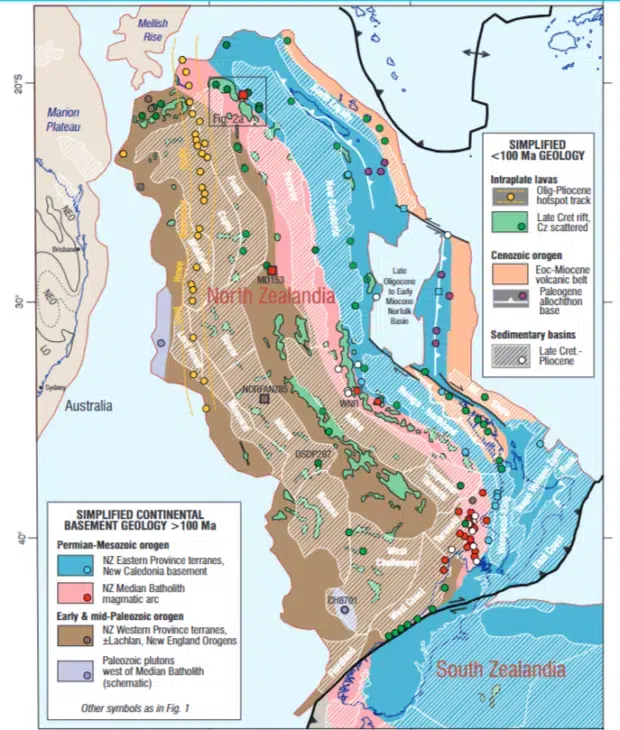
A study published in the journal Tectonics by GNS Science, led by geologist Nick Mortimer, represented a significant breakthrough in research regarding Zealandia.
To investigate, the team utilized advanced dredging techniques in sections north of Zealandia, collecting rock samples that include sandstone, siltstone, limestone, and basalt lava. These samples provided fundamental revelations about the geological history of the region.
“By dating these rocks and analyzing their magnetic characteristics, we were able to map the main geological units of Northern Zealandia,” explained Mortimer’s team. This offshore geological mapping was the first of its kind for the Zealandia continent and offered an unprecedented overview.
Some of the rock samples, such as sandstone, are about 95 million years old, dating back to the Late Cretaceous period. Meanwhile, granite and volcanic rock samples are up to 130 million years old, tracing back to the Early Cretaceous period.
Basalt samples were dated to the Eocene, about 40 million years ago. This combination of data provides a detailed timeline of Zealandia’s geological evolution.
Theories On The Formation Of Zealandia
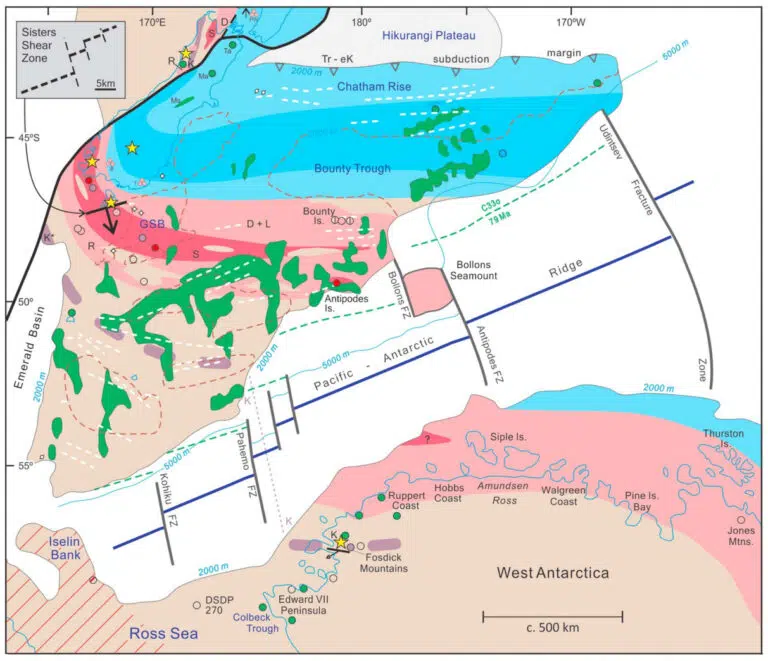
Recent discoveries challenge previous theories about the formation of the continent. Previously, many researchers suggested that Zealandia was formed by a rupturing intrusion between tectonic plates, where one plate moved horizontally over another.
However, Mortimer’s team’s study points to an alternative theory.
One research suggests that the stretching of the plates created fissures similar to a subduction process, forming the Tasman Sea. This tectonic extension process led to the thinning of the crust, causing Zealandia to sink until it reached its current submerged state.
Geological Meaning Beyond The Surface
Understanding Zealandia’s geological evolution brings significant implications for the study of global tectonics. Zealandia’s crust is thinned by up to 65%, a rare feature that allows for deeper study of tectonic processes.
Moreover, Zealandia serves as a “natural laboratory” that helps geologists better understand the geological dynamics of the Pacific.
A researcher from GNS Science commented that “the fact that Zealandia is submerged does not diminish its geological importance“. On the contrary, the submerged continent reveals unique characteristics that aid in understanding the planet’s evolution.
Continuation Of Research And Technological Advancements
Research in Zealandia continues and presents unique challenges due to its submerged state. However, the development of new technologies, such as deep-sea dredging and advanced seismic imaging techniques, has allowed scientists to uncover secrets of the submerged continent.
These studies aim to refine our understanding of Zealandia’s geology and ultimately of Earth’s own history.
As scientists explore Zealandia, they are not only uncovering the mysteries of a hidden continent but are also paving the way for a more complete understanding of our planet’s dynamic history.






Achei isso muito mais do que eu esperava.