





 Portuguese
  English
  Spanish
  6 min of reading
  0 comments



Annual Routine of 17,000 Hours of Maintenance and Seasonal Certification Supports Packed Snow Airstrip Near McMurdo Station.
Modular infrastructure ensures aircraft landings with wheels and enables the flow of cargo, fuel, and scientific teams.
The operation relies on engineering processes, constant inspections, and integration with communications and ground support during short windows of the Antarctic summer.
An airport that needs to be “redone” each season still sustains a central part of the logistics of the United States Antarctic Program.
-
Church from 1888 becomes a mansion of over 330 m² in Canada after a renovation of R$ 3.4 million and is eventually sold for nearly R$ 4.3 million.

-
How an innovative city combines high technology, well-being, and sustainability to become the largest reference in clean energy on the planet.

-
Couple buys 1846 church in ruins for R$ 660,000, invests R$ 3.2 million in renovations, transforms it into a millionaire mansion, and even preserved a historic cemetery with over 300 graves.

-
He started running at 66 years old, broke records at 82, and is now a subject of study for having a metabolic age comparable to that of a 20-year-old, in a case that is intriguing scientists and inspiring the world.

This is the role of the runway complex serving McMurdo Station in Antarctica, where the operation depends on a heavy work routine and periodic validations to keep the airbridge functioning.
According to the National Science Foundation (NSF), which coordinates support for the U.S. Antarctic program, maintenance of the region’s airstrips consumes about 17,000 hours of work per year.
The foundation also informs that the runways undergo certification at the start of each season, a necessary step to allow operations after the winter period.
In practice, what seems like a technical detail defines the rhythm of supply.
Without operational runways, the arrival of personnel, equipment, food, scientific cargo, and part of the fuel slows down and becomes less predictable in a continent where alternatives are limited, and operating windows are narrow.
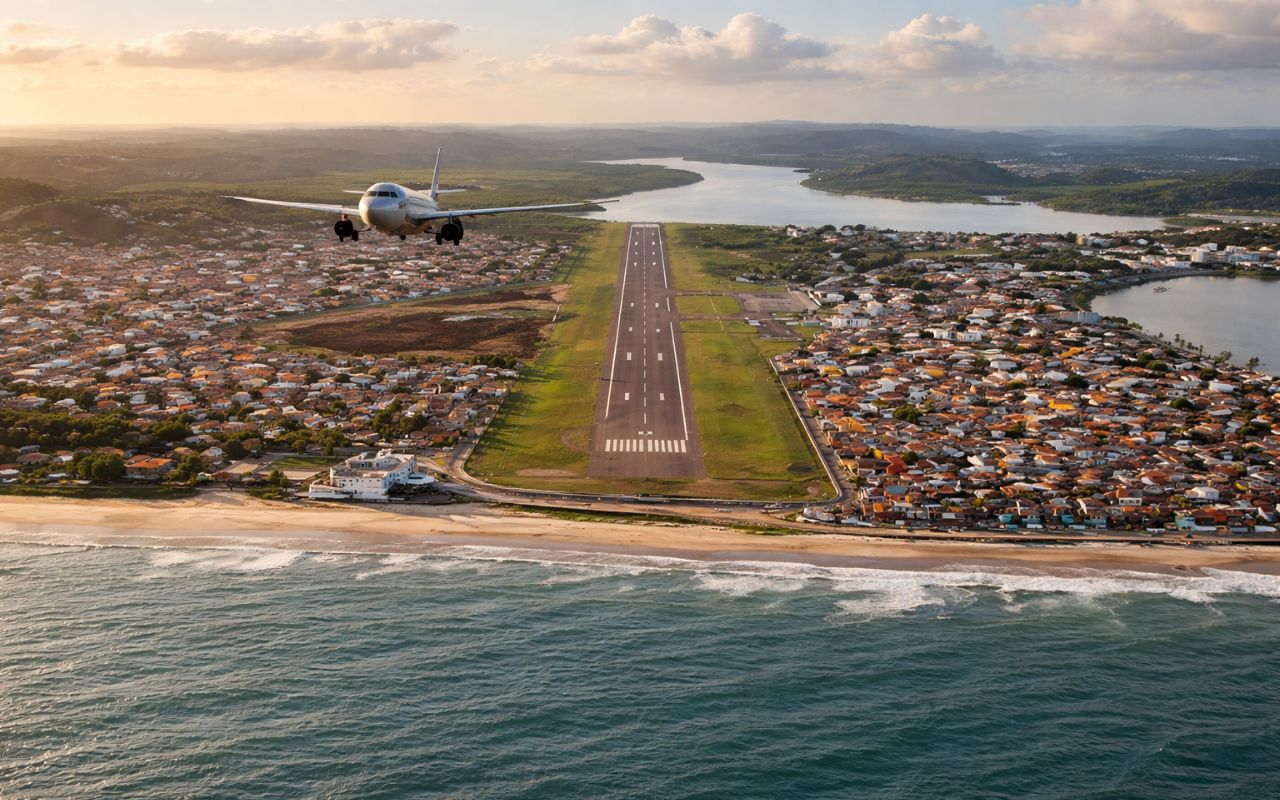
Infrastructure of the Temporary Airport in McMurdo, Antarctica
The contradiction is only apparent: instead of asphalt and concrete, what supports landings and takeoffs is a surface of packed snow, prepared to withstand conventional landing gear aircraft.

The airstrip for wheeled operations, known as Phoenix Airfield, is part of this system and integrates a support network that also includes areas for ski-equipped aircraft, used in specific missions and routes within the continent.
The operation is seasonal and contingent on the environment.
Even in the Antarctic summer, strong winds, temperature variations, and low visibility episodes influence runway conditions and flight planning.
Therefore, maintenance is not a one-time event: it becomes a continuous process of preparation and correction, with inspections and adjustments to maintain the surface within operational parameters.
Furthermore, the NSF explains that Phoenix and Williams Field are rebuilt each year because support structures such as buildings, fuel lines, and equipment cannot remain on-site during the winter.
The consequence is a repeated cycle of assembly, operation, and withdrawal, rather than a permanent construction typical of airports in urban areas.
Phoenix Airfield and Landings of Wheeled Aircraft
Phoenix Airfield was designed to meet a specific need: to increase the capacity for wheeled landings near McMurdo, in a context where ice platforms and previous runways faced operational limitations over time.
According to the NSF, Phoenix was built in 2017 to replace the old Pegasus Airfield, which had been used as the main alternative for wheeled operations.
The location and function of Phoenix are described in the Interagency Air Operations Manual of the U.S. Antarctic Program.
The document states that the airstrip is located about 10 nautical miles north of McMurdo and that its runway is constructed with packed snow for wheeled operations.
The manual also indicates that Phoenix is primarily used to support heavy cargo missions, reinforcing the site’s role in moving large volumes of cargo more efficiently.
 768w, https://clickpetroleoegas.com.br/wp-content/uploads/2026/02/Imagem-CPG-redimencionada-para-google-discovery-2026-02-06T183837.366-1536×864.jpg 1536w, https://clickpetroleoegas.com.br/wp-content/uploads/2026/02/Imagem-CPG-redimencionada-para-google-discovery-2026-02-06T183837.366.jpg 1920w” sizes=”(max-width: 1290px) 100vw, 1290px” />
This feature helps explain why the airstrip has become a strategic bottleneck.
In Antarctic operations, the ability to bring cargo on large aircraft influences everything from replenishing critical maintenance items to sending bulky scientific equipment, as well as rotating teams during busier periods.
Maintenance of the Packed Snow Runway and Seasonal Certification
The viability of a packed snow runway does not solely depend on low temperatures.
It requires procedures to maintain a consistent surface, with resistance compatible with the landing, braking, and takeoff requirements of heavy aircraft.
Snow, in this context, is treated as construction material that needs to be prepared and controlled.
The work involves leveling, compacting, and correcting irregularities that may arise from traffic, wind, and changes in the surface condition.
Meanwhile, frequent inspections help identify areas with loss of consistency, formation of ruts, or sections needing intervention before receiving new flights.
The seasonal certification cited by the NSF serves as a milestone in this process.
Instead of a permanent runway undergoing maintenance throughout the year, this is an infrastructure that must be declared fit at the beginning of each season, with verification of the necessary conditions for planned operations.
Integrated Logistics in McMurdo: Fuel, Communications, and Ground Support
The airstrip does not operate as an isolated element.
For the airbridge to function, the runway needs to be connected to communications, safety procedures, emergency response capabilities, and ground support.


The operations manual itself details aspects of the Antarctic environment that affect aviation, such as “whiteout” events, when visibility can hinder the completion of approaches and require fuel planning for alternates off the continent.
In this scenario, any disruption in the system tends to create a domino effect.
If the runway loses condition, flights are delayed or canceled; thus, cargo and personnel fail to arrive at the expected pace, putting pressure on stocks and research schedules.
At the same time, the response is not straightforward, as external support is limited, and the weather can quickly close the operational window.
This chain of events helps illustrate why the NSF emphasizes 17,000 hours of annual work as a measure of continuous effort, and not as a curiosity.
Maintenance appears, in practice, as part of the very logistics operation: it is what prevents “temporary” infrastructure from becoming the weak link in supply.
Seasonal Infrastructure and Predictability of the Airbridge
By calling the airstrip temporary, the description does not imply improvisation, but rather a model adapted to the Antarctic winter.
As part of the support structures must be removed or cannot remain installed during the harshest period of the year, the following season begins with reconstruction and preparation, repeating a planned cycle.
The result is a type of engineering applied to the routine of a scientific base: a runway that does not serve commercial traffic and does not behave like an urban airport, but defines the speed at which McMurdo receives what it needs to operate.
This includes everything from consumables and maintenance items to equipment and scientific cargo, as well as the movement of people who keep the field operation active.
In the end, the “airport on ice” reveals how Antarctica demands solutions that seem out of the ordinary but follow a strict logic of safety and operation.
If the runway needs to be rebuilt and certified season after season, which link in this machinery tends to be more decisive in preventing disruptions: the maintenance of the packed snow surface or the organization of the ground support that sustains each flight?






-

-

-

3 pessoas reagiram a isso.