Portuguese


The tunnel boring machine Dorothy, measuring 125 meters long and weighing 2,000 tons, excavated a railway tunnel approximately 1.6 km beneath an English forest. The first bore took seven months, included 790 concrete rings, and was part of a project anticipated to remove 250,000 m³ across the two parallel tunnels.
The tunnel boring machine Dorothy began operations in England in December 2021 to create railway tunnels under a forest area, avoiding disruption to the surface vegetation. With 125 meters in length and about 2,000 tons in weight, the machine was assembled with contributions from roughly 170 engineers before excavation commenced.
According to a report published by Monitor do Mercado on August 24, 2026, the operation aimed to achieve two bores, each approximately 1.6 km long. The plan accounted for the removal of about 250,000 m³ of rock and soil throughout both tunnels, while the first stretch was completed in seven months and included 790 structural concrete rings.
Tunnel Boring Machine Required Approximately 170 Engineers Before Beginning Excavation
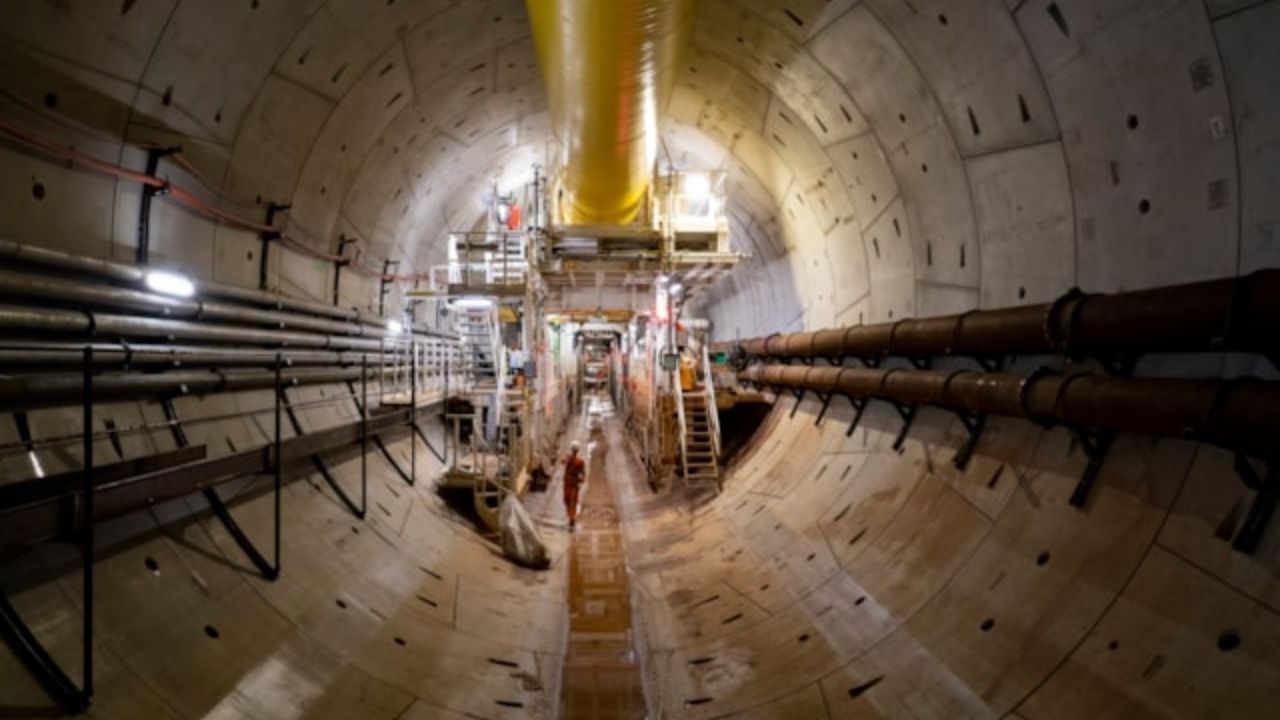
A machine of this size does not arrive at the site ready to immediately disappear beneath the ground. Prior to the first excavation, different components of the tunnel boring machine needed to be assembled at the tunnel’s entry portal.
-
Over 8,000 PET Bottles in Granados, Guatemala, Reused to Build School Walls Using a Community Approach

-
Wood Tower Challenges Concrete and Steel Dominance with Innovative Glulam Structure

-
18-Meter-Wide, 30-Meter-High, 1.18-Kilometer-Long Bridge Over the São Francisco River to Replace Ferry and Establish New Road Connection Between Alagoas and Sergipe; R$205 Million Investment, Over 50% Complete, Expected Completion by December 2026
-
Switzerland Excavated a Military Fortress 300 Meters Beneath Granite in the Alps, Creating Kilometers of Tunnels for Hundreds of Soldiers and Installing Four 150mm Cannons to Transform Gotthard into a Defense Barrier


The equipment includes a cutting head, hydraulic systems, conveyor belts, pumps, and structures that keep the entire operation running underground. About 170 engineers participated in the construction and assembly stages before Dorothy could begin its advance.
The 2,000-Ton Machine Measured 125 Meters Long
The dimensions help explain the logistical complexity of the operation. Dorothy was approximately 125 meters long and weighed 2,000 tons, turning the excavation into a continuous industrial operation beneath the ground.
Despite its size, the operation was not simply about pushing a massive cutting head against the rock. The tunnel boring machine needed to fragment the ground, remove the debris, transport it internally, and simultaneously secure the tunnel structure behind itself.
Excavation Started in December 2021

The launch of the machine took place in December 2021, when the mission to excavate the first of two planned railway tubes beneath the forest area began.
The underground solution had a clear goal: to allow the railway infrastructure to cross the area without requiring a continuous strip to be opened through the forest above. The main interference was concentrated on the access points and the operational area of the project.
Project planned to remove 250,000 m³ of rock and soil from both tunnels
Throughout the two drillings, the planning anticipated the removal of approximately 250,000 cubic meters of rock and soil. This figure pertains not only to the first tunnel, but to the volume estimated for the entire underground operation.
As the cutting head advanced, the fragmented material was transported through internal systems of the tunnel boring machine until it left the excavation front. This allowed the machine to continue operating without the need for constant interruptions to manually remove the produced waste.
Excavated material was not simply discarded
After leaving the tunnel, part of the excavated material was sent to a treatment facility located on the construction site itself.
According to the source, rock and soil were subsequently reused in landfills and landscaping projects. This strategy also reduced the need to transport large volumes of material to external locations during the operation.
First tunnel took seven months to complete
The initial estimate for the work was approximately five months, but the execution of the first hole ended up taking seven months.
During this period, the tunnel boring machine Dorothy advanced approximately 1.6 km beneath the terrain, maintaining a sequence that combined cutting, material removal, and the installation of the tunnel’s final lining.
Machine installed concrete while advancing

One of the most important features of this type of equipment is that the excavation and construction of the tunnel occur practically as parts of the same production line.
After the cutting face advanced a certain stretch, concrete rings were assembled behind the machine to line the newly excavated walls. This way, the open space didn’t remain simply exposed after the passage of the tunnel boring machine.
First Tunnel Received 790 Concrete Rings
When the first stretch was completed, the balance cited by the source recorded the installation of 790 concrete rings.
Each ring was composed of eight segments, which together formed the structural lining of the tunnel. Thus, as Dorothy advanced beneath the forest, it left behind a pass already lined and prepared for the subsequent stages of railway infrastructure.
Tunnel Boring Machine Had to Be Disassembled After the First Stretch
Completing the first tunnel did not simply mean turning the machine around and starting the second excavation in the opposite direction.
Parts of the tunnel boring machine were disassembled after the completion of the first bore and transported back to the initial portal, where the equipment would be prepared for the execution of the second tube.
Operation Transformed Excavation into an Underground Production Line

The operation of Dorothy relied on the repetition of a precise sequence: the cutting head fragmented the ground, the system removed the material, and, behind it, teams and mechanisms installed new concrete segments.
This integration is precisely what allows a 2,000-ton tunnel boring machine to work continuously for months, transforming a multi-kilometer excavation into a controlled industrial process.
Forest Remained Above the Railway Alignment
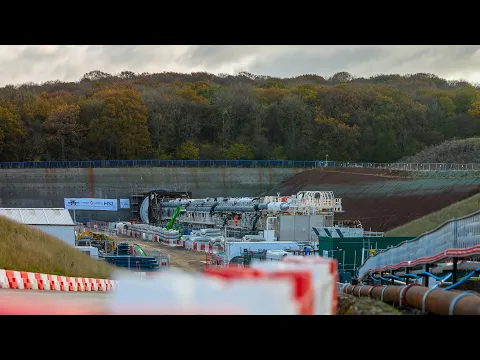

The decision to go under the terrain was directly related to the area that existed on the surface. Instead of crossing the forest through an open cut, the project took the route underground.
As a result, the forest remained above the railway passage, while much of the engineering activity occurred far from the surface, inside the tunnels and at the access portals.
Numbers Show the Scale of the Underground Operation
The scale of the project becomes apparent when the main figures are summed up: 125 meters of machine, 2,000 tons, around 170 engineers involved in preparation, approximately 1.6 km per bore, 250,000 m³ expected in the two tunnels, and 790 concrete rings installed just in the first segment.
More than the size of the tunnel boring machine, the operation draws attention for the need to keep excavation, material removal, and structural construction functioning in a coordinated manner for months beneath a forest.
2,000-ton Tunnel Boring Machine Shows How Far a Project Can Progress Without Surfacing
The Dorothy spent seven months executing her first route and left 790 concrete rings assembled behind her, following intensive preparation that involved about 170 engineers even before drilling began.
Meanwhile, the entire project planned to remove approximately 250,000 m³ of rock and soil in the two tubes without opening a rail corridor directly through the forest. What impresses you more: a 2,000-ton machine working beneath a forest, or the ability to construct the tunnel while it progresses? Leave your opinion in the comments.