





 Portuguese
  English
  Spanish
  5 min of reading


The 2017 Labor Reform States That Every Employer Must Guide Employees on the Prevention of Accident and Disease Risks Involving the Work Environment.
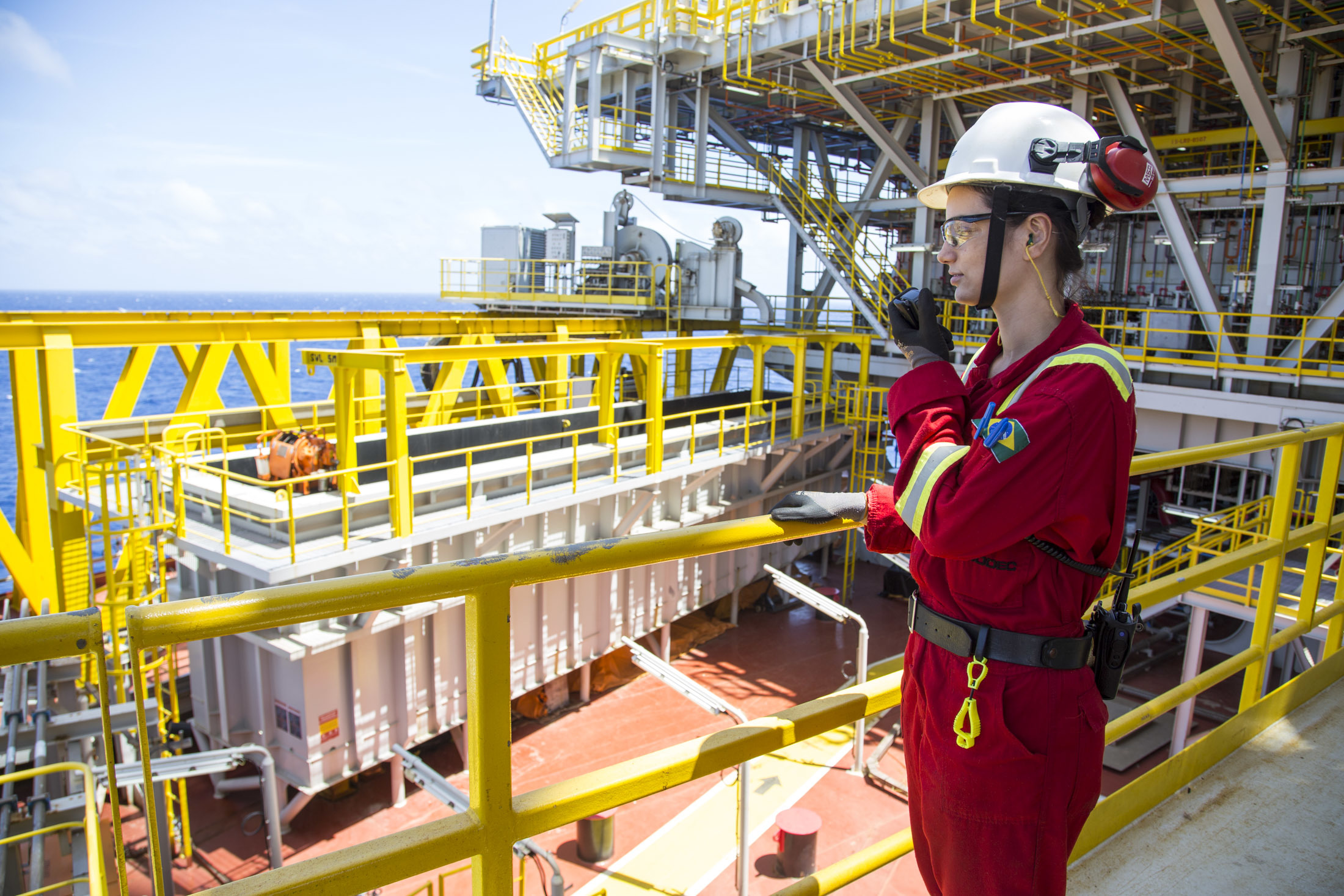
Working offshore is attractive and full of adventure. However, spending a long time away from home and family, surrounded by water on a floating platform, is a true challenge for the worker’s psychology. Therefore, in addition to the risks of the job itself that each employee is subject to, it is important to take care of the mind. This Thursday (28), the World Day for Safety and Health at Work is celebrated. To commemorate this date, we will detail what the law says about offshore work safety and in relation to the home office model, which is now regulated.
In July 2017, Law No. 13,467, known as the new Labor Reform, was approved. The text amended the Consolidation of Labor Laws (CLT), approved by Decree-Law No. 5,452/43, and Laws No. 6,019/74, 8,036/90, and 8,212/91, adjusting the legislation to the new working relationships.
Among other rules, the 2017 Labor Reform states that the employer must instruct employees clearly and openly on the precautions to be taken to avoid work-related diseases and accidents. The employee, in turn, must sign a liability term, committing to follow such instructions (Article 75).
-
End of the 1-hour lunch break in the CLT? Current labor law maintains the break, allows for negotiated reductions, and defines rules for working hours and home office in Brazil.

-
Employee Fired After Accumulating 114 Days of Medical Leave in One Year, Labor Court Upholds Company’s Decision

-
Employee Fired While Treating Depression Wins in Court and Vale Is Required to Rehire Him Following Decision Based on the CLT and INSS Benefits

-
Workers Should Be Aware! March 6 Will Be The Fifth Business Day Of March And The Final Deadline For Companies To Pay Salaries According To The CLT


Safety Tips and Rules for Offshore Workers
There are numerous types of professionals engaged in various activities on oil platforms. Therefore, it is important to remember that for each function, there are specific rules for preventing accidents. Hence, it is essential that employees undergo a training period related to the function they will perform and regarding safety practices.
Proper Use of PPE
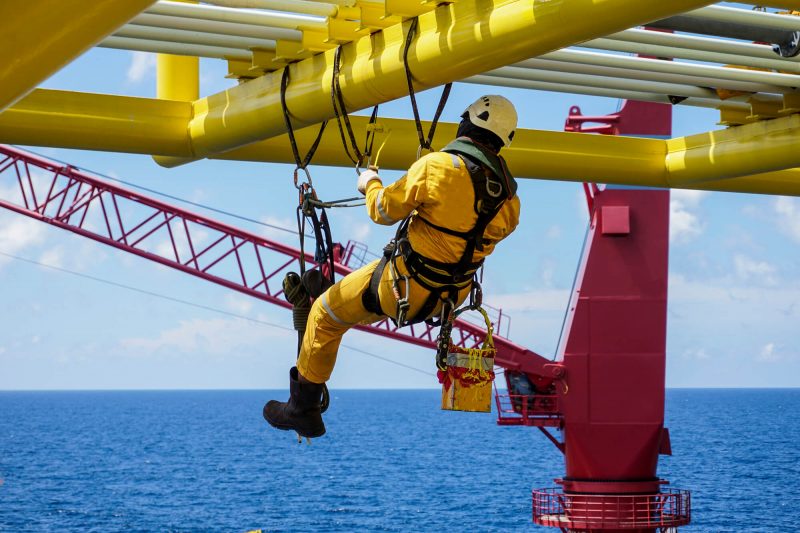
The use of Personal Protective Equipment (PPE) is a duty of every professional. Therefore, wear them daily and advise your colleagues to do the same to minimize risks of accidents as much as possible. The basic PPE used on offshore platforms includes:
- Boots
- Safety glasses
- Hearing protection
- Helmet with chin strap
- Gloves
- Face shields
- Life jackets
- Safety belts
- Immersion suits
How to Prevent Fire Accidents on Oil Platforms
- Avoid the accumulation of oils, greases, and fuels in holds, near electrical instruments, and other high-temperature equipment.
- Avoid placing clothes and rags near electrical equipment.
- Never operate electrical equipment that is experiencing overload.
- Do not use chemical and/or flammable products near operating electrical equipment or in areas that operate at high temperatures.
- Do not store used oils for inappropriate uses.
- Never weld or cut materials without someone nearby with a fire extinguisher for support.
Maintain Good Relationships Aboard Offshore Ships and Platforms
It is essential to maintain good relationships on board to preserve both physical and mental health. Offshore platforms are intensely social environments. Workers live where they work, making colleagues a part of their family. Good practices for coexistence include:
- Know how to listen and what to say
- Be patient with colleagues
- Reflect on colleagues’ ideas if they are beneficial to the work environment
- Avoid aggressive jokes and humor
- Value teamwork
- Respect colleagues’ rest
Stay Hydrated
Due to their distance from shore, oil platforms receive a lot of sun. Prolonged exposure to solar radiation can cause skin diseases, dehydration, and even heat stroke. Therefore, drink plenty of water and use sunscreen!
Other Basic Safety Tips for Work on Platforms and Oil Ships
- Do not run while going up or down the stairs and remember to use the handrail.
- Always consult the safety information sheet before handling any chemical product.
- Always obey isolation area signage over a suspended load.
- Wear clean clothes in dining areas and recreational spaces.
- Immediately report if you notice anything or any situation that may compromise the safety and health of people or the environment.
- Avoid smoking.
Rights and Duties of Home Office Workers Regarding Safety and Health
In times of “new normal,” home office has consolidated itself in Brazil and is now covered by labor and safety rules. Created in 2011, Law 12,551 already equated the legal effects of those working remotely with those working at the employer’s establishment.
To firmly consolidate telecommuting, in March 2022, the Executive Power signed Provisional Measure No. 1,108, which regulates the rules for home office work.
Work Safety Tips and Health for Home Office Workers
As we’ve discussed, employees must be instructed by law to avoid accidents at work and/or face psychological issues. Regarding psychosocial factors, the “Mental Health & Pandemic” survey conducted by Noz Pesquisa e Inteligência in partnership with the Bem Estar institute showed that by 2021, 59% of people reported feeling irritable even while working from home.
To minimize the risks of mental illness and accidents while working from home, employees can adopt the following tips:
- Do not overload outlets: the ideal is to use electrical extensions in a line and with fuses. Additionally, when a device is not in use, unplug it.
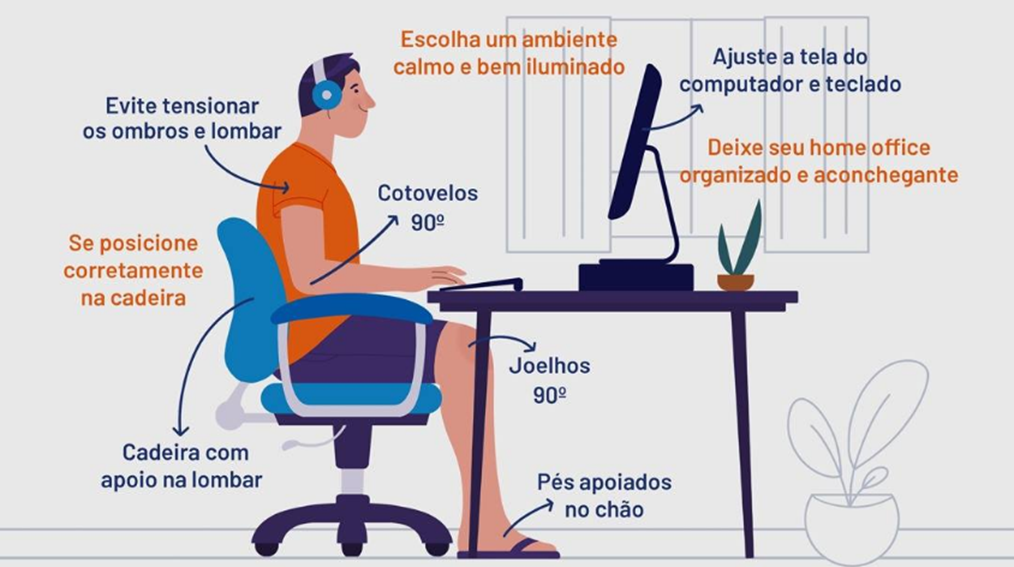
- Adjust the chair height for good posture: When sitting, both feet should touch the floor with knees at 90 degrees. Avoid tensing shoulders, and elbows should also be at 90 degrees. The chair must have lumbar support.
- Choose and organize a pleasant workspace: The room should be as far from the street as possible. Use furniture and covering that absorb sound, and make the space pleasant with rugs and curtains. If living with others, request their cooperation. Also, keep the space clean and organized.
Work Safety Goes Far Beyond Avoiding Accident Risks, Says Specialist
GT Fire is a consultancy in Worker Safety and Health, specializing in fire and panic safety project management. Among the various services they offer, the company promotes courses and lectures that guide workers on good practices in the workplace.
The CEO of GT Fire and safety engineer, Thiago Barbachan, says that safety measures go far beyond preventing accident risks in the workplace.
“We must also be concerned about Worker Health, to minimize potential harm that work activities can cause. For that, we should worry about the health conditions of the work environment related often to excessive noise, proper posture, care with repetitive efforts, and proper lighting of areas. Thus, it’s very important, besides constant training, to practice Attention at Work, Keeping the work area clean and organized, and being mindful of your actions as well as your colleagues’.”
Thiago Barbachan – CEO of GT Fire and Safety Engineer







Seja o primeiro a reagir!