






 Portuguese
  Spanish



Scientists Developed A New Type Of Filter Capable Of Cleansing Impurities Such As Bacteria And Viruses From Water Using Only Solar Energy. The New Product Is Low-Cost, Efficient, And Does Not Require Any Other Energy Source Besides Renewable
Scientists from the École Polytechnique Fédérale de Lausanne (EPFL) in Switzerland have produced a new type of filter capable of purifying water using only solar energy as a power source. The equipment is made with carbon nanotubes and titanium dioxide nanowires. According to the World Health Organization (WHO), around 2 billion people consume water contaminated by feces worldwide, and by 2040, a large part of the planet’s population will suffer from water stress due to insufficient available drinking water.
Understand How The Solar-Powered Filter Works
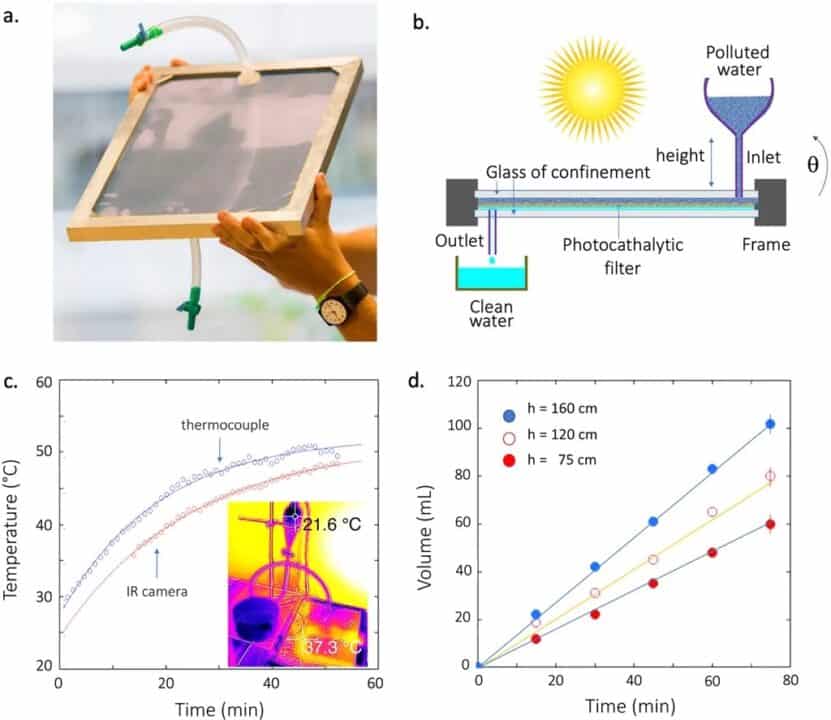
According to the lead author of the study, physics professor Lászlo Forró, by bringing together chemists, biologists, and physicists into a single project, it was possible to develop a highly efficient water purification filter that requires no other source besides solar energy and is still affordable for low-income people.
During laboratory tests, scientists discovered that titanium dioxide nanowires alone were already capable of acting as an efficient water filter when exposed to sunlight. When carbon nanotubes were added, it was possible to achieve an extra decontamination layer capable of killing pathogens such as viruses and bacteria.
-
Brazilian scientists are simultaneously advancing two research projects on clean hydrogen and driving solutions that could transform the energy matrix, enhance industrial competitiveness, and accelerate large-scale emission reduction targets.

-
Advancement in renewable energy: A R$ 150 million project launched by Petrobras and Finep aims to create state-of-the-art electrolyzers for green hydrogen, strengthening national research and preparing Brazil to compete in a billion-dollar energy market.
-
Solar energy can increase property value by up to 10% and become a selling point.
-
Illiterate or semi-literate grandmothers were trained to repair solar systems, open rural workshops, and light up homes that still depended on kerosene.




According to scientists, when the ultraviolet light from solar energy hits the filter, it causes the device to produce a group of molecules called reactive oxygen species, including hydrogen peroxide, oxygen, and hydroxide, elements known to be efficient annihilators of various types of harmful pathogens.
According to the study’s lead author, in addition to successfully removing all pathogens from the water, the solar-powered filter also showed optimal results for eliminating micro-pollutants, such as pesticides, cosmetics, and discarded pharmaceutical waste in rivers and seas that receive no treatment.
The New Solar-Powered Filter From Scientists Could Be Used To Decontaminate Supply Sources
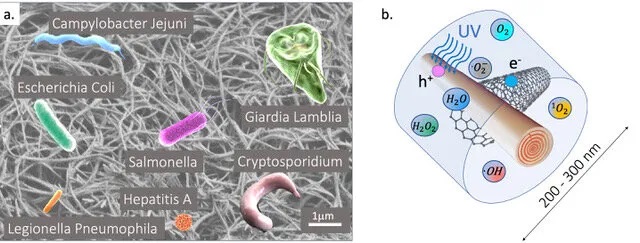
The new filter was able to remove several types of bacterial pathogens from the water, such as campylobacter jejuni, responsible for causing diarrhea, giardia lamblia, a microorganism that induces intestinal infection, salmonella, E. Coli bacteria, the virus responsible for hepatitis A, and legionella pneumophila, which is responsible for a large part of lung infections in humans.
The goal of the scientists is for the new filter, which uses solar energy, to be used in the decontamination of supply sources without the need for large investments during the process, relying only on solar energy as the power supplier.
According to the professor, the prototype can provide drinking water even in remote areas for small poor populations in more distant regions and can be easily scaled up to meet the needs of entire villages and communities suffering from daily water shortages.
New Devices For Generating Drinking Water
Last year, scientists from the Moonshot Factory of Alphabet developed a device that uses solar energy to extract water from the air, which could eliminate the scarcity for billions of people around the world through renewable energy.
According to the developers, in a solar energy collection area of 1 m², it is possible to produce up to 5 L of drinking water per day. However, this level of performance is only achievable under certain conditions of temperature and sufficient sunlight, and having a relative humidity of at least 30%. This means that while it is very useful in tropical climates, it is unlikely to meet the demands of those living in arid environments.




Be the first to react!