





 Portuguese
  English
  Spanish
  3 min of reading
  0 comments


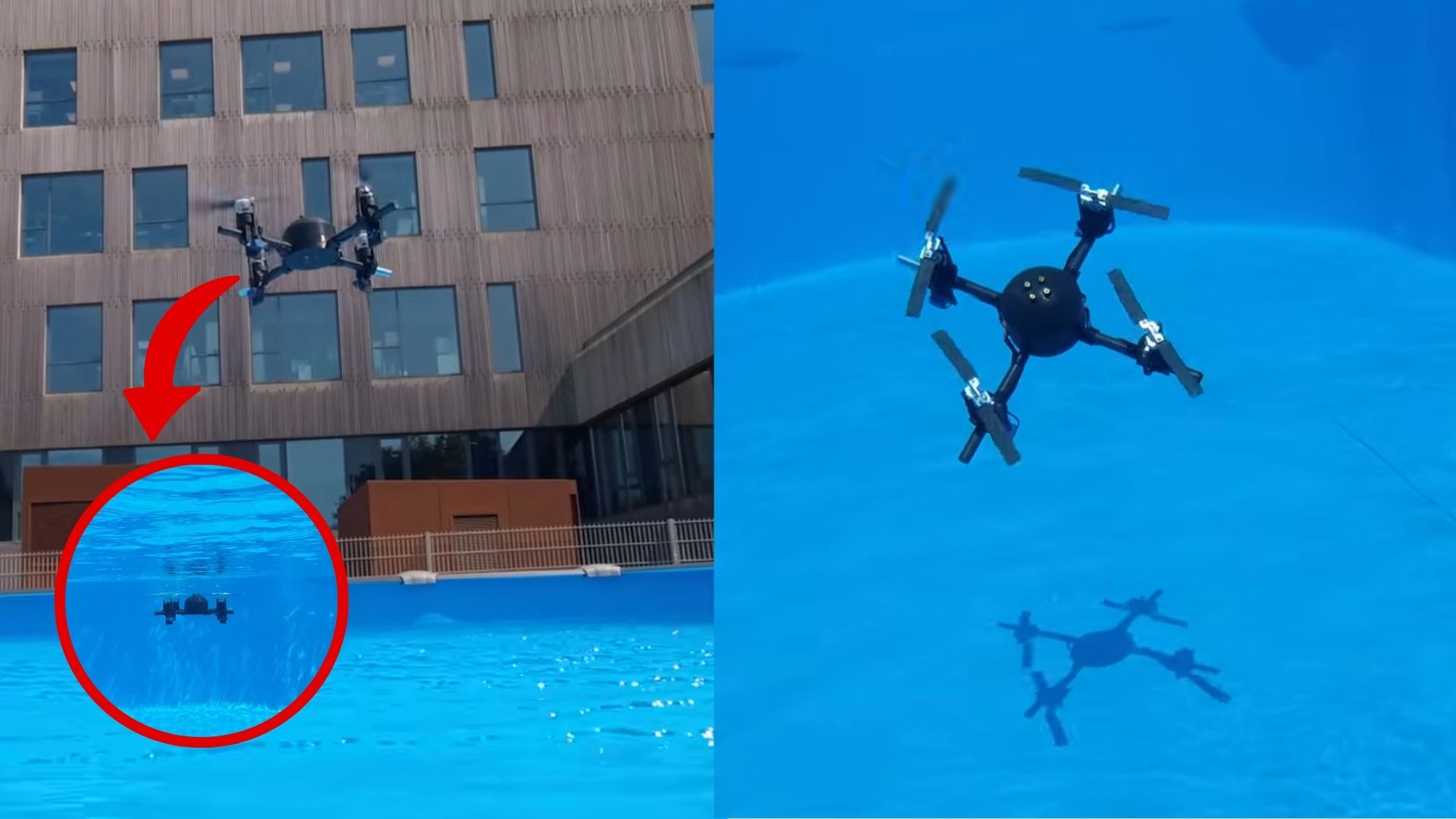
3D-Printed Hybrid Drone Takes Off, Dives, and Returns to the Air with Smooth Transition. Prototype Can Be Used in Search and Rescue Missions.
A team of applied industrial electronics students from Aalborg University in Denmark developed a 3D-printed hybrid drone capable of seamlessly switching between flying and diving. The prototype, created as part of a bachelor’s thesis, demonstrated quick transitions from air to water and vice versa, surprising even its creators.
The vehicle, showcased in a two-and-a-half-minute video, takes off vertically, dives into a pool, performs underwater maneuvers, and returns to the air with impressive fluidity. This technology could pave the way for low-cost, easy-to-manufacture drones capable of carrying out search and rescue missions, maritime inspections, ocean exploration, and even military applications.
Variable Pitch Propellers: The Secret to Smooth Transition
The key differentiator of the drone lies in the use of variable pitch propellers, a solution that eliminates the need for complex mechanical reconfigurations. The blades adjust their angle according to the environment:
-
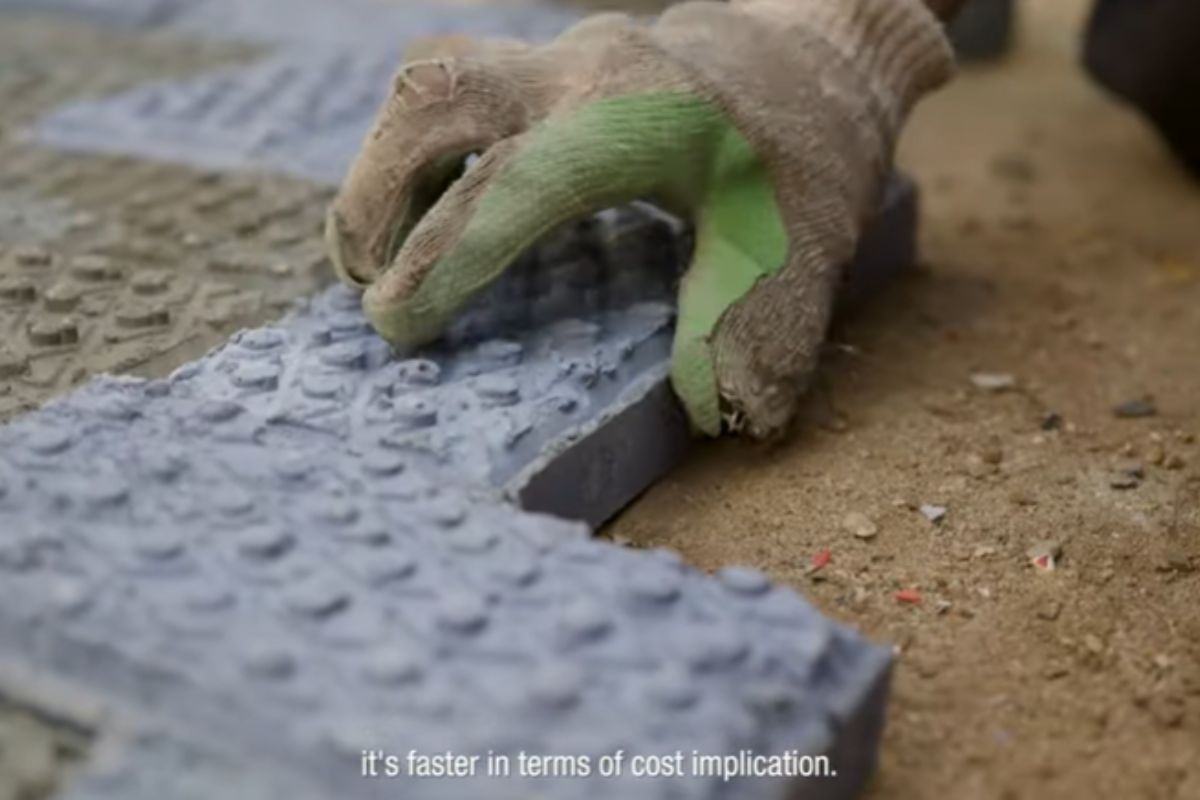
In Kenya, engineer Nzambi Matee created “bricks 2.0” using packaging plastic: a mixture with sand, heated and pressed; they are 5 times more resistant, already have official licensing, and are being used in streets and construction projects.
-
More than 20,000 positions could be opened, and thousands of technicians are starting to be trained in Brazil, as the expansion of data centers creates an urgent race for professionals to keep the internet, cloud, and artificial intelligence running 24 hours a day.

-
China approves the 15th Five-Year Plan 2026-2030 to become a global power: prioritizes brain implants, 6G with AI, humanoid robots, flying cars, quantum technology, and nuclear fusion, while strengthening defense and the economy.

-
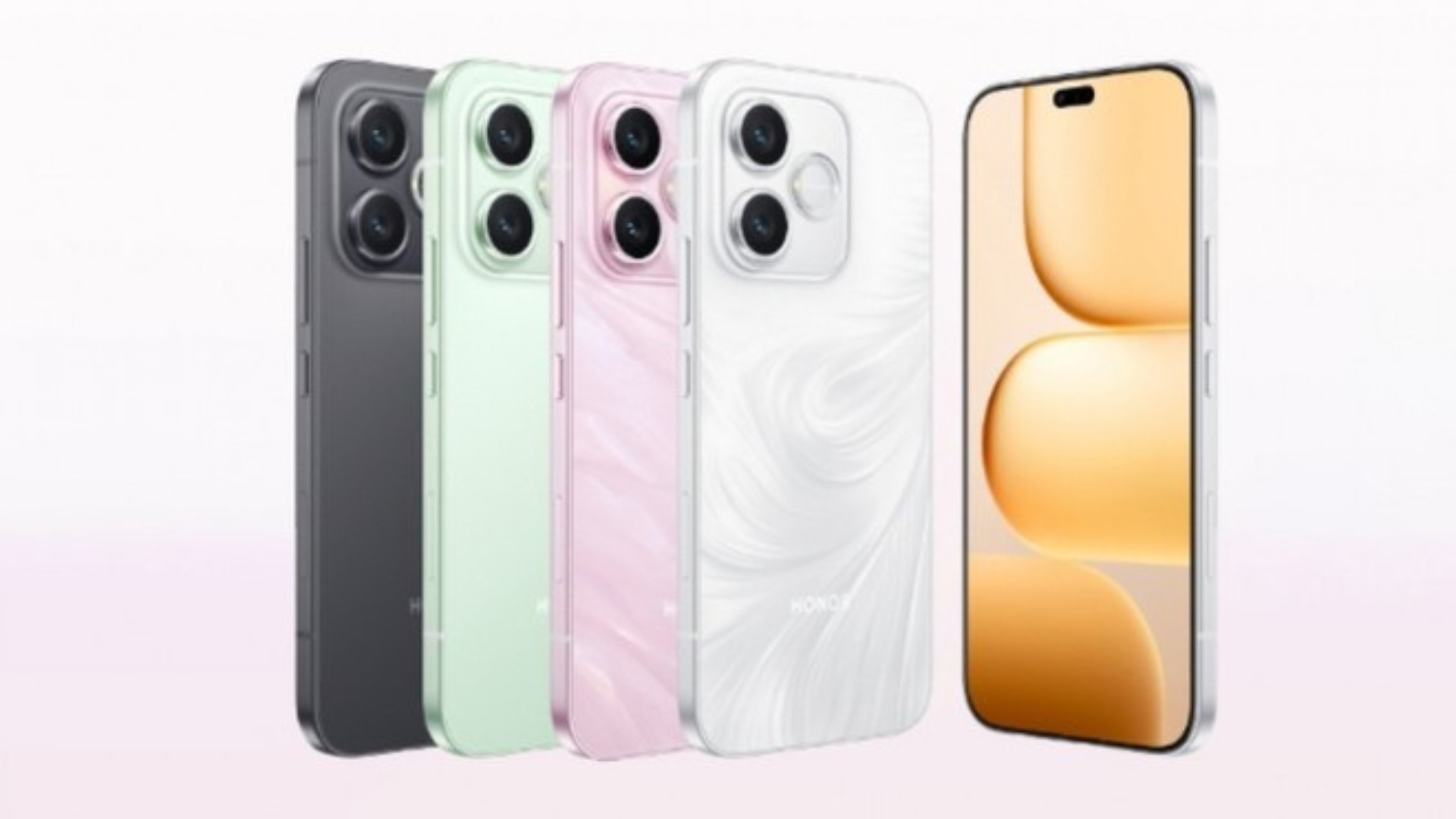
HONOR X80i arrives with a massive 7,000 mAh battery, a 120 Hz AMOLED display with a brightness of 6,500 nits, and the new Dimensity 6500 Elite chip, promising up to 22 hours of video playback and impressive performance in casual gaming.

- In the air, they operate with a higher pitch to generate efficient airflow;
- In water, the pitch is reduced to minimize drag and increase efficiency;
- The propellers can also generate negative thrust, allowing for precise underwater maneuvers.
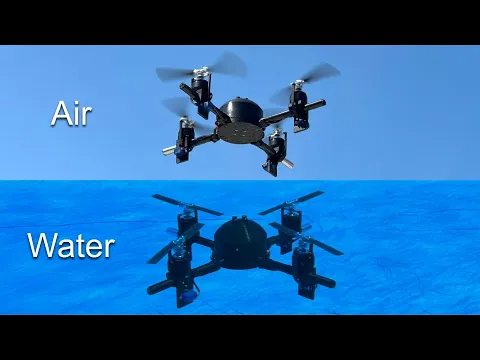

This technology allows the drone to switch environments without interruptions, a significant improvement over previous designs that used more complex and less stable mechanisms.
“The development of an aerial underwater drone marks a significant step in robotics, showing that a single vehicle can operate effectively in both air and water,” the students explained in a statement to Live Science.
How the Drone Was Designed and Tested
The team modeled the entire vehicle and manufactured the main components using a 3D printer and a computer numerical control (CNC) machine. They then programmed the system with custom software before moving on to field testing.
Associate Professor Petar Durdevic, who leads the Offshore Drones and Robots research group at Aalborg University, explained that the complete cycle – design, construction, and testing – took two academic semesters.
The released video shows the drone taking off next to a pool, diving, swimming briefly, and repeatedly returning to the air at different camera angles. The precision of the propeller system allowed for quick and repeatable transitions, something rare in this type of technology.
Inspiration and Differentiators Compared to Previous Projects
Hybrid air-water drones are not novel:
- In 2015, researchers from Rutgers University in the USA revealed a similar prototype.
- In 2023, Chinese scientists presented a comparable transition maneuver.
What sets the Aalborg project apart is the smoothness of the transition between environments, achieved through a straightforward, propeller-based solution that does not require additional moving parts or configuration changes.
Possible Applications: Search and Rescue, Inspections, and Military Use
Although the drone developed by the students is merely a prototype, it demonstrates the potential for a compact, low-cost hybrid platform. Among the possible applications are:
- Search and rescue missions: drones that can scan surfaces and dive quickly in search of victims;
- Inspections of vessels and offshore infrastructure: operating in hard-to-reach locations;
- Maritime exploration: data collection in shallow and deep waters;
- Military applications: aerial and underwater reconnaissance with a single device.
The students emphasized that the prototype’s construction using additive manufacturing (3D printing) and open-source technology makes the technology accessible.
“This proof of concept shows that accessible tools can produce complex dual-environment vehicles, capable of operating with minimal interruption,” they concluded.
An Important Step for Hybrid Robotics
For now, the drone is just an academic project, but it demonstrates how simple and smart solutions can bring significant advancements to robotics. The capability to switch between air and water efficiently could generate a new generation of hybrid vehicles capable of performing critical missions autonomously.
The next challenge is to scale the project and make it resilient to real field conditions, such as ocean currents, prolonged submersion, and low-visibility environments.





Seja o primeiro a reagir!