





 Portuguese
  English
  Spanish
  4 min of reading
  0 comments


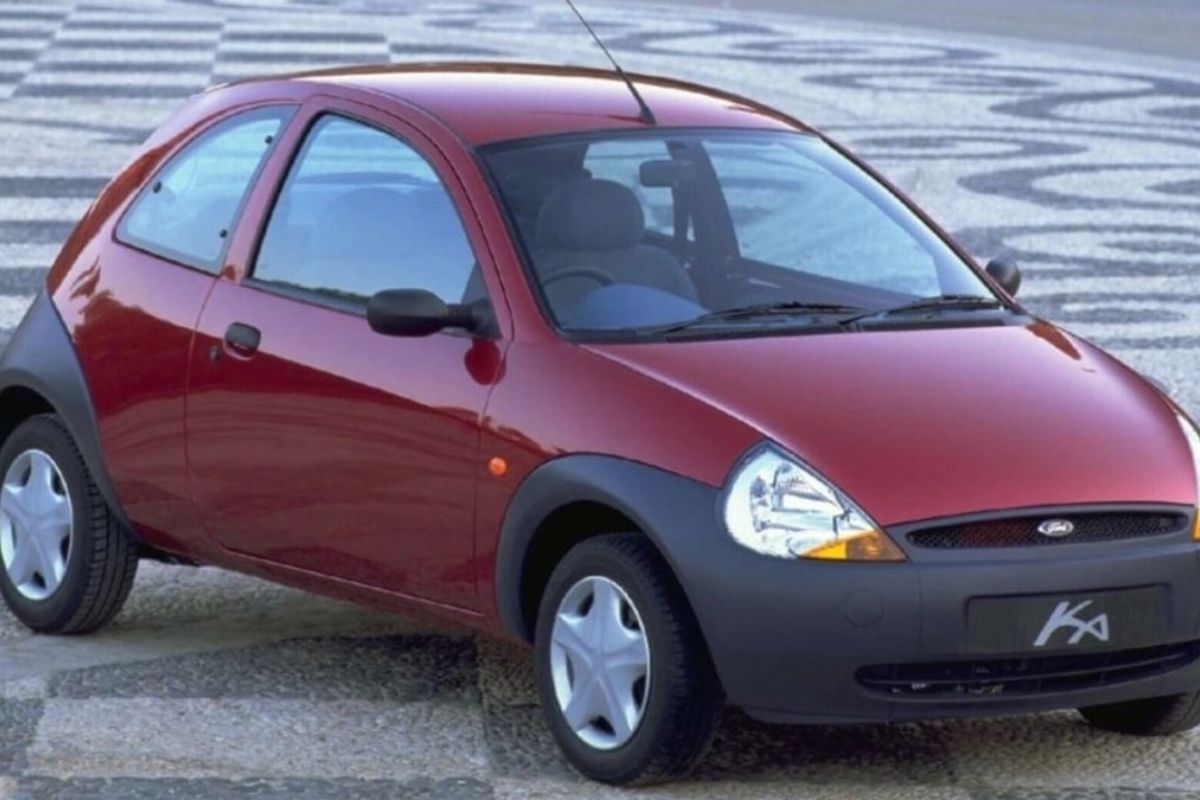
In 2015, Renato Amoedo Sold a Ford Ka 1999 for 2.2 Bitcoins When Each Bitcoin Was Worth About 314 Dollars. In 2026, the 2.2 Coins Are Approaching R$ 1 Million, After the Historical Peak of 119,488 Dollars in 2025. In Brazil, It Became a Millionaire Investment and an Example of Boldness.
The Ford Ka 1999 of Renato Amoedo, a civil engineer and lawyer, came to the attention of those following finance and technology when it was sold, in 2015, for 2.2 Bitcoins. At that moment, with Bitcoin at around 314 dollars, the choice sounded unusual for the Brazilian market and marked a transaction that deviated from traditional payment standards.
In 2026, the same decision is read from another angle: 2.2 Bitcoins are cited as equivalent to about R$ 1 million. The case became a summary of a scenario in which a common car can gain value for a reason external to the automobile, driven by the trajectory of Bitcoin and the debate over alternative investments in Brazil.
The 2015 Transaction That Transformed the Ford Ka 1999 Into an Investment Case
In 2015, Renato Amoedo made an unexpectedly regarded transaction by selling his Ford Ka 1999 for 2.2 Bitcoins. The price detail at that time helps to gauge the risk: Bitcoin was worth about 314 dollars, which placed the negotiation at a very different level compared to what is observed today.
-
Less than a Tera TSI, up to 710 km of range and charging in 9 minutes: the new BYD Song Ultra expands the Chinese brand’s bet on increasingly faster, more technological, and competitively priced electric SUVs.

-
With a 1.0 engine producing 75 hp and costing less than R$ 70,000, Fiat’s car returns to the podium as the cheapest in the country; a temporary promotion for the 2026 Like version reduces the price of the Fiat Mobi.
-
With a mild hybrid system of 48 V, 176 hp and a price of R$ 175,990 in the Sahara version, the new Jeep Renegade changes mostly on the inside, improves slightly in fuel consumption, and remains almost the same car.
-
With a 293.5 cm³ engine and a range of up to 400 km with a 14.1-liter tank, the Honda CB 300F Twister 2026 has up to 24.7 hp, an initial price of R$ 25,150, and already exceeds R$ 29,000 in the Fipe Table.

The central point is not the model of the car itself, but the payment method. Receiving Bitcoin instead of traditional money was described as an innovative and visionary choice in financial terms, precisely because it occurred at a time when the cryptocurrency had not yet occupied the same symbolic and economic space as in later years.
How Boldness Was Valued in 2026 and the Role of the Historical Peak in 2025
The narrative shift appears in 2026: the decision is noted as highly profitable because 2.2 Bitcoins would be valued at around R$ 1 million. It is this number, directly associated with the same volume of coins received in 2015, that transforms the Ford Ka 1999 into an example of appreciation through a digital asset.
The background of this calculation includes the “evolution of Bitcoin over the years.” In 2025, the cryptocurrency would have reached a historical peak of 119,488 dollars, establishing itself as the most valuable and well-known digital asset within this context. This peak of 2025 serves as a benchmark to explain how a payment made in 2015, in Bitcoin, might have converted into a million-dollar value in Brazil.
Why the Case Draws Attention in Brazil and How the Used Car Market Plays a Role
Besides Bitcoin, there is a second factor mentioned: the Brazilian automotive market. The sector has faced challenges, including problems in the production of new vehicles, which may have driven the appreciation of used models. In this context, the story of the Ford Ka 1999 gains even more appeal because it combines two simultaneous movements: the appreciation of a digital asset and an environment of greater price pressure in the used car market.
Still, the case itself is presented as something beyond “luck.” The highlighted interpretation is that there was an anticipation of trend: opting for Bitcoin as a form of payment before the asset reached substantial peaks ended up repositioning the car as a long-term episode, with financial impacts far exceeding those expected for a common sale.
Cryptocurrencies as Alternative Assets and the Perception of Trust in Blockchain
The growth of Bitcoin is associated with investors’ trust in blockchain technology and Bitcoin’s central role in the contemporary financial market. At the same time, the expansion of interest in cryptocurrencies appears as part of an economic scenario described as unstable, in which alternative assets gain space precisely for being “less conventional.”
In this framework, the Ford Ka 1999 becomes a symbol of a shift in mindset: the idea that an asset can be traded and appreciated differently when the medium of exchange is not just traditional currency, but rather a digital asset that can appreciate over time.
What the Story of the Ford Ka 1999 Suggests About Decision, Risk, and Time
Renato Amoedo’s case is used to highlight a simple message: innovation and boldness in investment decisions can completely change the final outcome. By receiving Bitcoin, he raised the final value associated with his asset, in addition to illustrating how the payment method can be decisive for the perceived appreciation years later.
The practical lesson, within the presented data, lies in the contrast between 2015 and 2026. In 2015, there was a car and 2.2 Bitcoins in a market that still viewed the cryptocurrency in a much less consolidated manner. In 2026, the same volume of coins is associated with about R$ 1 million, after a historical peak in 2025. What changed was the value of the digital asset, and this rewrote the story of a common sale in Brazil.
Would you have the courage to sell a car today while receiving Bitcoin, betting that it could turn into a million-dollar investment in the future?








-

2 pessoas reagiram a isso.