





 Portuguese
  English
  Spanish
  7 min of reading
  0 comments


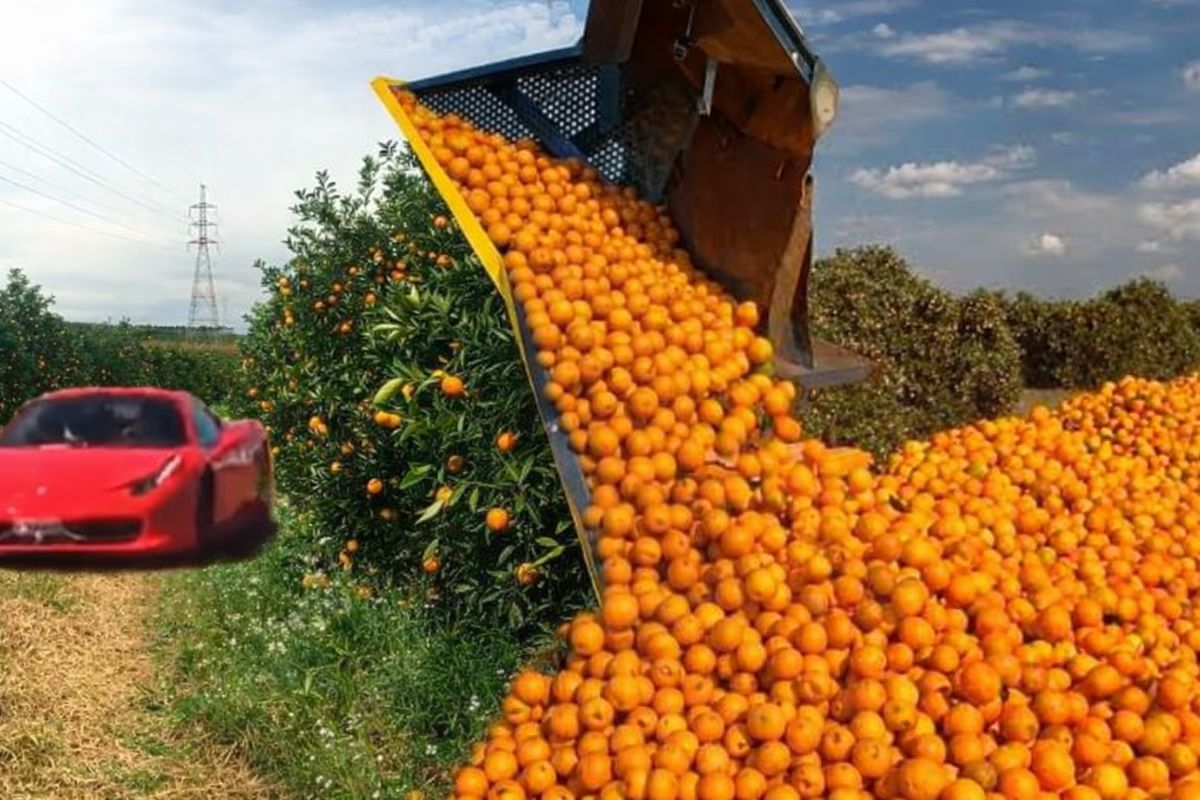
The History Of Cutrale, Family Business That Became The Largest In The World In Orange, Leads The Orange Juice Market, Is Now The Largest Producer Of Orange Juice And Matters In The Global Orange Juice Market.
The journey of an Italian immigrant who started by buying boxes of fruit at the docks and selling them at the Municipal Market of São Paulo ended up creating what is now considered the largest in the world in orange. For every three glasses of juice consumed on the planet, one comes from Cutrale’s factories, a company that exports to about 90 countries and supports more than 15,000 direct jobs connected to the juice chain.
What began as a family business, focused on fresh oranges, has weathered war, frost, and global crises to establish itself as the largest in the world in orange, competing in a market concentrated among a few companies. From Giusepe Cutrale’s arrival in Brazil in the 1930s to the current leadership of José Luiz Cutrale, the history blends opportunity, hard work in the fields, and a discreet management style focused more on the oranges than on the spotlight.
From Harvests In Sicily To The Dream Of Becoming The Largest In The World In Orange
Giusepe Cutrale did not accidentally enter the world of oranges. Before crossing the ocean, he already worked in orange groves in Sicily, Italy.
-
“No one will make us change the Pix,” says Lula after the US report.

-
Lula responds directly to Trump and says that Pix is from Brazil and will not change under pressure from anyone, after a report from the United States pointed out the Brazilian payment system as an American trade barrier.

-
Amazon has just announced a new fee on all deliveries, and your online purchases will become more expensive starting April 17, including for those buying from the United States here in Brazil.

-
He sold his share for R$ 4 thousand, saw the company become a giant worth R$ 19 trillion, and missed the opportunity of a lifetime.


When he came to Brazil in the 1930s, alongside thousands of immigrants seeking work and stability for their families, he brought with him experience with the fruit and the determination to start over from scratch.
Here, he began buying oranges in Rio de Janeiro, which at the time was one of the main production hubs, and reselling them at the Municipal Market of São Paulo.
It didn’t take long for him to realize that there was space to go beyond local sales. Using the contacts he had in Europe, he began exporting Brazilian oranges to Germany, the Netherlands, and Canada, expanding the reach of the fruit long before the company claimed the title of largest in the world in orange.
World War II interrupted this advance. Between the late 1930s and the early 1940s, the conflict in Europe practically paralyzed trade with the continent and forced Giusepe, already known as José Cutrale, to step back.
Even so, the foundation was laid: knowledge of the fruit, contacts, and a family that was growing alongside the business.
The Turnaround Of José Cutrale Júnior And The Leap To Juice
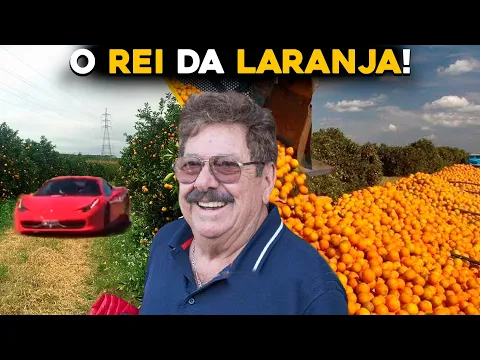

In 1947, the youngest of the 11 children, José Cutrale Júnior, took over the family business. With only primary school education, he dropped out and fully embraced the family business, driving his father’s plans forward with a blend of intuition and boldness.
At that moment, an external factor was starting to change the game. Repeated climatic issues in Florida, then the world’s largest producer of oranges, were affecting supply and opening up space for new players.
While American orchards were suffering from frost, José Cutrale Júnior invested in more fruit and expanded the structure in the interior of the state of São Paulo.
In the 1950s, he purchased a small pack house in Bebedouro, a company focused on packing oranges for export. Until then, the focus remained on the fresh fruit.
The big turning point would come in 1967 when the family decided to enter the orange juice market by acquiring Suconasa in Araraquara, a failed factory that seemed more a problem than an opportunity.
In practice, it was the missing step for the company to build the path that would lead it to become the largest in the world in orange.
To revive the plant and regain customer trust, José Cutrale Júnior personally sought out each buyer, renegotiating deliveries, deadlines, and contracts.
While he was putting things in order here, fate was helping out there: a new severe frost devastated groves in Florida, raising orange prices in the international market and enhancing the value of Brazilian products.
With orange prices soaring, the newly created Sucocítrico Cutrale was able to secure good contracts for concentrated juice, quickly paying off nearly all the investment made in the purchase of Suconasa and positioning itself as a relevant supplier in a market that was seeking alternatives to Florida.
The Cutrale Style: Owner In The Field, Control By The Side Of The Road

One of the hallmarks of José Cutrale Júnior’s trajectory was his way of managing the business. He was not an executive who spent the day behind a desk.
He traveled thousands of kilometers to inspect groves, check operations, oversee the harvest, and see the quality of the fruit up close. If he needed to pick up forgotten boxes or oranges lying on the ground, he would do it himself, just like any worker in the field.
In 1945, he got married, and from this relationship was born José Luiz Cutrale, who would later assume command of the group. From adolescence, the son was brought close to the operation.
At his father’s request, he went to the roadside to monitor the speed of the company’s trucks, learning firsthand that care for logistics is just as important as care for the orchard.
José Luiz didn’t rely solely on empirical knowledge. In addition to following in his father’s footsteps, he studied languages, public speaking, and developed negotiation skills which, combined with the family legacy, would help consolidate Cutrale as the largest in the world in orange, even in an increasingly competitive and concentrated market.
Discretion, Internal Generosity, And The Condominium In The Shape Of A Heart
Another characteristic that spans generations is the combination of public discretion with generosity within the company.
Both the father and the son avoid exposure in interviews and social columns. Even with billions in fortune and a prominent position, they prefer to keep their distance from the limelight and live close to family and close friends.
However, within the company, the care for those who work in the operations stands out. An example is the decision to move the administrative center from São Paulo to Araraquara in 1986.
In the same move, the company built a condominium near the factory, with comfortable houses surrounded by a heart-shaped wall.
There lived, besides José Luiz’s family, other directors and executives considered critical in building the group.
While the general public hardly sees photos or speaks of the owner of the largest in the world in orange, those inside the company feel the weight of this culture of closeness and recognition.
Numbers Of Those Who Became The Largest In The World In Orange

If the origin was a small orange trade between Rio and São Paulo, the current scale is another world.
According to the presented data, José Luiz Cutrale appeared in 2021 as the 22nd richest person in Brazil, with an estimated fortune of 2.5 billion dollars, something in the realm of over 10 billion reais.
The company has become one of the three giants operating in Brazil, controlling about 80% of the global orange juice market.
For every three glasses of juice consumed on the planet, one comes from Cutrale’s factories, which justifies the label of largest in the world in orange.
The industrial structure is spread across several cities in the interior of São Paulo state. There are factories in Araraquara, Colina, Coxilha Rica, Itápolis, and operations in two port terminals on the coast, in Santos and Guarujá.
During the harvest season, the company employs about 18,000 people across agricultural, industrial, and administrative units, maintaining over 15,000 direct jobs associated with its production and export chain.
In addition to serving the domestic market, Cutrale exports orange juice to about 90 countries, spreading Brazilian fruit across Europe, North America, and other regions.
What started with Giusepe carrying boxes to the Municipal Market is now an integrated system of orchards, factories, a port terminal, and global contracts, firmly establishing the company’s image as the largest in the world in orange.
Legacy, Economic Impact, And The Strength Of A Story That Started Small
When José Cutrale Júnior passed away on December 29, 2004, at the age of 78, the group had already dominated the national and international orange juice market.
What he inherited from his father, he multiplied. What the son inherited from him, he expanded even further, maintaining the logic of hard work in the field, discipline in management, and low exposure in public life.
The impact doesn’t remain within the company’s borders. The orange chain driven by the largest in the world in orange helps to drive local economies, generates direct and indirect jobs, demands services, transport, agricultural inputs, and technology, in addition to contributing to the Brazilian trade balance with constant exports.
Behind every glass of juice that leaves a Cutrale factory are decades of learning, risk taken in times of crisis, and decisions that could have gone wrong.
The difference is that, in this case, the vision of an immigrant about Brazilian oranges, the opportunity recognition by the son in the face of frosts in Florida, and the family’s persistence in maintaining control over the business across generations transformed a simple trade into an empire.
In a world where so many dream of “starting from scratch” and building something big, the story of the largest in the world in orange serves as a concrete example of how an apparently common product can become the foundation of one of the largest agribusinesses globally.
Credits for the account and original images go to the Fatos Rurais channel on YouTube.
And you, if you had the chance to choose, would you prefer to bet on a simple, focused business like that of oranges, trying to grow in it until you become a reference, or would you seek to diversify from the outset into various different sectors?








-

-

4 pessoas reagiram a isso.