





 Portuguese
  English
  Spanish
  5 min of reading
  0 comments


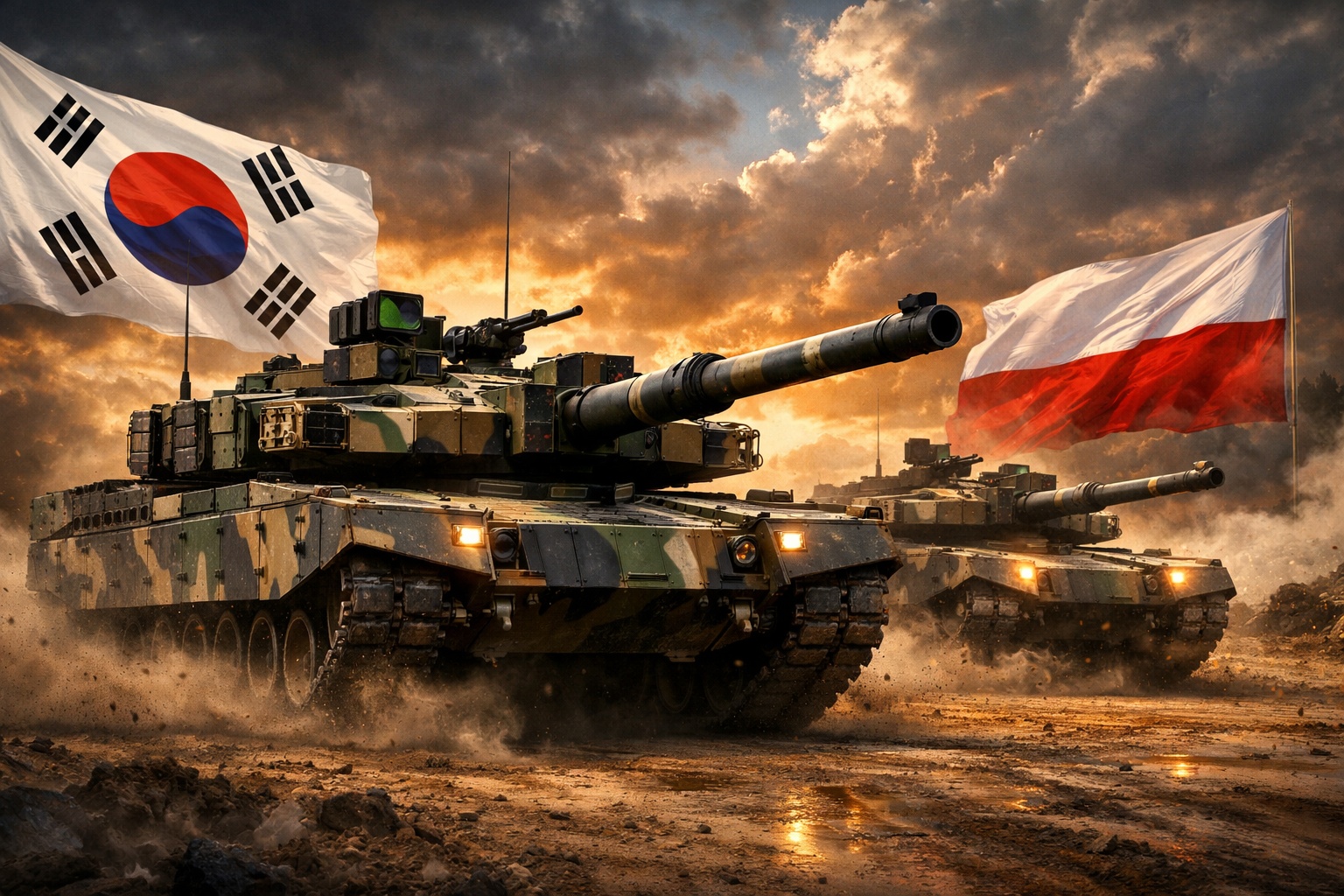
In 4 Months, South Korea Manufactures and Delivers K2 Tanks to Poland and Confirms Historic Turnaround: From War-Devastated Country to Global Defense Power.
On December 7, 2022, 10 K2 Black Panther tanks landed at the port of Gdynia in northern Poland. Polish President Andrzej Duda was on the dock. The Defense Minister was there as well. Cameras captured the scene. Four months earlier, the contract didn’t even exist. The Hyundai Rotem had signed the order in August 2022. It manufactured the first 10 units in October. And delivered in December — in a timeframe that no American or European manufacturer would even consider possible to quote in a commercial proposal.
This episode summarizes what is happening with South Korea’s defense industry: a country that 72 years ago was ravaged by war and received donated weapons from the US has quietly become one of the largest arms powers on the planet.
How South Korea Entered the Top 10 Arms Exporters Without the World Noticing
South Korea exported US$ 2.5 billion in weapons in 2019. In 2022, that figure jumped to US$ 17.3 billion — a growth of nearly 600% in three years.
-
USA and China compete for Brazil over resources that could be worth trillions — rare earths put the country at the center of a global dispute

-
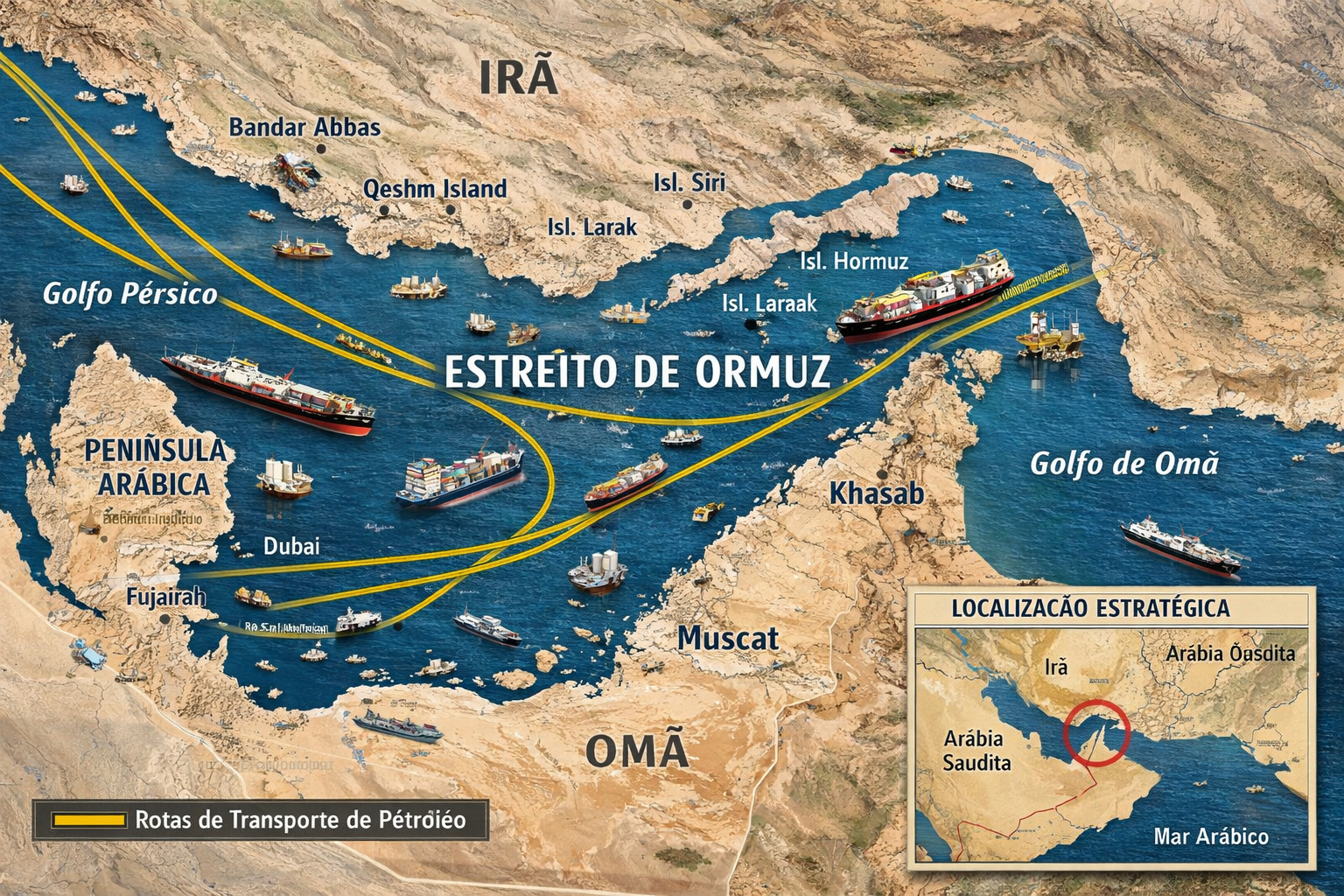
Global summit with over 40 countries pressures Iran for a blockade in the Strait of Hormuz and warns of direct impact on oil, food, and the global economy.
-
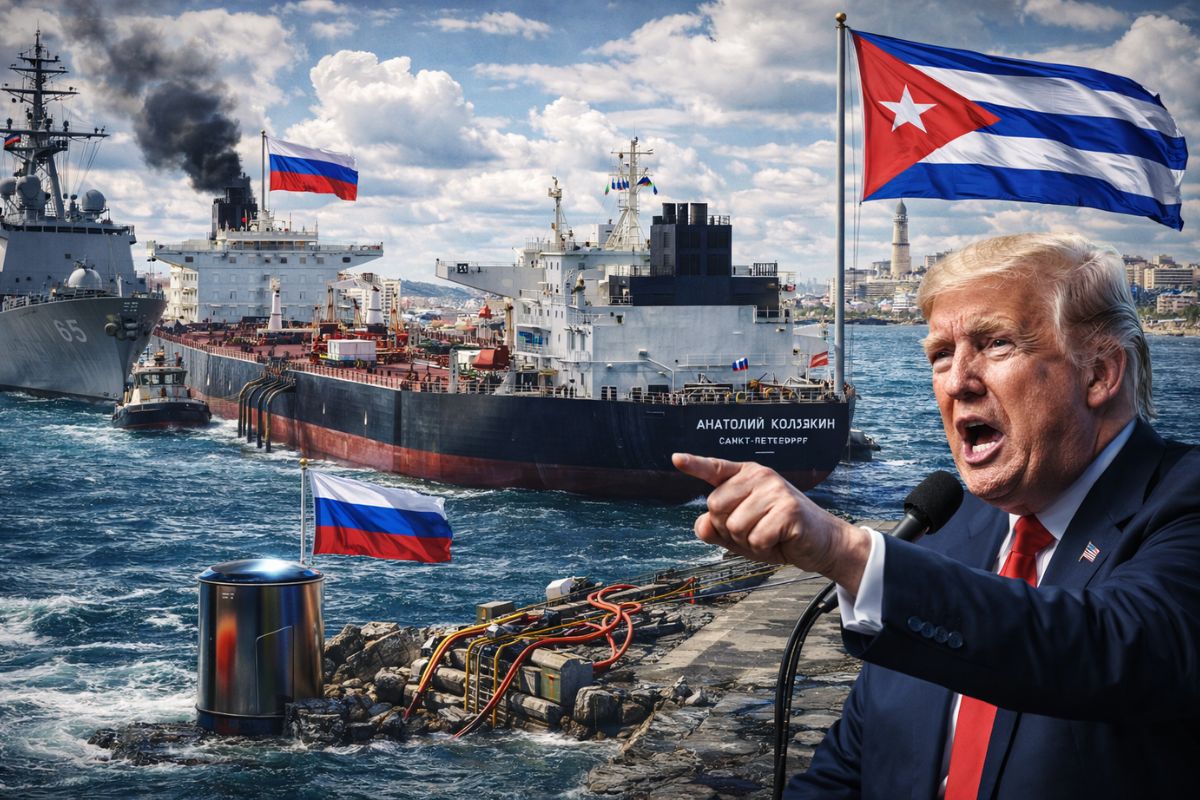
Russia has broken the U.S. maritime blockade to send oil to Cuba and is now loading a second ship while Trump says that “Cuba is next” in a possible military action against the island.
-
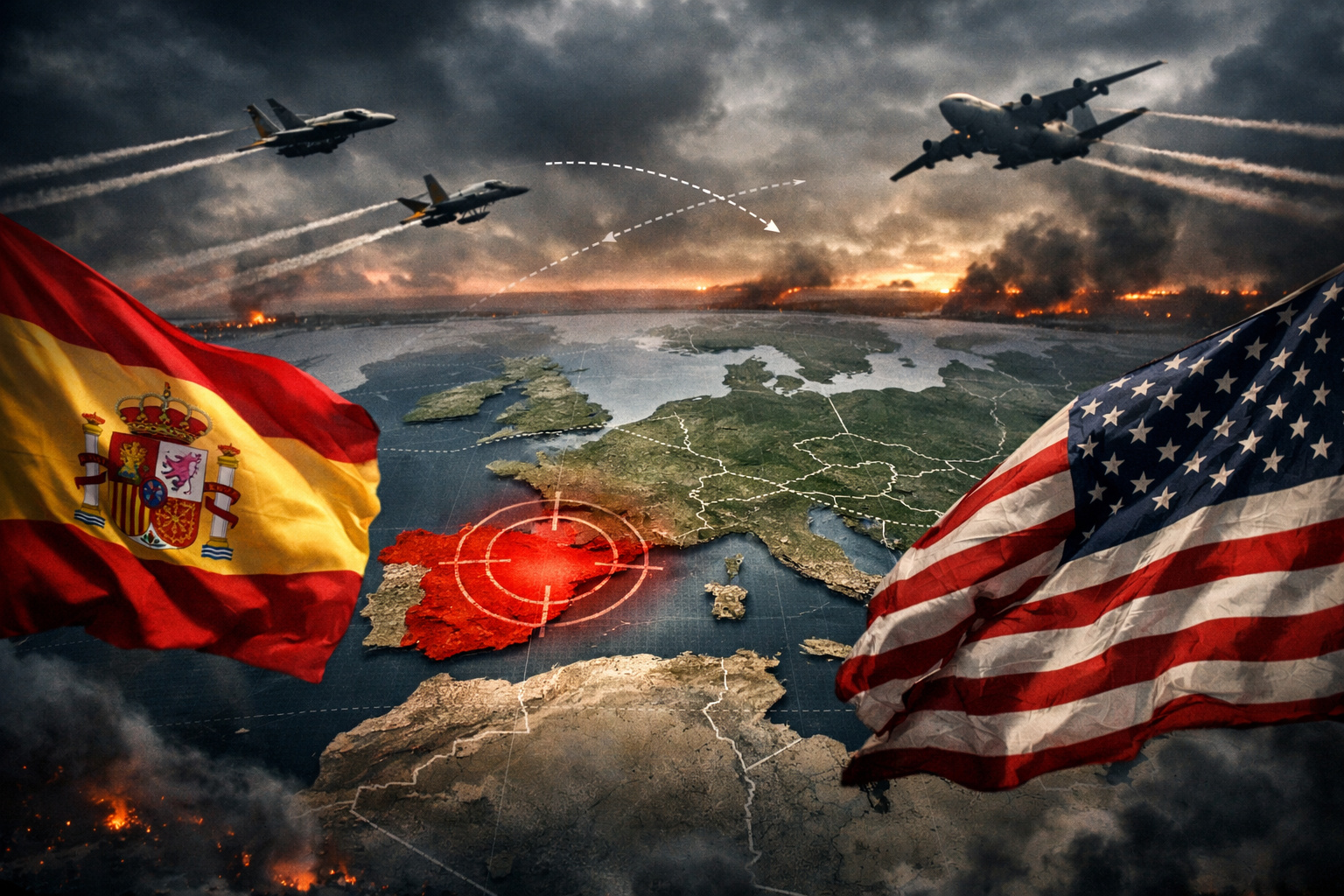
Spain challenges the USA and closes its airspace for operations against Iran, raising global tension and provoking the threat of a trade rupture.

Poland alone purchased US$ 2.51 billion in South Korean systems in 2024, more than four times what it had bought in 2023.
The SIPRI ranking for 2024 placed South Korea in 10th place among the largest arms exporters in the world, competing on equal footing with Germany, Israel, and Italy.
The four largest South Korean manufacturers (Hanwha Aerospace, Hyundai Rotem, LIG Nex1, and Korea Aerospace Industries) reported a combined operating profit of US$ 1.66 billion in the first half of 2025, a 161% increase compared to the same period the previous year.
Hanwha, the largest of them, rose from 24th to 21st in the global defense manufacturers ranking, with sales 42% higher year on year. None of this happened by accident.
The K2 Black Panther Tank: Why Europe is Lining Up to Buy a South Korean Tank
The K2 Black Panther is the main export product of Hyundai Rotem and one of the most advanced tanks in operation worldwide. It costs US$ 8.5 million per unit.
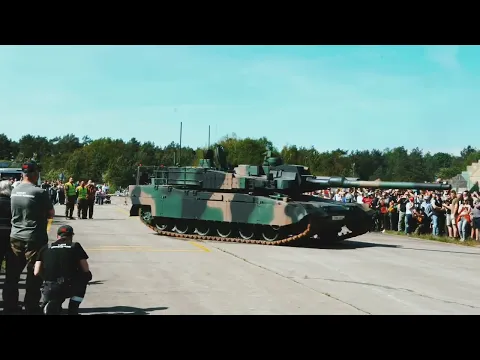

By comparison: the German Leopard 2 costs between US$ 10 and US$ 15 million, depending on the version. The American M1 Abrams exceeds US$ 10 million.
The K2 has a thermal camera that tracks targets at a distance of 9.8 km. Its millimeter-wave radar system serves as a missile approach warning. The autoloading system eliminates the fourth crew member, reducing the team size to three people and the vehicle’s profile.
The K2PL version exported to Poland includes active anti-tank protection and an electronic warfare system to suppress drone communications, a direct lesson learned from what the war in Ukraine has shown to be essential on the modern battlefield.
However, what impressed European buyers the most was not the technology. It was the delivery time.
The Deadline That Germany and the US Cannot Match
When Poland signed the first K2 contract in August 2022, Hyundai Rotem delivered 10 tanks in December of the same year. Four months from signature to delivery.
Germany took more than two years to start delivering the Leopard 2 on contracts finalized after the Russian invasion of Ukraine. The US has order backlogs extending for years.
The reason is structural: South Korea has maintained its defense industrial capacity on high rotation for decades, pressured by the constant threat from North Korea. Hyundai Rotem’s factory in Changwon assembles tanks with the same efficiency as Hyundai Motor assembles cars.
When demand exploded in 2022, South Korea simply opened more shifts. Since July 2025, Hyundai Rotem has increased monthly production of K2 from 3 to 4 units to over 10 — reallocating all factory capacity to fulfill Polish orders.
The US$ 15 Billion Contract That Changed the Map of the European Defense Industry
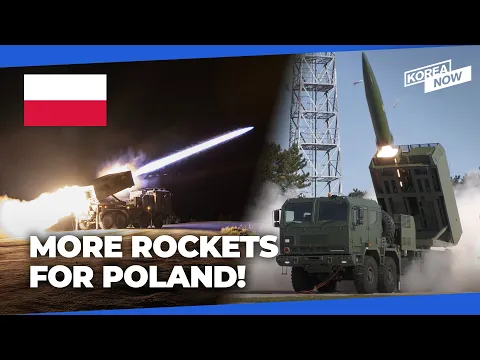
In July 2022, Poland and South Korea finalized the largest defense agreement in the history of the European country: US$ 15 billion for 980 K2 tanks, 648 K9 self-propelled howitzers, 48 FA-50 light combat jets, and Chunmoo multiple rocket systems.
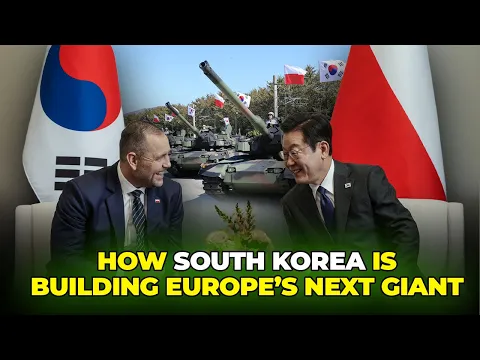
The figure was revised upwards later: with the addition of the Chunmoo, the total reached US$ 22 billion. In August 2025, Poland signed the second batch of K2 — an additional 180 tanks in a US$ 6.5 billion contract. The total accumulated Polish orders for the K2 points to 1,000 units over six contractual phases.
The innovation in the second contract goes beyond the numbers: 63 of the 180 tanks will be assembled in Poland itself by the state manufacturer Bumar-Łabędy in Gliwice, with technology transfer included in the package. South Korea is not just selling weapons. It is exporting the capability to manufacture them.
Why Poland Chose South Korea and Not the US or Germany
After the Russian invasion of Ukraine in February 2022, Poland needed to re-equip its ground forces at an emergency pace.
Traditional suppliers could not deliver in the necessary timeframe. The South Koreans could.
In addition to speed, there was another decisive factor: price. The K2 is significantly cheaper than its European and American counterparts, without sacrificing comparable technology.
And there was a third factor that rarely appears in official communications: South Korea offers technology transfer as a standard clause in its export contracts. Poland not only receives the tanks, it receives the knowledge to produce them locally, reducing its dependence on external suppliers in the long term.
It’s a model that South Korea has been replicating in other countries: Hanwha Aerospace is setting up K9 howitzer production lines in Australia, Egypt, and Poland. Romania signed a US$ 1 billion contract for 54 K9 with local assembly in September 2024.
From Military Aid Recipient to Global Supplier: The Transformation in Numbers
In 1971, the US began withdrawing troops from South Korea. Without guaranteed protection, the country was forced to develop its own defense capability. It was five decades of systematic investment.
The result is in the 2025 export catalog: K2 tanks, K9 howitzers, FA-50 jets, 5th generation KF-21 fighter, frigates, KSS-III class submarines, Cheongung surface-to-air missile systems, and Chunmoo rocket systems — an alternative to the American HIMARS that Europe is purchasing on an increasing scale.
The South Korean government projects defense exports to exceed US$ 20 billion in 2025. The declared goal of the South Korean president is to enter the global top 4 arms exporters, alongside the US, Russia, and France.
Analysts at JP Morgan raised the average target price of the four largest manufacturers by 28% in 2025, noting that “there is plenty of room to grow.”
The Country That Learned That Depending on Others for Defense Is an Unacceptable Risk
What explains the South Korean rise is not just technology or price. It’s a mindset built on a very specific memory.
South Korea was divided in half in 1945. It was devastated by war between 1950 and 1953. It rebuilt itself from scratch with external help. And then decided that it would never depend on anyone else for defense.
Each K2 tank shipped to Poland carries that history. The country that needed protection has become the supplier of protection.
And Europe, which believed for decades that it could indefinitely reduce its defense spending, is now lining up to buy from a country that never had that luxury.








Seja o primeiro a reagir!