





 Portuguese
  English
  Spanish
  4 min of reading
  0 comments


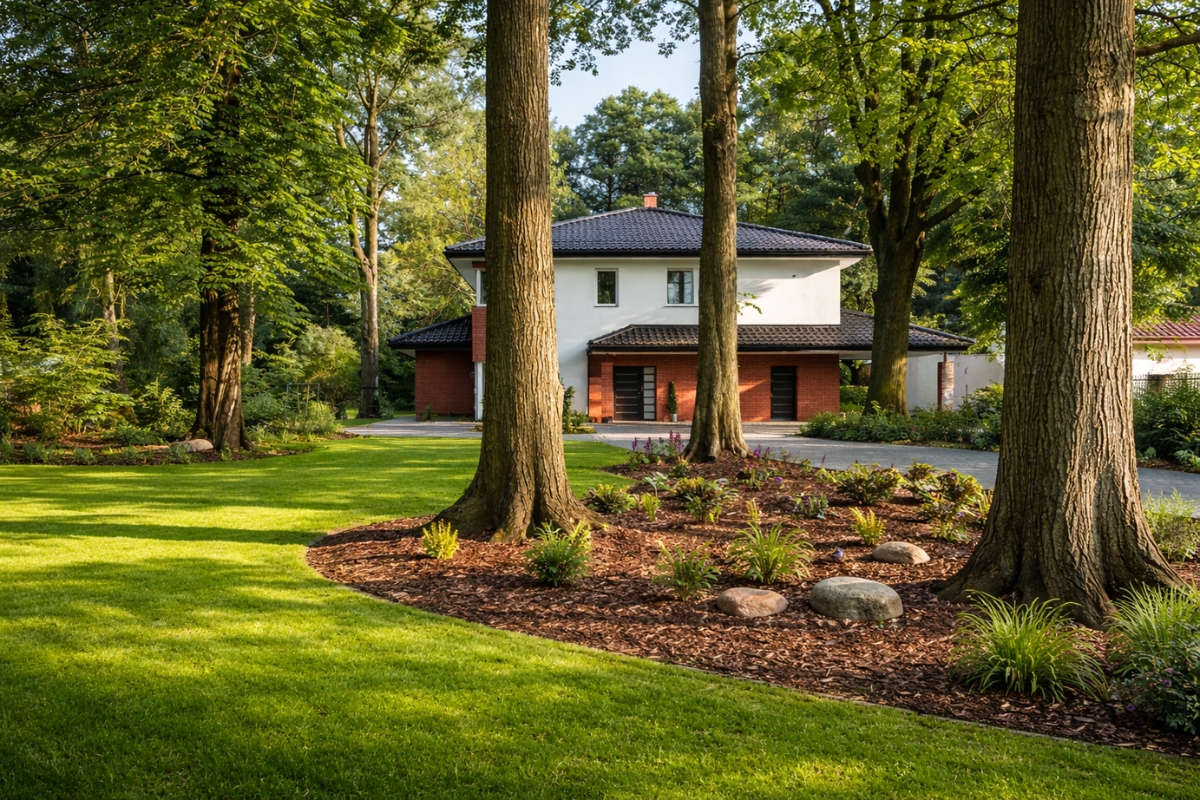
The United Kingdom Made It Mandatory to Deliver 10% More Nature in New Developments in England Starting in 2024, Tying Licenses and Forcing Developers to Restore Biodiversity for 30 Years.
The United Kingdom has put a tough rule in the way of new condominiums, subdivisions, and relevant buildings. Starting from 2024, construction will only proceed if the land ends with 10% more biodiversity than it had before.
In practice, this requirement affects how cities are planned. The real estate sector now treats green areas, habitats, and environmental maintenance as a central part of the project, not as a detail.
What Changes with the Requirement of 10% More
The rule goes by the name of Biodiversity Net Gain (BNG) and ties the construction license to a measurable outcome. After the construction, the site must register a biodiversity value at least 10% higher than the original.
-
Hidden beneath the dense forest of the Sierra Nevada, Betoma emerges in a neighbor of Brazil as the greatest archaeological discovery of the century, revealing a colossal ancestral city covering over 18 km², with 8,334 stone structures and the potential to rewrite the history of South American civilizations.

-
Goodbye iron: new technology from Xiaomi promises to revolutionize the way we iron clothes with 500 kPa steam, continuous flow of 120 g/min, heating in 65 seconds, and six smart modes for different fabrics.

-
Rio Pardo, the most mysterious city in Rio Grande do Sul: untouched Pampas castle, the missing treasure of the Devil Boy, bride’s saint, invisible tunnels, and a 200-year curse today.

-
China retires the J-7 fighter after years of military protection and can now transform military items into drones, following more than 60 years of operation of the J-7, derived from the MiG-21, with thousands of units produced and strategic use in the PLAAF and PLANAF.


None of this remains in the visual impression. The assessment uses an official metric that transforms habitats into units, considering vegetation type, size, quality, and connectivity, making the environmental gain a verifiable number.

Environment Act 2021 Becomes a Condition for the Project
The legal framework is the Environment Act 2021, which established the obligation as a condition linked to the construction permit in England. Without an approved plan, the construction site does not start, and the license remains blocked until the adjustment.
According to Natural England, a public body for nature conservation in England, the Statutory Biodiversity Metric is the tool that calculates the units and allows comparison of the before and after with the same standard.
Dates in 2024 Expand the Reach and Affect the Entire Market
The schedule has been staggered, but it has already tightened the sector. Since February 12, 2024, large developments like those with 10 or more houses or areas over 0.5 hectares must demonstrate the gain.
On April 2, 2024, the rule extended to small sites, the smaller residential and commercial projects that make up the majority of permits. The result is constant pressure for environmental adjustments already in the design phase.
The Biodiversity Plan Becomes Key to Release the Project
Before taking the project to the local authority, the developer needs to map habitats and conservation status. This survey feeds the metric, generates the initial score, and allows calculating the result after the planned intervention.
The gain can appear in gardens, green roofs, ponds, planted woodlands, and other straightforward solutions. But the law requires that the final balance be 10% higher and remain for 30 years, with management and monitoring.
When It Doesn’t Fit on the Land, Compensation and Credits Come In
In dense areas, it’s not always possible to accommodate everything on the same lot. The rule establishes a hierarchy: avoid impact, reduce harm, compensate on-site, and only lastly compensate off-site or purchase biodiversity credits.
These credits can come from registered properties to restore habitats for decades. The long-term commitment is anchored in instruments like section 106 agreements and conservation covenants, which tie the obligation to the land.
Exceptions Prevent Halting Small Projects and Self-Building
Despite its broad reach, there are exemptions designed not to halt minimal projects. Projects with an impact below 25 square meters of habitat, emergency actions, and certain very small infrastructures are excluded.
Self-builds and small plots, with up to nine units on areas smaller than 0.5 hectares, may escape the full requirement or use simplified versions. Still, the majority of the residential and commercial market falls under the BNG umbrella.
Extra Cost Now, Strategic Pressure Later
Critics point out the risk of increased costs due to ecological studies, monitoring, and management for 30 years, as well as delays and a speculative credit market. There is also concern about compensations far from the communities affected by construction.
On the other hand, the rule pushes a new standard for urban planning. The expected result is that urbanization will cease to be synonymous with continuous loss and will start to operate as a piece of environmental recovery in city design.
The United Kingdom transforms construction licenses into instruments of environmental influence. The measure raises the cost of getting the project wrong and amplifies the weight of nature at the negotiating table.
When construction depends on 10% more biodiversity, it changes the strategic reading of the territory and pressures the urban landscape.








Seja o primeiro a reagir!