





 Portuguese
  English
  Spanish
  5 min of reading
  2 comments


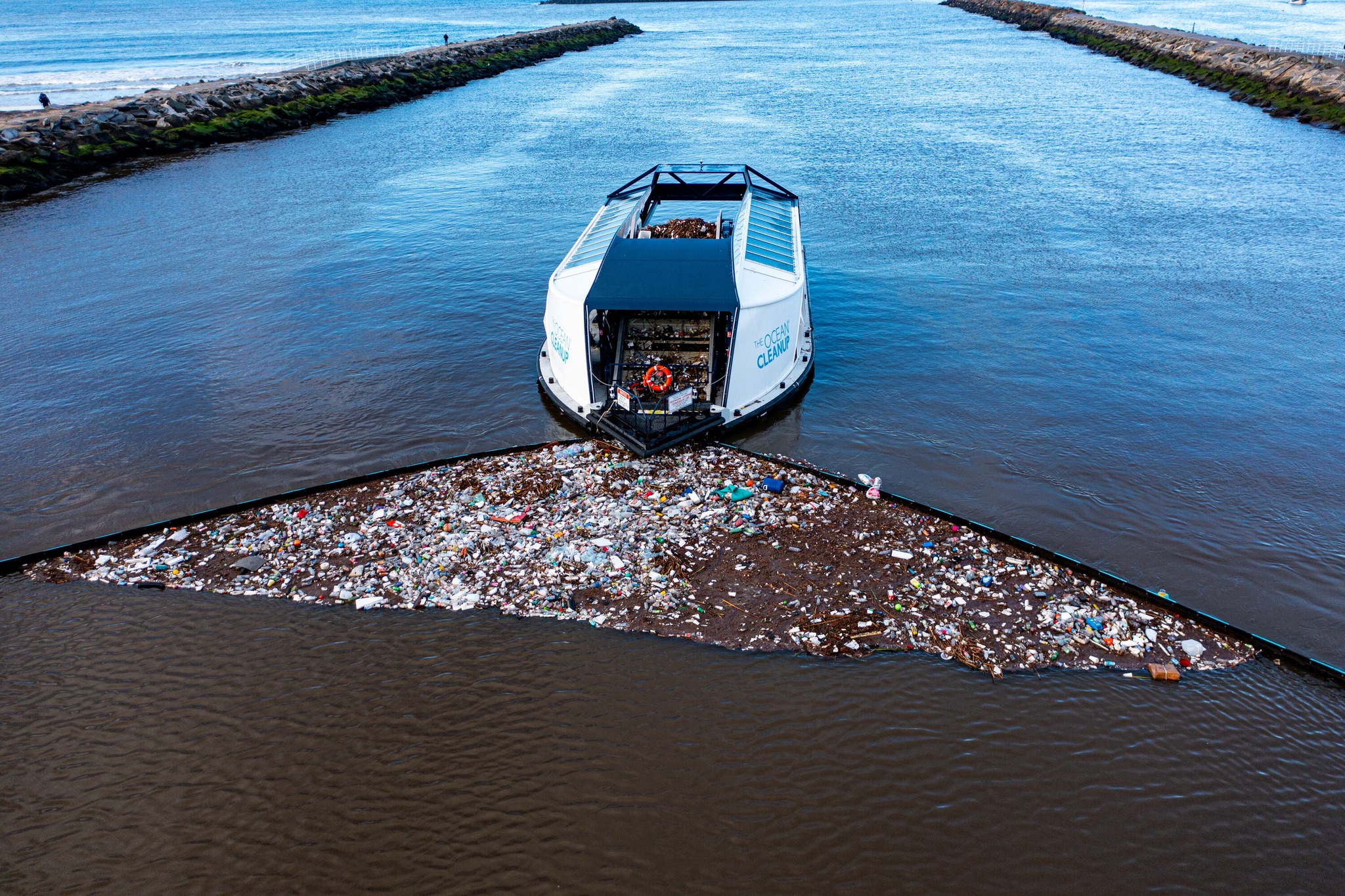


Floating Solar-Powered System Captures Up to 50 Tonnes of Plastic Per Day in the Cisadane River, Indonesia, Operating 24 Hours to Prevent Waste from Reaching the Ocean.
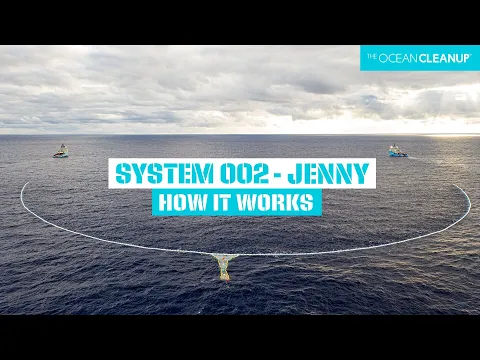
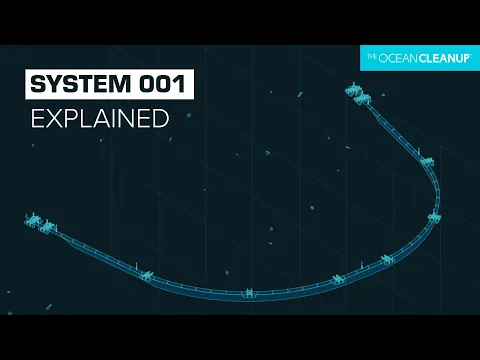
For years, scientists have warned that the battle against plastic in the oceans has been fought too late. Once in the open sea, waste fragments, disperses through global currents, and becomes almost impossible to recover. It was precisely to tackle the problem at its source that the Interceptor was born, a floating system developed by the international organization The Ocean Cleanup to operate directly in the most polluted rivers on the planet.
One of the most emblematic cases of this strategy is in the Cisadane River, in Indonesia. Cutting through densely populated and industrial areas, the Cisadane is considered one of the most critical transport routes for plastic waste heading towards the ocean. Before the system was implemented, tonnes of urban waste flowed daily towards the Java Sea, feeding one of the largest marine pollution hotspots in Southeast Asia.
Why the Cisadane River Became a Key Point in the Fight Against Plastic
Indonesia is among the countries that contribute most to marine plastic pollution, not due to isolated consumption but due to the combination of large urban centers, insufficient waste management, and rivers that act as true conveyor belts of garbage.
-
Archaeologists use satellite technology and find a mysterious structure of 500 m² buried up to 6 meters beneath an ancient city in Egypt.

-
Supercomputer calculates when humanity may disappear from Earth, predicts a scorching supercontinent, temperatures of up to 70 degrees, and a planet moving towards becoming uninhabitable.

-
INMET danger alert: heavy rains between the 3rd and 4th may drop up to 100 mm/day and winds of 60 to 100 km/h in several regions of Brazil require extra caution.

-
The parts crisis may bring back the drop notch and microSD in 2026; while Windows 11 promises to become lighter, leaks mention batteries of up to 10,000 mAh and 200 MP cameras.



The Cisadane flows through metropolitan areas with millions of inhabitants, receives household and industrial waste, and flows directly into the ocean. Studies have shown that intercepting the waste at this point would have an disproportionately large impact, preventing it from spreading through regional and global marine currents.
It was in this context that the location was chosen to receive one of the most advanced versions of the Interceptor.
What Is the Interceptor and Why Is It Different from Everything That Has Been Tested
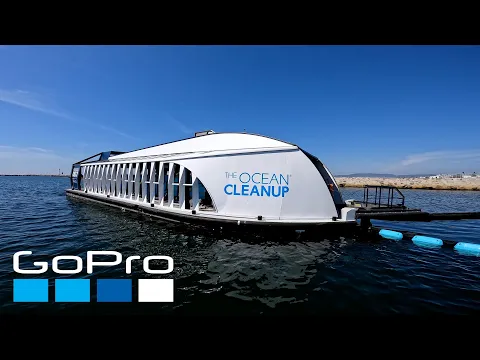
The Interceptor is neither a passive barrier nor a conventional cleanup boat. It is a self-sustaining floating platform, installed along the riverbank, designed to work continuously without interfering with navigation or the natural flow of the water.

Floating arms positioned at an angle direct the litter carried by the current into the mouth of the system. From there, a mechanical conveyor removes the plastic from the water and deposits it into large internal containers.
Sensors monitor the filling and send alerts when the material needs to be removed for recycling or proper disposal.
The crucial point is that the entire system is powered by solar energy, with panels and batteries that allow for uninterrupted operation, day and night, without fossil fuels and without operators on board.
Actual Capacity: Up to 50 Tonnes of Plastic Per Day
According to data released by The Ocean Cleanup itself and by technical reports that followed the project, the Interceptor was designed to remove an average of up to 50 tonnes of waste per day, potentially reaching even greater volumes under ideal flow and waste concentration conditions.
In annual terms, this represents thousands of tonnes of plastic prevented from reaching the ocean, a significant number when considering that the system operates at only one strategic point in the river.
This volume includes everything from PET bottles, packaging, and bags to smaller fragments, which would eventually turn into microplastics if they reached the marine environment.
Continuous Operation and Total Autonomy
One of the significant advances of the Interceptor is its ability to operate 24 hours a day, regardless of weather conditions.
Unlike point-cleaning operations, which rely on human teams and specific action windows, the system works continuously, following the real flow of waste.

The autonomy drastically reduces operational costs and makes the model replicable in developing countries, where resources for large environmental operations are limited. Once installed, the Interceptor requires only periodic maintenance and logistics for removing full containers.
Environmental Impact Before Waste Becomes a Global Problem
The greatest merit of the project lies not only in the quantity of plastic removed but in the timing of that removal. By capturing waste still in the river, the system prevents it from fragmenting under the action of the sun, waves, and seawater.
This drastically reduces the formation of microplastics, microscopic particles that enter the marine food chain, affecting fish, mollusks, and eventually, humans. Each tonne intercepted in the river represents an environmental impact avoided on an oceanic scale.
The River as a Decisive Frontline in Marine Pollution
The experience in the Cisadane reinforced a paradigm shift among scientists and policymakers: rivers are the decisive frontline in combating plastic in the oceans. Rather than trying to “clean up the mess” in the open sea, the most effective strategy is to prevent waste from getting there.
Based on initial results, The Ocean Cleanup began to prioritize the deployment of Interceptors in rivers considered highly polluted in other countries in Asia, Latin America, and Africa.
Limitations and Challenges of the Model
Despite its success, the system is not an isolated solution to the global plastic problem. It depends on local infrastructure for the removal and proper disposal of the collected material. Without recycling policies, environmental education, and waste management, the Interceptor acts as a brake but does not eliminate the source of the problem.
Still, experts recognize that it is one of the most effective tools ever tested to rapidly reduce the flow of plastic to the oceans, especially in countries with a high dependence on rivers for waste transport.
In the Cisadane River, the Interceptor does not draw attention at first glance. There are no large visible machines or noisy operations. Yet, day after day, it intercepts tonnes of waste that would otherwise end up scattered across the ocean.
The project demonstrates that relatively simple technological solutions, when applied at the right points, can generate global environmental impacts. By blocking one of the largest waste routes to the sea, the system installed in Indonesia has become a symbol of a new approach: act before the damage becomes irreversible.







Muito bom de verdade. Só falta agora garantir que a população não aumente o descarte incorreto achando que vai tudo ser coletado mais tarde no rio.
Maravilhoso! Amo a mãe Natureza e sempre sonhei que algum dia algo assim acontecesse. Bênçãos para vcs.🙏🏼🫶🏼