





 Portuguese
  English
  Spanish
  4 min of reading
  0 comments


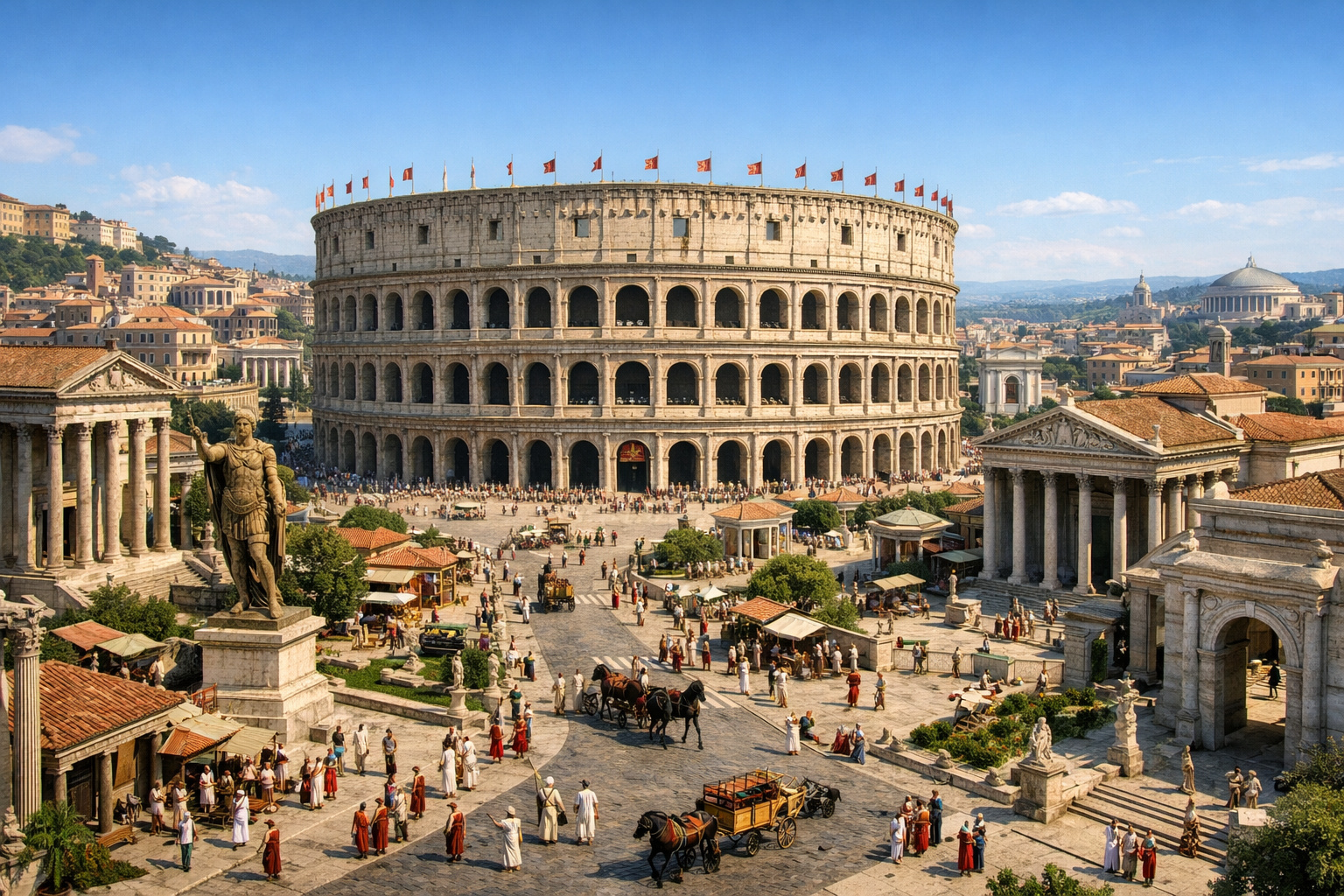
The Combination of Mathematics, Innovation in Materials, and Strategic Planning Allowed the Romans to Transform Rivers, Valleys, and Urban Centers into Durable Works That Redefined the Limits of Ancient Engineering
When speaking of the Roman Empire, iconic images arise almost automatically: legions marching along stone roads, crowded amphitheaters, aqueducts crossing entire valleys, and cities connected by impressive infrastructure. However, behind this visual legacy lies a decisive factor for Roman success: practical engineering that was innovative and designed to last.
More than just builders, the Romans developed technical solutions capable of facing natural, military, and urban challenges on a continental scale. Bridges, monumental buildings, and transportation systems were not only symbols of power but also essential tools for holding together an empire that stretched from Britain to the Middle East.
The information was released in an article signed by journalist Felipe Sales Gomes, detailing how Roman engineering became one of the most influential in history, combining tradition, innovation, and mastery of available materials.
-
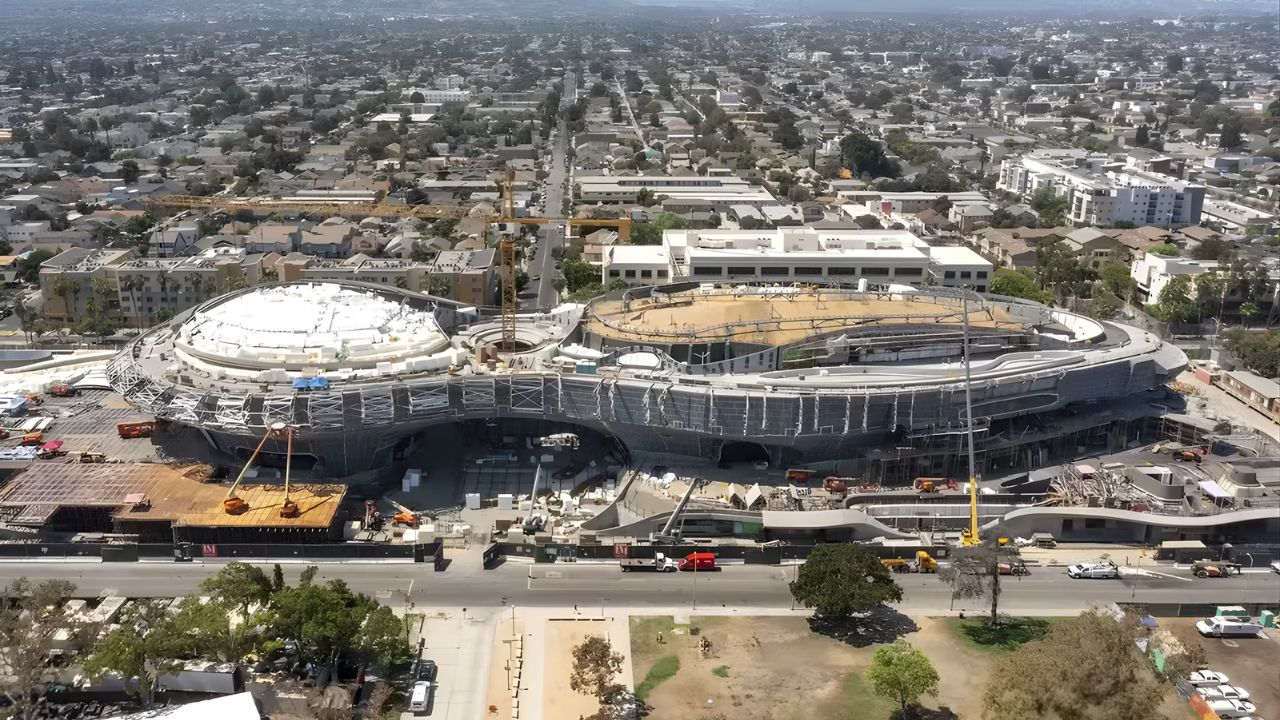
Created by George Lucas with over $1 billion, a futuristic museum in the shape of a spaceship with 1,500 curved panels is about to open in Los Angeles and will house one of the largest private collections of narrative art in the world.
-
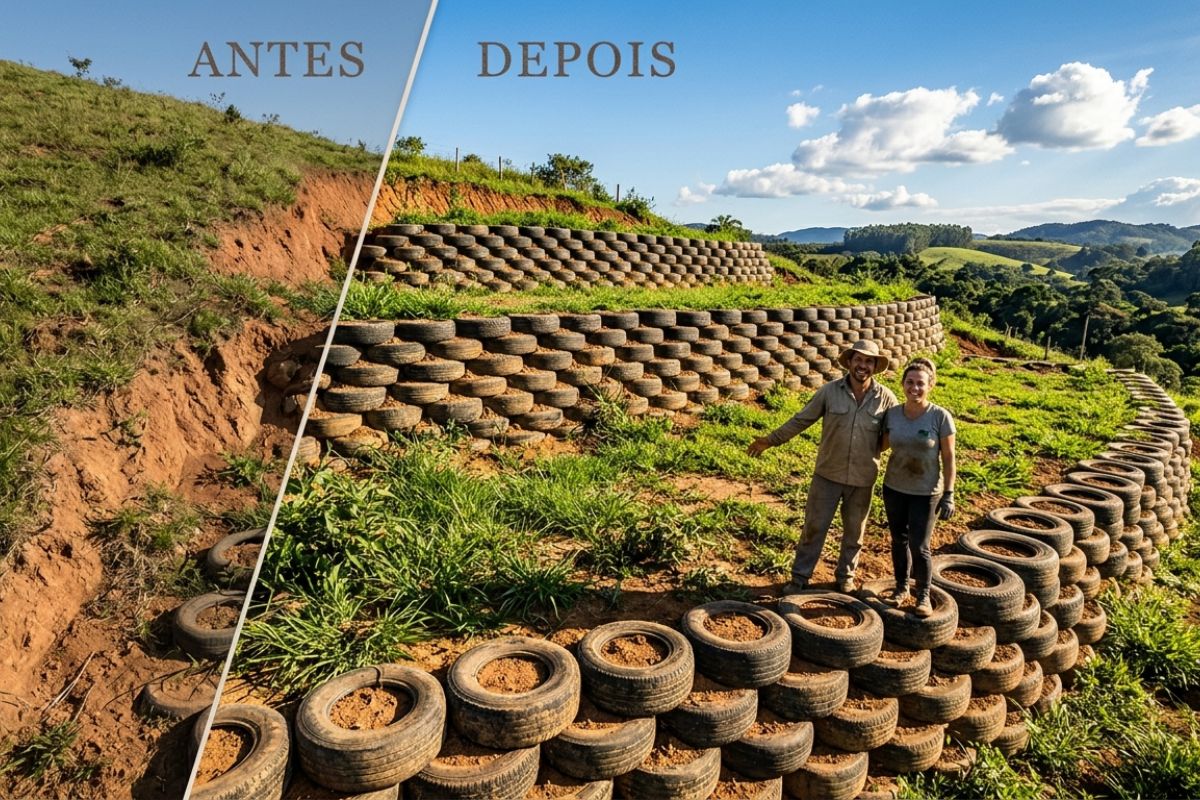
Couple shows how they built a retaining wall on their property using 400 old tires: sloped land turned into plateaus, tires are aligned, filled, and compacted with layers of soil, with grass helping in support and at almost zero cost.
-
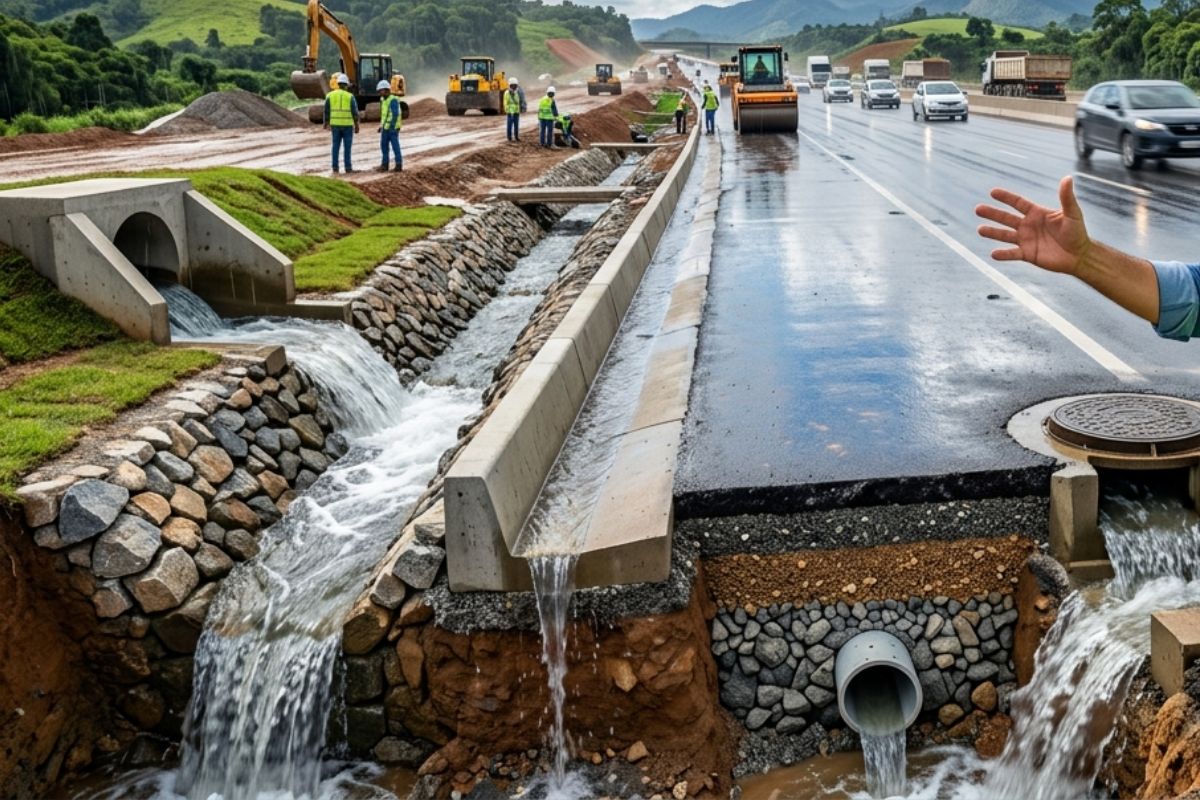
Engineer explains drainage during the rainy season: the difference between surface water and deep water, ditches, gutters, and water outlets on the road, as well as drains and drainage mattresses, to prevent erosion, aquaplaning, and flooding at the construction site today.
-
With 55 floors, 177 meters in height, a 15-meter walkway between the twin towers, ventilated facade, and 6,300 m² of leisure space, Ápice Towers already has one tower completed and another nearly at the top.


Roman Bridges: Structures Built to Conquer Rivers and Wars
Building bridges in the ancient world required overcoming complex problems: foundations on unstable beds, resistance to the force of water, durability in the face of floods, and the ability to support heavy traffic from people, animal-drawn carts, and military troops. The Romans not only faced these challenges but also overcame them with unprecedented solutions for the time.
The first Roman bridges, such as the Pons Sublicius, which crossed the Tiber River, were made of wood, following techniques inherited from the Greeks. Although functional, these structures had clear limitations, especially when subjected to the constant weight of traffic and military needs.
The real revolution occurred with the systematic introduction of the stone arch. An emblematic example is the Pons Fabricius, built in the 1st century BC, which still remains in use today. Its two large arches efficiently distributed weight, preventing collapses and drastically increasing the lifespan of the construction.
Another extraordinary case was the Trajan Bridge, erected over the Danube River. Spanning over 1,100 meters, this monumental work was designed to allow rapid movement of troops and supplies during Emperor Trajan’s campaigns. Conceptualized by engineer Apollodorus of Damascus, the bridge crossed one of the most feared rivers in Europe and was considered for centuries the largest bridge ever built in the ancient world.
In addition to these, structures like the Nomentano Bridge, the Pons Agrippae and the Augustus Bridge (Ponte d’Augusto) reveal the refined use of materials such as travertine, bricks, and carefully fitted stones, as well as hydraulic solutions to reduce the impact of water currents.
Arches and Roman Concrete: The Basis of Millennial Durability

The longevity of Roman constructions is directly linked to two fundamental elements: the arch and Roman concrete. Although the concept of the arch was already known to earlier civilizations, it was the Romans who perfected and applied it on a large scale.
The arch allows for lateral and downward weight distribution, reducing the need for central supports. This characteristic was essential not only for bridges but also for aqueducts, public buildings, and amphitheaters. Thanks to this technique, the Romans managed to span large distances without compromising the stability of the structures.
The other pillar of Roman engineering was concrete, produced from a mixture of lime, water, and pozzolana, a volcanic ash abundant in the Italian region. This material had a surprising characteristic: in contact with water, it became even more resistant over time. To this day, modern engineers study its composition in an attempt to replicate this durability.
The combined use of arches and concrete enabled the construction of iconic works. The Colosseum, for example, utilized multiple levels of overlapping arches, creating an amphitheater capable of accommodating tens of thousands of people without compromising its structural stability. This solution allowed for efficient load distribution, which is essential for a construction of this scale.
The Pantheon, with its immense concrete dome, remains one of the greatest achievements of ancient engineering, while the Roman aqueducts demonstrate mathematical precision in transporting water over hundreds of kilometers using only gravity.
A Legacy That Shaped Modern Engineering
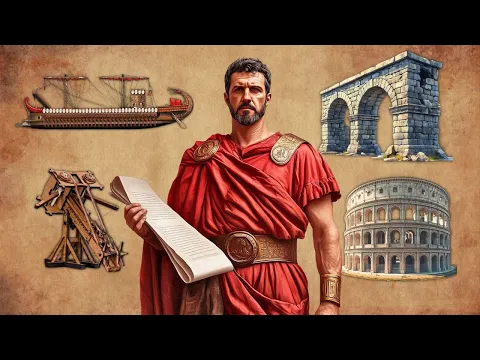

Roman constructions go far beyond historical ruins. They established principles that are still taught in engineering and architecture courses around the world today. The use of arches, concrete, urban planning, and standardization of construction techniques directly influenced how modern cities were designed.
Roman roads served as the foundation for trade routes for centuries, bridges have withstood millennia of continuous use, and water supply systems inspired solutions adopted long after the fall of the empire. In many cases, these structures continued to be used, adapted, or restored, proving the efficiency of solutions created two thousand years ago.
By mastering engineering as a tool for territorial integration, the Romans not only built monumental works but also created a model of infrastructure capable of sustaining an entire empire. Their legacy remains visible not only in ancient stones but also in the foundations of engineering that still shape the contemporary world.








-

-

-

-

13 pessoas reagiram a isso.