





 Portuguese
  English
  Spanish
  3 min of reading
  0 comments


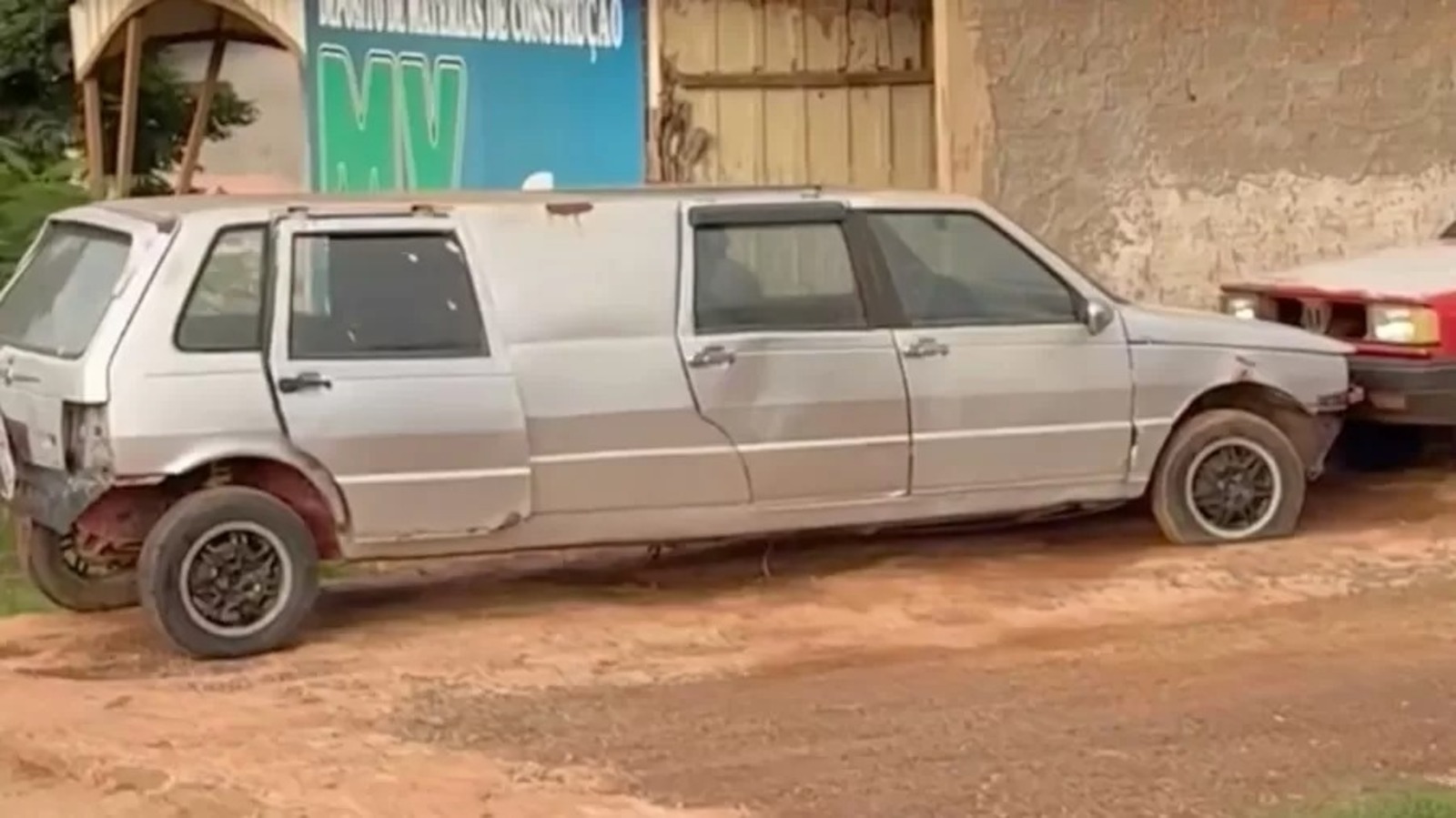
Flagged in the Interior of Brazil, Supposedly in Paraná, the Fiat Uno Transformed into a Handcrafted Limousine Viralized on Social Media by Joining Two Cars into One, Raising Questions About Improvised Engineering, Popular Creativity and Legal Limits for Vehicle Modifications Foreseen in the CTB and in Resolutions of the Contran
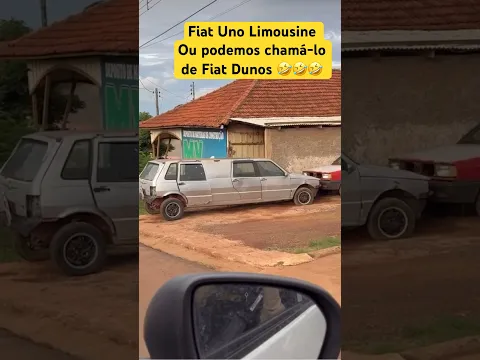
A Fiat Uno transformed into a handcrafted limousine, nicknamed “Duno” or “Limosuno,” caught attention on social media when it was spotted in the interior of Brazil in early 2025, supposedly in Paraná, sparking curiosity about creativity, legality, and the limits of vehicle modifications.
An Uno That Became Two, or Almost That
The improvised vehicle emerged from the union of two Fiat Uno, a popular national model, generating shock and delight among internet users as it circulated in recent videos and images.
The unusual adaptation was compared to the series “Now NASA Comes,” from UOL Carros, dedicated to catching extreme modifications that highlight creativity applied to ordinary vehicles.
-
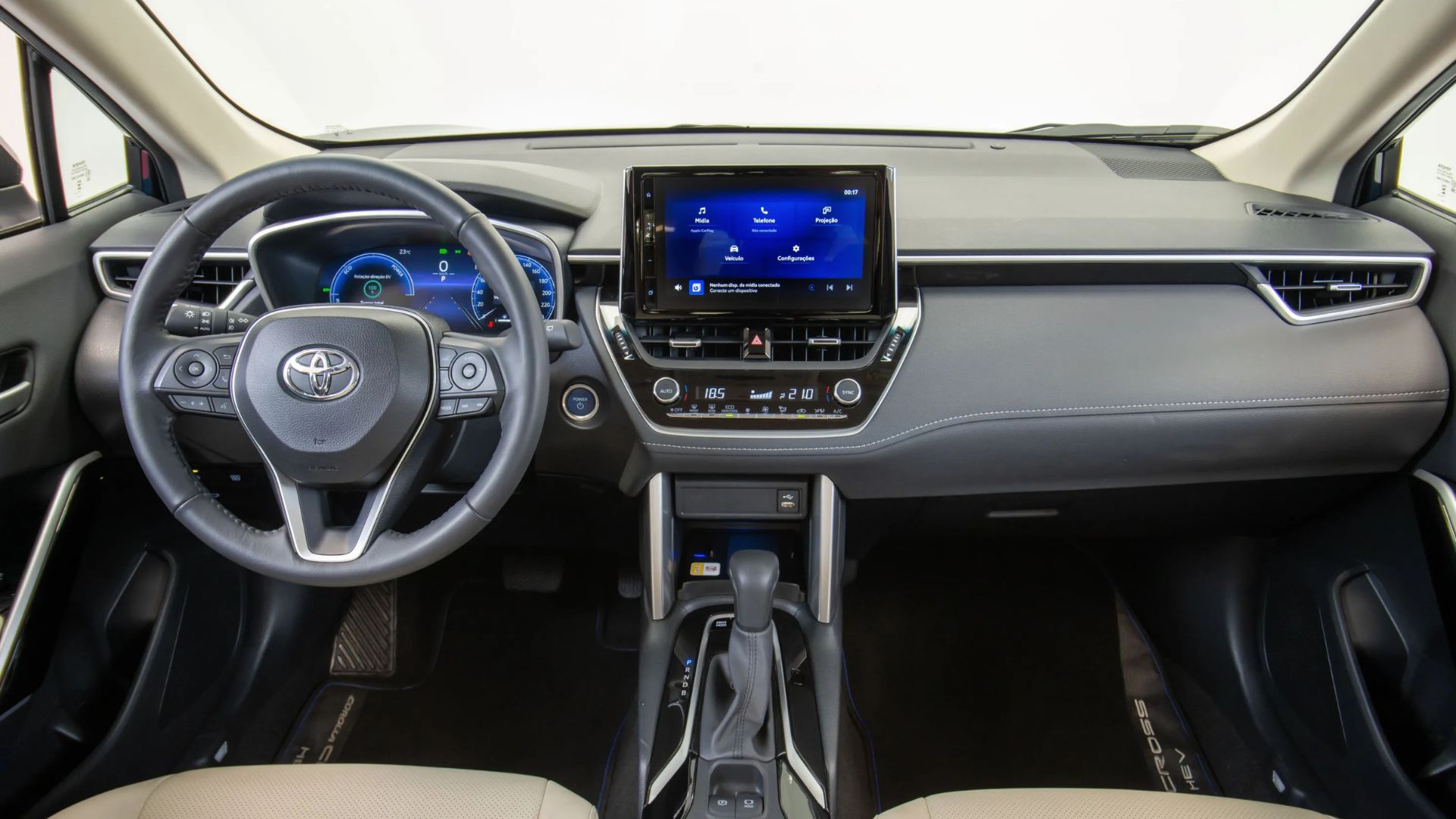
With 122 hp, fuel consumption of up to 17.7 km/l, and a trunk capacity of 440 liters, this hybrid SUV impresses even though it costs up to R$ 47,000 more than the Yaris — meet the Toyota Corolla Cross.
-
600 km with three Chinese plug-in SUVs, same mode and air conditioning on: Jaecoo 7, BYD Song Plus, and Haval H6 hit the road, and the pump reveals who was truly the most economical.

-
With a price almost R$ 100 thousand lower, the Haval H9 surpasses the SW4 for the first time in March, but Toyota still leads in the accumulated total for 2026; the Chinese SUV bets on technology and premium finishing to compete at the top.

-
6 used cars that cost less than a new Honda CG 160 Titan and still provide trunk space, four seats, and comfort that many new motorcycles cannot offer.

According to the images, only one set of front doors was kept, while the rear doors were taken from the two original units.
The visual result is a handcrafted limousine with six doors, something unusual for a compact urban model originally launched in the 1980s.

Internal Space and Improvised Solutions
Inside, there is an intermediate space between the second and third rows, described as an area reserved for private activities of the occupants.
This area has metal plates instead of windows, allowing visual isolation and suggesting a use inspired by traditional market limousines.
The video does not clarify the exact method of structural fusion used, but the most likely hypothesis involves extension of the longitudinal beams and chassis elements.
This adaptation seeks to recreate the original design signed by Giorgetto Giugiaro, preserving recognizable proportions of the Fiat Uno launched in the 1980s.
External Adjustments and Finishing
To prevent the bottom of the vehicle from scraping the ground, higher-profile tires and larger wheels were installed, increasing the ground clearance.
At the rear, the Fiat emblem received additional chrome details, an aesthetic highlight noted as exclusive and rare even among amateur customizations.
The taillights were removed, indicating preparation for a new lighting signature, still not revealed by the person responsible for the modification.
The author of the video mentions misalignment along the body, something treated as an aesthetic detail, but which shows that work is still in progress.

Legality and Requirements Foreseen by Law
Despite the humorous tone, extreme modifications require registration with the competent authorities for the vehicle to circulate legally on public roads.
According to Article 98 of the CTB, any vehicle alteration depends on prior authorization from the state traffic executive agency, Detran.
Even with authorization, not all modifications are allowed, according to the rules established by current Brazilian traffic legislation.
Marco Fabrício Vieira, a lawyer and member of the Legal Effort Thematic Chamber of Contran, emphasizes that only modifications foreseen are legally accepted.
Restrictions of the Contran and Penalties
Only modifications listed in Contran Resolution 916/2022 can be authorized, limiting deep structural interventions in passenger vehicles.
Article 10, Item III prohibits the replacement of the chassis or monocoque with another, even in cases of modification, except for specific accidents.
For vehicles out of compliance, the infraction is classified as serious under Article 230, VII, of the CTB, according to the cited legislation.
The penalty provides for a fine of R$ 195.23, five points on the owner’s record, and administrative removal of the vehicle.
These legal precedents show that, although creative and curious, the “Duno” Fiat still depends on regulatory compliance to circulate, remaining, for now, a symbol of Brazilian inventiveness on social media, slightly distant from full legality.
With information from UOL.









-

-

2 pessoas reagiram a isso.