





 Portuguese
  English
  Spanish
  6 min of reading
  0 comments


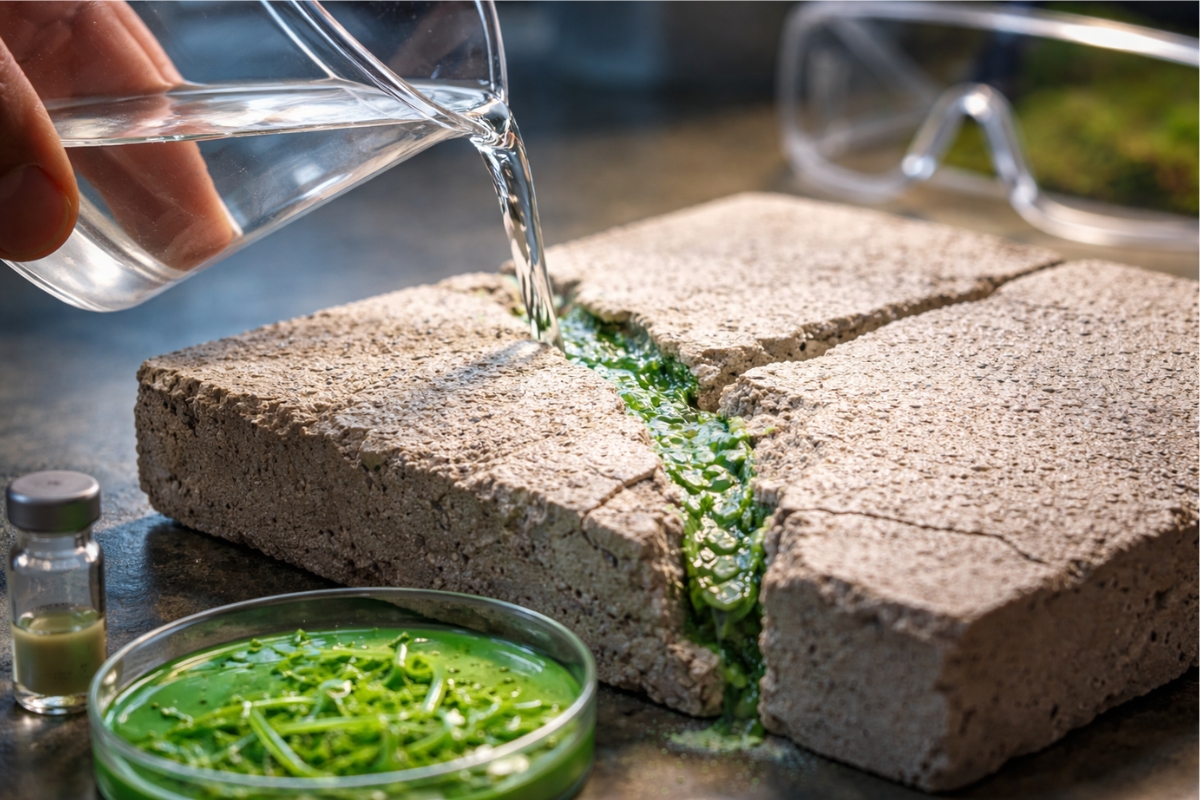
The Construction Industry Seeks More Durable and Eco-Friendly Materials, and Bio-Concrete with Cyanobacteria Emerges as a Bet: Activated by Light and Water, it Fills Internal Cavities and May Reduce Cement Consumption Over Decades
The construction sector is beginning to test a material that seems like science fiction: bio-concrete with cyanobacteria, a type of living concrete that “grows” and helps to seal its own cracks.
Instead of just resisting time, this material reacts to water and light and can significantly extend the lifespan of concrete structures, with a direct impact on costs and sustainability.
This concept arises in a context where the construction industry seeks lighter, more durable, and eco-friendly materials capable of reducing the need for constant repairs and excessive use of natural resources.
-
The United States Navy revealed a sixth-generation fighter concept with a bat-like shape that promises to fly at four times the speed of sound and operate from aircraft carriers with stealth technology never seen before.

-
China is sending 600 state-of-the-art buses to transform Nicaragua into a benchmark for public transportation in Latin America, and the first giant batch of 180 units has already arrived in the country, surprising everyone.

-
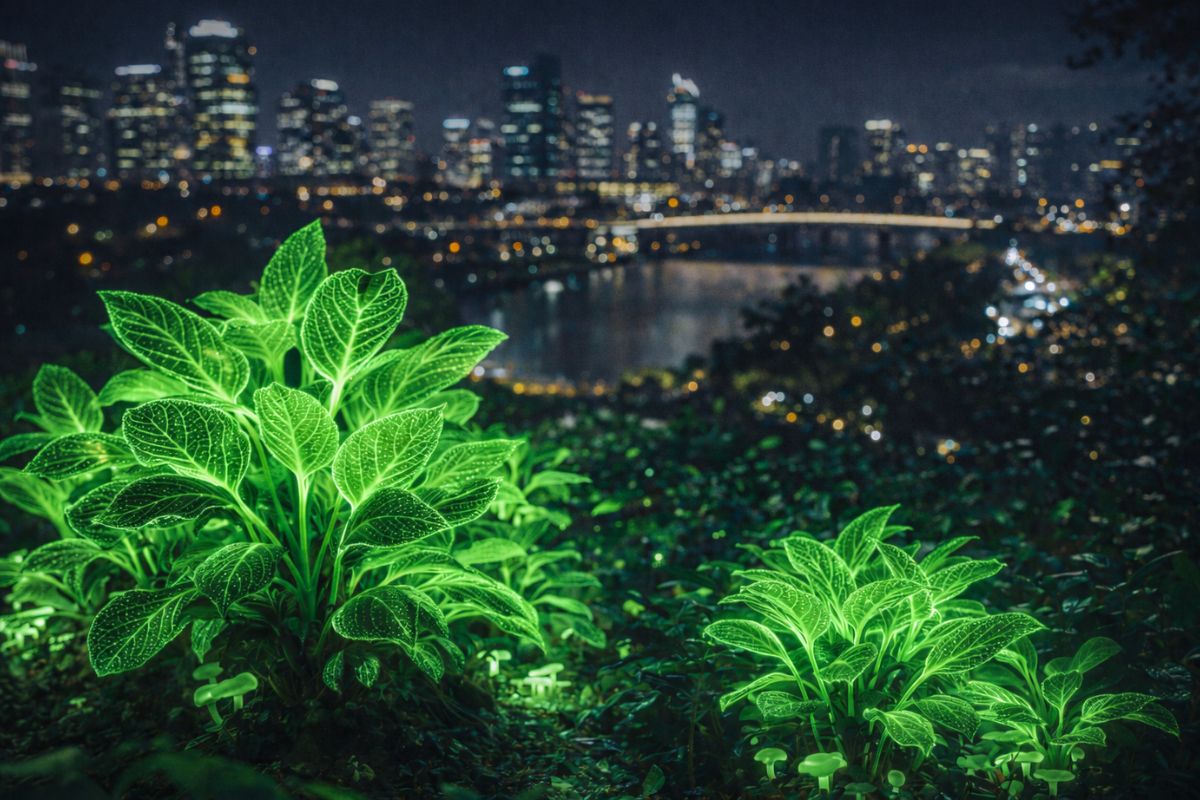
Chinese scientists have created plants that glow in the dark using luminescent fungi, and they now say that this technology could illuminate entire cities without spending a dime on electricity.
-
Motorola launched the Signature with a gold seal from DxOMark, tying with the iPhone 17 Pro in camera performance, Snapdragon 8 Gen 5 that surpassed 3 million in benchmarks, and a zoom that impresses even at night.


What Is Bio-Concrete with Cyanobacteria
Bio-concrete is a type of concrete that incorporates biological components with the mission of repairing or strengthening the material over time.
In one of the more advanced versions, researchers combine cyanobacteria, gelatin, and sand to form a composite that reacts to specific environmental conditions and fills internal cavities.
Cyanobacteria are photosynthetic microorganisms, meaning they use light to produce energy and form mineral compounds such as calcium carbonate.
Within the concrete, they act like small “factories” that come into action when they find sufficient moisture and light to activate their metabolism.
How the Concrete That Does Photosynthesis Works
In the production phase, the cyanobacteria are mixed with a matrix of gelatin and sand, which can be integrated into blocks, panels, or other construction elements.
This matrix behaves similarly to traditional concrete but carries a “biological mechanism” ready to be activated when cracks appear.
When water penetrates through a micro-crack, it reaches the region where the cyanobacteria are present and creates a moist environment that allows for their reactivation.
In the presence of light, these bacteria perform photosynthesis, grow, and produce minerals that help to occupy the empty space within the material.
This biological process increases the volume of the matrix and contributes to closing small cavities, functioning as a form of self-repair on a microscopic scale.
With each activation cycle, part of the integrity of the piece is recovered, which tends to reduce the progression of structural damage over time.

Why Cracks in Concrete Are a Problem
Cracks in concrete go far beyond aesthetics and are directly related to the durability of structures.
They allow the entry of water, salts, and other aggressive agents, accelerating the corrosion of reinforcements and compromising the safety of the construction.
In regions with large temperature variations, the presence of water in the cracks causes cycles of expansion and contraction that further amplify the damage.
This increases the need for inspections, repairs, and, in extreme cases, replacement of entire structural elements.
A material capable of alleviating or reversing this process from the inside out represents an important leap in how to handle maintenance.
It is in this context that bio-concrete with cyanobacteria gains relevance as a technological alternative.
Economic and Maintenance Benefits
By helping to seal micro-cracks, bio-concrete can contribute to reducing corrective interventions over the lifespan of a structure.
Fewer repairs mean fewer usage interruptions, fewer work hours on-site, and less material consumption for restoration.
In large infrastructures, such as bridges, tunnels, and canals, any savings on recurring maintenance represents significant figures in the budget.
The prospect is that, in many cases, part of the initial investment in living materials will be offset by long-term cost savings.
Moreover, the possibility of extending the life of existing structures may delay deep renovations or complete replacements.
This fits into asset management strategies that seek to maximize performance over decades.
Environmental Impact and Carbon Capture
The production of cement is one of the main sources of CO₂ emissions from the construction industry, making the development of cleaner alternatives urgent.
Materials that last longer and require less replacement already help to reduce the total volume of cement and concrete produced.
Bio-concrete with cyanobacteria adds an extra element to this equation, as the bacteria use carbon dioxide in the formation of calcium carbonate.
Although care is needed when quantifying this effect, the technology opens doors to materials that combine structural function and carbon capture.
Even if it does not transform concrete into a fully carbon-negative material on a large scale, the concept points toward construction that is more aligned with climate goals.
It also resonates with the trend of construction systems that actively interact with the surrounding environment.
Examples of Promising Applications
In an initial phase, it is likely that bio-concrete will be applied in prefabricated elements, where production control is greater and testing is easier.
Facade panels, modular pieces, and components exposed to frequent micro-cracks are natural candidates for the adoption of this technology.
Difficult-to-access infrastructures, such as galleries, channels, sloped surfaces, and buried structures, also appear as good use cases.
In these scenarios, each maintenance intervention tends to be costly, complex, and time-consuming, increasing the value of self-repairing solutions.
Regions subject to constant cycles of moisture and drying can benefit from the material’s ability to react whenever water re-enters through the cracks.
This cyclic activation behavior reinforces the concept of concrete that continues to work long after it is installed.
Current Limitations and Adoption Challenges
Despite the great potential, bio-concrete with cyanobacteria is still in the research and pilot testing phase at universities and innovation centers.
This means there are still important questions about performance at scale and behavior under different climatic conditions.
One of the challenges is ensuring that the cyanobacteria remain viable for long periods without compromising the mechanical strength of the material.
It is also necessary to understand how long the self-repair mechanism remains active and what the limits are for working in larger cracks.
Another sensitive point is the absence of specific standards for living concretes, which slows down approval in traditional projects.
The construction industry tends to be conservative, and new technologies require testing, certifications, and performance references to gain trust.
Bio-Concrete and the Future of Sustainable Construction
Bio-concrete with cyanobacteria is part of a group of innovative materials that aim to solve historical construction problems, such as cracking and low durability.
Alongside self-repairing concretes, new composites, and advanced insulation materials, it represents a new generation of smart solutions.
By combining self-repair, carbon capture potential, and a strong narrative of innovation, this type of living concrete is likely to gain traction in discussions about sustainable cities.
For construction companies, developers, and public managers, keeping up with this evolution can mean early access to technologies that reduce total costs and environmental impact.
If the coming years confirm the results of pilot projects, bio-concrete may leave the laboratory and become part of the daily reality of complex construction worldwide.
This change could mark a new chapter in the history of materials, where concrete ceases to be merely inert and starts to behave more like a living organism.






-

-

-

6 pessoas reagiram a isso.