





 Portuguese
  English
  Spanish
  5 min of reading
  4 comments


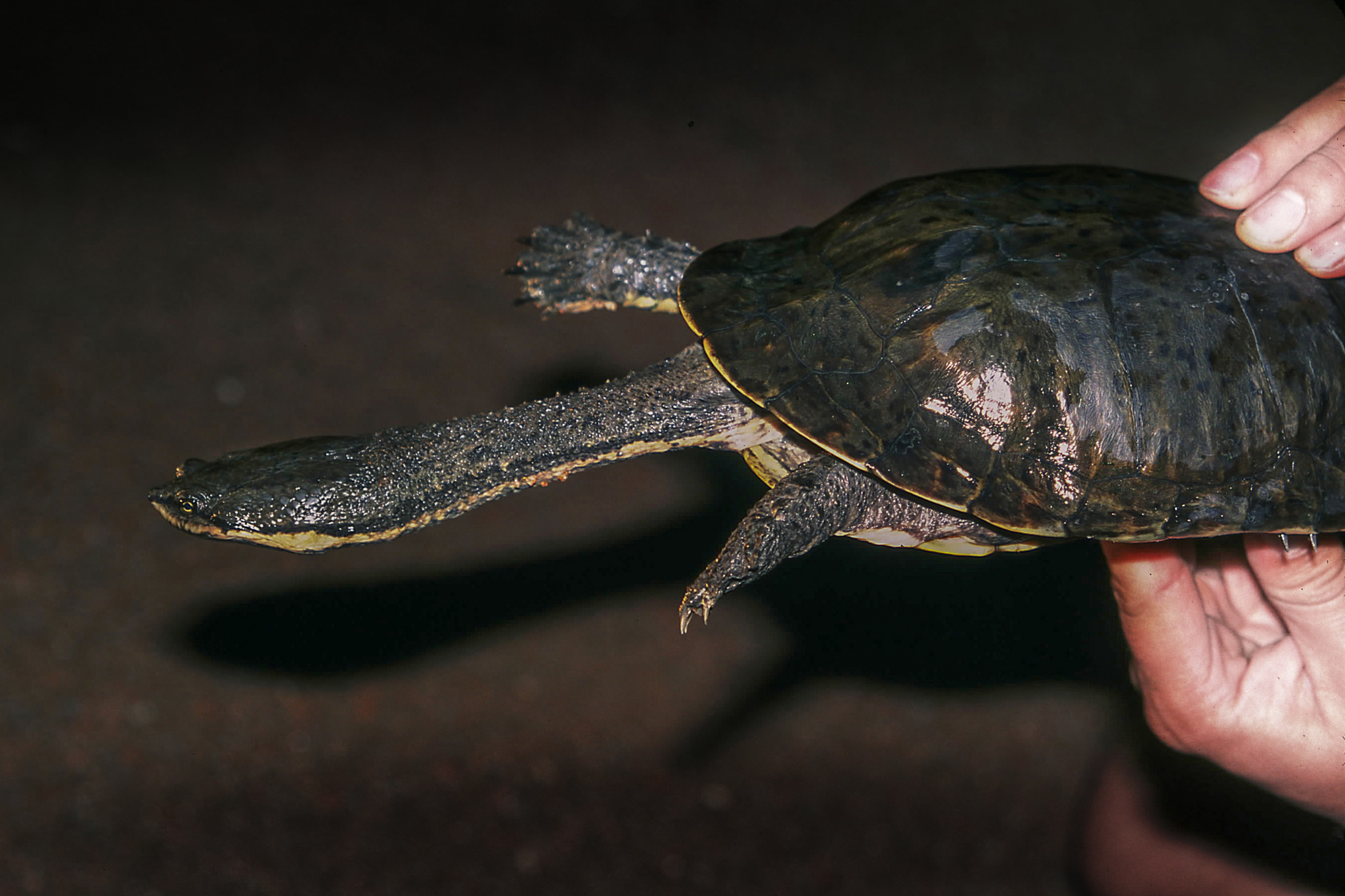


Declared Extinct Reptile, Roti Island Snake-Necked Turtle Reappears After More Than 100 Years in Isolated Refuge, Escapes Invasive Species and Reignites Global Conservation Plans.
For over a hundred years, it existed only in historical accounts, old colonial descriptions, and sparse mentions in scientific records. For modern zoology, the case seemed closed: extinct, silently eliminated even before conservation biology had the tools to try to save it. The reptile in question is the Roti Island Snake-Necked Turtle, an endemic species from the small island of Roti in Southeast Asia, whose existence had been considered lost since the early 20th century.
The scientific consensus was harsh. The island had suffered intense environmental degradation, the arrival of invasive species, and profound changes in land use. There were no recent records, no specimens in captivity, no concrete evidence of survival. For decades, the Roti Island Tortoise was treated as just another name on lists of definitive extinction.
This consensus began to crumble when researchers, exploring remote and little-studied areas of the island, found living individuals, occupying fragments of habitat that had gone unnoticed for over a century. The rediscovery was not just a rare event. It exposed deep fragilities in how extinctions are declared and reignited the global discussion on how far conservation can still go when everything seems lost.
-
The Himalayas continue to grow to this day, with tectonic plates advancing 5 cm per year, mountains rising up to 10 mm annually, and the 2015 earthquake that killed 9,000 people may have increased the risk of an even larger seismic mega-event.

-
At an altitude of 400 km by astronauts from the International Space Station, Paris transforms at night into a golden mesh so precise that it reveals the outline of the Seine River, avenues, and entire neighborhoods like a luminous map drawn over the Earth.

-
iPhone 17 reaches historic low price with 256 GB, 120 Hz display, and drops to R$ 5,703 on Shopee, featuring A19 chip, dual 48 MP cameras, battery life of up to 30 hours, and advanced AI features.

-
Trip to Mars getting closer: Pulsar Fusion, from the UK, advances with plasma ignition in fusion engine and could drastically reduce space travel time, making crewed missions faster, safer, and economically viable.


How Islands Became Silent Epicenters of Extinction
Small islands concentrate some of the planet’s most unique species and also the most vulnerable ones. Throughout the 20th century, the introduction of rats, cats, dogs, and pigs into island environments was enough to trigger rapid ecological collapses. Species that evolved without terrestrial predators simply did not develop defense strategies.
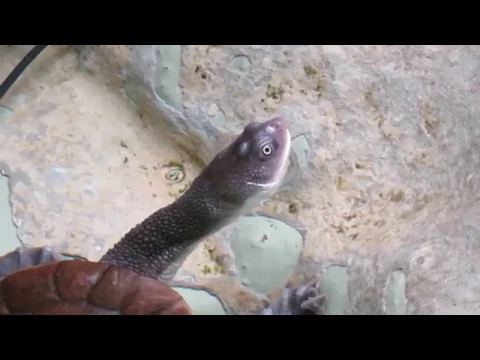

The Roti Island Snake-Necked Turtle inhabited exactly this kind of environment. Restricted to a small island, with limited territory and a naturally reduced population, it depended on a delicate ecological balance to survive. When invasive species arrived, the impact was devastating.
The disappearance was so rapid that, for decades, no one could even document the process. When science began to look more closely at island conservation, the tortoise had already vanished from the records.
A Century Without Records and the Declaration of Extinction
The last scientific confirmation of the species occurred in the early 1900s. From then on, no reliable observations were recorded. Subsequent expeditions failed to find it. Without data, without photos, and without specimens, the conclusion seemed inevitable: complete extinction.
Unlike species that survive in captivity, the Roti Island Snake-Necked Turtle was never kept in zoos or conservation centers. This made its case even more definitive in the eyes of science. Without a reserve population, without a genetic bank, and without any management plan, it was classified as an irreversible loss.
For decades, its name appeared only in historical lists and taxonomic revisions.
The Rediscovery in an Improbable Last Refuge
The turning point came when researchers decided to investigate ignored habitat fragments, areas far from villages and with less human presence. These places functioned, unbeknownst to anyone, as extreme ecological refuges, protecting small populations of species considered lost.
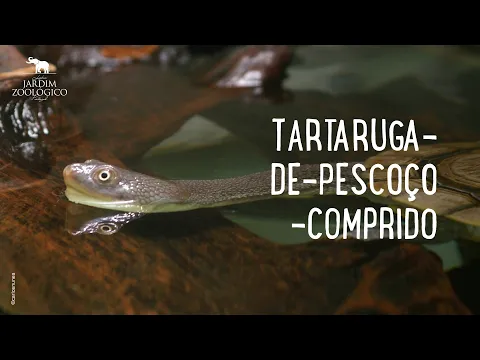
It was in these fragments that the Roti Island Tortoise was found again. Not a solitary individual, but a small functional group, demonstrating normal behavior, active feeding, and signs of reproduction.
The finding confirmed something that conservation biology has been realizing more frequently: declared extinction does not always mean real extinction. In hard-to-access environments, species can persist for decades off the scientific radar.
How It Managed to Survive Invasive Species
The survival of the Roti Island Tortoise was not due to direct resistance to invaders, but to spatial isolation. The individuals found were concentrated in areas where the presence of introduced predators was minimal or nonexistent.
These natural refuges functioned as islands within the island, allowing the species to maintain reduced yet viable populations. This dynamic explains why it disappeared from almost the entire island, yet managed to persist in extremely specific points.
It is a clear example of how micro-habitats can determine the fate of an entire species.
The Scientific Impact of the Rediscovery
The confirmation of the survival of the Roti Island Tortoise had an immediate effect on the scientific community. The case began to be cited as an extreme example of rediscovery after presumed extinction, something rare even in tropical regions.
It also reinforced the need for caution when declaring definitive extinctions, especially on islands and in under-monitored regions. Discreet species, with cryptobiotic habits, can simply escape observation for decades.
Furthermore, the rediscovery brought urgency. The population found is small, fragile, and highly vulnerable to any new disturbance.
International Mobilization and Conservation Plans
After the confirmation, the Roti Tortoise became part of top priority lists in international conservation programs. Biologists, herpetologists, and environmental organizations initiated discussions on:
- immediate protection of remaining refuges
- strict control of invasive species
- continuous population monitoring
- future possibilities of assisted reproduction
- creation of security populations
Unlike other cases, the challenge here is twofold: to save a recently rediscovered species without repeating the mistakes that nearly extinguished it.
A Symbol of the Invisible Risk of Silent Extinction
The case of the Roti Island Tortoise exposes an uncomfortable aspect of modern conservation. Many extinctions do not happen with spectacle, images, or global alerts. They occur slowly, in remote locations, far from political or media interest.
When science arrives, sometimes it is already too late. Other times, as in this case, there is still a thread of hope, but it is extremely fragile.
Why This Story Changes the Way We Think About Conservation
The rediscovery of the Roti Island Tortoise is not just an isolated good news. It changes the logic of conservation in three central points:
- Declared extinction can be reversible, especially in under-studied environments
- Invasive species are the deadliest factor on islands, more than habitat loss alone
- Small natural refuges can save entire species
These lessons are already influencing strategies for actively searching for other “lost” species.
For more than a century, the Roti Island Tortoise was treated as a closed chapter. Today, it represents the opposite: a reminder that nature can silently endure, even under extreme pressure.
The question now is no longer whether it exists — that has already been answered. The issue is whether humanity will act quickly enough to ensure that this rediscovery is not just a last gasp before definitive disappearance.









This looks like an unedited AI piece. Since when are the terms turtle and lizard considered interchangeable?
You can find this specie also In Brgy Hamugaway, Bayugan City, Philippines
Please revise your article for accuracy of the name of the **** in focus. It seems it’s about the Roti snake-necked turtle, but multiple times you mention Roti’s lizard as being the one considered extinct and rediscovered. Anyway, the rediscovery of this turtle species is great for the world and for conservation efforts to have found these individuals and try to help protect them.