





 Portuguese
  English
  Spanish
  5 min of reading
  1 comment


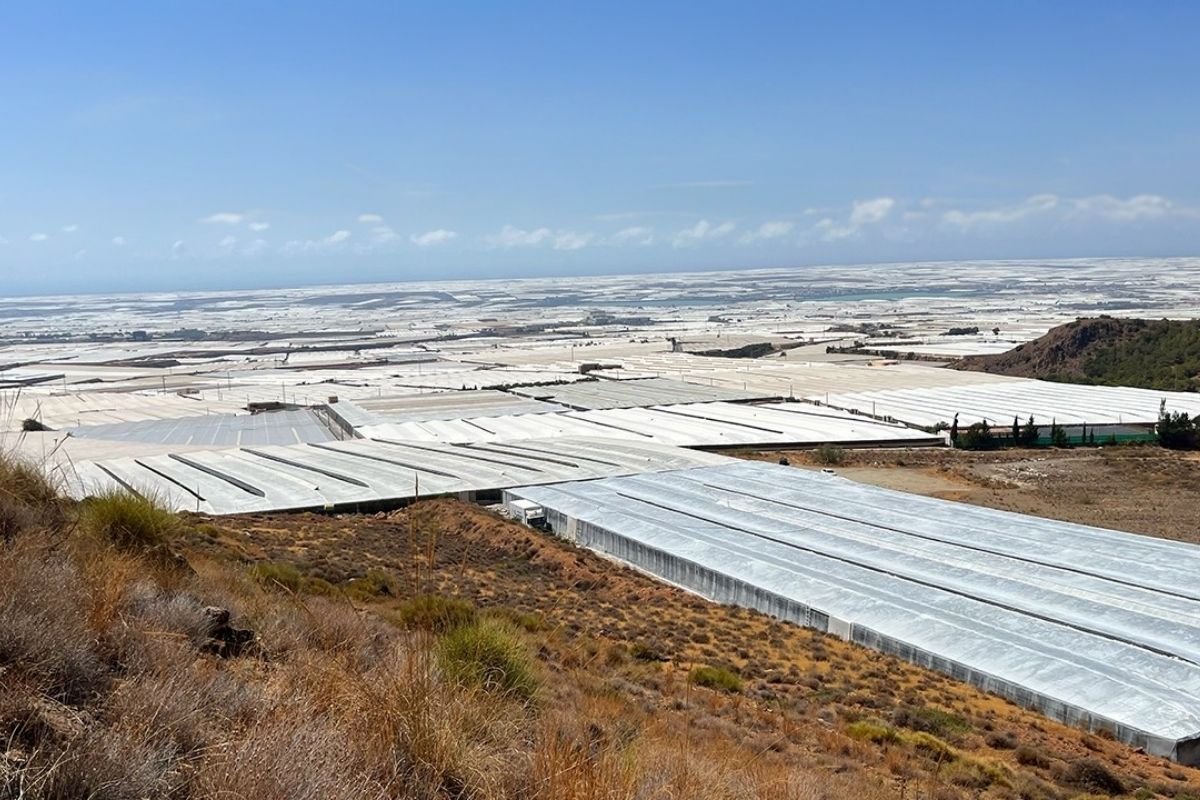


Calls of Plastic Sea: The Mosaic of Greenhouses in the Province of Almería Covers 370 km² in the Desert, Appears White in Satellite Images and Sustains 14 Thousand Producers. The Region Harvests 3.5 Million Tons, Generates € 3.7 Billion, but Faces Plastic Waste and Precarious Work in the Spanish Region
The plastic sea has transformed an arid stretch in southern Spain into a high-intensity agricultural hub: 370 km² of greenhouses spread across the desert, sustaining around 14 thousand producers while feeding European supply chains.
However, the model faces two pressure points that cannot be overlooked: plastic waste linked to the replacement cycle of the tarps and improper disposal, and precarious work associated with the migrant workforce and the challenges of social and labor oversight.
What Is The Plastic Sea And Why Does It “Swallow” The Landscape

The nickname plastic sea describes a continuous patch of white covers that, when viewed from a distance, resembles a sheet spread over the ground.
-
He sold his share for R$ 4 thousand, saw the company become a giant worth R$ 19 trillion, and missed the opportunity of a lifetime.

-
Elon Musk’s Starship megafrocket puts $8 billion at risk, raises alarms in the market, and could affect technology, mining, and space internet startups in the coming years.

-
Airfare prices may rise with increasing fuel costs, and the government is considering urgent measures to avoid a direct impact on the wallets of Brazilians.
-
Chocolate prices soar nearly 15% and become a luxury item for Easter 2026, with increases surpassing inflation and changes in Brazilian consumption habits.


In reality, it is a corridor of greenhouses sequenced over dozens of kilometers, structured to multiply cropping cycles and reduce losses in an environment naturally hostile to agriculture.
The scale is what makes the set unique: 370 km² of greenhouses in the same province, with concentrated agricultural production and logistical orientation towards large markets.
This size also explains why the region has become a reference point when it comes to protected agriculture in dry climates.
The Numbers That Sustain The Model: 3.5 Million Tons and € 3.7 Billion

In the 2022-2023 season, the reported production for the region reached 3.5 million tons, totaling € 3.7 billion when sold.
The crop agenda varies throughout the year, with an emphasis on peppers and tomatoes, followed by watermelons, cucumbers, zucchini, eggplants, and other melons.
This volume does not rely on “one” annual planting.
The scale gain is in the ability to maintain production in successive cycles, exploiting the combination of temperature, plastic protection, and management of the internal environment of the greenhouses.
Why Greenhouses In The Desert Work: Mild Climate, Less Energy, and Production In Cycles

The plastic sea operates with a climatic advantage described in the material: while part of Europe faces sub-zero temperatures, the region operates with winter temperatures ranging from 12 to 14°C, which reduces the need for external heating typically required by glass greenhouses in cold countries.
The direct consequence is energetic and economic: the average “plastic house” greenhouse cited consumes dozens of times less energy than glass structures in environments relying on gas to maintain temperature.
This improves cost and feasibility, especially when the goal is to deliver fresh products during winter months to markets with high demand.
Water At The Limit: Drip Irrigation And Efficiency In An Area With Low Rainfall
The desert imposes the most obvious restriction: water.
The set of greenhouses is described as dependent on drip irrigation and management methods that elevate efficiency in a place with annual precipitation below 200 mm, a scenario where rainfed agriculture would be much more unstable.
The stated productivity helps explain why the system advances despite the environment: on the same hectare, a greenhouse could produce dozens of times more than an average European farm, precisely by controlling variables and reducing evaporation losses and direct climatic stress.
The Environmental Cost: Plastic Waste, Tarp Replacement, and Microplastics in The Surroundings
The most sensitive point of the plastic sea lies in the very material that makes the model viable.
The tarps that cover the greenhouses need to be replaced every 3 to 4 years; when recycling is ineffective, the risk of improper disposal and spread of waste in the surroundings increases.
There is also a specific alert in the content: a cited study found a concentration of microplastics 30 times higher in nearby marine areas compared to similar regions, associating the problem with the cycle of use, disposal, and degradation of plastic in soil and water.
This is the hidden cost of a system that, by definition, depends on plastic coverage on an industrial scale.
The Social Pressure: Precarious Work and The Human Gears Behind Production
The productivity of the plastic sea depends on labor intensity.
The material mentions about 100 thousand workers in fieldwork linked to the greenhouses, with more than half being of Moroccan origin, connecting the system to migration flows and labor vulnerabilities.
The excerpt also points out that some of these migrants have difficulty accessing protection systems and claiming rights when there are violations, with reports of people working below minimum wage and living in precarious conditions.
This is the less photographed side of the plastic sea and one of the factors fueling criticism of the model.
Cooperatives, Price, and Economic Survival in A Competitive Market
Even with scale and demand, the plastic sea does not operate in a vacuum.
The content describes competition among producers with similar conditions, which tends to pressure prices.
In response, the province is mentioned as having a group of cooperatives, some of which are concentrated within the plastic sea itself, to aggregate production and negotiate more predictable conditions with European wholesalers.
The result is an arrangement that blends productive efficiency with commercial coordination, trying to reduce the typical volatility of agricultural commodities, without eliminating the environmental and social conflicts that accompany expansion.
The plastic sea has consolidated as a high-production solution in dry climates, with 370 km² of greenhouses, 3.5 million tons, and € 3.7 billion in a season, but the same structure that sustains the system keeps the debate alive about plastic waste and precarious work.
To follow the topic in a practical way, it is worth observing three fronts: the evolution of disposal and recycling rules, mechanisms for labor audits, and traceability requirements from European buyers.
In your opinion, is the plastic sea a necessary model for food security or an environmental and social alert that has already crossed the line?







Algo nesse nível, embora com algumas correções a serem implementadas, certamente é o modelo que melhor se adequa aos padrões atuais e até certo ponto futuros, é uma forma concentrada e ao mesmo tempo integrada de produção e economia ambiental e energética.