





 Portuguese
  English
  Spanish
  4 min of reading
  0 comments


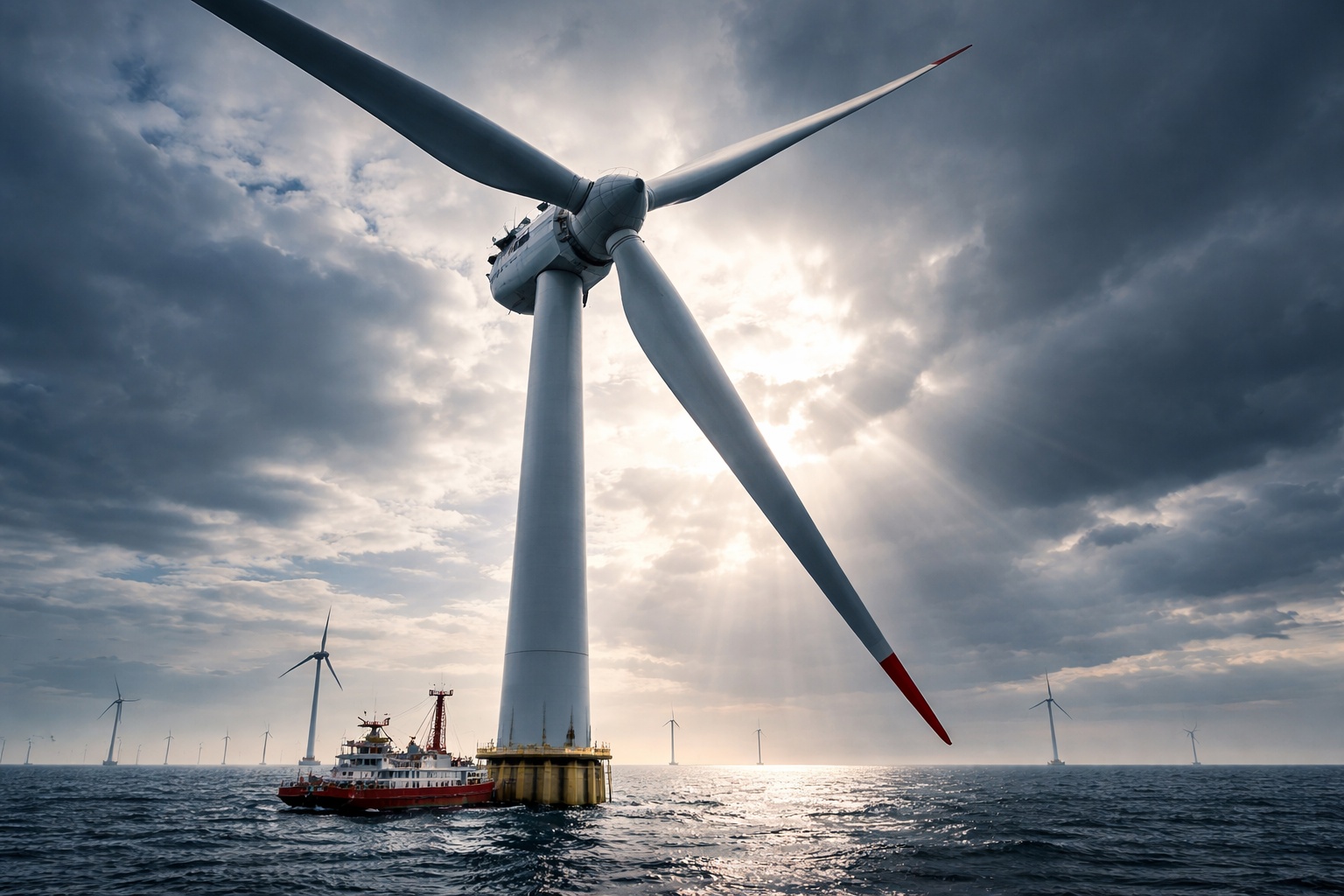
15 MW Wind Turbines Reach 260 Meters in Height, Have Blades Larger Than a Boeing 747, and Can Power Up to 20,000 Homes Each, Transforming the Offshore Market.
When experts talk about energy transition, the public typically imagines solar panels on rooftops or wind turbine parks on land. But since 2023, a new protagonist has begun to define the future of global renewable generation: 15 MW offshore wind turbines, machines so large and powerful that they dwarf skyscrapers, tiny aircraft, and traditional power plants. With the capacity to power up to 20,000 homes per unit, these structures usher in a new level of efficiency, industrial scale, and energy competitiveness.
The numbers are impressive. Commercial models like the Vestas V236-15MW, the Siemens Gamesa SG 14-222 DD (extended to 15 MW), and the GE Haliade-X 14—15 MW are already being installed in the North Sea, UK, Germany, Denmark, and China, consolidating a market where each turbine matches the consumption of entire neighborhoods.
The Turbine That Competes With Buildings and Aircraft
15 MW offshore turbines are not just powerful; they are colossal. A 15 MW model typically reaches:
-
Giant of the winds in Rio Grande do Norte: Serra do Tigre Wind Complex receives new investments and accelerates the expansion of clean energy generation to supply millions of Brazilian homes.
-
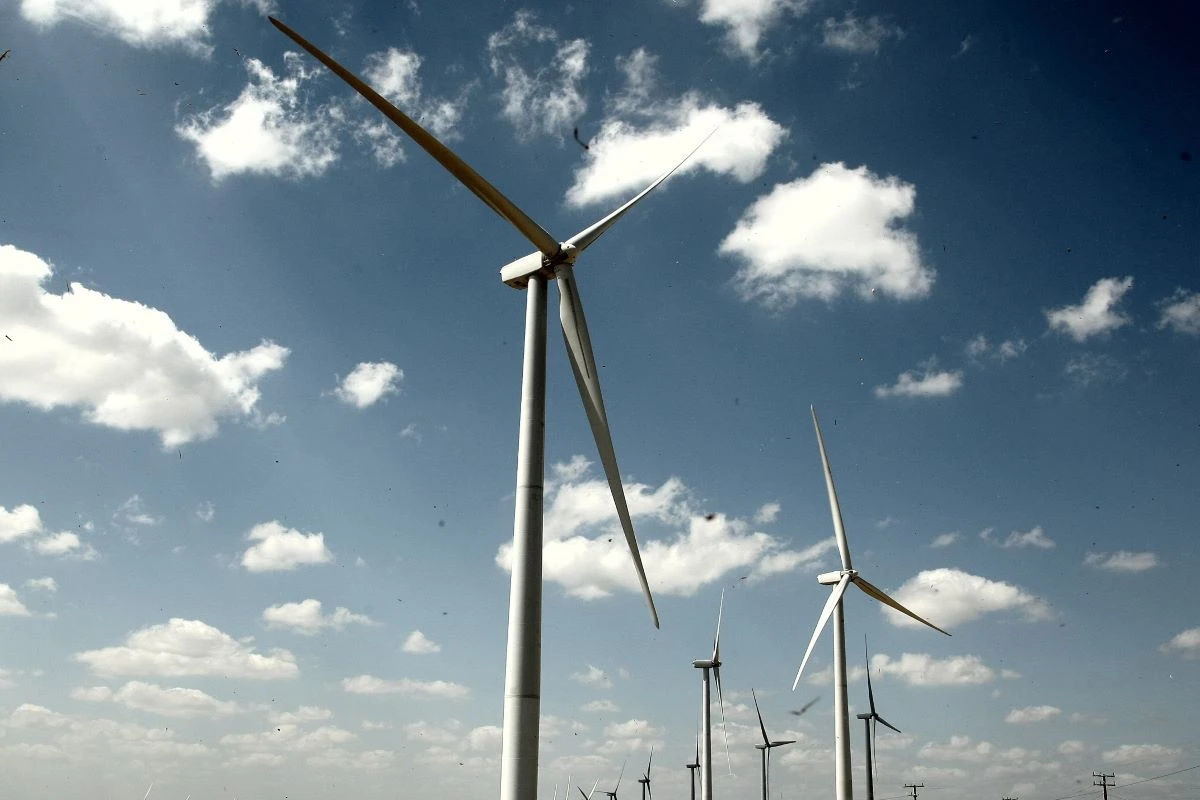
Urgent energy transition: Greenpeace advocates for massive investments and points to Brazil as a global leader in wind energy production in the coming years.
-
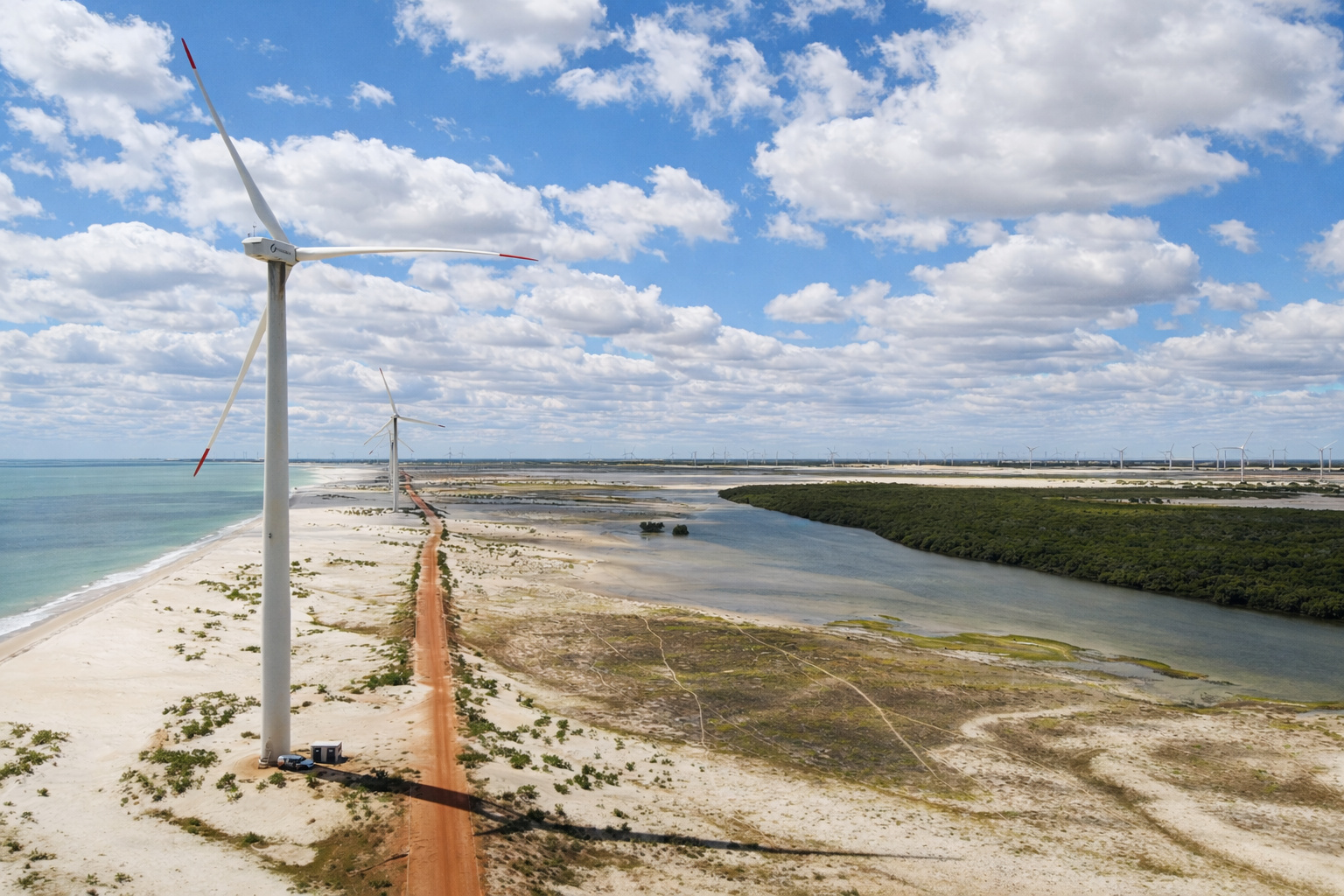
Conflict in the Sertão: Rural communities in Rio Grande do Norte report issues with wind farms and the new challenges of clean energy in the semi-arid region.
-
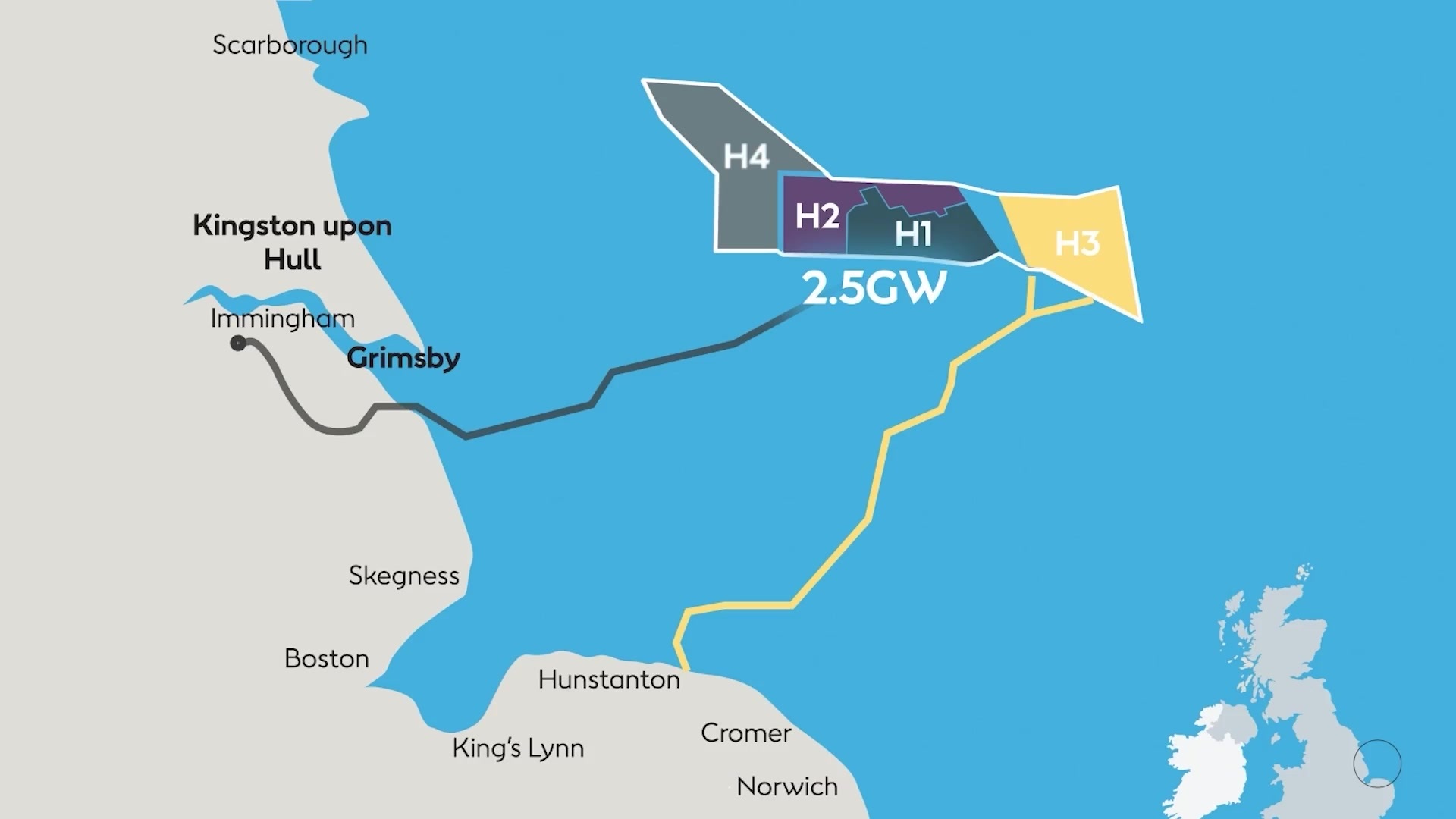
231 turbines of 260 meters at 160 km from the coast, monopiles weighing as much as nine blue whales embedded in the North Sea, and a crane ship taller than the Eiffel Tower: Hornsea 3 will be the largest offshore wind farm on the planet by 2027, and its first components have already arrived in England.

- Total Height: up to 260 meters from sea level to the top of the blade
- Rotor Diameter: up to 236 meters
- Blade Length: 115 meters each (larger than the wingspan of a Boeing 747, which measures about 64.4 m)
- Total Weight including Nacelle and Blades: hundreds of tons
For concrete comparison: the Statue of Liberty is 93 meters tall. A residential building with 75 stories is between 220 and 240 meters tall. In other words, a single turbine of this category can exceed the height of skyscrapers.
This scale is not aesthetic but functional. The larger the rotor, the greater the wind sweeps and the more energy available with each turn. A 15 MW turbine harnesses lower wind speeds and produces more energy for more hours of the year, making offshore the most competitive segment of the wind industry.
How Many Homes Can One of These Turbines Supply?
The numbers vary by country and consumption pattern, but typical estimates in Europe indicate that a 15 MW turbine can supply between 16,000 and 20,000 homes per year. This means that a park with just 50 turbines can meet the needs of almost 1 million people without relying on coal, gas, or oil.
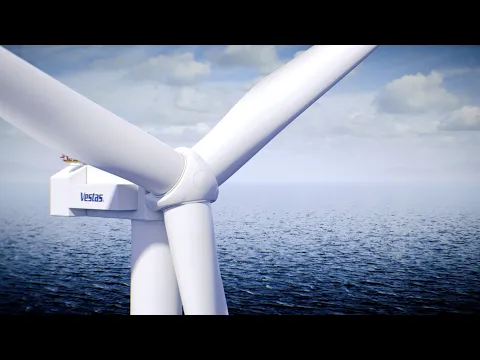

Moreover, offshore turbines have capacity factors between 45% and 60%, well above most onshore renewable sources. This means they produce more hours per year with fewer interruptions and less drastic network fluctuations.
Why Do Such Large Turbines Only Exist at Sea?
The expansion of these machines has only become possible in the offshore environment for three main reasons:
- Stronger and More Constant Winds at Sea — less turbulence and more stable speeds ensure greater production.
- Transport and Assembly — giant turbines do not fit on roads or through tunnels; at sea, they can be transported on special vessels.
- Low Urban Impact — noise and shadow do not affect populations and cities, allowing for industrial scale.
The result is engineering that exists only because maritime geography allows it.
The Geopolitical Impact: Who Dominates the Wind Mega-Scale
The race for 15 MW offshore turbines is not only industrial but geopolitical. It involves access to critical minerals, advanced naval logistics, and billion-dollar public investments.

Today, the map of this market is distributed as follows:
- Europe: The UK, Denmark, Germany, and the Netherlands lead in infrastructure, technology, and installed parks.
- China: Already a leader in annual installed capacity and naval manufacturing for offshore.
- USA: Have begun expansion focusing on the Atlantic but still face regulatory and port bottlenecks.
Whoever dominates this ecosystem controls not only energy but entire productive chains, from steel, ships, and submarine cables to digital intelligence and maintenance robotics.
Climate Economy and the Multiplicative Effect
The advantage of 15 MW turbines lies not only in production but in cost per megawatt. The larger the turbine:
- Fewer foundations are needed
- Fewer submarine cables are installed
- Less maintenance is required
- More energy is delivered per unit
This means that many projects near 2030 already estimate levelized cost of energy (LCOE) lower than that of natural gas, especially in regions with constant winds, such as the North Sea and the East China Sea. Furthermore, the expansion of wind mega-scale creates new job sectors in:
- Specialized shipbuilding
- Heavy metallurgy
- Underwater robotics
- Artificial intelligence for failure prediction
- New electrical systems for offshore networks
In other words, the 15 MW turbine is less a piece of equipment and more an emerging industrial platform.
And the Future? Even Larger Turbines Are Already on the Drawing Board
What seems colossal in 2026 will be considered modest in a few years. Proposals are already indicating models ranging between 18 MW and 22 MW, while conceptual studies mention 25 MW per unit.
If this is confirmed, a single turbine could supply up to 35,000 homes, further reducing costs and accelerating the decarbonization of the global matrix.
What is happening now is the consolidation of a new standard: the energy transition has become gigantic, literally. It’s no longer about small towers in isolated fields, but about machines the size of skyscrapers anchored in the ocean, generating enough energy for entire cities.






Seja o primeiro a reagir!