





 Portuguese
  English
  Spanish
  4 min of reading
  0 comments


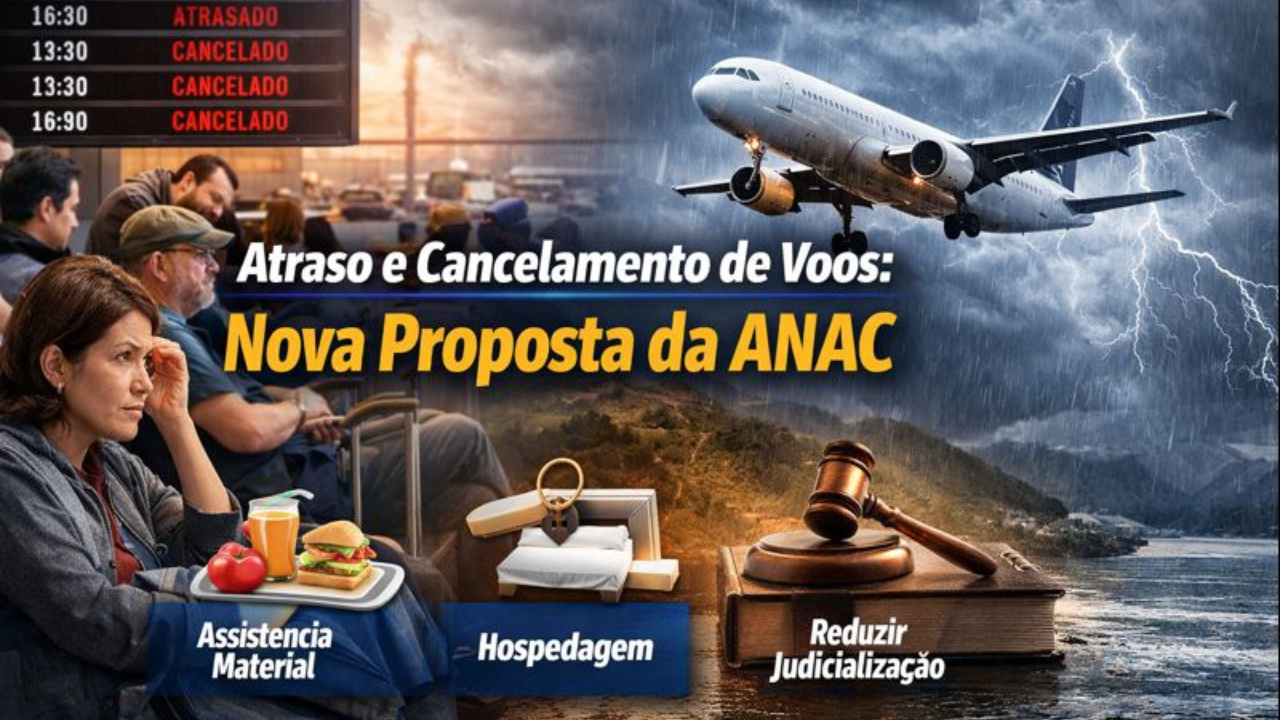
Anac Proposal Redefines Air Passenger Rights in Delays and Cancellations Due to Force Majeure and Maintains Mandatory Material Assistance.
The National Civil Aviation Agency is preparing an update to the regulations that address air passenger rights in cases of flight delays and cancellations caused by force majeure and fortuitous events, such as bad weather or airport infrastructure failures.
The proposal, which will be submitted to public consultation, seeks to clarify the duties of airlines, guarantee material assistance to passengers, and, at the same time, reduce the high level of litigation in the sector in Brazil.
The initiative arises in a context where millions of passengers face delays or cancellations every year, often due to factors outside the control of the companies.
-
Chaos On Airplane Could Be Expensive: Proposal Aims To Prevent Disruptive Passengers From Flying For Up To 1 Year In Brazil And Face Fines Of Up To R$17,500
-
Man Arrested After Halting Takeoff of Fire Department Helicopter During Child Rescue in Guaratuba

-
With 37 Tons of Cargo, Over 8,000 km Range, and Ability to Land on Unpaved Runways, the Airbus A400M Demonstrates How Europe Created a Military Giant That Transports Armored Vehicles, Aerially Refuels Fighters, and Operates in Conflict Zones and Humanitarian Missions Worldwide
-
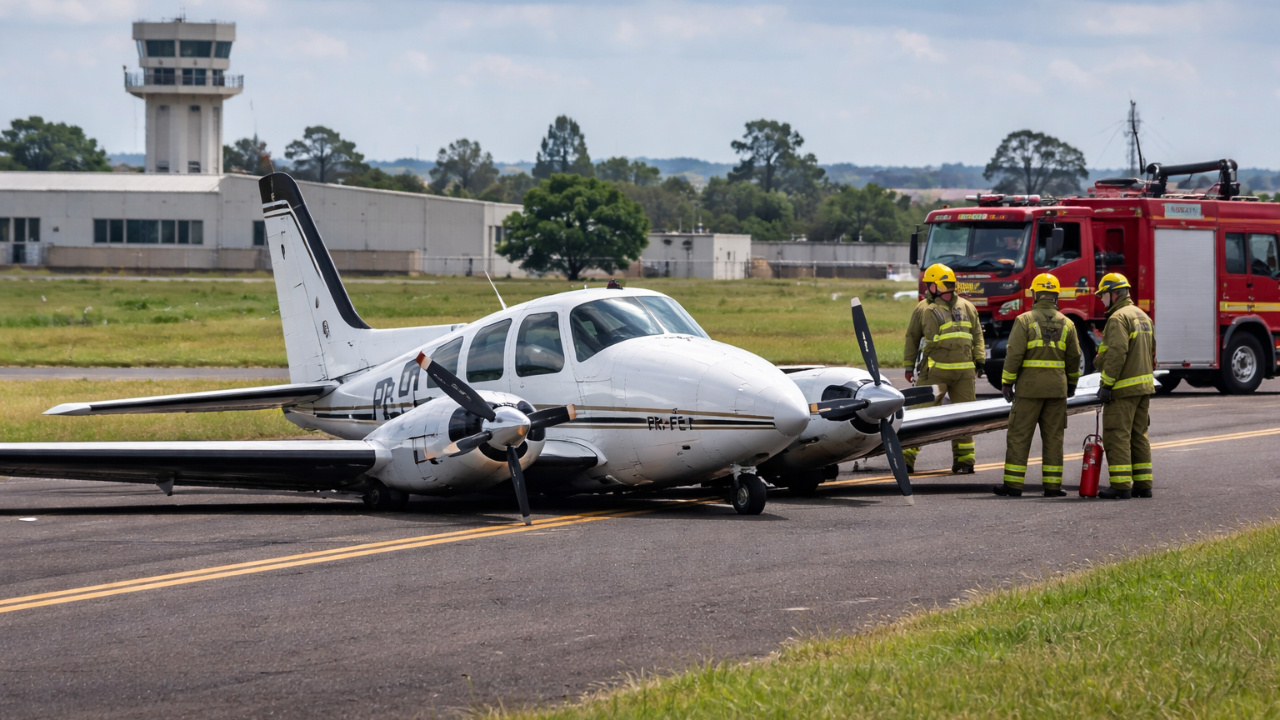
Emergency Landing in Campos Amarais After Bird Strike on Small Plane

According to Anac, the lack of clarity in the application of the rules encourages legal disputes, even when legislation already provides for exceptions to the civil liability of companies.
Update of Resolution 400 is the Focus of the Proposal
The main instrument that is set to undergo changes is Resolution No. 400, a regulation that governs the rights and duties of passengers and airlines in the country.
Although the Brazilian Aeronautical Code (CBA) already establishes that there is no civil liability in situations of force majeure and fortuitous events, the agency assesses that the interpretation of these rules still generates conflicts.
Thus, Anac intends to make the application of the legislation more objective, standardizing procedures and reducing room for doubts.
The idea is not to create new exceptions, but to align the infralegal norm with what is already provided in the CBA.
What is Considered Force Majeure and Fortuitous Events in Flights
According to the CBA, events classified as force majeure and fortuitous events are those that are beyond the control of airlines and prevent the normal operation of flights. The main examples include:
restrictions for landing, takeoff, or flight caused by adverse weather conditions;
unavailability of airport infrastructure, such as runway or terminal failures;
determinations by the civil aviation authority or other public bodies;
declaration of pandemics or government acts that limit air transport.
In these situations, the legislation understands that there is no direct fault of the airline for the delay and cancellation of flights.
Material Assistance to Passengers Remains Mandatory
Even when force majeure occurs, Anac reinforces that material assistance to passengers remains mandatory.
Service must be free and varies according to the waiting time at the airport.
After one hour, the passenger is entitled to communication means. After two hours, the airline must provide appropriate food, such as a voucher, meal, or snack.
When the wait exceeds four hours, the offer of accommodation becomes mandatory — in case of overnight stay — in addition to round-trip transportation.
These rights continue to be central pillars of consumer protection policy in air transport.
Anac Proposes to Remove Right to Communication
One of the most sensitive points of the proposal is the removal of the specific right to communication after one hour of waiting.
For Anac, this requirement has become outdated given the widespread availability of internet and mobile phone access.
The agency states that the change does not represent a withdrawal of rights, but an update aligned with current reality.
The other forms of material assistance to passengers, such as food and accommodation, would be fully maintained.
Brazil Leads Litigation Against Airlines
The debate takes place in a concerning context for the sector.
According to data from Anac itself, Brazil accounts for more than 90% of legal actions against airlines worldwide, despite accounting for only about 3% of global air traffic.
For the agency’s president, Tiago Faierstein, modernizing the rules is essential.
“Modernizing the rules is one of the measures to reduce litigation in the sector. We will never take away passenger rights,” he stated.
Clear Information to Passengers is a Priority
In addition to regulatory changes, the proposal aims to reinforce the obligation of clear and objective communication with passengers.
Airlines must inform, in an accessible manner, the reasons for delays or cancellations, the estimated new flight schedule, re-accommodation options, and how to access available material assistance.
According to Anac, centralizing this information in efficient channels is essential to reduce conflicts and ensure transparency in the relationship between companies and consumers.
Next Steps in the Proposal
The update of the rules will still undergo public consultation, a stage in which passengers, airlines, and experts can submit suggestions.
Only after this process can Anac approve any changes to Resolution 400.
Meanwhile, the current air passenger rights remain valid, especially in cases of flight delays and cancellations caused by force majeure and fortuitous events, with a guarantee of material assistance to passengers according to waiting time.
See more at: Anac Wants Rules to Reduce Actions in the Air Sector | G1









Seja o primeiro a reagir!