





 Portuguese
  English
  Spanish
  4 min of reading
  0 comments


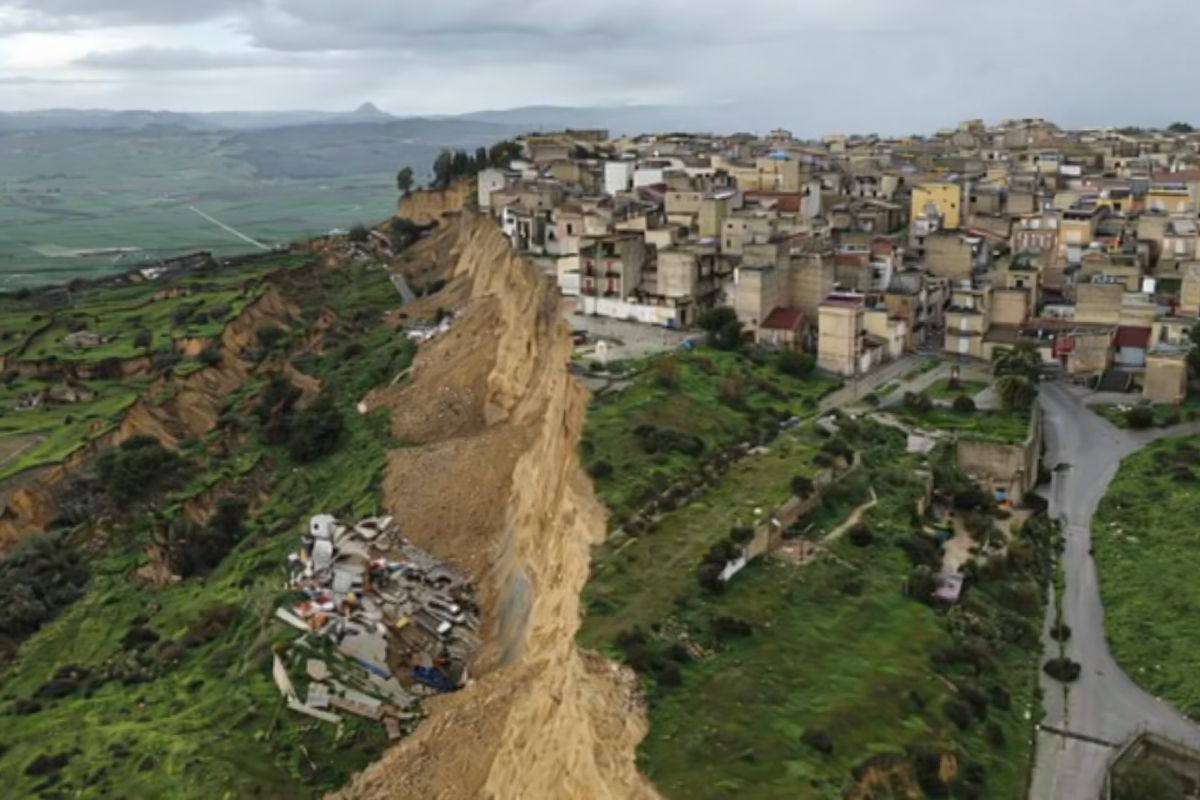
City of Niscemi Has Houses Hanging on the Cliff After Cyclone Harry, with Landslide Expanding and State of Emergency Declared in Sicily.
In the days following the passage of Cyclone Harry, the city of Niscemi, in Sicily, literally woke up on the edge of the abyss. A massive crack about 4 kilometers long opened up the hillside where the municipality is built, leaving houses hanging on the cliff, with facades and balconies now facing a void that grows day by day.
While the mayor speaks of a terrible situation and Civil Defense admits that all buildings within a radius of 50 to 70 meters from the rupture must collapse, about 1,500 residents have already been evacuated. In Niscemi, the houses hanging on the cliff have become the most dramatic portrait of a landslide that is still in motion and threatens to engulf part of the historic center.
City Cracked by Cyclone Harry

The current scenario in Niscemi is a direct result of the severe storm associated with Cyclone Harry, which hit southern Italy with heavy rains and winds capable of destabilizing entire hillsides.
-
“No one will make us change the Pix,” says Lula after the US report.

-
Lula responds directly to Trump and says that Pix is from Brazil and will not change under pressure from anyone, after a report from the United States pointed out the Brazilian payment system as an American trade barrier.

-
Amazon has just announced a new fee on all deliveries, and your online purchases will become more expensive starting April 17, including for those buying from the United States here in Brazil.

-
He sold his share for R$ 4 thousand, saw the company become a giant worth R$ 19 trillion, and missed the opportunity of a lifetime.


In the city built atop a hill, a long stretch of the slope collapsed, forming a landslide front about 4 kilometers long.
This movement began to signal on Sunday and continued to widen. With each new crack in the ground, the fear grows that the fissure will advance toward the oldest part of the urban core.
The mayor himself, Massimiliano Conti, described the incident as a dramatic landslide and urged, in a video on social media, that those not in the isolated areas stay home so as not to interfere with emergency operations.
According to Conti, aerial images of the area were shocking. From above, it is possible to see the ground detaching from the hill and leaving houses hanging on the cliff, some already with parts of their structure clearly exposed to the void.
Despite the severity, the mayor emphasized that, so far, there have been no injuries, only significant material damage.
Houses Hanging on the Cliff and Fear of Isolation
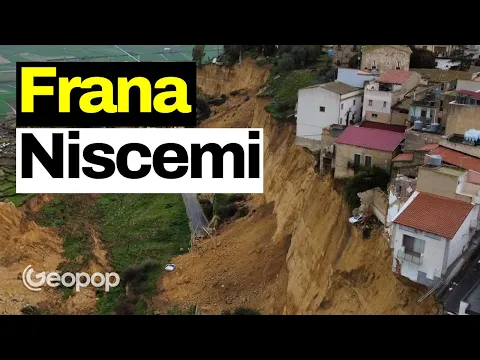

The photos and videos circulating show exactly what the Director-General of Civil Defense of Sicily, Salvatore Cocina, summed up in a harsh statement. According to him, all houses within a radius of 50 to 70 meters from the edge of the fissure will collapse.
In practice, this means that many of the houses hanging on the cliff today must be considered lost, even if they are still standing.
This prediction increases the climate of insecurity in a city that is already experiencing a forced exodus. Part of the 1,500 evacuees is housed in a local gymnasium, while many others have scattered to relatives’ and friends’ homes.
Schools remain closed and the main road connecting Niscemi to the coastal city of Gela has been blocked, raising another concern: that the municipality may end up partially isolated.
The mayor admits that the city is scared. He states that the landslide advanced another 10 meters in just one morning and reports that the cracks continue, fueled by rains that hinder neither rescue nor technical assessments.
Technicians and authorities are continuously monitoring the situation, precisely because the scenario can change at any moment.
State of Emergency and Billion-Euro Damage in Southern Italy
Niscemi is one of the most dramatic points of a much larger event. The Italian government declared a state of emergency for the southern regions affected by Cyclone Harry.
The storm brought incessant rains and waves up to 9 meters high, causing damage not only in Sicily but also in Calabria and Sardinia.
Roads were destroyed, coastal defenses were torn away, and entire beach resorts suffered significant damage. Initial estimates indicate losses exceeding 1 billion euros, with Sicily alone reportedly accruing about 740 million euros in damages. The island’s president, Renato Schifani, warned that the final value could be even double.
To respond to the emergency, the government initially allocated 100 million euros for the most urgent needs of the affected areas. The Minister of Civil Protection, Nello Musumeci, stated that in the coming days, a new inter-ministerial measure aimed at restoring and reconstructing the destroyed infrastructure will be adopted. Nevertheless, the feeling, in places like Niscemi, is that time is working against them, as the land continues to move.
What May Happen to Niscemi Going Forward
The case of Niscemi is a clear warning about the impact of extreme events on cities built on fragile land.
A single episode of intense rain associated with a cyclone was enough to turn entire blocks into an unstable boundary between soil and cliff.
From now on, experts in geology, engineering, and civil defense need to answer difficult questions.
Will it be possible to stabilize the slope that ruptured? Will essential services be maintained without the city becoming isolated? And what will happen to families who lost their homes or who still live in houses hanging on the cliff, waiting for a definitive decision on demolition, resettlement, and reconstruction?
As the work continues, one certainty already exists. In Niscemi, the line between safety and disaster became visible in the form of a 4-kilometer fissure, which forever changed the city’s relationship with the land on which it was built.
And you, upon seeing these images of houses hanging on the cliff in Niscemi, do you think that cities built on slopes should have stricter rules for occupation and reconstruction after events like Cyclone Harry?








-

6 pessoas reagiram a isso.