





 Portuguese
  English
  Spanish
  4 min of reading
  0 comments


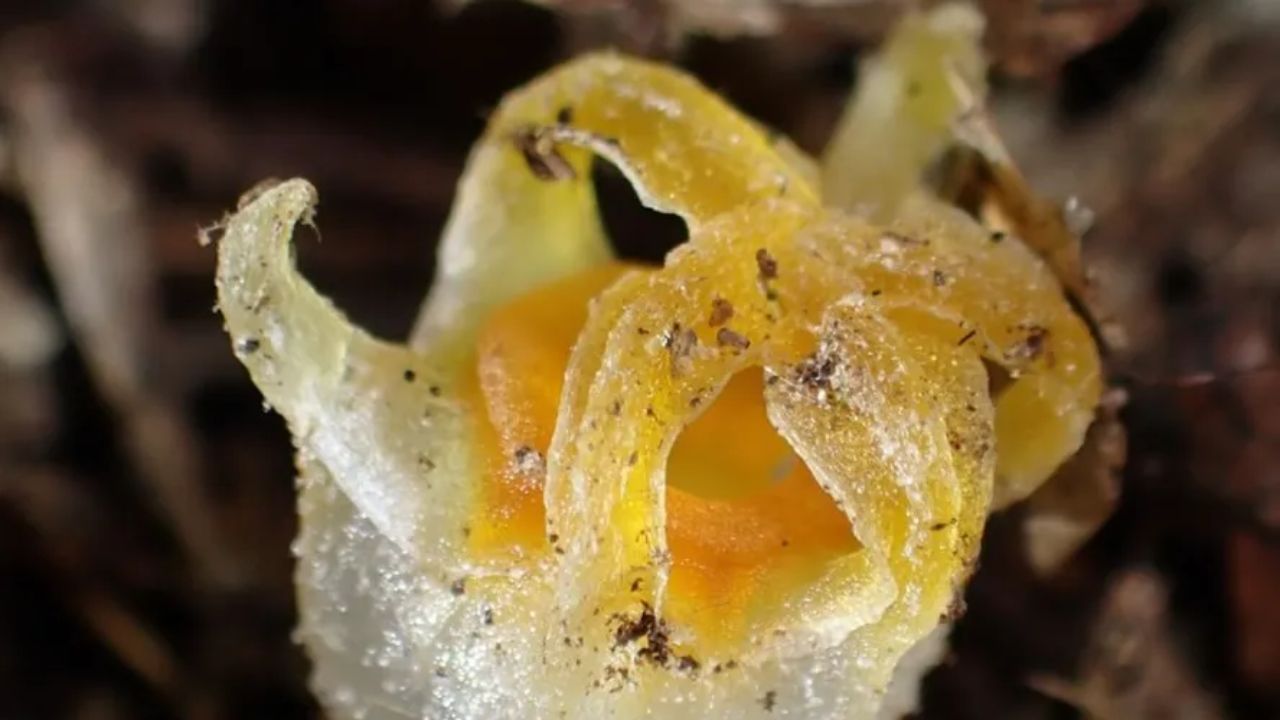
Rediscovery of the Fairy Lantern in Japan Surprises Scientists and Reignites Debates on Conservation of Extinct Plants.
The reappearance of an extinct plant in Japan has put researchers on alert. The fairy lantern, an extremely rare species that is almost invisible in nature, was found alive in a Japanese forest after more than 30 years without official records.
The discovery occurred during recent botanical studies and reignited discussions about environmental preservation, climate change, and the real risk of silent biodiversity loss.
The find involved Japanese scientists, was announced in February 2023, and represents a milestone for botany, especially because it concerns a plant with an unusual life mode and highly dependent on intact ecosystems.
-
At the bottom of the sea, scientists have found a true underwater cathedral measuring 62 meters at the base, 31 meters at the top, and 1,347 square meters of giant coral in the Maug Islands, estimated to be 2,050 years old.

-
Surrounded by the sea, the airport will have a system to prevent airplanes from falling into the water; technology will be installed in Ilhéus (BA), with an investment of R$ 70 million.

-
With a cost per shot close to zero, the DragonFire laser could change naval warfare in 2027 and provide British ships with nearly unlimited defense against drones.

-
A British startup creates tires that generate electricity in electric vehicles when passing over potholes, speed bumps, and cracks.

Fairy Lantern: A Plant That Lives Hidden in the Soil
The return of the fairy lantern goes beyond a scientific curiosity. The species was officially listed as an extinct plant after the complete disappearance of its known habitat.
This type of reappearance is rare and shows how certain species can survive discreetly, as long as they find very specific environmental conditions.
The fairy lantern, scientifically named Thismia kobensis, spends most of its life underground.
Unlike most plants, it does not produce energy through photosynthesis.
For this reason, the species only reveals itself for a short period when translucent flowers emerge from the forest floor, forming delicate structures that resemble small lanterns.
How Does the Plant Survive Without Light?
Without chlorophyll, the fairy lantern relies on a mechanism called mycoheterotrophy. In this process, the plant obtains nutrients by parasitizing fungi present in the soil.
These fungi, in turn, maintain a direct connection with the roots of the trees.
Thus, the survival of the species depends on an extremely sensitive balance between soil, fungi, and vegetation.
Where Was the Plant Rediscovered?
The new record of the extinct plant occurred in a forest located about 30 kilometers from Kobe, in Japan.

The region has environmental characteristics similar to the original location where the species had been observed decades ago.
According to researchers, the partial preservation of this ecosystem was essential for the silent survival of the fairy lantern over the years.
The Past That Led to the Plant’s Extinction
The first documentation of Thismia kobensis occurred in 1992, in the Kobe region. Shortly thereafter, the site underwent intense human intervention with the construction of an industrial complex.
With the destruction of the habitat and the absence of new records, the species came to be considered an extinct plant, completely vanishing from scientific literature for more than three decades.
The rediscovery was described in an article published in the journal Phytotaxa on February 27, 2023.
According to the study, the reappearance of the fairy lantern helped clarify important aspects of the evolution of the Thismia genus.
The scientists observed that characteristics like complex petals and the absence of nectar glands bring the Japanese species closer to rare relatives found outside Asia.
The Evolutionary Link with North America
The analyses indicate a possible relationship between the fairy lantern from Japan and Thismia americana, a species recorded in the United States in the early 20th century.
The main hypothesis suggests that ancestors of these plants may have moved between continents via the Bering Land Bridge, a land strip that connected Alaska to Siberia during glacial periods.

A Wake-Up Call for the Conservation of the Fairy Lantern
Thismia americana was last observed in 1916 in Chicago and has never been found again. This history emphasizes how vulnerable these plants are to environmental changes.
The reappearance of the fairy lantern in Japan thus serves as a clear alert about the risks of habitat destruction.
With the confirmation that the species still exists, researchers advocate for urgent protective measures for the area where the plant was found.
New studies should be conducted to assess the size of the remaining population.
More than a scientific feat, the return of the fairy lantern shows that nature still resists, but also makes it clear that the survival of rare species directly depends on the human decisions made today.
Source: Mega Curioso








-

-

3 pessoas reagiram a isso.