





 Portuguese
  English
  Spanish
  3 min of reading
  22 comments


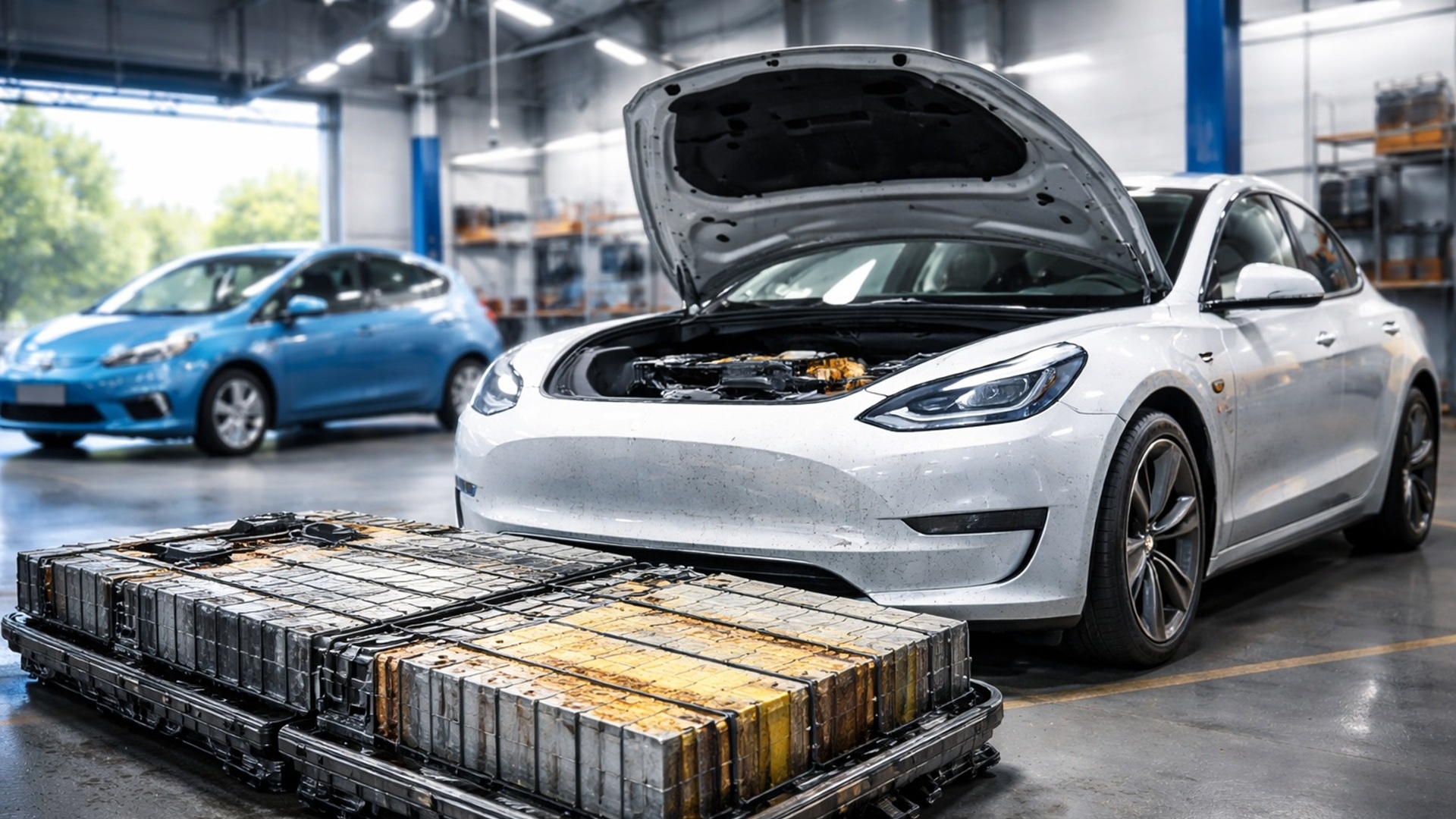


Analysis Based on Telemetry of About 1,000 Electric Vehicles with Over 240,000 Kilometers Driven Compares Real Range Over Time, Reveals Clear Differences Among Models Manufactured Between 2012 and 2023 and Indicates a Consistent Decline in Battery Replacement Rates
The advancement of electric cars has been accompanied by persistent doubts about battery durability, especially in high-mileage vehicles. A study based on real usage data shows that, after 240,000 kilometers, degradation is significantly lower than the common perception among consumers and critics of the technology.
Analysis with Real Usage Data and Not Homologation
The survey was conducted by Recurrent, a company specializing in automotive telemetry that monitors thousands of electric vehicles in circulation.
For this specific study, about 1,000 high-mileage cars were analyzed, all with over 240,000 kilometers driven.
-
Less than a Tera TSI, up to 710 km of range and charging in 9 minutes: the new BYD Song Ultra expands the Chinese brand’s bet on increasingly faster, more technological, and competitively priced electric SUVs.

-
With a 1.0 engine producing 75 hp and costing less than R$ 70,000, Fiat’s car returns to the podium as the cheapest in the country; a temporary promotion for the 2026 Like version reduces the price of the Fiat Mobi.
-
With a mild hybrid system of 48 V, 176 hp and a price of R$ 175,990 in the Sahara version, the new Jeep Renegade changes mostly on the inside, improves slightly in fuel consumption, and remains almost the same car.
-
With a 293.5 cm³ engine and a range of up to 400 km with a 14.1-liter tank, the Honda CB 300F Twister 2026 has up to 24.7 hp, an initial price of R$ 25,150, and already exceeds R$ 29,000 in the Fipe Table.

The methodology adopted compared the current range of vehicles with the actual range they had when new, and not with official homologation numbers.
This approach allowed for an assessment of the effective behavior of batteries over time, reflecting real usage conditions.
The data shows that most electric vehicles maintain a significant portion of their original range, contradicting the idea that long distances traveled result in severe capacity losses in short time frames.
Difference Between Generations Reveals Technological Impact
The results indicate a clear technological evolution over the last decade. Vehicles manufactured in 2012, the oldest included in the analysis, retain on average 81% of their original range after 240,000 kilometers driven.
In contrast, models produced in 2023 show an approximate retention of 91% of their initial capacity with the same usage level. The difference of ten percentage points highlights the direct impact of technological development on batteries and associated systems.
This advancement is related to improvements in battery chemistry, cooling systems, thermal management, and accumulator protection strategies.
These factors have made more recent electric vehicles more durable and reliable over time.
Practical Examples of Range After High Mileage
The practical application of the data helps to gauge the real impact of degradation. A Tesla Model 3 manufactured in 2023, which offered about 435 kilometers of real range when new, can still travel approximately 400 kilometers after 240,000 kilometers of use.
In contrast, a 2015 Nissan Leaf, equipped with a smaller battery and no liquid cooling, drops from about 108 kilometers of real range to approximately 90 kilometers after the same accumulated distance. The difference reflects both degradation and the initial technological starting point.
These examples show that range loss exists, but occurs gradually and predictably, being strongly influenced by the vehicle’s generation and the technology embedded since manufacture.
Battery Replacement Rates Continue to Decline
Another aspect analyzed was the need to replace batteries over the vehicles’ lifespan. In models manufactured from 2022, only 0.3% needed battery replacement, disregarding recall campaigns.
In the previous generation, between 2017 and 2021, this rate rises to 2%. Already in the first large-scale produced electric vehicles, the replacement rate reaches 8.5%, reflecting initial technological limitations.
According to Recurrent, the current industry expectation is that modern electric cars operate for at least 15 years without serious battery issues. When failures occur, they are generally associated with manufacturing defects covered by warranty, reducing the impact for the end consumer.
Declining Costs and Changing Perception
In addition to greater durability, the study highlights that battery costs have dropped significantly over the past decade. This reduction lessens the financial impact even in situations outside the warranty period, reinforcing the long-term viability of electric vehicles.
The data indicates that the fear regarding accelerated degradation no longer aligns with the current technological reality. For drivers, the scenario suggests that electric vehicles are designed to last, with batteries that are more resilient and predictable in their behavior over hundreds of thousands of kilometers.








Só sei que de resistente a essa nova tecnologia e hoje um admirador, quando pergunto a qualquer motorista de carro elétrico sobre seus benefícios, vejo um sorriso no rosto e depoimentos sobre o conforto e economia no bolso desses veículos.
Quanto tempo vai existir matéria prima para confecção de baterias?
É só lembrar da história do petróleo
Não iria durar e uma fonte que iria secar.
Hoje tem super produção.
Então… encontraremos sim matéria prima ou substituto
Apresentar os dados de evolução dos elétricos é o mínimo que a sociedade espera de uma nova categoria de ferramenta de locomoção. Esses dados ajudam a dar credibilidade ao desenvolvimento constante.
No Brasil, pela primeira vez, se torna vantagem não estar na vanguarda de algo, assim, outros mercados vão testar à exaustão e dar um veredito prático à questão.
Precisamos mudar apenas nossa cultura de que carro é patrimônio e é quase casa da gente. Entendendo que cada ferramenta tem uma função. 100% elétricos para uso urbano diário e Híbrido para viagens, até que o transporte por trilhos, ar e água melhorem e populariza melhores opções.