





 Portuguese
  English
  Spanish
  7 min of reading
  0 comments


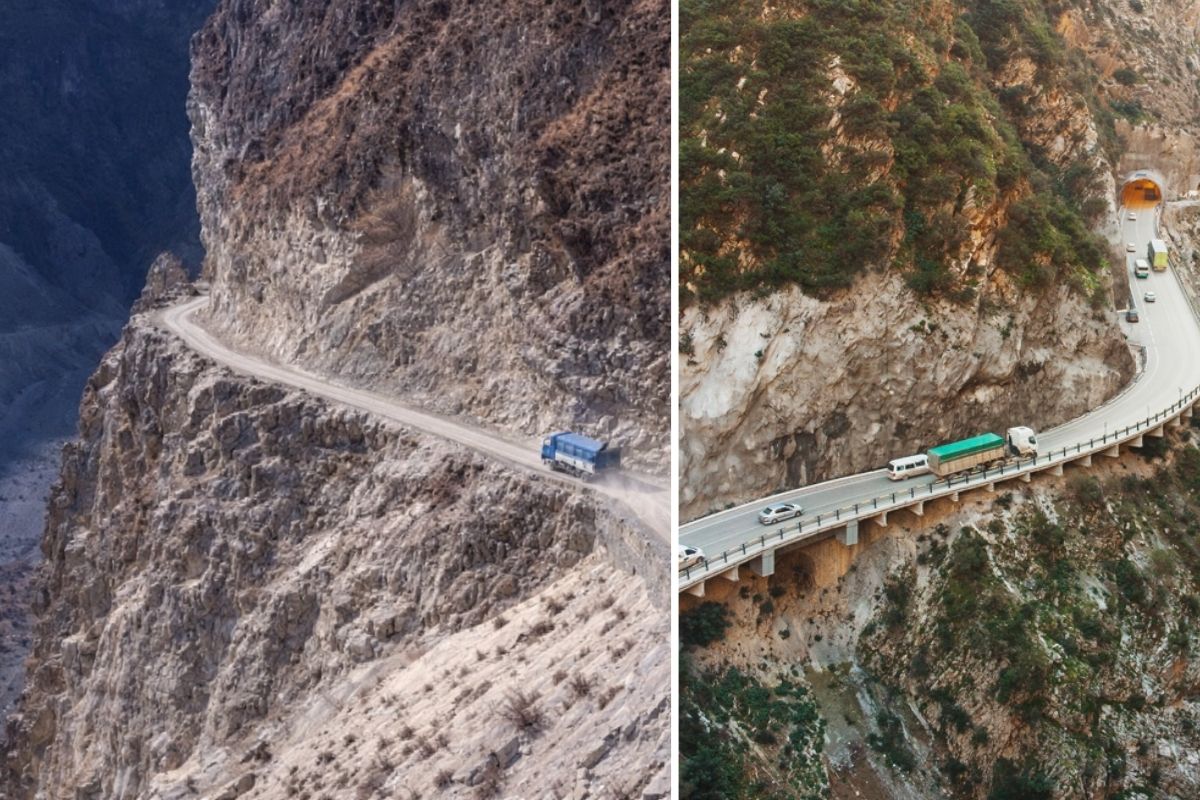
Algeria Decided To Transform The Former Highway Of Death Into A Suspended Highway, With Tunnels, Bridges, And Giant Beams That Redesign The Kerrata Gorge And Save An Entire Region From Stagnation.
For decades, truck drivers faced the highway of death in an improvised suspended highway, a lane only 3 meters wide stuck to a vertical cliff, where any error of centimeters on the steering wheel could launch a vehicle into an abyss of up to 50 meters. Today, the same stretch is beginning to be recognized as one of the most extreme examples of road engineering in impossible terrain.
The project that transforms the highway of death into a suspended highway stems from an economic urgency. Built in 1865 to serve carts and horses, the road became, over time, the most vital artery of northeastern Algeria.
All the cargo that connects the interior to the port of Bejaia had to flow through a bottleneck of just 7 kilometers, subject to brutal congestion, fog, mud, and fatal accidents that paralyzed the economy of entire cities.
-
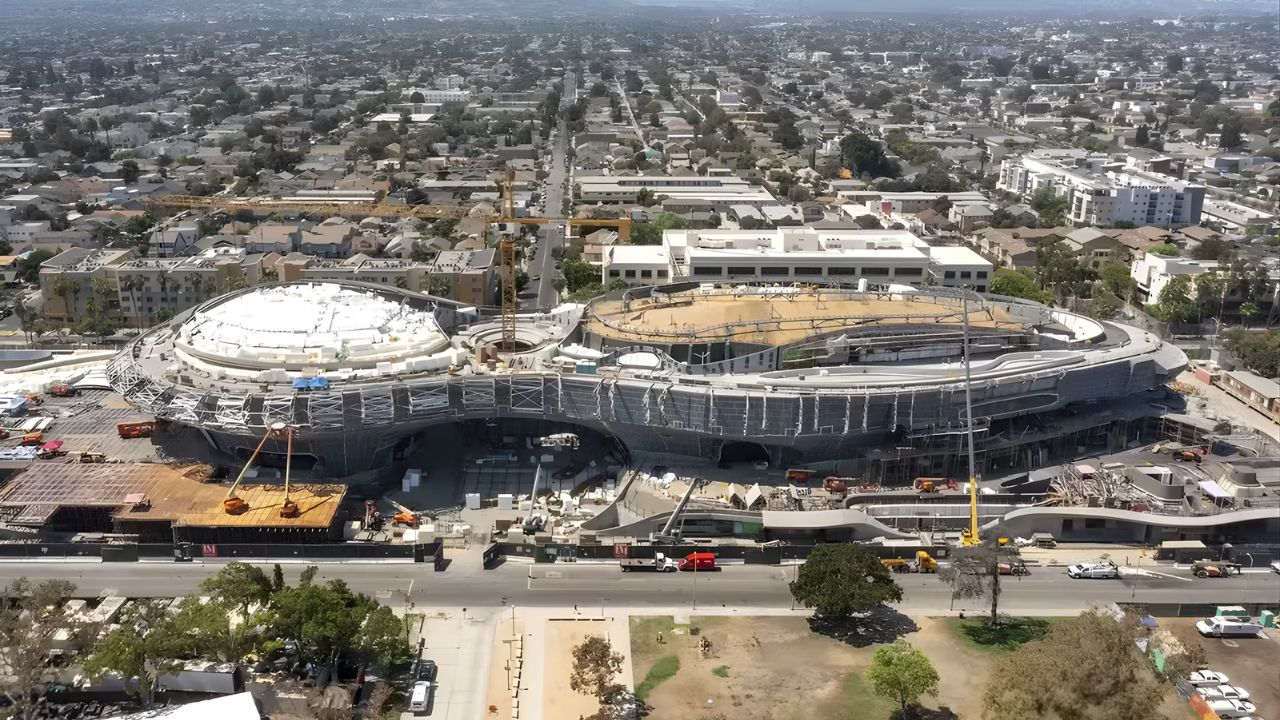
Created by George Lucas with over $1 billion, a futuristic museum in the shape of a spaceship with 1,500 curved panels is about to open in Los Angeles and will house one of the largest private collections of narrative art in the world.
-
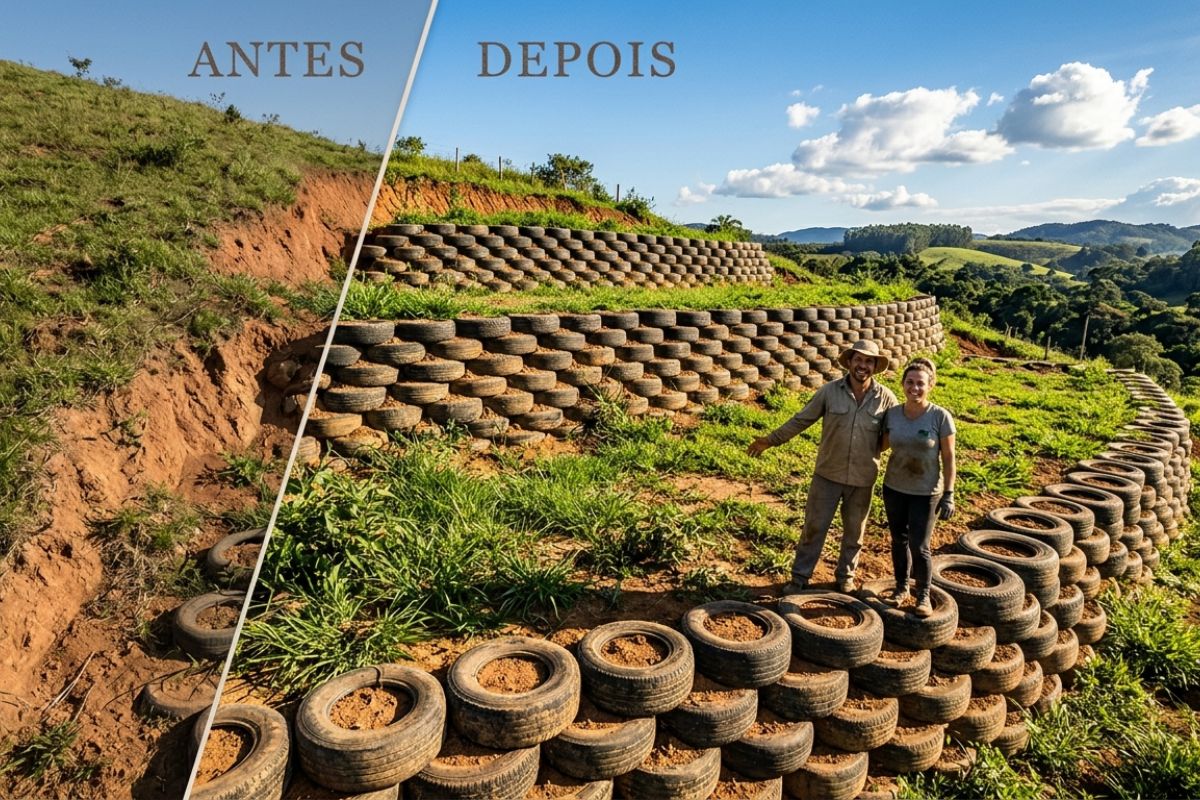
Couple shows how they built a retaining wall on their property using 400 old tires: sloped land turned into plateaus, tires are aligned, filled, and compacted with layers of soil, with grass helping in support and at almost zero cost.
-
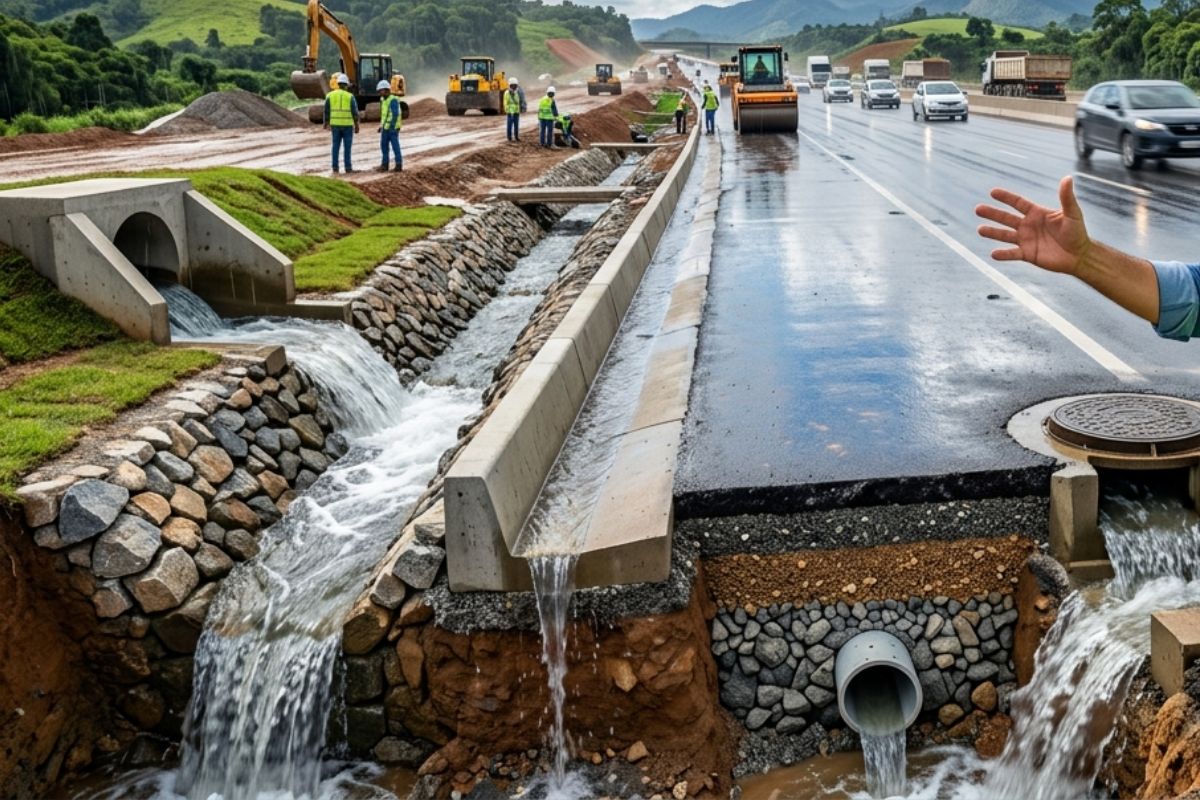
Engineer explains drainage during the rainy season: the difference between surface water and deep water, ditches, gutters, and water outlets on the road, as well as drains and drainage mattresses, to prevent erosion, aquaplaning, and flooding at the construction site today.
-
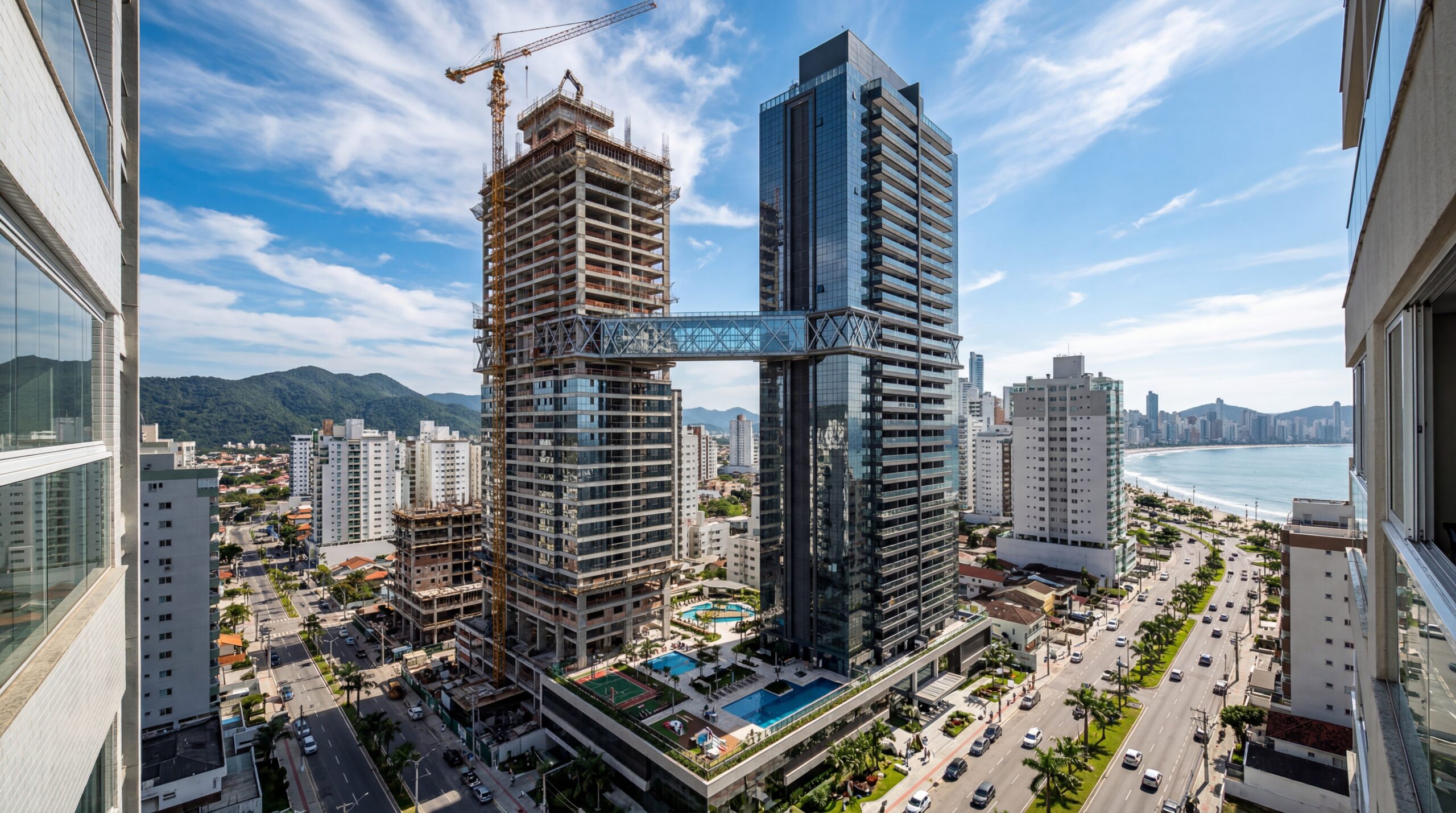
With 55 floors, 177 meters in height, a 15-meter walkway between the twin towers, ventilated facade, and 6,300 m² of leisure space, Ápice Towers already has one tower completed and another nearly at the top.

From Nineteenth-Century Path To Highway Of Death
The old highway of Kerrata was opened in another world. When the French carved the road into the rock in 1865, there was no heavy fleet, articulated trucks, or constant flow of loaded carts with wood, grains, and construction materials.
With population growth and industrialization, this narrow path transformed into a funnel. Two heavy trucks facing each other on the curve meant a millimeter choreography: one of the drivers had to back up, inch by inch, with the rear wheels kissing the edge of the precipice.
Without a shoulder, no proper safety barriers, and with sections in advanced deterioration, the road gained an inevitable nickname among locals: highway of death. The province of Bejaia and the region of Sétif literally became hostages of this 7-kilometer stretch.
A Gorge That Accepts No Error

Before transforming the highway of death into a suspended highway, engineers had to face the real enemy: the mountain.
On one side of the old road, there is a nearly vertical rock wall, imposing but far from solid. On the other side, a free fall varying between 30 and 50 meters, with no safety margin.
For decades, there were no shoulders, almost no guardrails, and protection against rock falls was virtually nonexistent.
The geology of the gorge is described by experts as a nightmare. Layers of hard limestone, requiring diamond-tipped drills, alternate with sections of weathered and fragile rock, which disintegrate like sand.
Cracks open and widen in silence, stimulated by the vibrations of heavy diesel engines, persistent rains, and temperature changes between day and night.
The result is a scenario where landslides and rock falls can be triggered by minimal triggers, turning each trip into a Russian roulette.
Stabilizing The Mountain Before Building In The Void
When the Algerian government decided to intervene in 2014, it was not enough to just lay a new layer of asphalt. The mission was to rewrite the geography, creating a base where there was previously only unstable rock and air.
Detailed surveys showed that many stretches of the old road simply would not support the weight of a conventional widening. If more rock were simply cut and concrete poured, the slope could collapse.
The solution was to transform the mountain itself into a foundation. Workers suspended by ropes and precarious platforms began a campaign of deep drilling, installing micro-piles and ground anchors that sew together the unstable layers of rock.
These steel tendons cross different strata, securing the face of the cliff and reducing the risk of rockfall.
On top of this invisible stitching, reinforced concrete retaining walls were erected, not only to hold the earth in place but to create an artificial base where there was previously no reliable soil. It was a surgical stage on a monumental scale, without which any suspended structure would be doomed.
Colossal Beams To Project The Road Outwards From The Cliff
With the ground stabilized, the next problem was space. How to widen the highway of death into a suspended highway if there is nowhere to support the new lane?
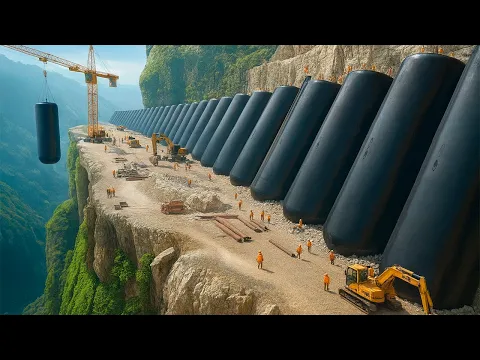
The answer was radical: projecting sections of the road literally out over the mountain. To do this, engineers designed extensions supported by colossal steel beams, up to 60 meters long and about 160 tons each.
In a conventional construction site, these pieces would be raised by two 400-ton cranes working side by side. In Kerrata, this was impossible. The corridor was only 3 meters wide, and any additional heavy equipment would mean flirting with the abyss.
The logistical solution was a triumph of creativity. Instead of lifting the beams directly from the road, crews set up sliding platforms. The beams were pushed into the void, supported by temporary supports, until they reached the exact position.
Meanwhile, a crane operated at the limit, positioned at the edge of the precipice, working at its maximum structural capacity. Each movement required millimeter calculations of center of gravity, soil capacity, and cable resistance.
A miscalculation or deviation of a few centimeters could mean the collapse of the operation and a fall of hundreds of tons of steel.
By repeating this process in 13 critical sections, the team managed to create a lane where there was previously only air, pushing the road out from the slope and gaining width without “stealing” anything from the mountain.
Tunnels And Bridges To Redesign The Route
It was not always possible to build out over the cliff. In spots where the gorge was too narrow or the old curves were blind and dangerous, engineering opted to cross the rock.
Four tunnels, totaling about 450 meters, were built to eliminate deadly curves and reduce sections where vehicles ran close to the abyss. Instead of going around the mountain at half height, drivers now pass through the rock mass, in more predictable alignments.
Additionally, the new infrastructure includes three bridges with nearly 400 meters combined, linking banks previously separated by ravines and unevenness.
These structures, made of concrete and steel, smooth out the route, reduce steep ramps, and cut out winding detours that increased the risk of head-on collisions and rollovers.
In a region prone to torrential rains, water is also an enemy. To prevent floods from destroying the new asphalt or destabilizing the slopes, 15 box culverts and advanced drainage systems were installed. The goal is to let the water pass under the suspended highway without eroding embankments or undermining foundations.
Nets, Barriers, And A New Safety Standard

Transforming the highway of death into a suspended highway required more than just widening the road. It was essential to create a permanent shield against rockfalls.
Entire slopes along the Kerrata gorge were covered with high-strength steel mesh nets and dynamic barriers, designed to absorb the impact of blocks detaching from the rock wall.
Instead of hitting the lane directly, the stones are retained, slowed down, and channeled into safe areas.
Where the terrain allows, the road axis was shifted into the mountain, moving vehicles away from the edge of the precipice.
Robust retaining walls were erected on both sides, combining structural and psychological functions. When entering a curve, the driver now sees solid concrete and steel barriers, not just the void.
The new configuration offers two complete lanes, with space for trucks to pass without reversing maneuvers in risky situations.
Instead of being a test of courage at every head-on encounter, the stretch now behaves like a functional and predictable highway, with a modern standard of road safety.
From Deadly Bottleneck To Economic Corridor
Flying over the Kerrata gorge today reveals a profound transformation. The asphalt lane that crosses the rock walls no longer looks like an improvised scar, but a monument to human resilience and engineering in extreme terrain.
Heavy trucks now flow with much less interruption between the mountainous interior and the coast, unlocking the economy of Bejaia, Sétif, and the entire region.
The road that for decades was synonymous with fear and logistical delays has become a corridor of development, reducing travel times, increasing the reliability of cargo transport, and allowing tourism to enjoy the cliffs without panic at every turn.
In the end, hundreds of workers, designers, and engineers faced wind, height, unstable rock, and vertical abysses to do something that many considered unfeasible: taking the highway of death out of the era of carts and bringing it into a century of suspended highways, tunnels, and large bridges.
Kerrata has ceased to be just the highway of death to become, for thousands of families, the highway of life, which guarantees access to work, services, and opportunities without turning each trip into a game of chance.
And you, would you have the courage to drive on this old highway of death in a suspended highway or would you prefer to admire this type of work only through images and stories?








-

-

-

-

7 pessoas reagiram a isso.