





 Portuguese
  English
  Spanish
  5 min of reading
  11 comments


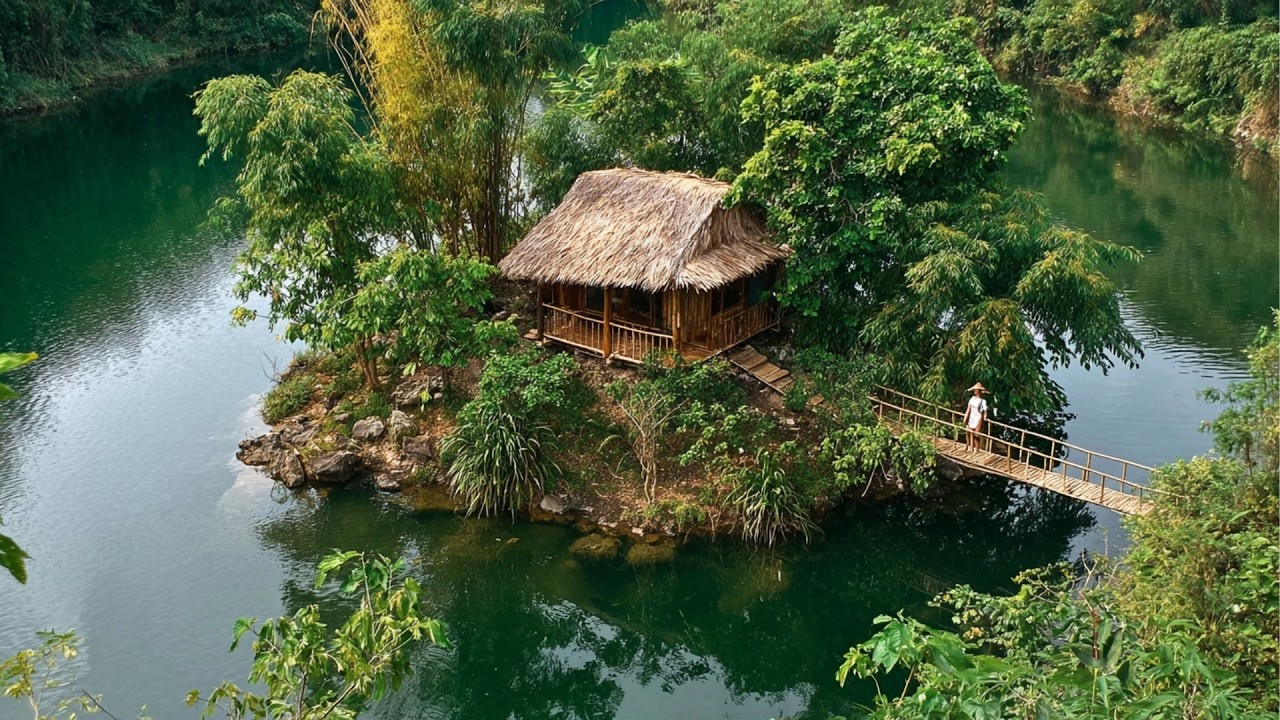


On A Remote Island, A Woman Builds An Off-Grid House Alone In 120 Days And Transforms The Forest Into A Sustainable And Functional Microterritory.
The project begins in a setting that offers nothing but raw nature: steep slopes, dense vegetation, limited circulation, and a body of water that separates important areas of the land. It is in this environment that a woman decides to build, with her own hands, a functional set of structures that range from shelter and kitchen to circulation, access, and community.
There are no machines, no trucks carrying materials, no industrial saws. All the steps rely on manual operations: selecting trees, felling, cutting logs, transforming them into beams and joints, preparing bamboo for crossings, and building with earth, stone, and plant fibers. What could be just an improvised cabin slowly evolves into a small off-grid settlement, capable of sustaining daily activities without connection to urban systems.
Shaping The Terrain: Trails, Terraces, And Circulation In An Uneven Terrain
Before raising the house, she faces a fundamental challenge: transforming an irregular slope into a traversable territory. The soil is manually excavated to create terraces, an ancestral method used in hillside agriculture and traditional settlements in mountainous regions. These terraces serve as both work areas and future communal spaces, allowing safe circulation between different levels.
-
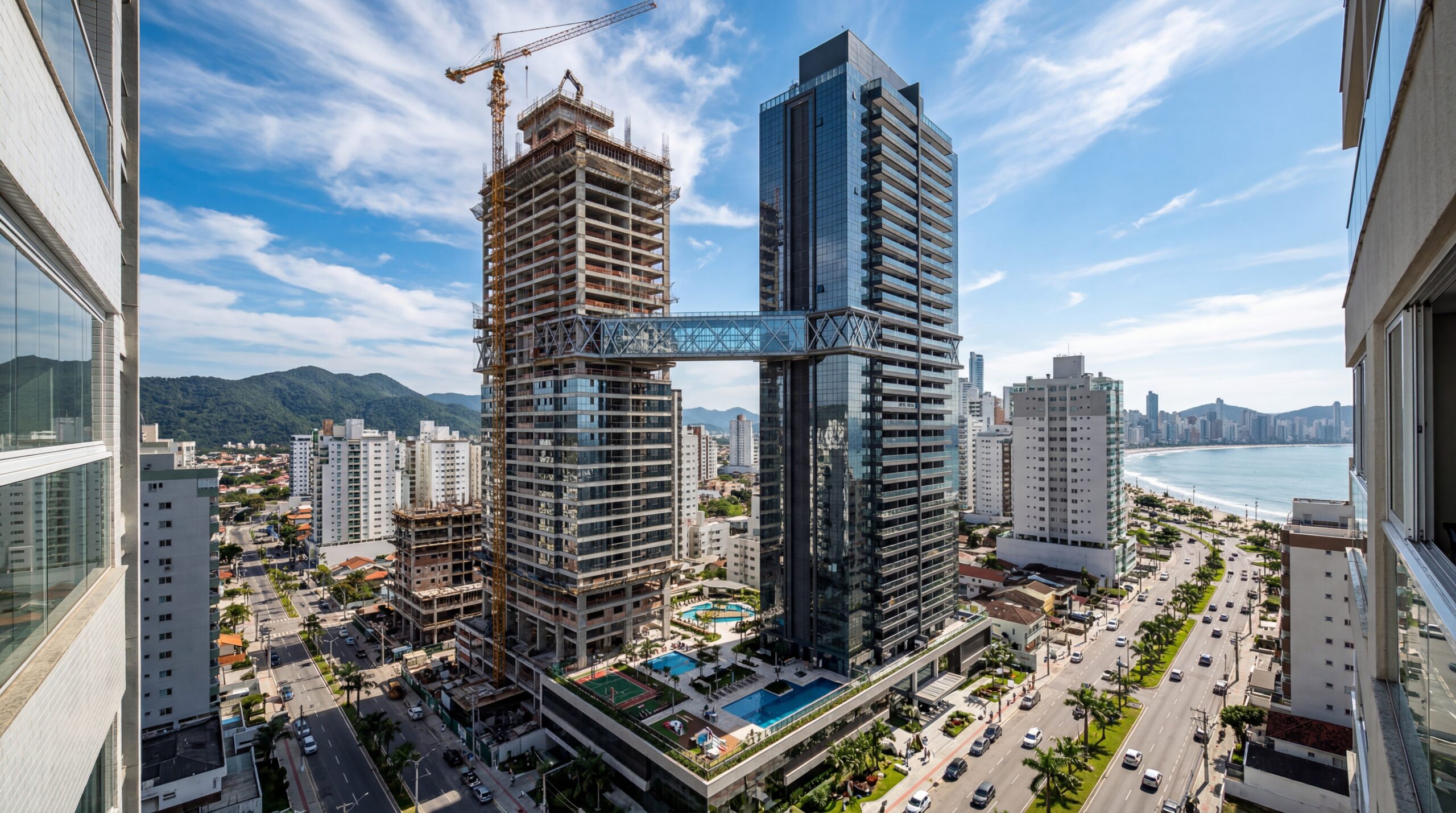
With 55 floors, 177 meters in height, a 15-meter walkway between the twin towers, ventilated facade, and 6,300 m² of leisure space, Ápice Towers already has one tower completed and another nearly at the top.
-
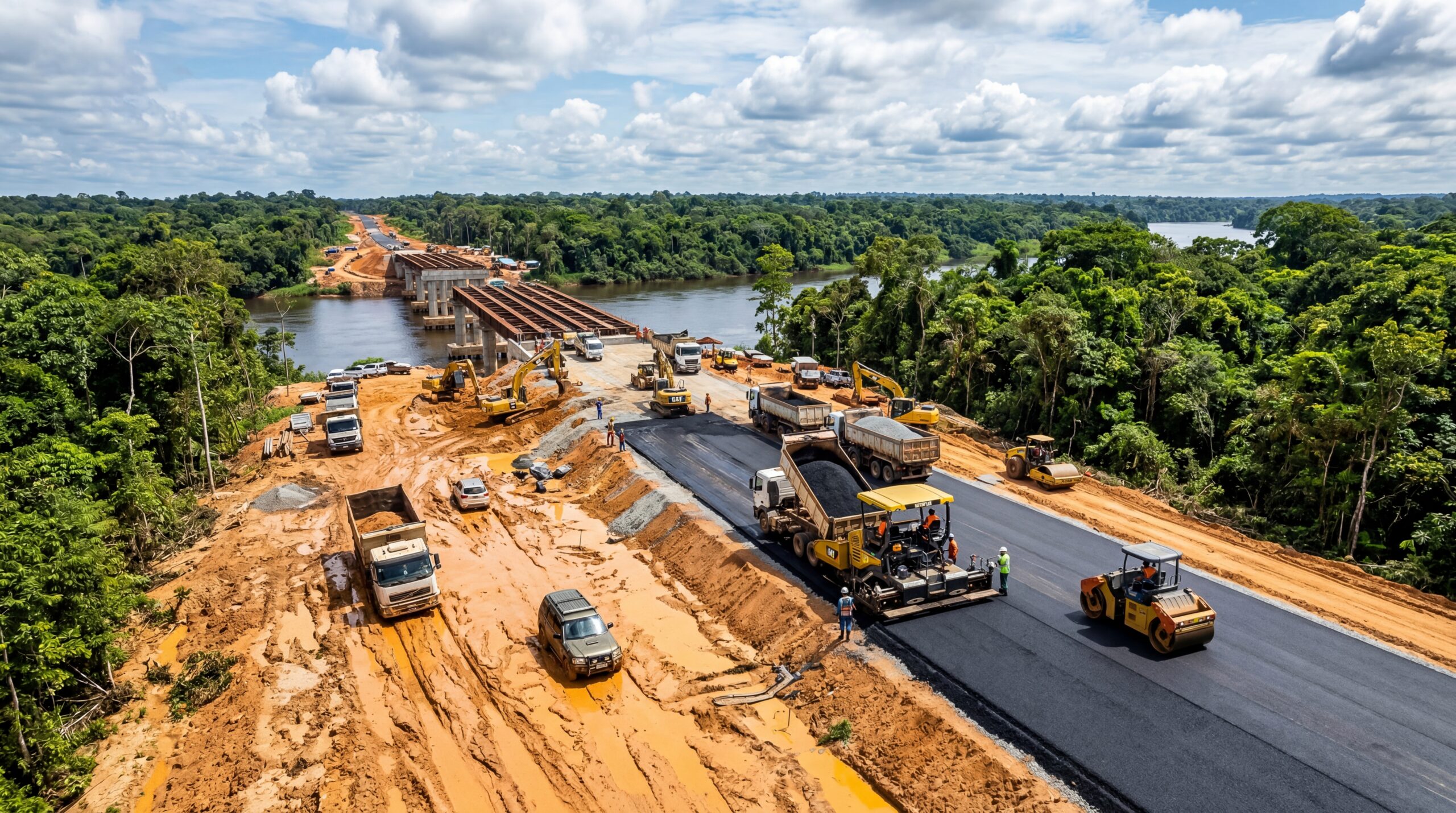
After nearly 50 years of neglect, BR-319 receives R$ 678 million to pave 340 km, gain a 320-meter bridge, and try to lift Amazonas out of the mud, the quagmire, and road isolation.
-
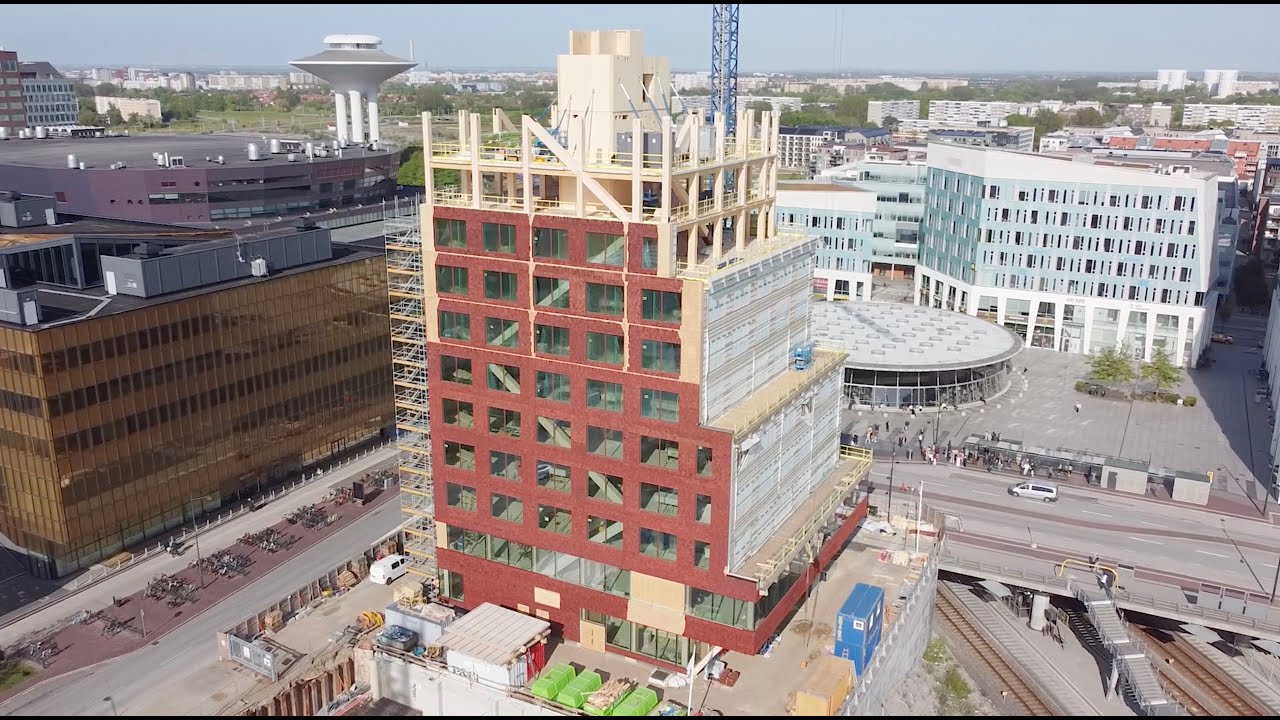
In Sweden, a 51-meter tower was built almost entirely of wood, without a concrete structural core and with solar panels integrated into the facade, using CLT and laminated beams to challenge the dominance of steel and concrete in modern buildings.
-
The section of Serra da Rocinha on BR-285 is now open in Timbé do Sul: 50 m tensioned curtains and top-down technique stabilize the slope, with a stairway duct controlling the water.


With the terracing established, the first paths emerge, some more rustic, others reinforced with stones and clay.
The landscape changes: from a wild ravine to a functional structure, connecting critical points of the land and establishing what would ultimately be the circulatory system of the micro-world she is building.
The Bamboo Bridge: Vernacular Engineering To Connect Banks
Next comes the element that stands out due to its technical nature: a completely hand-built bamboo bridge, crossing an arm of the river.
The process follows a clear structural logic. The terrain is manually surveyed to ensure sufficient depth for the supports; longer bamboo poles are driven in as pillars; diagonal bracings are added to withstand vibrations and wind; longitudinal beams create the backbone of the crossing; the decking is installed with cut and tied culms.

Even without steel, cement, or nails, the bridge shows efficient structural performance, supporting human weight and allowing continuous circulation between previously isolated sectors. It is applied vernacular engineering, where bamboo functions as a structural material due to its tensile strength, flexibility, and lightness.
Raising The House: Elevated Structure, Local Wood, And Vegetal Roof
With circulation resolved, the construction of the off-grid house begins. The first step is the elevated structure, an essential solution in humid regions to keep the floor away from soil moisture and allow for lower ventilation.
The pillars are positioned manually, the platform is assembled with locally cut boards, and the beams receive wooden joints without relying on industrial hardware.

The roofing uses large palm leaves and bamboo as the structural matrix, forming a lightweight, ventilated, and durable roof. This type of roofing is common in vernacular tropical architectures, as it reduces internal thermal load and allows hot air to escape from the top.
The interior features interlocking wooden flooring and window openings with lattices, creating cross ventilation without the need for electricity.
Kitchen, Stove, And Thermal Mass: Controlled Heat Without Urban Energy
Another interesting point is the creation of a handmade stove, molded with earth and reinforced with stones that function as thermal mass.

The logic is simple: the stones absorb peak temperatures and release heat slowly, protecting the wooden structure and preventing fire from making direct contact with boards or pillars. It is a solution found in rural communities in Asia, especially in regions that combine wood and bamboo as construction bases.
This off-grid kitchen fulfills two fundamental functions: it prepares food without external energy and heats the interior in a controlled manner, maintaining complete autonomy of the system.
Furniture And Finishes: The Same Wood Becomes Architecture And Design
With the main structure functional, the project advances to the interior. Tables, benches, platforms, and surfaces are built with the same wood that makes up the house.
Nothing is brought from outside. The design is simple but ergonomic: flat surfaces, clean joints, few hardware, and good weight distribution. The wood appears in an almost raw state, reinforcing the aesthetic integrated into the environment.
The set resembles an architecture that dialogues with the available material and not with a store catalog. This maintains the environmental coherence of the project and ensures that each piece is replaceable or repairable without external logistics.
Landscape Integration: From The Wild Slope To The Habitable Sanctuary
As the project evolves, the territory gains spatial quality. The trails become definitive passages, the stones define stairs and terraces, the soil is stabilized by the terraces, flowers and shrubs begin to compose the landscape, and the house positions itself as a natural overlook over the water. There is no rupture between architecture and environment; there is continuity.

This type of construction generates a rare aesthetic: it is not a tourist chalet, it is not a stylized urban cabin, and it is not an improvised campsite. It is a hybrid form of human occupation based on engineering, survival, and knowledge of the local ecology.
Architecture, Engineering, And Survival In An Act Of Total Authorship
The project has a characteristic that makes it particularly impressive: it is a work of total authorship. The same person who cuts the wood conceives the structure, tests the bridge, molds the stove, creates the circulation, designs the furniture, and organizes the territory.
There is no division of trades or outsourcing of steps. This requires architectural vision, structural reading, mastery of natural materials, and climatic understanding.
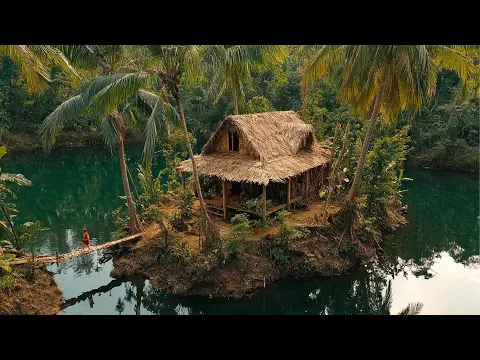

At the end of the 120 days, the island is no longer a remote and uninhabitable spot; it is a small self-sufficient system where shelter, circulation, kitchen, landscape, and natural resources coexist. In a world dependent on urban infrastructure, this type of artisanal construction serves as a powerful reminder that constructive autonomy still exists — it has just become rare.
And perhaps that is precisely why it draws so much attention: because it reveals that there are still people capable of transforming nature into territory, wood into architecture, and isolation into life.






Apenas um vídeo para visualização, esses vídeos são bons para monetizar, mas ficou bom, muito criativo equipe que fez esse vídeo
Parabéns, fantástico, uma obra de arte, genial!
Pq essas matérias são tão porcas e vazias? Não tem nome da mulher, não tem localização ou nome a tal ilha…sei lá, umas matérias que parecem inventadas.