





 Portuguese
  English
  Spanish
  3 min of reading
  0 comments


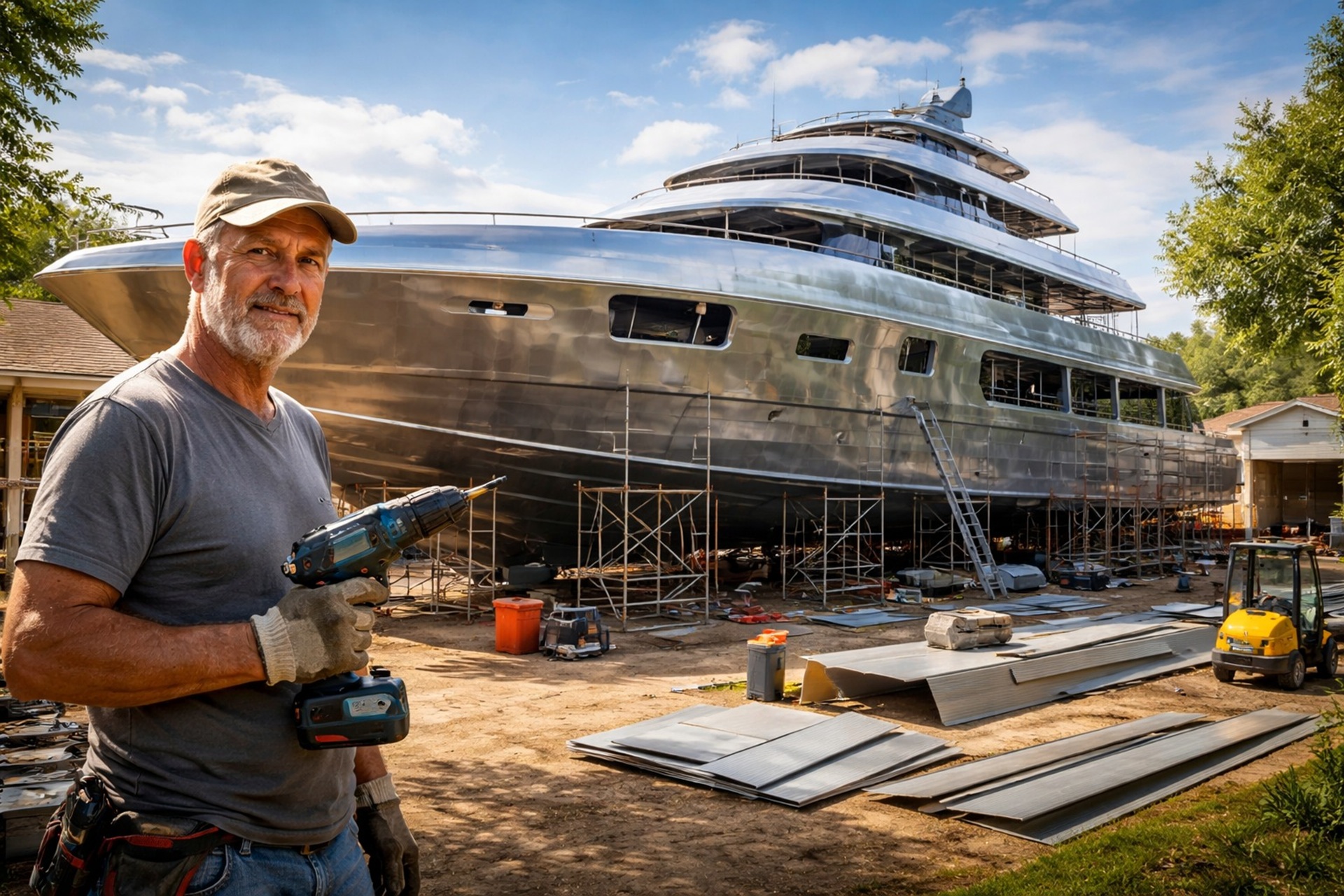
Built Over Five Years in the Backyard of a Residence in the United States, the 30-Meter Yacht Made of Industrial Aluminum Required a Custom Design, Multiple Attempts, Video Documentation, and a Complex Logistical Operation That Included Cutting the Vessel Into Seven Parts for Transport Over 85 Miles to the Ocean
An American Built a 30-Meter Yacht in His Backyard, Using Industrial-Grade Aluminum, Over Five Years, Even Without Prior Experience, Documenting the Entire Process in Videos and Facing the Final Challenge of Transporting the Vessel Over 85 Miles to the Ocean.
A Project Conceived Without Prior Experience in Shipbuilding
Clyde, a Resident of the United States, Decided to Build a Giant Yacht Without Any Prior Knowledge of Maritime Vessel Construction and Practically Without External Help Throughout the Process.
He Started Only with an Initial Concept, Transformed into Precise Drawings Based on Methods Learned During One Semester in College, Which Served as Technical References for All Subsequent Stages.
-
Man never set foot on the Moon? 5 scientific proofs confirm that humanity has been there and definitively dismantle conspiracy theories.
-
The Brazilian Army will adopt humanoid robots to test the concept of future combat, says a website, surprising everyone, but later revealing that it was all just an allusion to April Fool’s Day.

-
There is a city in China right next to Hong Kong where people speak Portuguese, the streets have names in Portuguese, and the architecture looks like it came straight out of a historic city in Brazil.

-
Rare frog thought to be extinct after only appearing in fossils reappears, becoming a ‘living relic’ of evolution and gaining a real path to spread after combating introduced predators.


The Entire Development of the Project Was Recorded on Video and Published on YouTube, Showing in Detail the Progress of the Work Over Five Consecutive Years.
Planning on a Small Scale and Gradual Evolution of the Structure
Before Starting the Definitive Construction, Clyde Developed a Reduced Scale Version of the Boat’s Structure, Which Was Gradually Improved as New Adjustments Were Needed.
The Construction of Large Vessels, Like This 249-Foot Luxury Yacht, Typically Requires Long Periods, a Factor That Explains the Similar Duration Clyde Faced Throughout the Project.
Although He Was Not Completely Unprepared, Ensuring That All Stages Worked Properly from the First Attempt Proved to Be a Constant Challenge, Requiring Successive Corrections.
Use of Industrial Aluminum and Mandatory Structural Precision
After Numerous Trials and Errors, the Vessel Began to Take Its Definitive Shape, with the Structure Being Built in Aluminum, a Material That Required Absolute Precision at Every Stage.
This Structural Base Was Essential, as It Was Fundamental to the Hull Accessories, Engines, and the Correct Alignment of Starboard, Not Allowing for Significant Failures or Adjustments Later On.
Even in the Face of Technical Difficulties, Clyde Maintained the Work Pace and Completed One of the Most Remarkable Vessels Ever Seen, Without Disrupting the Established Timeline.
Complex Transport and First Trip to Mexico
At the End of Half a Decade, the Yacht Was Ready, Appearing Similar to a Model Freshly Out of the Factory, but a Crucial Logistical Obstacle Emerged for the Project’s Completion.
Clyde’s Residence Was Located in the Middle of the Desert, About 85 Miles from the Ocean, Which Made It Necessary to Cut the 30-Meter Yacht into Seven Parts for Transport and Subsequent Reassembly.
After Reaching the Sea, the Handmade Yacht Named “Kaleidoscope” Underwent Its First Test and Set Off on a Journey to Cabo San Lucas, Mexico, Confirming the Full Operation of the Vessel, Even After the Exhausting Process.




-

-

-

-

-

-

77 pessoas reagiram a isso.