Portuguese
  Spanish


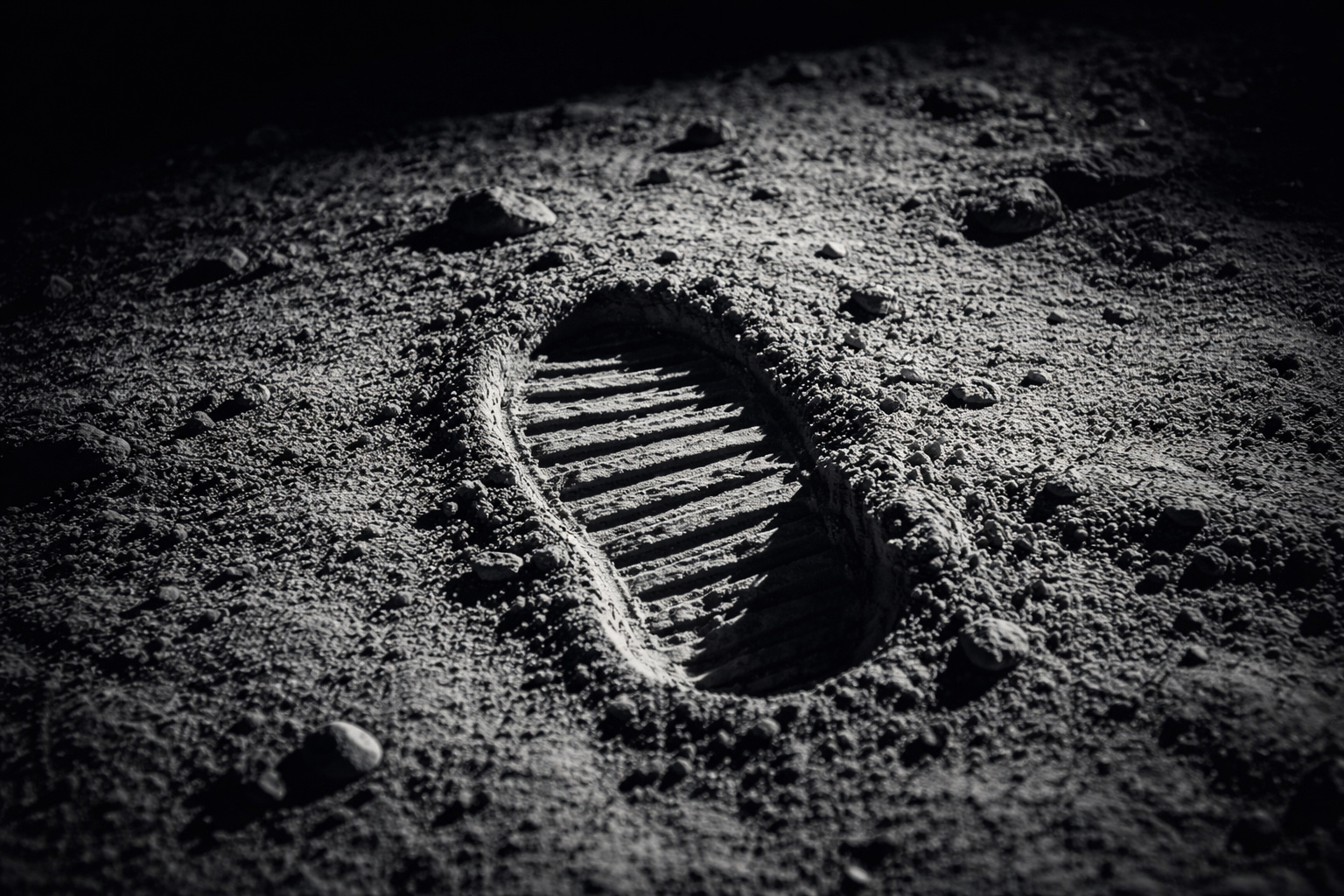

Physical evidence, historical records, and independent data show that the Apollo missions were real and continue to be confirmed by modern technologies and scientific analyses around the world
For decades, conspiracy theories have raised doubts about one of humanity’s greatest achievements: mankind’s arrival on the Moon. However, science, technology, and historical records accumulated over the years show exactly the opposite.
The information was disclosed by widely recognized historical records and scientific analyses, including data from the NASA, which led the Apollo missions between 1969 and 1972.
Moreover, independent evidence confirmed by other countries reinforces that, yes, humanity has been to the Moon and left marks that can still be observed today.
-
Crab Trapped in Plastic Bottle for 62 Days Near Okinawa Highlights Little-Known Impact of Marine Pollution on Small Animals

-
Esperanza’s Bamboo Barrier in Oaxaca Redirects River and Reduces Erosion by 85% in Five Years

-
Family Builds Homemade Wind Turbine to Power Off-Grid Home, Video Reaches 555,000 Views on Ngô Thị Huyền’s Channel
-
Indian Brand Creates Sneakers from Recycled PET Bottles and Discarded Tires, Repurposing Over 1 Million Bottles and Raising $4 Million for Expansion





The evidence that confirms that humans have been to the Moon

Firstly, one of the strongest points against any fraud theory is the scale of the Apollo program. In total, more than 400,000 people were directly involved in the project, including NASA employees and contracted companies.
In this sense, maintaining a supposed hoax involving hundreds of thousands of professionals for decades would be practically impossible.
Additionally, another determining factor is the lunar rocks brought back by the missions. A total of 382 kg of samples were collected, which have been analyzed by scientists in various countries. In fact, researchers from the former Soviet Union — a direct rival of the U.S. during the Cold War — also studied this material.
On the other hand, there is even more impressive physical evidence. Astronauts installed devices called retroreflectors on the surface of the Moon, which allow for precise distance measurements between the Earth and the Moon using lasers.
Consequently, even today scientists can perform exact measurements based on this equipment, proving human presence at the site.
International monitoring and current images reinforce the veracity
Another fundamental point is that the transmissions of the Apollo missions were not monitored only by the United States. During the Cold War, the Soviet Union tracked the radio communications between the astronauts and mission control.
Thus, it was possible to verify that the signals came from a direction and distance compatible with the Moon, which invalidates any hypothesis of staging.
Furthermore, modern technologies continue to confirm this historic achievement. The Lunar Reconnaissance Orbiter (LRO), launched in 2009 by NASA, captured detailed images of the Apollo landing sites.
These images show, for example:
- Remains of the lunar module
- Instruments left on the surface
- Marks on the ground
- Tracks of the vehicles used
In other words, there are current visual records that prove human presence on the Moon decades after the missions.
How the historic arrival on the Moon was
The trip to the Moon took place in a context of intense geopolitical competition known as the Cold War. During this period, the United States and the Soviet Union competed for technological and space leadership.
Before the Americans arrived, the Soviets had already achieved significant milestones, such as the launch of Sputnik, sending the dog Laika into space, and Yuri Gagarin’s flight, the first human to orbit the Earth.
However, on July 20, 1969, the Apollo 11 mission made history. Astronauts Neil Armstrong and Buzz Aldrin landed in the so-called Sea of Tranquility.
They walked for about two hours on the lunar surface, collected samples, took photographs, and planted the United States flag. Meanwhile, Michael Collins remained in the command module in orbit.
Subsequently, five other missions also successfully landed, totaling six descents on the Moon between 1969 and 1972.
Why humans have not returned to the Moon since 1972
Despite the success of the Apollo missions, the program was terminated after the Apollo 17 mission in 1972. This occurred mainly for financial and political reasons.
At the time, the U.S. government invested nearly 5% of the federal budget in NASA, a level of investment considered extremely high.
However, with the end of the space race and the reduction of Cold War tensions, political interest waned. As a consequence, the U.S. Congress reduced funding for the program.
Additionally, robotic missions began to be prioritized, as they are cheaper and safer. According to researcher Rosaly Lopes, sending robots into space costs significantly less than crewed missions.
Thus, space exploration began to focus on satellites, probes, and the International Space Station, temporarily sidelining new crewed trips to the Moon.
Have you ever believed in any theory about the Moon or have you always trusted scientific evidence?