





 Portuguese
  English
  Spanish
  6 min of reading
  0 comments


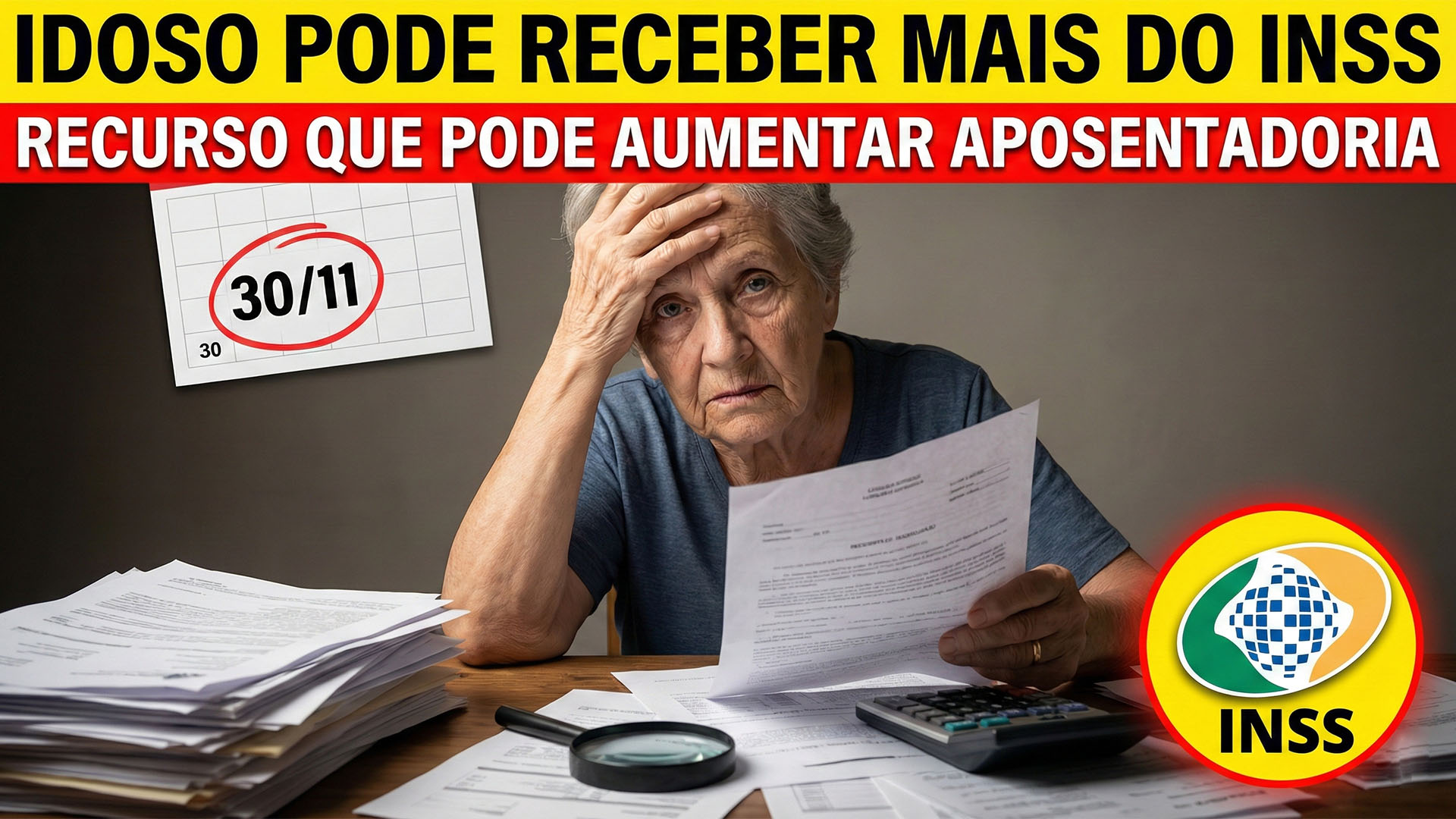
The Resources Council, a body within the INSS itself, allows free challenges to correct errors and increase pensions, especially for the elderly with old benefits. Understand how the appeal works, the deadlines, and what can still be corrected after recent decisions by the Supreme Court.
Every month, many elderly people receive a pension smaller than what they are actually entitled to and don’t even suspect it. Calculation errors, incomplete data in the system, and misinterpretations of social security law are more common than they seem. What few people know is that there is an “administrative tribunal” appeal within the Social Security prepared to review these decisions.
This body is the Social Security Resources Council (CRPS), responsible for analyzing appeals against INSS decisions. It functions as a second administrative instance, with its own structure, rules defined in internal regulations, and collegiate judgment sessions, linked to the Ministry of Social Security.
According to the federal government, policyholders can appeal without paying fees and are not required to have a lawyer, although professional assistance may facilitate strategy and evidence production. The deadline to file the appeal is generally 30 days from the acknowledgment of the decision, and the request can be made via the Meu INSS website or app or through Central 135.
-
At 73.8 meters tall, the world’s tallest teapot-shaped building has 15 floors, ensures stability, and impresses with an internal space of 28,000 cubic meters.

-
Ambev has planted over 3 million trees and restored an area equivalent to the coastline from São Paulo to Natal, and the result after 15 years of silent investment has finally appeared for all of Brazil to see.

-
A new AI collar technology for cattle eliminates physical fences, creates virtual barriers, monitors animals 24/7, and detects changes in behavior and health.

-
For a few weeks each year, an entire country blooms with billions of tulips, creating a mosaic of colors visible from the sky, while a single garden gathers more than 7 million flowers and attracts visitors from around the world to one of the most impressive shows in Europe.


At the same time, the Supreme Federal Court (STF) has already closed the door to broad theses such as “the entire life review” and desupplementation, which has generated frustration among many retirees. Nevertheless, experts argue that it is worth doing a “fine review” of the benefit to locate concrete errors in the calculation, which can still be corrected through administrative appeal or judicial action.
What Is the Resources Council and Why Does It Matter to Those Who Receive Pensions
The Social Security Resources Council (CRPS) is a collegiate body that judges appeals against INSS decisions regarding social security, assistance benefits, and some topics related to businesses. It is part of the structure of the Ministry of Social Security and acts as a reviewing instance of INSS actions, with technical autonomy in relation to the autarchy.
According to official information, the CRPS is composed of Resource Boards, which function as the first instance, and Judgment Chambers, which act as the second administrative instance. In practice, the policyholder first appeals to a Board; if they lose, they can still take the case to the Chamber through a special appeal.
Recent reports show that the Council currently has 29 Resource Boards across the country and four Judgment Chambers, responsible for analyzing thousands of policyholders’ cases annually. For the elderly with old pensions, this collegiate functions as a “second chance” to correct unjust decisions by the INSS, with no filing fees and the possibility of detailed calculation review.
Common INSS Errors That Can Reduce Pensions and Generate the Right to Review
Errors in unaccounted contribution periods are among the most cited problems by social security lawyers. Failures in the CNIS (National Register of Social Security Contributions), companies that did not correctly transmit data, or unrecognized contributions from self-employed individuals result in decades of work simply “vanishing” from the policyholder’s history.
Another group of errors involves the incorrect application of calculation rules, such as the wrong choice of basic calculation period, poorly applied monetary correction rates, and retirement coefficients calculated incorrectly. This can lower the initial monthly income (RMI), reducing the amount received each month and the arrears owed.
Errors with concurrent activities are also frequent, meaning when the policyholder worked two jobs at the same time or accumulated links in different companies. In many cases, the INSS fails to correctly sum the salaries from these activities for benefit calculation purposes, generating significant losses, especially in professions like doctors and teachers.
There are still problems in the analysis of special or rural time, where documents are evaluated restrictively or incorrectly. Labor Court decisions that recognize employment relationships, bonuses, or salary differences can also be ignored when calculating retirement, even though they can directly influence the final value of the benefit.
Therefore, specialized offices have advocated a “Complete Review”, a thorough analysis of the entire policyholder’s history, crossing laws, judicial decisions, and INSS data to locate loopholes and concrete errors. In many cases, this review identifies high retroactive amounts, especially for old retirees who have never reviewed their benefit.
How to Appeal to the INSS and to the CRPS Through Meu INSS, Phone 135, or with Professional Help
When the policyholder identifies a possible error, the first step is to gather documents: complete CNIS extract, work cards, paychecks, labor decisions, PPP, and special activity reports, among others. Then, they can request a review at the INSS itself, via Meu INSS (website or app), Central 135, or in some cases, scheduled in-person assistance. If the INSS recognizes the error, it recalculates the benefit and pays the overdue amounts; if it maintains the denial, the path to appeal opens up.
According to the official service “Submit Ordinary Appeal,” the policyholder has 30 days to appeal, and the appeal is sent to the Resource Board, which is the first instance of the CRPS. If they still do not agree with the decision, they can file a special appeal to the Judgment Chambers.
Once a definitive decision favorable to the policyholder is made, the INSS has a deadline to implement the new amount, under penalty of being legally compelled to comply with the ruling.
Limits of the Review: What the STF Has Already Blocked and What Can Still Be Corrected
It’s important to remember that the appeal to the CRPS does not authorize any type of review. The STF formed a majority to cancel the thesis of “the entire life review”, which aimed to include contribution salaries prior to July 1994 in the calculation of some benefits. The Court understood that the transition rule created by the 1999 pension reform should prevail, restricting this type of broad recalculation.
Prior to that, the Supreme Court had already considered desupplementation unfeasible, meaning the idea of renouncing one retirement to obtain another more advantageous one, combining later contributions, without specific legal basis. The thesis was set aside with general repercussions, meaning future decisions must follow the same understanding.
In practice, what remains open are reviews based on factual and legal errors: unaccounted periods, incorrectly applied indices, disregard of labor decisions, failures in the CNIS, miscalculations of concurrent activities, among others. In these cases, the focus shifts from “creating” a new right to correctly enforcing existing legislation.
Due to deadlines, the risk of decay, and the discussion of technical details, many specialists recommend that the policyholder, especially the elderly, seek guidance from a social security lawyer or public defenders when possible. Still, even without a lawyer, retirees have the right to appeal to the CRPS for free and demand that their benefit be reviewed with care.
In your case, have you or someone in your family checked if the pension is correct or if there was an INSS error? Do you think it’s fair that elderly people have to chase after a “hidden appeal” to receive what is rightfully theirs, or should this be corrected automatically by the system? Leave your comment and share if you’ve been through a review, appeal, or had problems with the INSS.








-

-

2 pessoas reagiram a isso.